A $50,000 reward has put fresh pressure on investigators in the hit-and-run death of <strong>Robert Rathvon</strong>, the Port Angeles air ambulance pilot...
$50K Reward in Port Angeles Hit-and-Run Death: What Happened to Air Ambulance Pilot Robert Rathvon
A $50,000 reward has put fresh pressure on investigators in the hit-and-run death of Robert Rathvon, the Port Angeles air ambulance pilot known to friends as Rob. The case is grim, plain, and infuriating. A man who spent years serving others was killed, and police still want the driver who left him there. Who hit him?
Key Takeaways- Robert Rathvon was an air ambulance pilot in Port Angeles and a former aid pilot in Indonesia.
- A $50,000 reward has been offered for information leading to answers in the hit-and-run case.
- The killing has drawn attention because Rathvon’s life was defined by public service, aviation, and community trust.
- Hit-and-run cases often depend on small clues — vehicle damage, witness tips, video, or parts recovered at the scene.
- The central issue is not just one death, but how communities respond when someone with a record of service is lost to reckless violence.
What is the Port Angeles hit-and-run case?
It is the investigation into the death of Robert Rathvon, an air ambulance pilot who was struck and killed in Port Angeles in what authorities say was a hit-and-run. The case matters because it is not merely a traffic fatality. It is a criminal investigation, one that turns on reckless driving, accountability, and public cooperation.
I’ve covered enough of these cases to say this much: the press release is never the whole story. The real work comes later, when detectives sort out fragments — a mirror cap, a paint smear, a witness who remembers a loud impact, or a camera that caught a vehicle limping away with front-end damage. That is usually how these cases break open.
And yes, people talk about road safety in broad terms, but here the facts are hard-edged. A pilot who spent his career helping others was killed, and the driver vanished. That’s the part that sticks. Frankly, it should.
The broader issue is also moral, not just legal. Catholic social teaching gets one thing right that modern public talk often shrugs off: human dignity does not depend on status, fame, or usefulness. A man flying medical missions or serving remote communities deserves the same protection as anyone else. Justice is not decorative. It is owed.
For readers looking at the wider pattern, hit-and-run deaths sit alongside other public-safety failures. They belong in the same conversation as drunk driving enforcement, speed control, nighttime visibility, emergency response, and the willingness of witnesses to come forward. If you want the legal background, see Insurance Information Institute coverage of hit-and-run crashes.
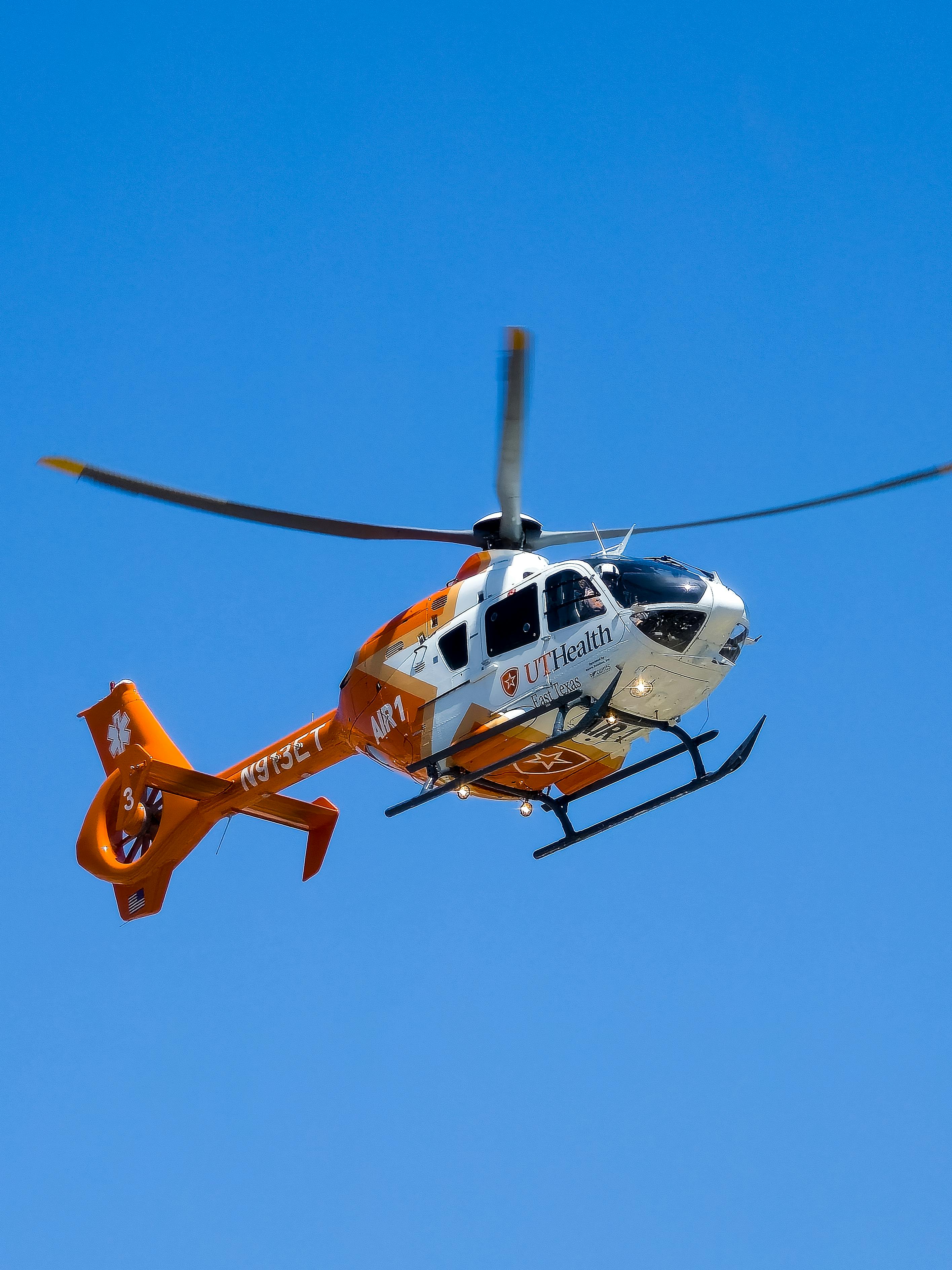
Core details and context
The key facts are straightforward, even if the investigation is not. Robert Rathvon, called Rob by friends and family, was not a random victim in the public imagination. He had a record of service that made the case resonate beyond Port Angeles. That matters, because public attention can be useful when it brings tips, but it can also breed sloppy assumptions. Let's be real: sympathy is not evidence.
Here is what stands out.
- Rathvon’s background: He spent about eight years flying in Indonesia, helping connect remote villages. That kind of work is not glamour. It is discipline, weather judgment, and responsibility.
- His final role: He was working as an air ambulance pilot in Port Angeles, a job that demands precision and calm under pressure.
- The reward: Authorities and supporters have offered $50,000 for information that helps identify the driver or vehicle involved.
- The likely evidence trail: Investigators in hit-and-run cases usually look at collision damage, debris, surveillance footage, repair shops, towing records, and witness statements.
- The public impact: A death like this shakes trust because it suggests someone hit a person and chose escape over responsibility. That choice says a lot about character.
Most coverage stays on the emotional surface. The better question is operational: what produces an arrest? Usually not one dramatic clue. Usually a stack of ordinary ones. A side mirror found at the scene. A vehicle with new dents. A shop that notices suspicious repairs. A person who changes their story. That’s how it works.
The reward changes the equation because money widens the circle of people paying attention. Someone who stayed quiet for fear, indifference, or loyalty to a bad driver may now talk. That is the practical point. Rewards are not magic, but they can loosen tongues.
The community angle matters too. Port Angeles is not New York or Los Angeles. In smaller places, people know roads, vehicles, and habits. They notice when a truck looks wrong, when a commuter suddenly has body damage, or when a neighbor’s story sounds off. Local memory is often the real surveillance network.
If you want a broader look at how communities respond to traffic deaths, the National Highway Traffic Safety Administration has useful data on fatal crashes and behavioral risks at NHTSA Traffic Safety Facts. That data is dry, but dry data still tells the truth.
Timeline and what likely happened
The public timeline is limited, which is exactly why people should be cautious about filling gaps with rumor. I’ve seen too many cases get poisoned by certainty before the facts are in. Here’s the cleaner way to look at it.
- Rathvon lived a life in aviation service. He worked in remote settings overseas and later as an air ambulance pilot in Washington state. That background helped shape the public response after his death.
- He was killed in a hit-and-run incident in Port Angeles. The driver did not stay at the scene, which turned a traffic tragedy into a criminal investigation.
- Law enforcement opened a search for leads. Investigators would have begun collecting physical evidence, witness statements, and nearby video footage.
- A public reward was announced. The $50,000 reward is meant to motivate witnesses and anyone with direct or indirect knowledge to step forward.
- The community reaction intensified. Friends, family, and residents responded not just to the death, but to the unfairness of losing someone who had spent years helping others.
- The case now depends on information flow. If someone saw the vehicle, knows the driver, or has evidence of repair or concealment, that information could become the difference between a cold file and a solved case.
What actually happened in the immediate moment of the crash is still the key unknown. That’s the part the public wants, and rightly so. But investigations are built on patience, not wishful thinking. Police do not need every rumor. They need the one witness who remembers the make, model, color, headlight pattern, or damage profile. Small stuff. Always small stuff.
The other timeline to keep in mind is the human one. Rathvon’s years in Indonesia suggest a man comfortable with responsibility in difficult conditions. Those who fly medical missions or transport patients are not just drivers with wings. They are part of emergency care. They carry a duty to strangers, often in bad weather and under time pressure. That is a form of stewardship, one too many people overlook until tragedy reminds them.
For a broader sense of aviation safety and mission flying, see Aviation International News on air medical safety challenges. Different issue, same truth: flying critical missions leaves no room for careless behavior on the ground or in the air.

Comparison table: hit-and-run cases vs. ordinary traffic crashes
| Factor | Hit-and-run death | Ordinary traffic crash | Why it matters |
|---|
| Driver behavior | Driver leaves scene | Driver typically remains or calls for help | Leaving can signal fear, intoxication, or consciousness of guilt |
| Criminal exposure | Often includes separate criminal charges | May remain a civil or traffic matter | Accountability gets much harder when the scene is abandoned |
| Evidence collection | Depends heavily on debris, video, and tips | More direct on-scene witness and driver statements | More fragile evidence chain in hit-and-run cases |
| Community role | Witnesses and rewards can be decisive | Police and insurers may resolve with standard reports | Public tips matter far more |
| Moral weight | Seen as abandonment of duty to the injured | Usually treated as accident plus negligence | The human damage feels worse because help was withheld |
| Case pace | Can stall without leads | Often resolved faster | Delay can bury key clues |
The difference is not subtle. A crash is bad. A crash followed by abandonment is worse. Why? Because the driver makes a second choice after the first mistake: to leave another human being without aid. That second choice is the one that makes people angry, and with good reason.
If you compare this to other public-safety problems, hit-and-run stands out for one nasty reason: it strips away the chance of immediate rescue. Medical response starts later, evidence gets scattered, and the chance to help the victim vanishes. That is why these cases become community-wide events, not just private grief.
For traffic enforcement context, the Governors Highway Safety Association on hit-and-run crashes offers a solid overview of the national problem. No spin. Just the facts.
Common misconceptions and what to know
People get this wrong all the time.
First, not every hit-and-run driver is a mastermind. Sometimes the culprit is panicked, impaired, uninsured, unlicensed, or all of the above. Panic does not excuse anything, but it does explain why someone would flee. The truth is messier than the crime-drama version.
Second, rewards do not guarantee a quick arrest. They increase odds, not certainty. A reward can pull forward a tip that was already sitting in someone’s throat. It can also bring junk calls, false confessions, and noise. That’s the price.
Third, people assume the vehicle must be badly mangled. Not necessarily. Some crashes leave very little visible damage, especially if the struck person was on foot, in a bike lane, or hit at an angle that damaged only one side of the car. A careful driver can hide damage; a reckless one can too.
Fourth, some readers think public service should not matter in coverage. I disagree, but not because it turns one life into a bigger life. It matters because service reveals character. Rathvon’s years flying in Indonesia, connecting villages that would otherwise stay cut off, show a habit of sacrifice. The world needs more of that, not less.
Here’s the kicker: the best journalism in cases like this does not worship the victim, and it does not flatten them either. It records the facts and respects the dead. That balance is hard, but worth doing.
Fifth, people sometimes treat a reward as if it were a form of revenge. It is not. It is a tool. A blunt one, sure, but a tool. Its purpose is to produce truth, not theater. In a just society, the search for truth should always outrank the urge to talk first and think later.
A few things do matter if you have relevant information.
- Report exact details, not guesses.
- Note vehicle make, model, color, and damage.
- Save dashcam or phone video immediately.
- Preserve timestamps, locations, and contact info for witnesses.
- Avoid public speculation that could taint the case.
Those are simple habits. They also happen to be decent civic behavior. Not complicated. Not flashy. Just responsible.
For a general law-enforcement perspective on witness tips and case building, readers can review FBI guidance on cold case investigations, which explains how persistent lead work can crack long-running files.
Frequently asked questions
What happened to Robert Rathvon?
Robert Rathvon, a Port Angeles air ambulance pilot, was killed in a hit-and-run incident. Authorities have sought information to identify the driver or vehicle involved, and a $50,000 reward has been offered for useful tips.
Why is there a $50,000 reward?
The reward is meant to encourage witnesses or people with knowledge of the crash to come forward. In hit-and-run cases, even one credible tip can move an investigation forward.
Why has this case drawn so much attention?
Because Rathvon was widely remembered as a public servant. He flew missions in remote parts of Indonesia and later served as an air ambulance pilot, so his death struck people as both tragic and unfair.
What kinds of evidence matter most in a hit-and-run investigation?
Vehicle damage, broken parts, surveillance video, witness descriptions, repair records, and digital data such as timestamps or dashcam footage can all matter. Small clues often matter more than dramatic ones.
Final thought
The hard part of this case is not just the loss. It is the cowardice implied by leaving the scene.
Robert Rathvon spent years doing work that stitched isolated places to help, which is exactly the kind of ordinary heroism that rarely gets enough notice while it is happening. Then he was gone, and the driver vanished too. That kind of exit tells you everything you need to know about why justice matters: not for paperwork, not for headlines, but because a community cannot function if the vulnerable are abandoned and the responsible get to slink away.
I’ve seen public attention fade when the news cycle moves on. It always does, unless people keep asking the right questions. Who was there? What vehicle was damaged? Who stayed silent? In the end, truth is often built from patience, witness by witness, fact by fact. And that’s how it should be.