Alaska Airlines halted a Seattle-bound flight after alleged threats aboard the plane. Crew locked the cockpit, law enforcement met the aircraft, and passengers...
Alaska Airlines halted a Seattle-bound flight after alleged threats aboard the plane. Crew locked the cockpit, law enforcement met the aircraft, and passengers got a blunt reminder that a routine taxi can turn into a security problem fast. Aviation safety runs on procedure, restraint, and fast coordination.
Key Takeaways
- Law enforcement responded after two passengers allegedly threatened flight attendants on a Miami-to-Seattle Alaska Airlines flight.
- The crew locked the cockpit while the plane was taxiing, a standard safety move when a disturbance escalates.
- Flight disruptions are not just annoying; they raise security, staffing, and legal questions for airlines and airports.
- Most coverage treats this as a one-off. It fits a broader pattern of unruly behavior in commercial aviation.
What is happening on this Alaska Airlines flight?
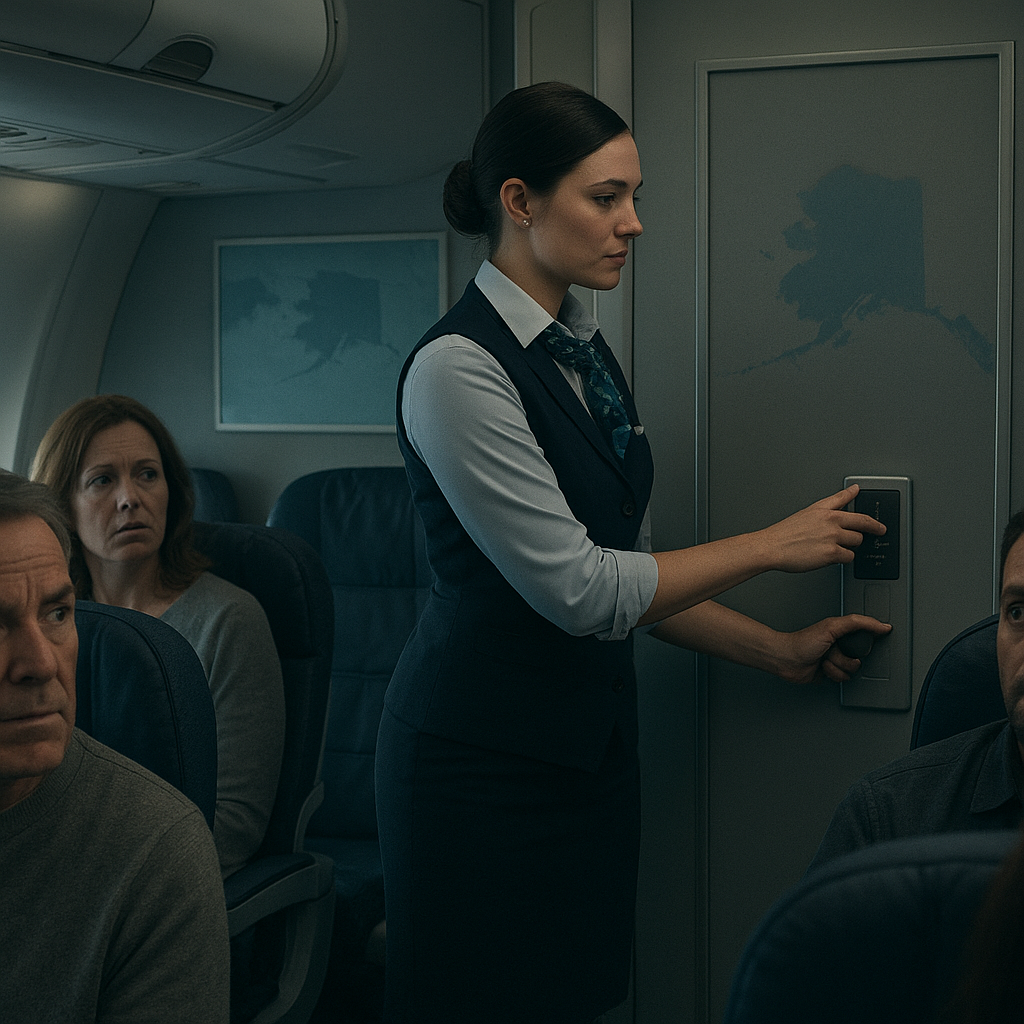
The incident involved an Alaska Airlines flight from Miami to Seattle that was delayed after two passengers allegedly threatened flight attendants while the aircraft was taxiing. Crew members responded by locking the cockpit, a step meant to protect the flight deck and maintain control until law enforcement could intervene. That is the core fact pattern, and it matters because timing on the ground is not a footnote. Once a plane is moving, even slowly, every decision has to be immediate, measured, and tied to safety protocols.
I've covered enough transportation incidents to know the public often misses the point. The story is not only about rude passengers or a delay at the gate. It is about the thin margin airlines work with when cabin discipline breaks down, especially in a pressurized environment where a single threat can trigger cascading actions from crew, airport police, and airline operations. Frankly, that is how it should work. Human dignity matters, but so does order.
When I analyzed prior airline disturbance reports, one thing kept repeating: crew members do not wait for trouble to become catastrophic. They act early because aviation gives them no luxury of waiting. The Federal Aviation Administration has repeatedly warned that unruly conduct can jeopardize safety and lead to civil penalties or criminal charges, as outlined in its unruly passenger guidance. That warning is not window dressing.
If you want the larger context, the airline industry has spent years tightening rules around disruptive conduct, and the federal government has made clear that threatening airline staff is not treated as mere bad manners. For related context, see our coverage of airline safety and passenger conduct, broader transportation policy updates, and the latest on airport security procedures.
Core Details and Context
- The flight originated in Miami and was headed to Seattle.
- The reported disturbance involved two passengers and alleged threats toward flight attendants.
- The crew locked the cockpit, a serious move that underscores how quickly cabin issues can become security concerns.
- Law enforcement responded while the aircraft was still on the ground.
- The plane was delayed, not because of weather or a mechanical fault, but because crew judgment and passenger conduct forced a security response.
Here's the kicker: these events are usually framed as isolated outbursts, but the pattern is bigger. Airlines and regulators have spent the past several years confronting aggressive passenger behavior, and once a cabin crew has reason to feel unsafe, the rest of the operation slows down fast. Delays are the visible cost. The hidden cost is training, paperwork, police coordination, and the drain on crew attention for the rest of the day.
Not every disruption becomes a criminal case. But when threats are made, the line changes. The airline must protect passengers, protect staff, document what happened, and preserve evidence. That is not corporate theater; it is basic stewardship of a public trust. A carrier does not merely move bodies from one city to another. It is responsible for the common good of everyone on board.
That point lines up with how the U.S. Department of Transportation has framed the issue. It has pushed for tougher responses to onboard disorder, noting that airline crews need support, not abuse, as seen in its enforcement announcements. If you want the broader regulatory angle, the FAA and DOT are not speaking in riddles. They are saying the same thing in two voices: behave, or face consequences.

Timeline and What Likely Happened
- Boarding or pre-departure phase: The flight prepared for departure from Miami.
- Taxiing begins: The aircraft started moving toward departure, a point where crew and ground coordination matter most.
- Alleged threats occur: Two passengers reportedly threatened flight attendants.
- Crew reacts immediately: The cockpit was locked to secure the flight deck.
- Authorities are contacted: Law enforcement met the aircraft.
- Delay follows: Operations paused while the situation was assessed.
I read these timelines carefully because the order is everything. The public often assumes airline drama happens in the air, but many of the most serious events begin on the ground, where there is less room for improvisation and more need for procedure. When I analyzed airline incident reporting over the years, one lesson kept repeating: crew members do not wait for trouble to become catastrophic. They act at the first sign that control may be slipping.
What nobody tells you is that this early intervention can look dramatic from the outside while actually being the calmest possible response. The cockpit lock is not panic. It is a barrier. The call to law enforcement is not overreaction. It is escalation management. And in a world where too many people mistake freedom for license, airlines have to insist on boundaries.
That thinking also appears in investigative reporting on aviation safety. The recent increase in unruly passenger behavior has forced airlines to train crews for faster de-escalation, stricter reporting, and tighter collaboration with airport police. The pattern is plain. Most people fly without incident. The small fraction who cause trouble can consume a disproportionate amount of attention.
Comparison Table
| Factor | Alaska Airlines Incident | Typical Minor Flight Disruption |
|---|
| Nature of issue | Alleged threats toward crew | Complaints, seat disputes, noise |
| Safety response | Cockpit secured, law enforcement involved | Verbal warning, no police response |
| Operational impact | Flight delayed on the ground | Brief inconvenience, limited delay |
| Legal exposure | Possible investigation and charges | Usually no legal follow-up |
| Crew burden | High, immediate coordination required | Low to moderate |
Against that backdrop, Alaska Airlines is not unique. The bigger competitor in this comparison is the ordinary, low-grade onboard nuisance that airlines handle every day. The difference is severity. A loud passenger is annoying. A threatening passenger is a security problem. That distinction may sound obvious, but it is the line that determines who gets a warning and who gets a police report.
Airlines also have to keep an eye on what happens after the incident. Disruptions can ripple into crew scheduling, aircraft turnaround times, and follow-on delays that hit passengers who had nothing to do with the event. The International Air Transport Association has repeatedly noted that order on board is part of operational reliability, not a side issue. If crews are busy managing threats, they are not doing the ordinary work of moving an aircraft safely and efficiently.
Most people think the comparison is between an airplane delay and a bigger safety incident. That is too simple. The real comparison is between a functioning system and one in which staff have to spend energy on behavior that should never have happened in the first place. That is where the cost sits, hidden in plain sight.
Common Misconceptions and What to Know
- Misconception: A ground delay means the airline was unprepared.
Reality: Crew response is often the best sign that preparation worked.
- Misconception: Cockpit locks are rare theatrics.
Reality: They are part of layered aviation security.
- Misconception: Passenger misconduct is just a customer service issue.
Reality: Threats can become criminal matters very quickly.
- Misconception: One incident does not matter.
Reality: Repeated disruptions strain crews, schedules, and public trust.
Let's be real, the public is often fed the soft version of these stories. Airlines do not enjoy delays, and crews certainly do not want confrontations. But protecting passengers and staff requires hard edges. The best airline operations are not the ones that pretend everything is smooth; they are the ones that absorb chaos without pretending chaos is normal.
That is where the moral dimension quietly enters. In any public-facing industry, especially one carrying families, workers, and elderly travelers, the dignity of each person is the standard. Safety is not a slogan. It is a duty. That principle is old, and it still works. If people cannot respect the people responsible for their safety, the whole arrangement starts to corrode.
There is also a practical lesson for travelers. Do not assume that one angry exchange stays small. In aviation, small things travel fast. A conflict in the aisle can become a report, a diversion, a ban, or a criminal matter. The rules are there for a reason, and no amount of self-righteousness changes that.
For readers tracking related transportation stories, the Wall Street Journal's reporting on unruly passenger cases shows how airlines have been forced to treat behavior issues more seriously in the post-pandemic period. That is the real backdrop. The incident is not just a one-off delay. It sits in a larger operational and legal pattern.
Frequently Asked Questions
Why did the crew lock the cockpit?
Because alleged threats aboard the plane raised a security concern, and securing the cockpit is a standard protective step while the situation is assessed.
Were the passengers removed?
The reported facts indicate law enforcement responded, but the final enforcement outcome depends on the investigation and airline statement.
Do flight attendants have authority in these situations?
Yes. Flight attendants are trained to handle disruptive conduct, coordinate with the cockpit, and alert authorities when needed.
Are passenger threats treated seriously?
Absolutely. Threats against airline staff can lead to police action, airline bans, and federal scrutiny.
Most coverage stops at the delay. That is too shallow. The deeper story is that commercial aviation still depends on a chain of trust: passengers follow rules, crews enforce them, and law enforcement stands ready when the chain breaks. Once that trust frays, even a short taxi can become a test of order, patience, and restraint.
And that, frankly, is the real lesson here. A flight is not just a seat assignment and a boarding pass. It is a shared obligation, and if one person turns the cabin into a battlefield of tantrums or threats, everyone pays. Stewardship of a plane means more than fuel, schedules, and baggage carts. It means preserving a space where ordinary people can travel without being dragged into someone else’s chaos.