Kamehameha Patterson’s arrest is a criminal case with broader public-safety implications. The Anchorage case centers on alleged domestic violence, a police...
Anchorage man faces assault charges after police gunfire, dog bite arrest
Kamehameha Patterson’s arrest is a criminal case with broader public-safety implications. The Anchorage case centers on alleged domestic violence, a police response, a flight from officers, and a violent confrontation that ended with gunfire and a K-9 bite. Who gets hurt when a household dispute turns into a street crisis?
Key Takeaways:- Kamehameha Patterson, 24, is accused of choking his wife twice before fleeing police.
- The arrest escalated into a confrontation involving officers, gunfire, and a police dog.
- The case raises questions about domestic violence response, use of force, and officer safety.
- The core facts matter more than the noise, and the public should resist the usual guesswork.
What is the Anchorage assault case?
This case is a criminal allegation involving domestic violence, flight from police, and a violent arrest sequence in Anchorage, Alaska. According to local reporting by Alaska’s News Source, Wesley Early reported that Kamehameha Patterson is accused of choking his wife twice in their home on April 7 before running from officers and being injured by a police dog during the arrest. That is the core. Everything else is commentary.
Frankly, a lot of coverage around cases like this gets sloppy fast. People race to pick a side before the facts are even settled, and that helps nobody. The police have a duty to stop violence and protect victims. The accused still has rights, because justice is not a slogan, it is a discipline. The difference matters.
The public sees the headline and fills in the blanks. That is human, but it is not careful. The real issue is not just what happened in the final minutes of the arrest. It is what allegedly happened in the home, what officers found, how the pursuit unfolded, and whether the force used matched the danger presented. I have covered enough of these cases to know the first version people hear is rarely the full one.
The case also touches a familiar and ugly truth: domestic violence often begins behind closed doors, then spills outward when someone tries to flee or when police intervene. That pattern is grim, but it is common. And if there is any moral order left in public life, it starts with protecting the vulnerable, not excusing brutality because it is politically convenient.
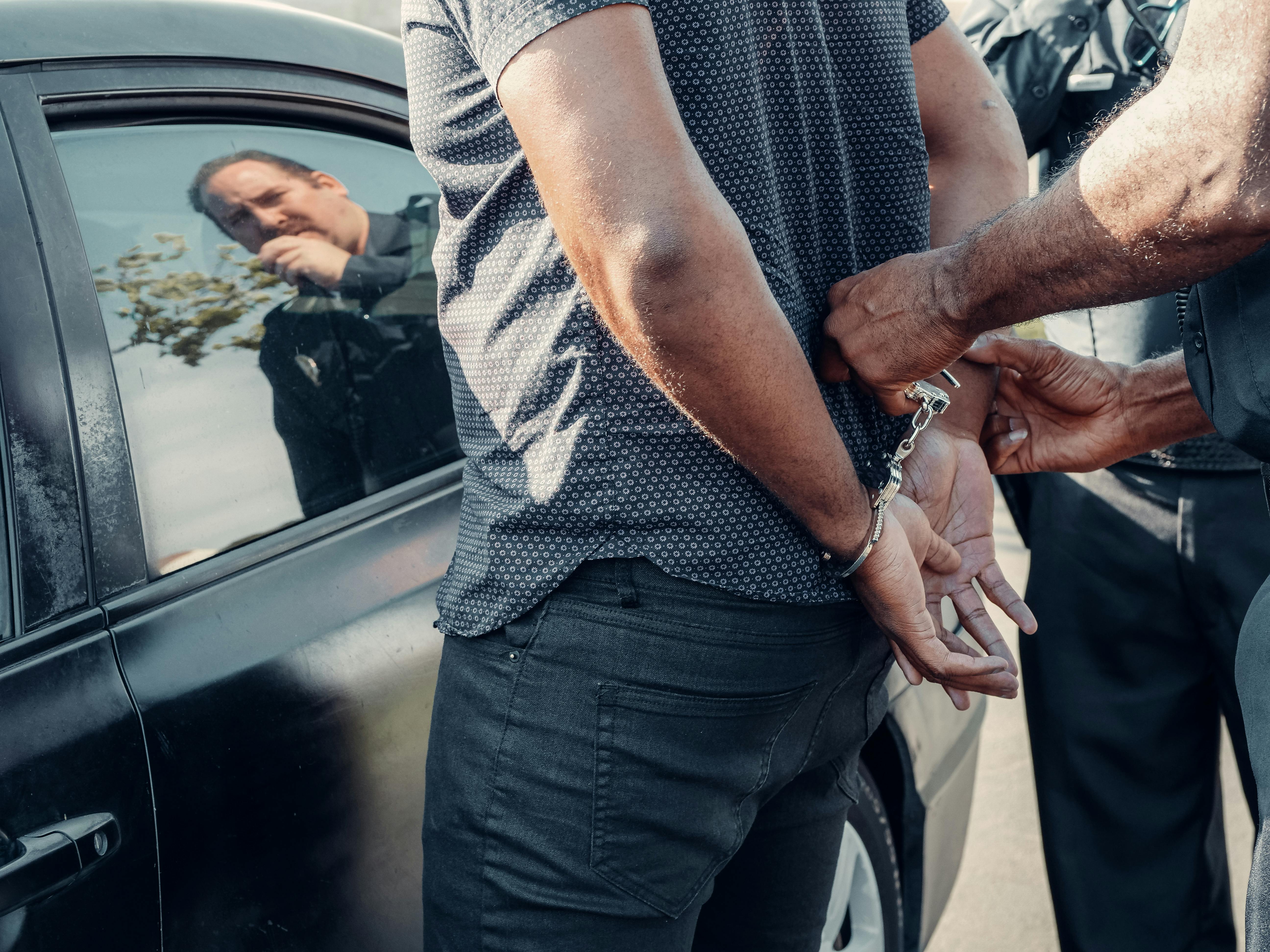
Core Details and Context
The reported allegations are serious.
- Patterson is alleged to have choked his wife twice inside their home.
- Police say he then fled when officers attempted to arrest him.
- During the arrest, a police dog helped subdue him, and Patterson was injured.
- The case now includes assault charges tied to the alleged domestic incident and the subsequent confrontation with law enforcement.
What nobody tells you is that these cases are usually messy long before they become news. A domestic call can shift from a private crisis to a public one in minutes, and officers are left making quick decisions with incomplete information. That does not make every use of force right. It means the record has to be examined carefully, not with social-media theater.
The alleged choking is the most important detail from a victim-safety perspective. Strangulation in domestic cases is not a minor assault. It is a marker of serious danger and can signal a high risk of future harm. That is not editorial spin. It is a known factor in criminal justice and emergency-response circles. When I analyze cases like this, that is the detail I do not let slip past.
There is also the issue of the arrest itself. Once a suspect runs, officers must decide whether to pursue, contain, or deploy additional tools. A K-9 can be a control device, but it is not a toy, and it is not harmless. Dogs bite because someone trained them to bite on command. That reality should make everyone sober, not smug.
The public often treats police force as either entirely justified or entirely abusive. That binary is lazy. Real cases sit somewhere uglier. An officer can face genuine danger and still make a poor choice. A suspect can be accused of a violent offense and still be entitled to proper treatment. Civilization requires both truths at once, even when people would rather shout past each other.
For broader context on public-safety reporting and police accountability, readers may find it useful to review related coverage such as AP police coverage, which tracks patterns in use-of-force investigations nationwide. That kind of reporting helps separate one-off claims from recurring systems issues.

Timeline and What Appears to Have Happened
- April 7: Police respond to the home after the alleged domestic assault.
- Patterson is accused of choking his wife twice during the incident.
- Officers attempt to take him into custody.
- Patterson allegedly flees, turning the situation into a pursuit.
- During the arrest, a police dog is deployed and Patterson is injured.
- Charges are pursued, and the case moves into the criminal-justice system.
That is the bare outline. The rest depends on the official reports, witness statements, medical records, and whatever body-camera or dispatch evidence exists. People love a clean narrative, but facts rarely arrive wearing clean shoes.
Here’s the kicker: the moment someone runs, the risk profile changes. Officers are no longer dealing only with a domestic call. They are dealing with a fleeing suspect who may still be dangerous, panicked, injured, or all three. That raises the stakes for everyone nearby, including the officers, the suspect, and any bystanders.
The use of a police dog is not unusual in a flight or resistance situation. It is, however, serious. K-9 deployment is one of those tools police departments defend as effective because it can end a chase quickly. Critics point out, correctly, that a dog bite is a traumatic injury and can easily worsen if the scene is chaotic. Both statements can be true. Shocking, I know.
I’ve seen how these stories get flattened in public discussion. People talk as if the arrest happened in a vacuum. It didn’t. The alleged choking, the attempt to arrest, the escape, and the K-9 injury are all parts of one chain. Break one link, and the whole event looks different. That is why timelines matter more than hot takes.
The criminal case will likely move through standard steps: charging review, court appearances, possible bail conditions, discovery, and, if it comes to that, plea negotiations or trial. The defense may challenge the allegations, the force used, or both. The prosecution will focus on the reported domestic violence and the flight from police. The court will sort out what can be proved. That is how the system is supposed to work, when it works.
For readers who want to understand how criminal cases are reported and verified, basic criminal case process guides can help clarify the stages that follow arrest. Not glamorous, but useful.

Comparison Table
| Issue | Anchorage Assault Case | Typical Domestic Disturbance Call |
|---|
| Initial allegation | Two choking incidents | Verbal dispute, threats, or minor physical contact |
| Police response | Arrest attempt followed by flight | Scene assessment, separation of parties, possible arrest |
| Arrest escalation | Police dog used; suspect injured | Often ends without pursuit or major injury |
| Public safety risk | High, because alleged strangulation raises danger | Variable, depending on threats and weapons |
| Legal focus | Domestic assault, resisting or fleeing, use-of-force questions | Assault, disorderly conduct, protective orders |
| Main evidence | Officer reports, witness accounts, medical records, possible body-cam | Same, but often less severe and less contentious |
The bigger competitor here is not another headline. It is the ordinary assumption that every domestic case is routine. It is not. A choking allegation changes everything. That is the part most people miss.
If you want a useful contrast, look at how police accountability stories are often framed versus how domestic violence cases are framed. One gets turned into a referendum on law enforcement. The other gets turned into a private matter until it becomes a corpse or a courtroom record. Both habits are bad. Both leave people exposed.
A broader national context can be found in federal domestic violence resources, which explain why strangulation, intimidation, and repeat abuse are treated as serious warning signs. That policy context matters because public institutions are supposed to serve the common good, not just react after damage is done.
Common Misconceptions and What to Know
The first myth is that a domestic violence arrest is “just a family issue.” It is not. Once physical assault enters the picture, the state has a duty to respond. That duty exists because human dignity is not disposable. Anyone who has watched these cases up close knows how fast “private conflict” turns into grave harm.
The second myth is that police dog injuries are somehow proof the arrest was unjust. Not necessarily. A suspect fleeing from officers creates a real safety problem, and police have tools for that reason. But let’s be real: a justified deployment is not the same thing as a perfect one. The standard is reasonableness, not applause.
The third myth is that the public can infer guilt or innocence from one headline. No. That is lazy and often wrong. A charging document is not a verdict. An arrest is not proof beyond a reasonable doubt. And a release from custody does not clear anyone either. Facts matter more than team sports.
The fourth myth is that the most important question is whether the suspect was injured. It isn’t. The first question is whether the alleged victim was safe and whether the violent behavior was real. The next question is whether the arrest was conducted within lawful bounds. Order matters. So does mercy, but mercy without truth is just sentiment with better branding.
One thing to watch is whether investigators or prosecutors describe prior incidents, protective orders, or other warning signs. In domestic violence cases, pattern evidence can matter a great deal. A single event may be bad enough on its own, but repeated abuse paints a fuller picture, and the public deserves that context instead of chopped-up fragments.
Another thing to remember: police departments often review force incidents internally, especially when a suspect is bitten by a K-9 or injured during arrest. Those reviews are not the same as independent oversight, and critics have every right to question them. Still, the process should be based on evidence, not raw anger.
The truth is, this case sits at the intersection of domestic violence, use of force, and criminal accountability. That intersection is where law, public safety, and moral responsibility meet. And if that sounds a little old-fashioned, good. We could use a bit more of that.
For readers comparing this with broader police and court coverage, Reuters U.S. news often provides concise, fact-driven reporting on arrests, court filings, and agency responses. That kind of reporting is plainspoken, which is refreshing in a field full of fog.
Frequently Asked Questions
What is Kamehameha Patterson accused of?
He is alleged to have choked his wife twice in their home on April 7, then fled police when they tried to arrest him. The reported charges also stem from the later confrontation with officers.
Why did police use a dog during the arrest?
Based on the report, Patterson fled from officers, and the police dog was used to help take him into custody. K-9 deployment is typically a control tactic used when a suspect runs or resists arrest.
Does being injured by a police dog mean the arrest was illegal?
No. Injury alone does not prove misconduct. The key question is whether the force used was reasonable under the circumstances, which is determined through reports, evidence, and, if necessary, court review.
Why are strangulation allegations treated so seriously?
Because choking or strangulation in a domestic setting can signal a high risk of severe future harm. It is not treated as a small scuffle. It is a major warning sign.
Final Thought
This is not a story about a headline. It is a story about what happens when violence starts at home and spills into the street, where officers, victims, and bystanders all pay the price. The law has to be firm, but it also has to be fair. Otherwise we end up with neither safety nor justice, just noise and bruises.
The hardest part of covering cases like this is resisting the rush to certainty. Everyone wants a tidy villain, a spotless hero, and a moral that fits on a bumper sticker. Life is uglier than that. A serious society does not excuse abuse, and it does not pretend force is free of cost. It protects the innocent, holds the guilty to account, and remembers that every person, even the accused, still bears human dignity. That is not soft. It is civilized.