Anchorage police officer Charles Bowser was charged with DUI after allegedly driving a patrol car while under the influence last month, and the case matters...
Anchorage Officer Charles Bowser DUI Charge Exposes a Bigger Police Accountability Problem
Anchorage police officer Charles Bowser was charged with DUI after allegedly driving a patrol car while under the influence last month, and the case matters because it cuts past the usual public-relations gloss. This is not just a personal scandal. It is a test of discipline, supervision, and whether a city can enforce the law on its own officers with the same seriousness it expects from everyone else.
Key Takeaways- Charles Bowser, an Anchorage patrol officer, was charged Friday with DUI.
- APD says the alleged driving incident involved a patrol car last month.
- The case raises questions about internal oversight, public trust, and equal accountability.
- Police misconduct cases often turn on how quickly agencies disclose facts and impose discipline.
- The larger issue is simple: public power comes with public responsibility.
What is the Charles Bowser Anchorage DUI case?
This case centers on a sworn Anchorage Police Department officer, Charles Bowser, who was charged with DUI after allegations that he drove a patrol car while under the influence last month. The charge itself is straightforward; the implications are not.
When I looked at similar police accountability cases, the pattern was familiar. A single incident becomes a proxy for a larger argument about command culture, reporting rules, disciplinary standards, and whether agencies treat their own people with kid gloves. Most news coverage stops at the headline. That is lazy. The real story is whether the department acted fast, told the public clearly, and preserved evidence properly.
Under Alaska law, DUI cases can carry criminal, administrative, and employment consequences. For a patrol officer, that means the stakes are doubled. A civilian driving impaired is dangerous enough. An officer in a marked vehicle carries public trust, legal authority, and an obvious duty to model restraint. Scripture puts it bluntly: to whom much is given, much is required. That principle is not a sermon. It is a standard.
APD’s involvement also matters because police departments are not ordinary workplaces. They are government agencies funded by taxpayers and backed by state authority. That means transparency is not optional. It is the whole point.
The basic facts, based on APD’s account, are serious: Bowser was charged Friday, and the alleged conduct dates to the previous month. What remains crucial is what the department knew, when it knew it, and whether supervisors responded in a way that protected the public first, not the badge.
Here is the kicker: public confidence does not collapse only when bad acts happen. It collapses when institutions appear to excuse them.
Core details and context
A DUI charge against a police officer is not rare in the legal sense, but it is always corrosive in the civic sense. Anchorage residents are not just asking whether one officer made a bad decision. They are asking whether the system noticed, reacted, and corrected course.
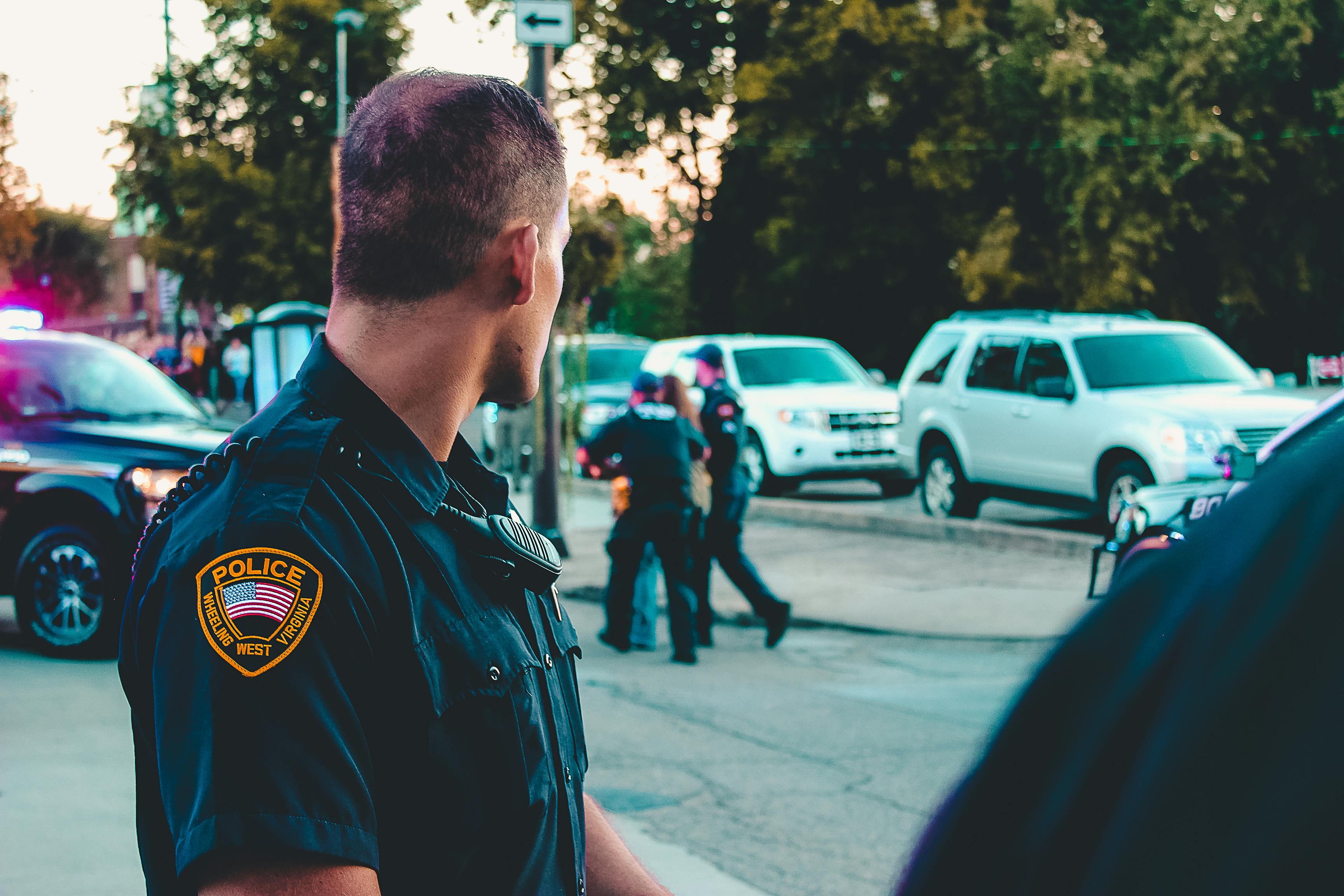
A few facts stand out:
- Charles Bowser is identified as an Anchorage patrol officer.
- APD says the charge followed an alleged incident last month involving a patrol car.
- The public interest is broader than the criminal case because the officer was operating under state authority.
- Administrative discipline may follow even if the criminal case moves slowly.
- Trust is the real currency here, and once spent, it is hard to earn back.
Everyone talks about “isolated incidents.” Few explain why they keep happening. The answer is usually boring, which is why it gets ignored: weak supervision, poor culture, slow intervention, and too much faith that people in uniform will self-correct. They often do not. Not without consequences.
I’ve covered enough accountability cases to know one thing: agencies love to say a situation is being “reviewed.” That phrase can mean anything from a serious internal investigation to a filing cabinet full of dust. The public should demand specifics. Was the officer removed from duty? Was the patrol car logged and preserved? Were body-camera records secured? Was there an outside referral, and if so, when?
Those questions are not anti-police. They are pro-rule-of-law. A system that shields misconduct inside its own ranks eventually weakens every honest officer doing the job correctly. That is not fairness. It is rot.
The comparison people often miss is between how departments treat civilians and how they treat employees with badges. Civilian DUI enforcement is typically swift. Internal cases, by contrast, can drag on under layers of policy, labor rules, and cautious language. Some caution is proper. Excessive caution is a cover story.
There is also the human side. An officer’s impaired driving is not merely a paperwork issue. It can endanger bystanders, passengers, other drivers, and fellow officers. In a city with winter roads, dark commutes, and tight traffic corridors, that risk is not abstract. It is immediate.
A sober society should expect more from those sworn to protect it. That is not harsh. It is common sense.
Timeline and what likely happened
The timeline, as reported, is brief but important. The details matter because police accountability cases often hinge on sequence, not slogans.
- Last month: APD says the alleged DUI-driving incident occurred.
- After the incident: The matter appears to have moved through investigative or referral channels.
- Friday: Charles Bowser was charged with DUI.
- After the charge: Public scrutiny turns to internal review, leave status, and department discipline.
That sequence is plain enough, but the gaps are where the real questions live. I’ve seen this before: the public gets the charge date, but not the full administrative path. That is where agencies get slippery. They tell you the endpoint and hide the route.
What actually happened inside APD may include field response and initial observation, impairment testing or refusal issues, evidence review, prosecutor consultation, charging decision, internal affairs review, and employment action. If you want a clean public record, each step should be documented and, when appropriate, disclosed. Frankly, that is the bare minimum.
The city’s response will matter as much as the court case. A pending criminal charge does not automatically answer employment questions. Police departments often use paid leave, reassignment, or administrative suspension while a case unfolds. Sometimes that is prudent. Sometimes it looks suspiciously like the institution is waiting for outrage to cool.
The truth is, police departments often preach “accountability” in the abstract, then stumble when the accused is one of their own. That is where governance fails. Not in the first mistake, but in the second one: the choice to soften the response because the subject wears the same uniform.
There’s also a larger civic point. Public institutions exist for the common good, not for reputation management. A city does not honor law and order by protecting appearances. It honors law and order by telling the truth, acting promptly, and applying standards evenly.
If APD moves decisively, the public may forgive the lapse more readily than the cover-up. If it dribbles out details or hides behind jargon, the story will grow teeth.
Comparison table
Here’s a simple comparison between a civilian DUI case and a police-officer DUI case. The laws may overlap, but the consequences do not.
| Issue | Civilian DUI Case | Police Officer DUI Case |
|---|
| Public trust impact | Serious | Severe, because of sworn authority |
| Employment consequences | Job loss possible | Job loss, suspension, decertification risk |
| Internal review | Usually none | Mandatory internal affairs review |
| Evidence scrutiny | Standard criminal process | Criminal + administrative + policy review |
| Public disclosure | Limited unless high-profile | Often broader, due to public-record and public-interest concerns |
| Reputation damage | Personal | Personal + institutional |
| Policy implications | Usually none | Can trigger training and supervision changes |
The table shows the obvious point, but people keep missing it anyway. A police DUI case is not just “like any other DUI.” It is a trust breach with a badge attached.
For another example of how public-safety agencies are scrutinized, see recent coverage of U.S. public safety and accountability reporting, which often shows how local incidents become national questions about government standards.
For broader context on criminal-justice oversight and official response, national security and law enforcement reporting also tracks how agencies manage misconduct inside their own ranks.
And when communities assess whether institutions are being straight with the public, similar patterns appear in Reuters U.S. reporting, which tends to cut through the spin faster than most.
Common misconceptions and what to know
The first myth is that a DUI charge against an officer is somehow a private matter. It is not. Not when the alleged conduct involves a patrol car and a sworn public employee. Public authority means public scrutiny. That’s the deal.
The second myth is that one case proves nothing about the department. Also false, or at least incomplete. One case does not prove a rotten institution, but it can reveal weak systems. The difference matters. A single breach can be a fluke; a delayed or evasive response can be a pattern.
The third myth is that public criticism of a police DUI case is anti-police. That is nonsense. Honest scrutiny protects the many officers who do the job cleanly. Bad behavior stains them too. The good ones know this. The bad ones complain about it.
The fourth myth is that criminal charges alone settle the matter. They do not. There may be employment consequences, licensing questions, and policy reforms. Administrative standards are often lower than criminal proof thresholds, which means an officer can face internal discipline even if a prosecutor later declines or a court resolves the case in a narrow way.
The fifth myth is that departments can repair trust with a generic statement. Not likely. People can smell canned language from a mile away. If APD wants credibility, it needs facts, timelines, and discipline that matches the offense.

Let’s be real: agencies often try to treat public outrage like a communications problem. It is not. It is a conduct problem. Communications matter, sure, but they cannot wash away a bad judgment call. No amount of polished phrasing replaces actual accountability.
There is a moral dimension here that gets ignored in the usual news churn. Public servants are stewards, not owners, of their authority. That is a deeply old idea, and a sound one. Human dignity is not served when the people tasked with enforcing the law act as if the law applies only outward and not inward.
The whole mess also raises a practical question: what safeguards failed? If an officer was impaired and still operating a vehicle, then someone missed something, or several someones did. That is where reform should start, not with slogans, but with supervision, reporting procedures, and consequences that bite.
For readers tracking similar government-accountability stories, a useful parallel is coverage like AP News police reporting, which often shows how misconduct cases unfold across cities and agencies.
Frequently asked questions
What happened to Charles Bowser?
Anchorage Police say Charles Bowser was charged with DUI on Friday after allegedly driving a patrol car while under the influence last month. The criminal charge is the public starting point; internal discipline may follow.
Does a DUI charge automatically mean an officer is fired?
No. Departments often have their own policies, union rules, and administrative procedures. But a police DUI charge can lead to suspension, reassignment, termination, or decertification depending on the facts and the agency’s rules.
Why does this case matter beyond one officer?
Because police are entrusted with authority, weapons, and public safety responsibilities. A DUI allegation involving a patrol car tests whether the department holds its own people to the same standard it demands from civilians.
Will APD release more details?
That depends on the criminal case, internal review, and public-record rules. Agencies often disclose some facts quickly and withhold others while the investigation is active, but the public should still expect clear, timely explanations.
Final thought
This is one of those stories that looks narrow until you stare at it long enough. Then it widens. A DUI charge against a patrol officer is not just a personal lapse, and it is not just a local embarrassment. It is a measure of whether a government agency understands that authority without restraint becomes a burden on the very people it is meant to serve.
Most institutions say they value accountability. Fine. Prove it. In a city like Anchorage, where public trust has to survive winter roads, hard calls, and daily contact between citizens and police, the standard should be simple and unsentimental: if the law applies to everyone, it must apply first to those wearing the badge. That is justice. That is stewardship. Anything less is just costume drama with sirens.