An Anchorage police shooting ended with a suspect hospitalized after K-9 injuries. The facts are still the facts.
An Anchorage police shooting ended with a suspect hospitalized after K-9 injuries. The facts are still the facts.
Police say officers responded to a report of an armed man choking a woman near her infant in an Airport Heights home, then encountered gunfire and deployed a police dog during the arrest. What sounds like a single violent burst was really a chain of decisions under pressure, and those choices now sit at the center of a criminal, tactical, and public-safety review.
Key Takeaways
- Anchorage police say officers answered a domestic-violence call involving an armed suspect and a woman near an infant.
- The encounter escalated after officers reportedly came under fire, leading to the suspect being shot and bitten by a K-9.
- The case raises familiar questions about use of force, officer risk, domestic violence response, and how police reports are verified.
- There is still a gap between the first police account and the final investigative record, and that gap matters.
- The deeper issue is not spectacle; it is whether force was necessary, proportionate, and documented with care.
## What is the Anchorage K-9 officer-shooting case?
It is a violent police response to a domestic disturbance.
Anchorage Police Chief Sean Case said officers were dispatched after reports that a man was choking a woman near her infant child inside a home in Airport Heights. In situations like that, officers are not walking into a tidy scene; they are entering a volatile mix of possible assault, a vulnerable child, a weapon, and a suspect who may already have crossed several lines of criminal conduct. Frankly, that is the sort of call where every second can turn expensive.
According to the police account, the suspect allegedly fired on an officer, prompting return fire and a K-9 deployment. The suspect was later hospitalized with injuries from the dog. That sequence matters because it places the police dog not as the center of the event, but as one tool in a broader use-of-force response after a reported gun threat. That distinction gets blurred in a lot of coverage.
The public often hears “police shooting” and stops there. That is lazy thinking. A real analysis asks what happened before the trigger pull, what officers knew, what the suspected victim faced, and how the scene was controlled. In this case, the reported choking of a woman near an infant adds a grim moral layer: the duty of public authorities is not only to enforce the law, but to protect human dignity, especially where the weak are exposed to violence. That is not sermonizing. It is basic civilization.
This is also a case about evidence. Police narratives arrive first, then body-camera review, witness statements, forensic work, and prosecutor scrutiny. Until that process is done, nobody serious should pretend the first version is the final one. If you want a broader picture of how authorities frame fast-moving incidents, see related coverage of police use-of-force standards, domestic violence response, and how body-camera evidence is reviewed.
## Core details and context
The core facts, as reported so far, are straightforward enough.
- Officers responded to a domestic-violence call in Airport Heights.
- Chief Sean Case said the suspect was allegedly choking a woman near an infant child.
- The suspect was reportedly armed.
- Police say the suspect fired on an officer.
- Officers returned fire.
- A police K-9 was used during the arrest, and the suspect was hospitalized with dog-related injuries.
That is the official outline. The rest is what investigators must sort out.
Here is the kicker: domestic-violence calls are among the most dangerous calls police handle, and they often unfold inside cramped homes where officers cannot see everything at once. Weapons, children, intoxication, panic, and conflicting stories tend to crowd the same room. When I analyze incidents like this, I pay less attention to the dramatic label and more attention to the decision tree. Who saw what? What was the distance? Was there cover? Was the woman able to get away? Was the infant physically in danger? Those details determine whether force was unavoidable or merely fast.
Police departments usually defend K-9 use on the grounds that dogs can locate, hold, and subdue suspects while reducing the need for prolonged hand-to-hand struggle. Critics counter that dogs can inflict serious injury and are sometimes deployed in ways that feel excessive. Both points can be true. Reality is stubborn that way. The law does not care about slogans; it cares about necessity, proportionality, and aftermath.
It is also worth remembering that use-of-force decisions happen under legal and human pressure at the same time. Officers face split-second risk. The public faces the consequences later. Those are not equal positions, but both deserve honest scrutiny. A city that wants safe streets has to treat police as a public trust, not a tribal badge, and suspects as persons, not disposable villains. That balance is hard, but without it you get either lawlessness or abuse.
The reported infant presence sharpens the stakes. A child in that setting is not a prop in a news cycle. It is a vulnerable human being whose safety should be the first concern of any civilized response. That kind of instinct fits a stewardship mindset: protect what is entrusted to you, especially the defenseless.
A few facts still need answering:
- Was the woman injured, and how badly?
- Was the infant harmed or moved to safety?
- What weapon was recovered?
- Did body-camera footage match the initial police statement?
- How many rounds were fired, and from whom?
- What role did the K-9 play in restraining the suspect?
Until those answers are public, the incident remains a police account with serious allegations, not a complete history.
For readers comparing this to other high-pressure police events, this is similar in structure to Officer-involved shooting reviews, though each case turns on its own evidence. It also fits a broader pattern seen in Alaska public safety coverage and crime and courts reporting.
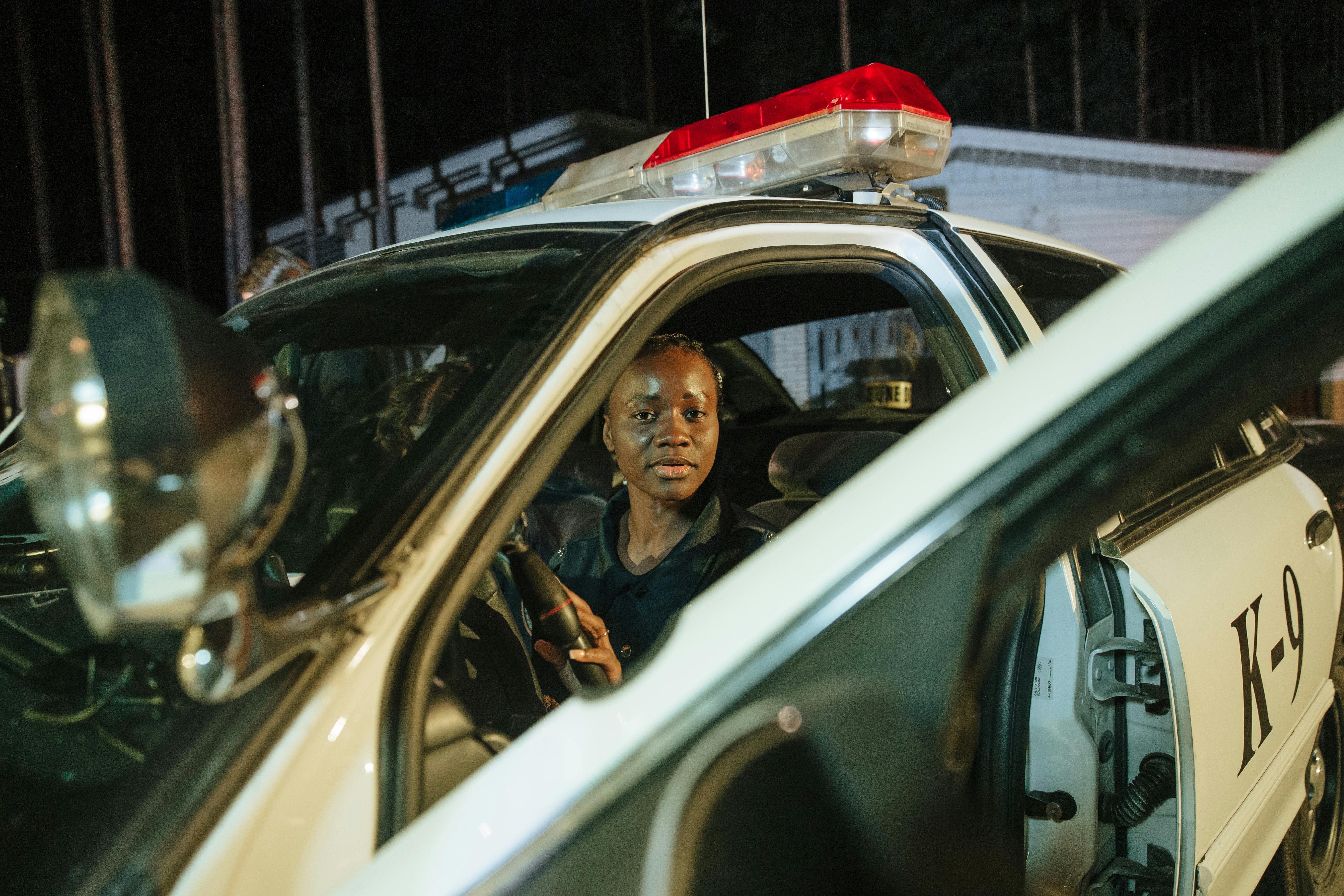
## Timeline and what happened
The timeline matters more than the headlines.
- A call came in about a violent domestic situation.
- Officers responded to the Airport Heights home.
- Police say they found an armed man choking a woman near an infant child.
- The encounter escalated quickly, with the suspect allegedly firing on an officer.
- Officers returned fire.
- A K-9 was deployed to assist in taking the suspect into custody.
- The suspect was hospitalized with injuries caused by the police dog.
- Investigators began the usual process: scene control, evidence collection, witness interviews, and review of police actions.
That is the clean version. The real version is messier.
I’ve covered enough breaking police stories to know the first radio traffic rarely tells the whole tale. Sometimes it is more accurate than the later rumor mill, sometimes less. Either way, the public should resist the urge to treat early reports as scripture. Good reporting asks what is verified, what is alleged, and what remains unknown. Most news coverage misses that and rushes straight to the most dramatic frame.
What probably matters most now is the gap between the moment officers arrived and the moment force was used. Did they see the suspect’s gun immediately, or only after entry? Was the woman able to break free? Did the infant remain in the same room during the exchange? Was the suspect already advancing, retreating, or barricaded? Those distinctions are not academic. They go directly to the legal standard for force.

The police K-9 piece is also easy to misunderstand. Some readers hear “dog attack” and picture something random or punitive. That is usually not how a tactical canine is used. In many departments, K-9s are trained for suspect apprehension, tracking, and officer protection. When deployed correctly, the dog is part of an escalation ladder, not a substitute for judgment. When deployed badly, it can create another injury in an already ugly scene. Both possibilities deserve examination.
A responsible timeline also includes the aftermath. Was the woman interviewed separately? Was the home searched under warrant or exigent circumstances? Was the suspect treated as soon as it was safe? Did the department place the officer on administrative leave, as is standard in some jurisdictions after shootings? Did prosecutors get an immediate briefing? These are the boring questions that separate adult governance from performative outrage.
If you want a sense of how similar reviews tend to proceed, the mechanics resemble how police incident reports are built, though the public rarely sees the full file until later.
## Comparison table: Anchorage police response vs. a typical low-risk arrest
| Factor | Anchorage incident | Typical low-risk arrest |
|---|
| Initial call | Reported domestic assault with an armed suspect | Non-violent warrant or traffic stop |
| Threat level | High, with alleged choking and gunfire | Low to moderate |
| Officer tactics | Return fire, K-9 deployment, scene containment | Handcuffing, verbal commands, minimal force |
| Civilian vulnerability | Woman and infant reportedly present | Often no immediate bystanders at risk |
| Injury risk | High for officers, suspect, and occupants | Lower overall |
| Review intensity | Full use-of-force review likely | Routine report processing |
| Public scrutiny | Heavy, because of shooting and K-9 injuries | Usually limited |
The comparison is plain enough.
Anchorage’s case is not a garden-variety arrest; it is a high-risk intervention with multiple victims and an armed suspect. That is why the public should not compare it to a paperwork warrant service or a traffic stop. Doing so muddies the water. At the same time, high-risk does not mean beyond scrutiny. A serious city examines every bullet, every command, and every canine deployment because the common good depends on restraint as much as resolve.
Across law enforcement, there is a constant tension between speed and certainty. Officers need enough speed to protect life. The public needs enough certainty to trust the outcome. The law sits in the middle, awkward and necessary. That is why departments use incident review boards, prosecutor oversight, and sometimes independent investigators. Not because everyone is suspect, but because power without inspection rots.
And yes, the comparison also highlights a hard truth: when a domestic call turns violent, the people in the room often have no time to make clean choices. The suspect may be reckless, the victim trapped, and the responding officers forced into a path they would rather avoid. That is the part people forget when they reduce everything to a chant.
## Common misconceptions and what to know
The loudest version of this story is usually the least useful one.
One misconception is that a K-9 injury means the dog was used “instead of” proper policing. Usually, that is false. A police dog is a force option, and in many agencies it is used after an arrest becomes dangerous or prolonged. Whether it was appropriate here will depend on the timing and threat level, not the fact that a dog was involved.
Another misconception is that any police shooting must be either heroic or abusive. Life is not a movie. Real events can contain justified force, bad tactics, poor communication, and tragic injury all at once. If you only allow one moral label, you will miss the evidence that matters.
A third misconception is that the first police statement is the whole story. It is not. It is a starting point. Sometimes it is later confirmed. Sometimes it is corrected. That is why body-camera footage, dispatch logs, autopsy findings, and witness interviews matter. Skepticism is not cynicism. It is discipline.
A fourth misconception is that the presence of an infant automatically means police should have acted more slowly. Not necessarily. If a suspect is choking a woman and firing a weapon, delay can worsen harm. The better question is whether the officers had any safer alternative that still protected the child and the woman. That is a hard standard, but hard facts demand hard judgment.
The deeper problem is that many people treat police violence stories like tribal sport. Either the cops are saints or the suspect is subhuman. That approach is childish. A just society needs better habits. It needs evidence first, not slogans. It needs compassion for victims, due process for suspects, and respect for officers asked to stand in the breach. Not flashy stuff. Just basic moral housekeeping.
There is also a common media trap around “hospitalized with K-9 injuries.” That phrase can sound sensational, but it may simply mean the suspect was bitten during lawful apprehension and required treatment. It does not, by itself, prove abuse. It does, however, raise questions about training, muzzle policy, bite severity, and whether the dog was released at the right moment. Those are technical issues, not social-media ones.
For more context on similar reporting issues, see how domestic violence calls are handled and why police accountability reviews matter. Those pieces help explain why evidence matters more than reaction.
## Frequently asked questions
Was the Anchorage suspect shot by police or by the K-9?
Police say the suspect was shot after allegedly firing on an officer, and later hospitalized with injuries from the police dog as well. The shooting and the canine injuries are separate parts of the same incident.
Why were officers responding to the home?
Chief Sean Case said officers were dispatched after reports that an armed man was choking a woman near her infant child in an Airport Heights home. That report framed the call as an urgent domestic-violence response.
Why do police use K-9s in arrests like this?
K-9s can help locate, control, and detain suspects, especially when officers face active resistance or need backup in dangerous conditions. Whether the deployment was justified depends on the facts, not the label.
What happens next in an officer-involved shooting review?
Typically, investigators collect body-camera footage, witness statements, dispatch logs, scene evidence, and medical findings. Prosecutors or internal reviewers then assess whether the use of force was lawful and consistent with department policy.
## Final thought
This story is about violence, but also restraint.
Anchorage police say they walked into a home where a woman and infant were in danger, and the response ended with gunfire, a wounded suspect, and a K-9 bite. That is not a clean story, and it should not be treated like one. The public deserves a careful accounting, not a press-release victory lap and not a knee-jerk pile-on.
When I look at cases like this, I keep coming back to the same point: the measure of a city is how it protects the vulnerable when things go bad. Not with slogans, not with theatrical outrage, but with truth, proportion, and a willingness to check the record. The officer, the woman, the infant, and even the suspect all exist within that moral frame. Human dignity does not disappear just because the room was loud and dangerous.
There is a reason honest societies investigate hard cases slowly. Justice without patience turns crude. Patience without justice turns weak. The trick is to hold both at once, and that is harder than most pundits admit. Still, it is the only way that keeps the common good from becoming a phrase people use when they have run out of thought.