Auburn Teen Found in Raleigh After Cross-Country Search; Key Questions Remain
A 16-year-old girl from Auburn, Washington, was found at Raleigh-Durham International Airport on Friday after authorities traced a two-day search from the Seattle area to North Carolina. A man with her was arrested, but officials had not publicly identified him, explained his relationship to the teenager, or said whether another flight was planned.
This is a recovery story, but not a complete account of what happened. The known route is striking; the unanswered questions are more important than speculation about them. KING 5 reported that the family’s search began after an ordinary school-day plan went wrong, then widened when investigators found evidence that the teenager had traveled to Sea-Tac Airport and flown across the country. Her relatives said public posts helped bring attention to the disappearance, and they were visibly relieved when they learned she had been located.
Still, finding a missing teenager does not automatically explain how she left, who she met, or whether anyone helped her. The report did not establish that the gaming contact was the arrested man, that the person who met her at the airport was the same person later arrested, or that the teenager was being taken onto another flight. Those distinctions matter. In a case involving a minor, accuracy and privacy are not formalities; they are part of protecting the young person at the center of the story.
What Happened in the Auburn Teen Case?
The case began in Auburn, south of Seattle. According to KING 5, the teenager’s father dropped her at West Auburn High School on Wednesday so she could complete paperwork related to working longer hours at her job. Her sister was supposed to meet her there later. When the teenager did not appear, her family reported her missing that afternoon.
At first, relatives did not know whether she had left the school area, gone somewhere nearby, or traveled farther. The King County Sheriff’s Office traced a ride-share trip to Seattle-Tacoma International Airport, commonly called Sea-Tac. Surveillance video from a nearby restaurant showed the teenager getting into a car. That helped establish part of her route, but investigators initially did not know whether she had boarded a plane or where she might have gone.
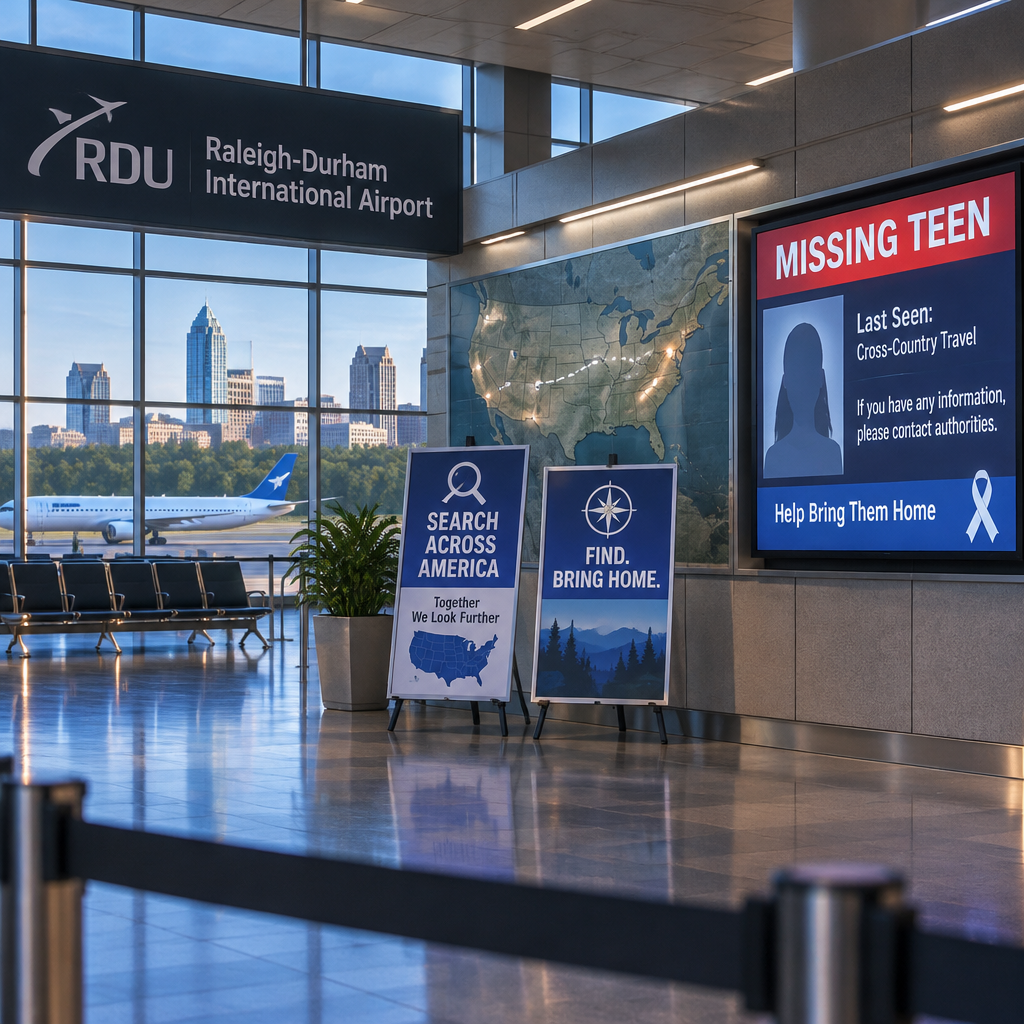
The location became clearer on Friday. Law enforcement announced that she had flown to Raleigh-Durham International Airport in North Carolina and had been picked up by someone whose identity investigators had not determined at that point. Later that evening, the family learned she had been found at the Raleigh airport with a man who was arrested. Officials had not released his name or described his relationship to her. The family also did not know whether he had been trying to put her on another flight.
Those are the reported facts. They do not establish a motive, an online grooming allegation, or the circumstances of the arrest. The distinction is not pedantic. An arrest means a person was taken into custody; it does not, by itself, establish guilt or explain what investigators believe happened. The teenager’s account, any charges, and further information from law enforcement were not included in the report.
The family’s account provided context for the investigation, not proof of a particular explanation. Relatives said she had been gaming more often and staying up into the early morning. After she disappeared, they noticed late-night DoorDash meals and gifts they believed came from someone she had spoken with while playing Fortnite. They also said material had been deleted from her PlayStation. Those details may matter to investigators, but the report did not confirm who sent the food, who deleted anything, or whether those events were connected to her trip.
The Online Clues—and What They Do Not Prove
The online details understandably drew attention. A teenager gaming late at night, receiving food deliveries, and then traveling across the country is a sequence that raises questions. It is not, however, a complete chain of evidence. The family believed the gifts were linked to someone she knew through Fortnite; investigators had not publicly confirmed that interpretation or identified a person behind the deliveries.
That restraint is important. Online games and chat services can create opportunities for people to meet, talk, and build trust. They can also be used innocently by friends and classmates. The existence of a gaming connection alone does not demonstrate exploitation, coercion, or criminal intent. In this case, the known facts do not establish that the man arrested was the person from the game, the person who arranged transportation, or the person who sent food.
The same caution applies to the PlayStation. Relatives said items had been deleted from the device when they searched for clues. The report did not say what was deleted, when it disappeared, who removed it, or whether investigators recovered it. Deletion can have many explanations, and a family’s discovery cannot substitute for a forensic examination. It is a lead to check, not a verdict.
The National Center for Missing & Exploited Children describes online enticement and related risks, but general information about those risks cannot be used to label a particular person or case. There is also a difference between a young person choosing to travel and an adult arranging, facilitating, or pressuring that travel. The available report did not answer which, if any, of those circumstances applied.
Frankly, the most responsible reading is also the least sensational: the online activity may help explain how the teenager connected with someone, but officials had not publicly said that it explained her departure. Investigators would need to establish who communicated with whom, what was said, and whether those conversations had any bearing on the trip. Until then, it is fair to ask questions and unfair to supply answers the evidence has not supplied.
For families facing a missing-child emergency, NCMEC says to contact local law enforcement promptly. Its missing-child guidance explains how families can seek assistance, and the CyberTipline accepts reports about suspected online child exploitation. These resources are not evidence that exploitation occurred in this case; they are avenues for reporting concerns when facts warrant it.
Timeline: From Auburn to Raleigh
- Wednesday morning: A routine school stop. The teenager’s father dropped her at West Auburn High School so she could complete paperwork that would let her work longer hours. The report did not say exactly when she left the school or whether anyone saw her depart.
- Wednesday afternoon: The family reports her missing. She did not meet her sister at the school as planned. Her family contacted authorities and began trying to establish where she had gone. The first essential task was to determine whether she was still nearby or had traveled.
- The investigation identifies Sea-Tac. The King County Sheriff’s Office found that she had used a ride-share service to reach Seattle-Tacoma International Airport. Restaurant surveillance video showed her getting into a car. At that stage, authorities had not publicly established whether she boarded a flight or where a plane might have taken her.
- Friday afternoon: Authorities announce the Raleigh flight. Law enforcement said she had flown to Raleigh-Durham International Airport and had been picked up by a person whose identity they could not yet determine. That announcement placed the search hundreds of miles from Washington but did not explain who had met her or what had happened after she arrived.
- Friday evening: The family learns she has been found. Relatives were told she was at the Raleigh airport with a man who was arrested. They did not know whether he had planned to put her on another flight. The family said it had not yet received information about her physical condition, and her mother began arranging travel to North Carolina.
- After the recovery: Questions remain open. The report did not provide the teenager’s account, the man’s identity, the reason for his arrest, or any charges. It also did not establish whether the person who met her after the flight was the same person described by the family as a possible gaming contact. I read the timeline as a strong account of her location—not yet a public account of the full circumstances.
The family’s reaction was immediate and emotional. In a call minutes after learning she had been found, one relative said the family was “very emotional” and had been praying for a safe return. They thanked people who shared posts about the disappearance, saying the public attention helped. That is the family’s assessment; the report does not quantify how any particular post affected the investigation.
Confirmed Route Versus Unanswered Travel Questions
The known journey and the possible next step should not be blurred together. One part of the route was supported by the investigation’s public statements; another was still an open question when the family spoke with KING 5. A table helps keep those categories separate.
| Confirmed or reported route | Unresolved travel questions |
|---|
| The teenager was in Auburn and was expected at West Auburn High School to meet her sister. | The report did not establish when she left the school or who, if anyone, accompanied her before the ride-share trip. |
| The King County Sheriff’s Office found that she used a ride-share service to reach Sea-Tac. | The public account did not identify the driver or explain whether the driver knew her destination or circumstances. |
| Restaurant surveillance showed her getting into a car near the airport. | The video, as described in the report, did not by itself show what happened afterward or establish who arranged the trip. |
| Authorities said she flew to Raleigh-Durham International Airport. | The report did not identify the flight, who purchased the ticket, or whether anyone helped her board. |
| She was later found at Raleigh airport with a man who was arrested. | Officials had not publicly identified him, described his relationship to her, explained the arrest, or confirmed whether another flight was planned. |
Here’s the kicker: a confirmed destination does not settle the question of how a trip was arranged. A passenger can travel on a ticket bought by someone else, buy a ticket independently, or receive help without the public record yet showing which happened. This report did not specify who booked or paid for the flight, so any claim about that detail would go beyond what was known.
Nor does the table establish that every unanswered point is suspicious. Some are ordinary gaps in an early public account; others may be part of an active investigation. Police may withhold information to protect a minor, preserve evidence, or avoid compromising investigative work. The report did not say which explanation applied here. It is better to state that information was not released than to invent a reason for its absence.
That is also why the arrest should be reported precisely. The man was arrested, according to the account, but no charge or court record was described. The public should not treat an arrest as a conviction, nor should it assume that officials had concluded every element of the teenager’s travel. Careful language is not a favor to one side. It is the minimum standard owed to the teenager, her family, and anyone whose conduct is being discussed.
Common Misconceptions and What to Know
Misconception: The teenager’s gaming contact has been identified. The family believed she had been talking to someone on Fortnite and that late-night food deliveries were connected to that contact. The report did not confirm the person’s identity, establish who paid for the meals, or connect that person to the man arrested. A family’s reasonable concern is important, but it remains different from an investigative finding.
Misconception: The arrest proves the man was taking her onto another flight. The family said it was unclear whether he was trying to get her on another flight. Officials had not publicly explained the arrest or described a further travel plan. The possibility was a question, not a confirmed event. Treating it as fact would turn uncertainty into a false allegation.
Misconception: Deleted files reveal what happened. Relatives said material had been deleted from the PlayStation. That detail may be useful to investigators, but the report supplied no technical findings about the device. It did not say what was removed, by whom, or whether the content related to the disappearance. Online and device evidence needs context, not guesswork.
Misconception: A viral post necessarily solved the case. The family thanked people who shared information and said that attention helped bring the teenager home. Their gratitude deserves respect. But the report did not describe which posts were shared with investigators, whether a specific tip led to the discovery, or how the search team located her. Public sharing can raise awareness; it can also spread outdated locations, private details, and rumors. When a family is searching for a child, accuracy matters more than reach.
Misconception: Being found means the family immediately knew she was physically well. The relatives said law enforcement had not yet told them her physical condition at the time they learned she had been found. Their relief was real, but the report did not provide a medical assessment or the teenager’s own account. “Found” is a crucial development; it is not a complete update on health or wellbeing.
Misconception: Online gaming itself explains the disappearance. Millions of people use games to talk with friends, and the presence of a gaming account does not establish danger. The concern here arose from the family’s specific observations after the teenager went missing. Even so, the facts available publicly did not show that Fortnite caused the trip or that a crime began there. A careful investigation can take online contact seriously without condemning every player or platform.
The FBI and child-safety organizations publish material about online risks, including the FBI’s information on sextortion. That subject should not be projected onto this case: the report did not mention sextortion. Broader guidance can help families recognize warning signs, but it cannot replace case-specific evidence. The teenager’s dignity and privacy matter as much as the public’s appetite for details. Responsible attention serves the common good; turning a minor into a mystery for strangers does not.
Frequently Asked Questions
Where was the Auburn teenager found?
She was found at Raleigh-Durham International Airport in North Carolina on Friday evening, according to the account reported by KING 5. Authorities had said earlier that she flew there from the Seattle area and was picked up by someone whose identity they had not determined at that time. The family later learned she was at the airport with a man who was arrested. The report did not provide a later location or a medical update.
How did investigators trace her trip?
The King County Sheriff’s Office found that she used a ride-share service to get to Seattle-Tacoma International Airport. Surveillance video from a nearby restaurant showed her getting into a car. Officials later announced she had flown to Raleigh-Durham International Airport. The public report did not explain how investigators identified the specific flight, who bought the ticket, or who arranged the trip.
Was the arrested man identified as someone she met on Fortnite?
No such identification was reported. The family believed she had been communicating with someone through Fortnite and linked that contact to late-night food deliveries, but law enforcement had not publicly identified the man or described his relationship to the teenager. The report also did not establish that he was the person from the game. Those are separate questions, and the available facts do not answer them.
What should a family do if a child goes missing?
Contact local law enforcement promptly and share accurate information about the child’s last known location, recent contacts, and any immediate safety concerns. NCMEC offers guidance for families of missing children; suspected online child exploitation can be reported through its CyberTipline. In an immediate emergency, call emergency services. Families should preserve relevant messages or device information when safe to do so, rather than posting unverified accusations or trying to investigate a potentially dangerous situation alone.
Final Thought
The outcome families hope for arrived: the teenager was found. But the public account still leaves major questions unanswered, including how the flight was arranged, who met her, why the man was arrested, and what the teenager herself says happened. Until officials release more information, those gaps should remain gaps—not invitations to fill in a dramatic story.
I have analyzed enough breaking-news accounts to know that the first details often travel faster than verified explanations. A school stop, a ride-share, a flight, a gaming contact, and an arrest can be assembled into a neat narrative before investigators have said how those facts connect. That neatness is tempting. It is also dangerous, particularly when a minor’s identity and safety are involved. The facts deserve attention; the teenager deserves room to return home without strangers deciding what her experience must have been.
The family’s gratitude to those who shared the missing-person information is understandable. So is the public’s wish to help. The useful response is to share verified alerts while they are current, send credible tips to authorities, and resist reposting private details or unconfirmed claims. That is practical stewardship of attention, not passivity. It recognizes that a child’s dignity is not the price of public curiosity.
For now, the most accurate account is simple: a 16-year-old from Auburn was reported missing, traced through an airport journey to North Carolina, and found at Raleigh-Durham International Airport with a man who was arrested. The rest remains under investigation or was not reported. That may feel incomplete. It is still more honest—and more useful—than pretending to know what has not been established.
