A teen is dead in Belltown.
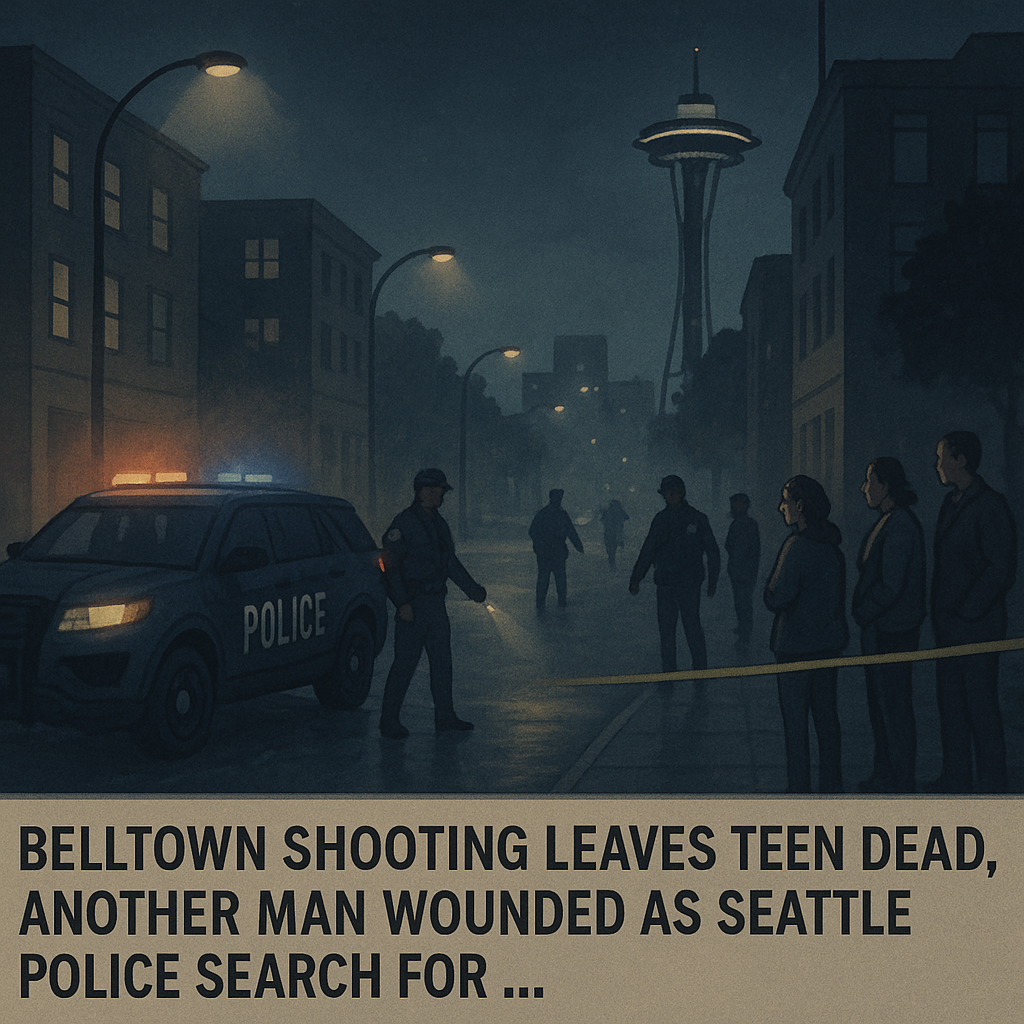
Belltown Shooting Leaves Teen Dead, Another Man Wounded as Seattle Police Search for Suspects
A teen is dead in Belltown.
Seattle’s latest gun crime in the neighborhood has left a 17-year-old killed and another man injured, while police say no suspects are in custody. The facts are blunt, and they matter. A shooting in a dense downtown district is not just another local headline; it is a test of public safety, police response, and the city’s ability to protect people who live, work, and pass through the area.
Key Takeaways- A 17-year-old was killed in a Belltown shooting.
- Another man was injured.
- Seattle Police say no suspects are in custody.
- The case adds pressure on downtown safety policy and violence prevention.
- The real issue is not the headline alone, but whether the city can reduce repeat violence.
What is the Belltown shooting?
It is a fatal gun attack in one of Seattle’s busiest neighborhoods.
Belltown sits near downtown, packed with apartments, restaurants, bars, hotels, and foot traffic, so when gunfire erupts there, the shock spreads fast, and frankly, the pattern raises hard questions about how public space is being used and defended. According to the Seattle Police Department, the shooting left one teenager dead and another man wounded, with no arrests announced at the time of reporting. That is the basic frame, but the deeper issue is more unsettling: a city block can become a crime scene in seconds, and the people caught there are left to absorb the damage.
I have covered enough violent crime reporting to know that early accounts often miss the larger point. Everyone focuses on the immediate scene, the tape, the sirens, the first police statement. Fine. But the bigger question is why these episodes keep happening in the same urban corridors, where nightlife, street disorder, and weapon access intersect. The city cannot paper over that with slogans. It needs facts, enforcement, and serious violence reduction efforts.
There is also a moral layer here that gets ignored. A 17-year-old is not “just” a statistic. He is a young human being with unfinished obligations, unrealized work, and a family now facing grief that no press release can fix. Catholic teaching keeps this simple: human dignity is not abstract, and the common good is not a talking point. A city that accepts routine gunfire is failing stewardship in the most literal sense.
Core Details and Context
- Location: Belltown, Seattle.
- Victims: One 17-year-old killed, one adult man injured.
- Suspects: None in custody, according to police.
- Agency: Seattle Police Department.
- Case status: Active investigation.
The city has spent years debating downtown public safety, but the public keeps getting the same reminder: disorder does not stay contained. It spills into sidewalks, parking lots, transit stops, and storefront corridors. Belltown is especially exposed because it is both residential and commercial, with late-night traffic and a constant churn of people. That mix can make routine policing harder, and when violence hits, it tends to attract attention from residents who feel they are being asked to endure the costs while leaders argue over framing.
Let’s be real. The phrase “no suspects in custody” does not mean nothing happened. It means the work is still open, and often the hardest part is witness cooperation. In urban shootings, people may be reluctant to speak, cameras may not capture enough, and suspects can vanish quickly into a grid of side streets and buildings. That is why investigations depend on swift canvassing, shell-casing recovery, video review, and public tips.
The injury to the second man matters too. Nonfatal shootings often reveal as much as homicides about local violence patterns, because they show where disputes escalate and how quickly a weapon becomes the final argument. Most news coverage treats the fatality as the whole story. It is not. The wounded survivor may have key details, or he may be part of the same conflict chain. Investigators will sort that out.
For readers tracking other Seattle public-safety stories, this case fits a wider pattern of concern around downtown disorder, police staffing, and city response. Related coverage on broader city policy and crime pressure appears in reports like Seattle Times local news coverage, KOMO News local reports, and FOX 13 Seattle updates. Different outlets frame it differently, of course. That is journalism. The facts still land the same.

Timeline and Step-by-Step
- Gunfire is reported. Residents, pedestrians, or nearby businesses call 911 after hearing shots or seeing people down. In a place like Belltown, those calls can come from multiple directions at once, which helps dispatch but also creates noise for investigators.
- Officers secure the scene. Police establish a perimeter, look for victims, and check whether suspects are still nearby. If the shooter has fled, the area shifts from emergency response to evidence collection.
- Victims are treated. One victim in this case, a 17-year-old, died. The other man was injured. Medical response is crucial because in gunshot cases, minutes matter. There is no clean language for this; it is trauma, plain and simple.
- Detectives begin the follow-up. They interview witnesses, review video, track ballistic evidence, and look for links to known disputes. I’ve seen cases move fast when someone talks and stall when everyone stays silent. That is the ugly truth.
- Public information is released. Seattle Police confirm the basics: location, victim count, and custody status. Early releases are usually spare for a reason. Facts change, rumors spread, and police would rather be precise than theatrical.
- The search continues. If no suspect is in custody, the investigation keeps running through surveillance footage, phone data, and witness leads. That takes time, and sometimes too much of it.
The sequence sounds routine because, sadly, it is routine. That should bother people more than it does. A city ought to protect its young, its workers, and its strangers with equal seriousness. Instead, Americans get used to headlines that read like weather reports. One more shooting. One more family shattered. One more block with its own memorial candles.
Here’s the kicker: investigations are only one layer. Prevention matters before the shots are fired. That includes visible patrols, quicker intervention in dispute hotspots, and serious attention to youth violence. If a 17-year-old is dead, then every institution that failed to pull him away from harm has a duty to look hard at itself.
Comparison Table
| Factor | Belltown shooting | Typical downtown assault case |
|---|
| Victim impact | One teen killed, one man injured | Often nonfatal or isolated injury |
| Public visibility | High, due to dense nightlife and foot traffic | Moderate to high |
| Police urgency | Very high | High |
| Community reaction | Strong concern, broader safety fears | Localized concern |
| Policy pressure | Intensifies debate on downtown safety | Usually limited to one incident |
| Long-term effect | Can shape citywide crime discussion | Usually fades faster |
The comparison tells you something important. A fatal shooting in Belltown is not just another incident in the queue. It becomes a symbol, whether people like it or not. That is because downtown violence affects more than direct victims. It influences business confidence, tourism, transit use, apartment demand, and public trust. Business owners see the risk. Parents do too. Workers do as well.
Seattle’s response, then, has to be more than optics. It should include targeted enforcement, better lighting where needed, real cooperation with prosecutors, and honest data about what is and is not working. Any serious policy has to respect human dignity while also protecting ordinary people trying to live their lives. That balance is not optional.
Note: Insert another internal link here if available.
Common Misconceptions and What to Know
The first misconception is that a downtown shooting is somehow isolated from the city’s broader crime picture.
It is not. Violent incidents in high-traffic neighborhoods can reflect the same problems seen elsewhere: gun access, conflict escalation, repeat offenders, weak deterrence, and the failure of institutions to interrupt risk early enough. If you pretend this is only about one intersection, you miss the pattern.
The second misconception is that police silence means police are doing nothing.
Usually, that is wrong. In active investigations, detectives often hold back details to preserve witness credibility and avoid tipping off suspects. That frustrates the public, sure, but it is not proof of inaction. The trick is whether the department can move from initial response to meaningful progress without letting the case go cold.
The third misconception is that urban gun violence is inevitable.
No, it is not. That fatalism is lazy. Cities make choices through policing, zoning, youth services, prosecution, mental health response, and street-level design. Not all violence can be prevented, but pretending nothing works is an excuse, not an analysis.
The fourth misconception is that only the victim count matters.
Wrong again. The condition of the wounded man, the time of day, witness availability, and the location’s history all matter. So does the age of the person killed. A 17-year-old dead in a city street is not a footnote. It is a warning.
Let’s be frank. News consumers are often fed comforting simplifications: bad person, bad place, move on. Real life is messier. A shooting usually sits at the intersection of personal conflict and social breakdown. That does not erase responsibility. It sharpens it.
When I analyze cases like this, I look for three things: whether police identify suspects quickly, whether the city can prevent retaliation, and whether officials talk honestly about neighborhood risk instead of hiding behind statistics. Numbers matter, but they must serve truth, not spin.
Frequently Asked Questions
What happened in Belltown?
Seattle Police say a shooting in Belltown killed a 17-year-old and injured another man. No suspects were in custody at the time of reporting.
Is the shooting being investigated as a homicide?
Yes, fatal shootings are typically investigated as homicides until the facts show otherwise. Detectives will review evidence, witness statements, and any surveillance footage.
Why does Belltown keep appearing in safety reports?
Because it is a dense downtown neighborhood with heavy foot traffic, nightlife, housing, and transit activity. That mix can make it vulnerable to street crime and fast-moving violent incidents.
What should residents do if they have information?
They should contact Seattle Police or submit a tip through official channels. In cases like this, even a small detail can matter.
Final Thought
A city reveals itself in moments like this.
Not in the speeches, not in the polished plans, not in the tired claims that “something is being done,” but in whether it can keep a teenager alive on a city block and still call itself safe, just, and decent. The shooting in Belltown is a human tragedy first, but it is also a test of civic responsibility, and those are the kinds of tests that do not grade on a curve.
People deserve streets where they can walk without fear. They deserve police work that moves with discipline. They deserve officials who tell the truth about violence instead of sanding off the sharp edges. Most of all, they deserve a public order that recognizes the worth of each person, because once a city gets casual about the death of the young, it has already started to lose more than one life.