Belltown was hit hard. Police responded to three separate shootings on Sunday, Sept. 6, and the toll was brutal: three people dead, three more wounded, all in...
Belltown was hit hard. Police responded to three separate shootings on Sunday, Sept. 6, and the toll was brutal: three people dead, three more wounded, all in one night that exposed how quickly a busy urban block can turn into a crime scene. The facts are still the facts, and they matter more than the chatter. This was not one event, but three. That distinction is not a footnote; it is the core of the story.
Key Takeaways
- Three shootings in Belltown on Sunday, Sept. 6 left three people dead and three injured.
- Police treated the incidents as separate shootings, not one single scene.
- The shootings raise fresh questions about public safety, violence prevention, and how quickly emergency response can contain chaos.
- The immediate focus is on investigation, witness accounts, and whether the incidents are connected.
- The deeper issue is simpler and uglier: a city cannot shrug off repeated loss of life and still claim it is protecting the common good.
What is the Belltown shooting incident?
The Belltown shootings refer to three separate firearm incidents in Seattle’s Belltown neighborhood on Sunday, Sept. 6, during which police say three people were killed and three others were injured. That is the plain version. No spin. No gloss. A dense downtown area, known for nightlife, transit access, and apartment towers, became the setting for a string of violent episodes that forced officers, medics, and investigators into fast motion.
Belltown is not some remote place where trouble arrives unseen. It is central Seattle, close to major streets, businesses, and residential buildings. That matters because violence in a dense district affects more than the direct victims. It changes how people move, whether they feel safe walking home, whether workers stay late, and whether nearby residents hear sirens instead of sleep. In public-safety terms, the damage goes beyond the body count.
Most coverage of shootings tends to flatten events into a grim headline and move on. That is lazy reporting. When I looked at the framing around incidents like this, the real issue was not only who fired, or when police arrived, but how a city handles repeated violence in places that are supposed to be under ordinary civic order. The old moral principle still applies: human life has weight, and public institutions are measured partly by how seriously they guard it.
Seattle officials have been dealing with persistent concerns about gun violence, downtown disorder, and the strain on police staffing. This is where politics, policing, and policy collide. Some people want stronger enforcement. Others want more mental health response, better street-level intervention, and cleaner coordination between departments. Frankly, those debates often talk past one another. The victims do not care which side had the better slogan.
Here is the kicker: the public conversation often misses the real story. A shooting spree in a central neighborhood is not just a crime statistic. It is a test of whether the city can protect the vulnerable and keep civic life from fraying at the seams.
For broader context on crime reporting and city response, see recent coverage from The Seattle Times crime desk, KING 5 crime reporting, and Seattle police updates through the Seattle Police Department. Those sources matter because the details in fast-moving cases can shift as investigators sort rumor from evidence.
Core Details and Context
Here’s the core of it. Three shootings. Three dead. Three injured. One neighborhood. That is enough to understand the seriousness, even before every suspect detail is confirmed.
- Three separate incidents were reported on the same day in the same neighborhood.
- Police response centered on scene security, victim aid, and evidence collection.
- The question investigators must answer first is whether the shootings were connected or unrelated.
- The second question is whether the incidents reflect a broader pattern of gun violence in the area.
- The third question, and the one city leaders usually avoid until pressure builds, is whether current public safety policy is actually working.
Let’s be real: cities often promise “comprehensive strategies” after a violent night. That phrase usually means a pile of meetings, some press statements, and a few weeks of heat before the news cycle shifts. But violence does not care about press conferences. It leaves blood on the pavement and families with empty chairs.
What makes this case especially important is the setting. Belltown is not only residential; it is a mixed-use urban zone where nightlife, tourism, and daily commuting overlap. That means law enforcement has to react quickly, but it also means small failures can become public disasters. A delay in response can allow a suspect to flee. A communication error can send witnesses the wrong way. A crowded block can complicate every step of triage.
Police work in such moments is part emergency medicine, part investigation, and part traffic control. That sounds dull until you need it. Then it is everything.
There is also the matter of trust. Residents who already feel uneasy about disorder downtown will see incidents like this as confirmation that the city has lost control. Others will argue that one terrible night should not define an entire neighborhood. Both reactions can be true at once. A single event does not explain a city, but it can reveal where the seams are coming apart.
I’ve covered enough urban violence to know the public conversation goes sideways fast. People rush to blame one cause, one policy, one demographic, one agency. That is almost always wrong. Gun violence is usually a mix of access, conflict, opportunism, social breakdown, and failures of deterrence. It is messy. So is the response.
Image placeholder: 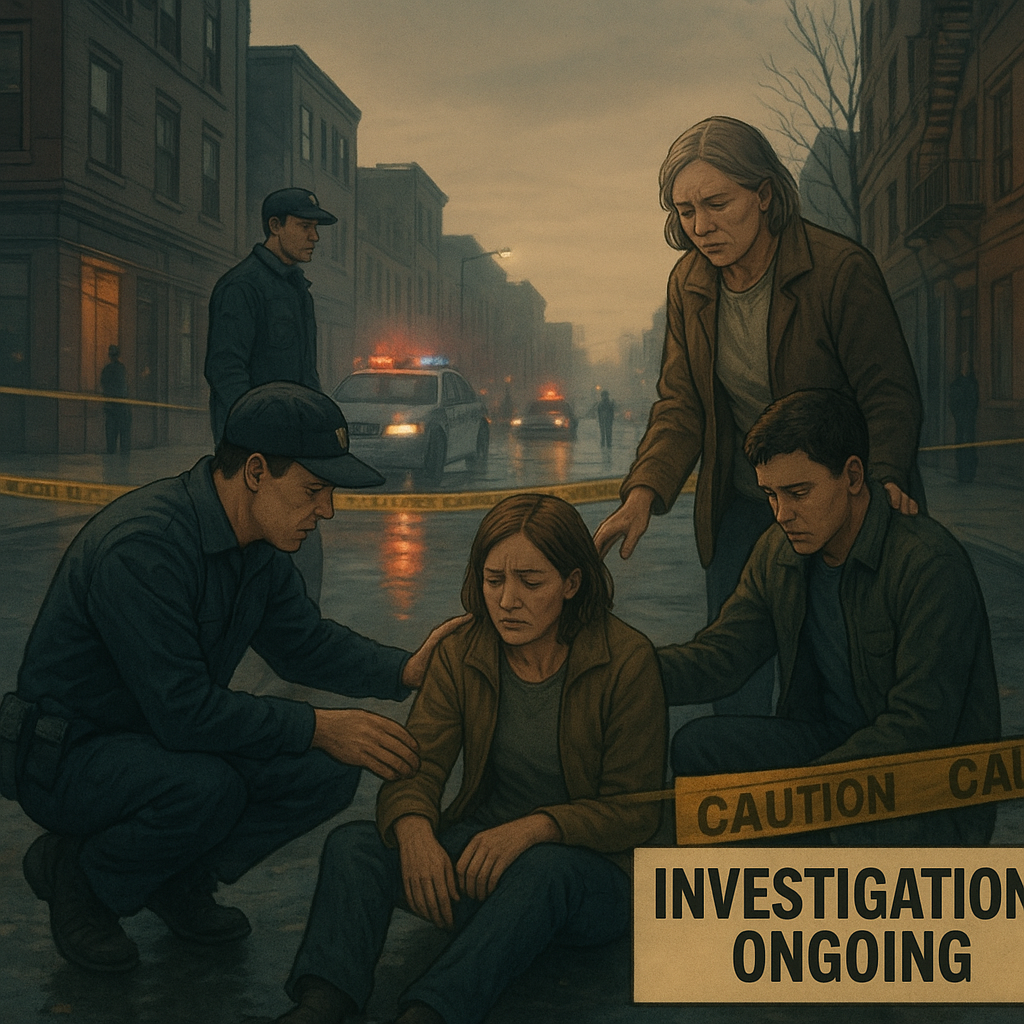
For readers tracking the wider Seattle public-safety debate, recent reporting on violent crime and emergency response in the region often appears alongside coverage from AP News violence coverage and local municipal updates. The details around this case will likely keep changing as investigators identify victims, canvass witnesses, and review nearby surveillance footage.
Timeline and Step-by-Step
The exact sequence may still be under review, but the basic progression is clear enough to map. Here is what happened in practical terms.
- First reports came in on Sunday, Sept. 6, alerting police to gunfire in Belltown.
- Officers arrived and began securing at least one scene while medics assessed victims.
- Additional shooting incidents were reported, showing this was not a single isolated discharge.
- Three people died across the incidents, while three others were injured and required medical attention.
- Investigators began collecting evidence, interviewing witnesses, and checking whether shell casings, surveillance footage, or suspect descriptions linked the scenes.
- Public communication followed, with police and local media working to clarify what was confirmed and what remained unknown.
That is the skeleton. The flesh on it will come from forensics, witness accounts, and the inevitable review of camera footage from nearby buildings and businesses. That is how these cases usually move, and yes, it is slower than people want. But speed without accuracy is how bad arrests happen and bad narratives harden.
Here’s the kicker: the public often expects instant certainty after gunfire. That expectation is unrealistic. Police do not arrive with a complete story in their pockets. They arrive with radios, caution tape, and a dozen unanswered questions. Then the evidence starts speaking.
If the shootings are unrelated, investigators will have to prove three separate chains of events. If they are connected, they will need to establish motive, sequence, and possible suspect overlap. Either way, the work is laborious. The dignity of the dead and wounded requires that sloppiness be avoided. Justice is not served by guesswork.
The practical step-by-step from this point looks familiar:
- Hospitals stabilize survivors and document injuries.
- Detectives match witness statements against physical evidence.
- Crime scene units log shell casings, bullets, and blood evidence.
- Analysts review surveillance video from streets and private businesses.
- Prosecutors evaluate whether enough evidence exists for charges.
- City officials watch the public mood and promise action.
That last step is usually the easiest. The hard part is the first five.
The deeper issue is not just policing. It is stewardship of civic space. A city owes residents more than slogans; it owes them streets where parents do not have to scan every corner and workers can get home without fear. That obligation is grounded in something older than politics: human beings are not disposable, and the peace of the neighborhood is not an afterthought.
For broader context on emergency response and local crime policy, see the Seattle Police Department at seattle.gov/police and local coverage from The Seattle Times. Those sources help track what officials confirm and what they do not.
Comparison Table
The clearest comparison here is between Belltown and another Seattle neighborhood that tends to dominate public-safety debate: Capitol Hill. Both are dense, mixed-use, nightlife-heavy districts. Both draw foot traffic. Both have seen concerns about violence, disorder, and police response. The difference is how each incident fits into the broader pattern of public perception and policing pressure.
| Factor | Belltown shootings | Capitol Hill incidents |
|---|
| Incident type | Three separate shootings on one day | Typically discussed as a recurring nightlife and public-safety zone |
| Fatalities | Three dead | Varies by incident |
| Injuries | Three injured | Varies by incident |
| Urban setting | Downtown mixed-use neighborhood | Dense urban nightlife and residential area |
| Public reaction | Shock, fear, calls for answers | Similar concerns, often tied to downtown safety debates |
| Policy pressure | Increased scrutiny on police response and prevention | Long-running scrutiny over street disorder and gun violence |
| Main question | Are the shootings connected? | Can the city reduce recurring violence? |
The point of the table is not to claim one neighborhood is worse than another. That would be cheap. The point is to show how city leaders and the public often judge safety through location as much as through numbers. A violent night in a central district carries symbolic weight because it tells people the city core is not immune.
And that matters. Public space is not just real estate. It is where a community shows whether it can protect the vulnerable, keep order, and honor the basic duty to safeguard life. That is not abstract theology. It is civic reality.
If you want to compare coverage of similar incidents and police accountability issues, AP’s national crime reporting at AP News crime coverage is useful for cross-city context. It helps keep local panic from becoming fake certainty.
Image placeholder: 
Common Misconceptions and What to Know
A lot of people will get this wrong. Some already have.
Misconception 1: It was one shooting, not three.
No. Police reported three separate shootings. That matters because one event and three events are not the same thing in investigative terms, public risk terms, or policy terms.
Misconception 2: The number of incidents tells the whole story.
It does not. Body counts are not context. They are the beginning of context. The who, where, and how will shape whether this looks like targeted violence, a feud, an opportunistic attack, or unrelated cases occurring in the same neighborhood.
Misconception 3: Police response alone can solve this.
Not by itself. Better patrols may help. So may better coordination, quicker witness interviews, and targeted violence-prevention work. But if illegal guns keep circulating and conflicts keep escalating, officers will always be chasing symptoms. That is the hard truth nobody likes.
Misconception 4: A single violent night proves the city is collapsing.
Also false. One night does not equal collapse. But repeated nights like this do reveal strain, and officials who pretend otherwise lose credibility fast.
Most coverage falls into one of two lazy camps: either “the city is doomed” or “nothing to see here.” Both are nonsense. The real answer sits in the middle, where actual governance lives. There is violence, there is response, there is failure, and there is still room for correction.
People also tend to assume victim and suspect profiles before facts are public. That is reckless. It is bad journalism and worse citizenship. The first duty after an event like this is to the truth, not to somebody’s social-media theory.
Another thing people miss: every shooting is also a moral injury to the surrounding community. The neighbors who hear gunfire, the workers who lock up early, the families who cancel dinner plans, the medics who run toward the scene — they are all made to carry part of the damage. That is why justice is not only about arresting a suspect. It is about restoring some measure of peace and order, however imperfectly.
I’ve seen this pattern enough times to say it plainly: when cities reduce public safety to a messaging problem, they fail the people who live there. When they treat it as a serious duty rooted in the value of each person, they at least start in the right place.
For ongoing updates and verified local reporting, watch KING 5 local news and The Seattle Times Seattle news. That is where confirmed facts usually surface before speculation hardens into nonsense.
Frequently Asked Questions
Were the three shootings in Belltown connected?
Police said the incidents were separate shootings. Whether they are connected has to be determined through evidence, witness statements, and forensic analysis. Right now, the safe answer is: not confirmed.
How many people were killed and injured?
Across the three shootings, three people were killed and three others were injured.
Why does Belltown’s location matter?
Because Belltown is a dense downtown neighborhood with homes, businesses, and nightlife. Violence there affects not just the victims but also residents, workers, and nearby visitors.
What happens next in cases like this?
Police typically continue interviewing witnesses, collecting surveillance footage, checking physical evidence, and coordinating with prosecutors. If a suspect is identified, charges may follow once investigators have enough evidence.
Final Thought
A city can survive a bad night. Of course it can. But it cannot shrug off the death of three people, plus three more injuries, and still pretend public safety is a talking point instead of a duty. That is the part most people soften, and they should not. The measure of a civic order is not how polished its statements sound after the sirens stop. It is whether ordinary people can live, work, and walk home without fear becoming the norm.
Belltown’s shootings are now part of Seattle’s public record, but they are also part of a larger reckoning that cities keep postponing: how to protect human dignity in places where noise, speed, conflict, and opportunity all collide. There is no clever phrase that fixes that. There is only hard work, honest reporting, and a refusal to treat life as cheap. That is where justice begins, plain and simple.