Bicyclist Killed in Bellevue Crash; Bellevue Way SE and I-90 Ramps Closed
A bicyclist was killed in a crash in Bellevue, Washington, and the incident prompted closures on Bellevue Way Southeast and nearby Interstate 90 ramps. The crash was reported at about 6:35 a.m. The available report does not establish the date, the exact location, how long the closures lasted, or what caused the collision.
What happened in the Bellevue crash?
The information available is brief: a fatal crash involving a bicyclist was reported in Bellevue at approximately 6:35 a.m., and Bellevue Way Southeast and I-90 ramps were closed in connection with the incident. That is the confirmed account provided for this article. It does not say whether the bicyclist was struck by a motor vehicle, whether another road user was involved, or precisely which ramps or stretches of road were affected.
Those gaps matter. A closure notice is not a collision reconstruction, and a preliminary report is not a final finding about responsibility. Until police or another investigating agency releases more information, claims about speed, visibility, traffic signals, road design, impairment, or fault would be speculation. I would not treat early assumptions circulating online as established facts.
The report also omits the crash date. Without it, readers cannot reliably match the item to a particular traffic alert or determine whether an online update is current. Anyone travelling in the area should check the latest information from Bellevue Police and Washington State Department of Transportation traffic updates, rather than rely on a headline that may have been published earlier.
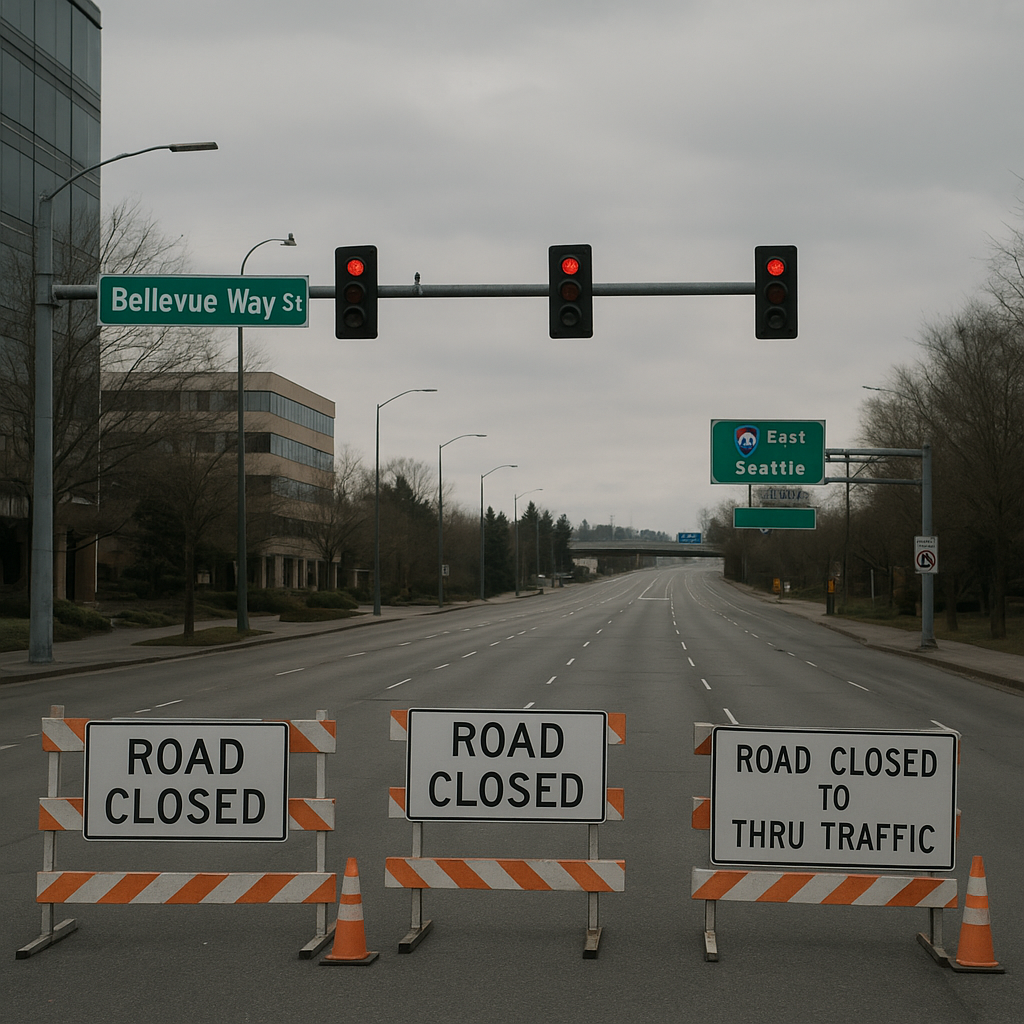
What the available details do—and do not—tell us
The time and road names provide useful context, but they do not answer the central questions. “Around 6:35 a.m.” indicates an approximate report time, not necessarily the exact time of impact. The headline says Bellevue Way Southeast and I-90 ramps were closed, but it does not specify the direction, the boundaries of the closure, or whether traffic was diverted.
Here is what can be responsibly stated:
- Fatality: The supplied report says a bicyclist was killed.
- Reported time: The crash was reported at about 6:35 a.m.
- Road disruption: Bellevue Way Southeast and I-90 ramps were closed in response.
- Unknown details: The cyclist’s identity, the cause of the crash, any other people involved, the duration of the closures, and the status of an investigation are not included.
That distinction between known and unknown is not nitpicking. In serious crashes, early information may change as investigators examine evidence and speak with witnesses. The public deserves accurate information, but a quick answer is not worth a false one. The dignity of the person who died—and the privacy of family members—also calls for restraint before names or personal details are officially released.
For road conditions, WSDOT’s traffic information service provides current travel updates. For general cycling guidance, the agency’s bicycling information and the National Highway Traffic Safety Administration’s bicycle safety resources offer background, not findings about this particular collision.
Timeline based on the report
- About 6:35 a.m.: The crash was reported. The supplied information does not say whether this was the time emergency services were called or the time the incident occurred.
- After the report: Bellevue Way Southeast and I-90 ramps were closed. The available account does not identify the exact closure points or traffic detours.
- Investigation and updates: No investigative findings or reopening time are included in the information provided. Further details should be attributed to the relevant authorities when they become available.
I can establish no more precise sequence from the supplied report alone. That may sound cautious to a fault, but accuracy is the point: filling in missing steps with assumptions would turn a brief news item into an invented account.
Crash facts compared with the missing details
| Topic | Confirmed in the supplied report | Not established by the supplied report |
|---|
| People involved | A bicyclist was killed | Identity, age, or whether anyone else was involved |
| Timing | Reported around 6:35 a.m. | Exact time of collision and date |
| Location | Bellevue; Bellevue Way Southeast and I-90 ramps affected | Exact intersection, direction, or ramp names |
| Cause | A fatal crash occurred | Cause, fault, speed, or contributing conditions |
| Traffic effects | Closures were reported | Closure duration, detours, and reopening time |
There is no “biggest competitor” to compare with an individual crash, and the provided information contains no competing incident data. A side-by-side comparison of two crashes would therefore imply facts that are not available. The table instead separates the reported facts from the unanswered questions.
What readers should keep in mind
A fatal collision can trigger strong reactions before the facts are settled. It is reasonable to ask whether road design, traffic speed, lighting, or other conditions played a role. It is not reasonable to declare that any one of them caused this crash without evidence. Investigators typically need to assess the scene and available records; the exact work in this case has not been described in the supplied report.
It is also easy to confuse a traffic closure with proof about the collision. Authorities may close roads to respond to an emergency, preserve a scene, or manage traffic. The closure itself does not reveal who was involved or what happened.
For drivers and cyclists, the practical advice is simple: follow posted detours and instructions, watch for emergency crews, and do not enter a closed area. WSDOT publishes road-condition information, while Bellevue Police is a relevant public source for local police updates. Neither a general safety page nor an unrelated crash report should be presented as evidence about this event.
The broader stakes are real. A person has died, and the local community has been left with disrupted travel and unanswered questions. Public discussion of road safety is most useful when it is grounded in verified facts and directed toward practical improvements. Stewardship of public roads includes taking the safety of all road users seriously, while treating those affected by a death with care rather than turning an incomplete report into a blame contest.
Frequently Asked Questions
Where did the crash happen?
The supplied report places the crash in Bellevue and says Bellevue Way Southeast and I-90 ramps were closed. It does not identify the exact intersection or ramp locations.
When was the crash reported?
It was reported at about 6:35 a.m. The report does not provide a date or confirm that this was the exact time of the collision.
What caused the bicyclist’s death?
The available information does not state a cause. No claim about fault or contributing factors should be treated as confirmed without an official investigation update.
Are Bellevue Way Southeast and the I-90 ramps still closed?
The supplied report says they were closed, but gives no reopening time. Check current WSDOT traffic updates and local authority information before travelling.
Final Thought
The confirmed facts are brief, and the loss is not. A bicyclist died; a morning crash disrupted traffic on Bellevue Way Southeast and nearby I-90 ramps. Beyond that, the supplied report leaves key questions unanswered. Responsible coverage should make that boundary plain instead of dressing guesses up as reporting.
More information may emerge from authorities, including the exact location, the time sequence, and any investigative findings. Until then, readers should distinguish between what has been reported and what remains unknown. For people travelling through Bellevue, current road alerts matter more than an old closure notice. For the public, accurate updates matter more than a confident theory about blame.
The person who died should not disappear behind traffic maps or speculation. A careful account can acknowledge the disruption, identify the limits of the available information, and leave room for verified reporting to follow. That is not a weak version of the story. It is the honest one.