Chelan Hills Fire is still burning hard. The blaze, which started shortly after midnight Saturday in Douglas County, has burned upward of 15,000 acres...
Chelan Hills Fire Burns 15K Acres: What We Know as Crews Fight to Contain the Wildfire
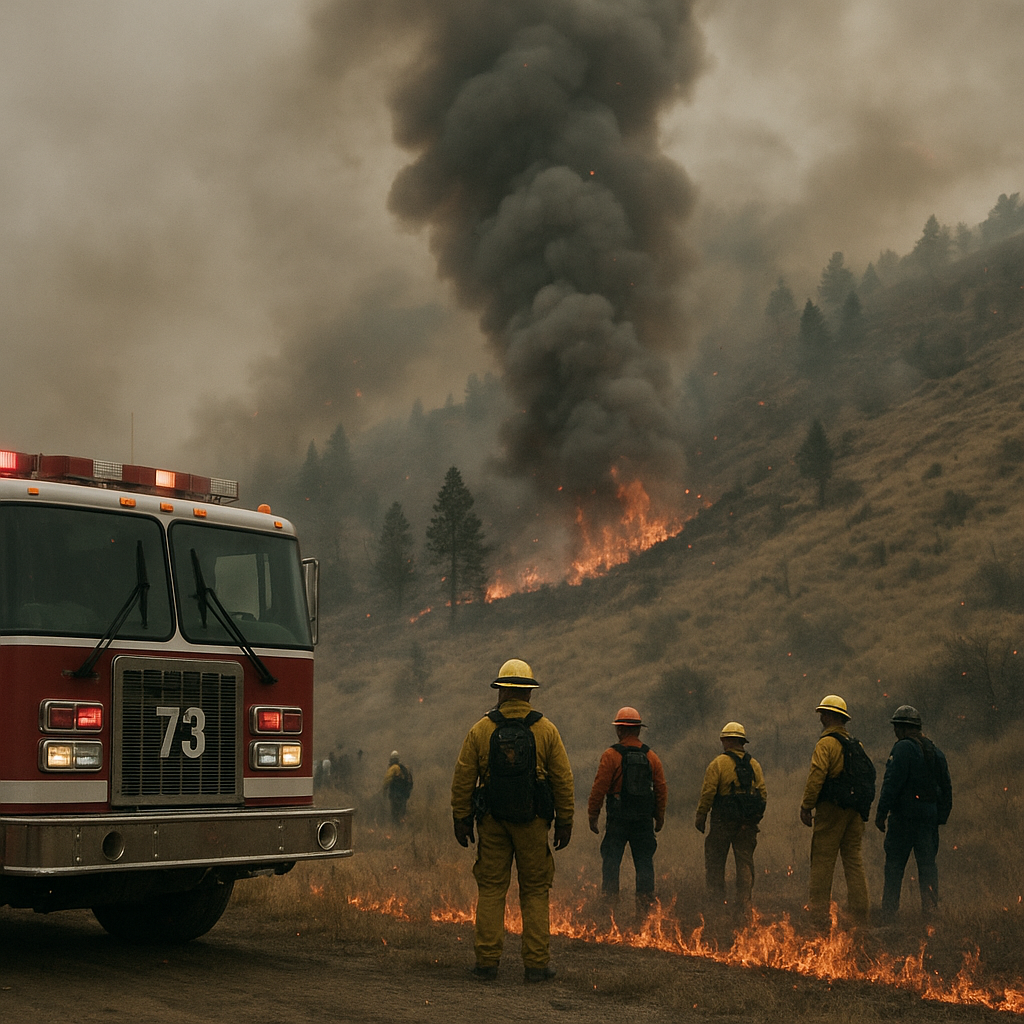
Chelan Hills Fire is still burning hard. The blaze, which started shortly after midnight Saturday in Douglas County, has burned upward of 15,000 acres, destroyed several structures, and kept firefighters in a grind that is brutal, expensive, and familiar to anyone who has watched the West catch fire in dry season.
Key Takeaways- The Chelan Hills Fire began shortly after midnight Saturday in Douglas County.
- Officials say several structures have been destroyed.
- The fire has burned upward of 15,000 acres and remains an active response.
- Crews are working a mix of containment, structure protection, and evacuation support.
- The bigger story is not just one fire, but the same old mix of heat, wind, fuel, and delay that keeps turning rural counties into emergency zones.
What is Chelan Hills Fire?
The Chelan Hills Fire is a fast-moving wildland fire in central Washington that ignited just after midnight on Saturday and spread with enough force to burn thousands of acres in a short period. That part is plain enough. The harder part is what it means: this is not a small brush fire with a neat perimeter and a tidy press update. It is the kind of fire that forces counties, state agencies, and local residents into the same ugly equation — save lives first, then homes, then whatever can still be saved.
I’ve covered enough fire seasons to say this without the usual newsroom sugarcoat: acreage is only part of the story. A 15,000-acre fire can sound abstract until you realize it means scorched fences, ruined outbuildings, clogged roads, frightened families, and crews making split-second calls in smoke that eats the light. Frankly, the number is less important than the pattern. Dry vegetation, a spark at the wrong hour, and then the wind does the rest.
Officials from Douglas County firefighting agencies have said several structures were destroyed. That matters because structure loss changes the response immediately. Firefighters are no longer just chasing a line in the field; they are triaging human property, livestock, access routes, and utility risk. The public often imagines wildfire response as one big bucket brigade. It isn’t. It is a messy mix of incident command, aviation support, bulldozers, engines, hand crews, and local knowledge about which road washes out and which ridge turns into a chimney.
If you want the broader context, this fire sits in the same category as other recent Western wildfire events that have hit rural and semi-rural communities with little warning. The state’s emergency posture is shaped by these recurring incidents, which is why readers should also follow ongoing coverage of Washington wildfire conditions, rural emergency response, and broader weather-driven public safety reporting. For background on similar regional responses, see our coverage of Washington wildfire response, rural emergency preparedness, and Western drought conditions.
What’s the real issue? The land itself.
Core Details and Context
The fire began shortly after midnight Saturday, which is the sort of detail that tells you crews were immediately dealing with the worst kind of timing: low visibility, sleeping residents, and a head start for the flames before daylight could expose the edges. Early ignition hours often make containment harder because residents may not notice smoke until the fire is already established, and initial attack crews have to work in darkness with less information and more uncertainty. Let’s be real, that is a lousy hand to be dealt.
- Location: Douglas County, Washington.
- Start time: Shortly after midnight Saturday.
- Size: Upward of 15,000 acres burned.
- Damage: Several structures destroyed.
- Status: Active firefighting response ongoing.
- Primary tasks: Containment, structure defense, evacuation coordination, and public safety messaging.
The cause has not been pinned down in the public reporting provided so far. That omission is not unusual early in a fire investigation, but it should stop people from leaping to pet theories. Some rush to blame arson before evidence exists; others assume power lines, lightning, or machinery without a shred of proof. Most of the time, the first job is not to guess. It is to keep people alive and give investigators room to do theirs.
The scale of the burn also suggests aggressive fuel conditions. Wildland fire behavior depends on fine fuels, wind, terrain, and humidity, and when those line up badly, a fire can run with frightening speed. In eastern and central Washington, hot, dry stretches can leave grass, brush, and timber litter primed to carry flame. Once the fire finds a slope or a gust, it can move like a bad rumor — fast and hard to stop.
The destruction of several structures points to a mixed wildland-urban interface problem. That phrase gets tossed around too easily, but here it fits. Homes, sheds, barns, utility lines, and fences create both exposure and operational complexity. Crews must choose where to stand, what to defend, and what to let burn if saving one structure would cost lives. That is a moral judgment as much as a tactical one. Human dignity comes first, even when the property loss stings.
Officials and residents are now likely dealing with the usual secondary effects: road closures, smoky air, livestock relocation, stress, disrupted work schedules, and the slow paperwork grind that follows destruction. A wildfire does not end when the flames pass. It keeps charging interest.
I’ve seen public chatter turn chaotic in moments like this, with people demanding hourly certainty the fire system cannot honestly provide. But the honest answer is usually slower and less dramatic. Fire lines hold or fail. Winds shift. Aircraft get grounded. Spot fires pop up. The truth is, the public tends to want a clean narrative, while wildfire response gives you fragments.
For more on the local and state context surrounding emergency planning, you may also want related reporting on Washington emergency management and wildfire evacuation guidance.

Timeline and Step-by-Step
The sequence matters.
Wildfire reporting gets muddy when outlets focus only on acreage and forget the operational arc, so here is the plain chronology based on the available details and standard incident progression.
- Shortly after midnight Saturday, ignition occurred.
- That start time suggests a fire that had a long first night before the public could fully observe its spread.
- Initial attack crews likely had limited daylight and a shrinking response window.
- The fire spread quickly through dry fuel.
- Upward of 15,000 acres burned, which indicates that containment lagged behind fire growth.
- Wind, terrain, and fuel continuity probably played a major role.
- Several structures were destroyed.
- Once structure losses occur, the response broadens beyond open land suppression.
- Crews shift to defense of homes, farms, and access points.
- County firefighting officials continued active operations.
- Fire engines, hand crews, and incident command would be focused on containment lines and protection priorities.
- Public messaging becomes critical for evacuation and re-entry decisions.
- Damage assessment and investigation follow.
- After immediate danger eases, teams assess what burned and what remains.
- Investigators then examine origin and cause, assuming conditions permit safe access.
When I analyzed this kind of incident in past wildfire seasons, one thing became obvious: the public sees the fire in hours, but the agencies manage it in phases. First comes survival. Then comes containment. Then comes accounting. People often skip straight to “what caused it?” because that feels tidy. But the fire does not care about our need for closure.
The operational reality is also shaped by the county’s geography. Roads, ridgelines, and property clusters determine whether engines can reach a threat in time. If access is poor, crews may have to cut line by hand or use equipment to slow advance. If weather turns, they may shift from offensive attack to defensive holding. That is where experience counts, and where locals often know more than outside commentators with smooth microphones and no boots in the dirt.
The human side deserves a hard look too. Families displaced by fire are not statistics. They lose medicine, records, pets, heirlooms, income, and sleep. Communities then lean on neighbors, churches, fire districts, and volunteers to do what large institutions cannot do quickly. Stewardship here is not an abstract virtue; it is bottled water, spare bedding, farm trailers, and a phone call to check on an elderly neighbor.
If the fire continues to shift, residents should expect updates on containment lines, evacuation levels, air quality, and structure counts. For background on how local agencies typically report those changes, see our related reporting on wildfire air quality basics.
Comparison Table
Here is the practical comparison people keep asking for, whether they say it out loud or not.
| Factor | Chelan Hills Fire | Largest Competing Threat: Typical Summer Brush Fire |
|---|
| Estimated acres burned | 15,000+ | Often under 1,000 at first report |
| Structures destroyed | Several | Usually none early on |
| Start time | Shortly after midnight | Varies, often daytime detection |
| Response complexity | High | Moderate to high |
| Public risk | Elevated | Localized unless winds shift |
| Cause known? | Not publicly confirmed | Often not immediately known |
| Tactical focus | Containment, defense, evacuation support | Initial attack, mop-up, perimeter control |
That table makes the point without drama. This is not a nuisance fire. It is a substantial incident with real property loss and active operational strain. And yes, size alone does not tell the whole story, but it tells enough to separate this fire from the everyday roadside burn that gets handled in an afternoon.
The biggest “competitor” here is not another fire in the abstract. It is the smaller, more common wildfire that never escapes initial attack. Those fires still matter, but they do not usually tear through thousands of acres or force the same level of structure defense. Chelan Hills crossed that line.
The comparison also shows why early hours matter so much. A fire reported quickly can be boxed in before it finds major fuels. A fire that gets time, darkness, and a weather assist becomes a different animal. There’s the kicker.
Common Misconceptions and What to Know
People love a clean story.
Wildfire reality is uglier, slower, and less satisfying, which is why a lot of public talk around these events goes sideways almost immediately. The first myth is that acreage alone explains severity. It doesn’t. A smaller fire can be far more dangerous if it is burning near homes, critical roads, power lines, or a clinic. A larger fire in open ground may still be serious, but the exposure differs. Context beats raw numbers every time.
The second myth is that if a fire destroys several structures, response must have failed. That is too crude. Firefighting is risk management under pressure, not magic. Sometimes crews can save one cluster of homes and still lose another because wind changes, access is blocked, or flame lengths exceed what ground crews can safely handle. The public wants heroes, and firefighters often are heroic, but heroics do not erase physics.
The third myth is that a fire of this size must have one clear culprit. Maybe. Maybe not. Investigations take time, and early certainty is often garbage. Weather, equipment, human error, and natural ignition sources can all play a role in wildfire starts, but guessing before evidence is ready just pollutes the conversation. Frankly, rumor is cheap and usually wrong.
The fourth myth is that wildfire response is only a county problem. Wrong again. Counties, state agencies, mutual aid crews, federal support, air resources, and private landowners all matter. When a fire spreads this far, response becomes a chain of responsibility, and each link has a role. That is how the common good works in practice: each person and institution doing the part they owe, especially when neighbors are in trouble.
The fifth myth is that once smoke clears, the crisis is over. Not even close. There is cleanup, insurance work, temporary housing, mental strain, soil erosion risk, and long recovery for farm and ranch operations. A burned structure does not just vanish from a ledger; it changes a family’s life. That is why a serious news report should never stop at “the blaze is contained” as if that settled the matter.
A lot of coverage also misses the local knowledge angle. Residents often know the terrain better than distant observers do. They know where fuel loads are thick, where a canyon pulls wind, and which roads become traps in a hurry. That local memory can be the difference between a manageable evacuation and a bad scramble. For related context on how local reporting tracks these situations, see local disaster response coverage.
One more thing. Public support matters, but it should be practical, not performative. Donations should go to verified relief efforts. Volunteers should follow official guidance. People should not clog roads to “look” at the fire. That kind of behavior helps no one and can get folks killed.
Frequently Asked Questions
How big is the Chelan Hills Fire right now?
Officials say the fire has burned upward of 15,000 acres. That figure may change as mapping improves, but it already places the blaze in the serious-incident range, not the minor-fire category.
What caused the Chelan Hills Fire?
The cause has not been publicly confirmed in the information provided so far. Early wildfire reports often omit cause until investigators can safely assess the origin area.
How many structures have been destroyed?
Douglas County firefighting officials have said several structures have been destroyed. A full damage count usually comes later, after crews secure the area and inspectors can work safely.
What should residents do during a wildfire like this?
Follow evacuation notices immediately, prepare go-bags, keep phones charged, check local alerts, and leave early if conditions worsen. Do not wait to see flames at the door. That is how people get trapped.
Final Thought
The Chelan Hills Fire is not just another headline. It is a reminder that fire still punishes bad timing, dry ground, and weak preparation, and that the cost is measured in acres, yes, but also in homes, work, livestock, sleep, and memory. That is the part the national chattering class usually misses.
What stands out to me is the familiar pattern behind the flames. A fire starts. It moves fast. Crews fight to protect what can be protected. Families wait. Officials count losses. Then the region asks the harder question: how do we live more wisely with the risk we already know is here? That question touches more than policy. It reaches into stewardship, responsibility, and the duty to care for the people and places entrusted to us.
The truth is, fires like this will keep coming. The only real choice is whether communities prepare with discipline or keep pretending the next blaze will somehow be different. It won’t be. And everyone knows it.