A 15-year-old boy died inside a home near Big Creek Road after Kittitas County deputies tried to serve a King County Juvenile Court Services arrest warrant on...
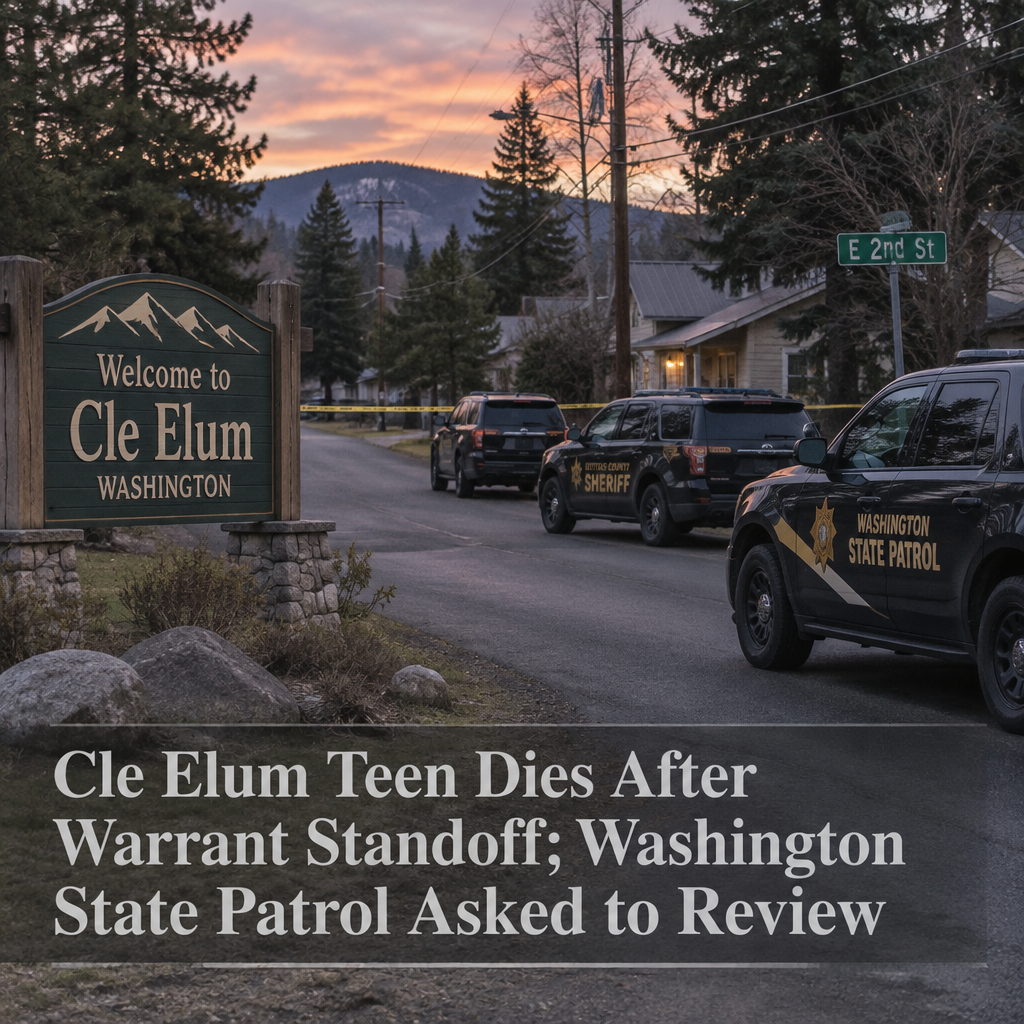
Cle Elum Teen Dies After Warrant Standoff; Washington State Patrol Asked to Review
A 15-year-old boy died inside a home near Big Creek Road after Kittitas County deputies tried to serve a King County Juvenile Court Services arrest warrant on Nov. 9, 2026. The sheriff’s office said communication stopped, negotiators received no response, and no tactical team member fired a weapon.
Key Takeaways- King County Juvenile Court Services asked the Kittitas County Sheriff’s Office to serve the warrant.
- Deputies began speaking with the teenager outside the home at about 11 a.m.; the sheriff’s office said contact later ended.
- A tactical team and crisis negotiators arrived. The team entered the home at about 2:30 p.m. and found the boy dead.
- KCSO said no tactical team member fired a weapon during the standoff.
- KCSO asked the Washington State Patrol to conduct an independent review and document the scene.
The publicly described sequence is stark, but it leaves major questions unanswered. The account does not identify the warrant’s underlying allegation, explain why communication ended, name the teenager, or state how he died. Those details should not be filled in by guesswork.
The review request matters because KCSO is both the agency that described the response and the agency whose actions are part of the sequence under scrutiny. The account says Washington State Patrol was asked to provide an independent review; it does not report findings, a cause of death, or a review timetable. Until those facts are disclosed, precision is more useful than confident speculation.
What happened in the Cle Elum-area standoff?
The incident was a warrant-service operation that ended with a 15-year-old’s death inside a home near Big Creek Road, in the Cle Elum area. According to the Kittitas County Sheriff’s Office, King County Juvenile Court Services asked KCSO to serve an arrest warrant on the teenager, who was staying at the home on Monday, Nov. 9, 2026.
The known chronology begins around 11 a.m. Deputies tried to serve the warrant and spoke with the teenager from outside. At some point, that communication stopped, and he remained inside, KCSO said. The office later obtained a search warrant to enter the home and make the arrest. The report does not say when that warrant was requested or issued, or provide its wording.
A regional tactical response team and crisis negotiators arrived. Negotiators called out to the teenager several times, but received no reply, according to KCSO. The team entered at about 2:30 p.m. and found him dead. KCSO said no tactical team member fired a weapon during the standoff.
That is enough to establish a sequence, not to explain the death. The account does not say whether the boy had a weapon, whether anyone else was in the home, what was said during the initial conversation, or what happened inside before entry. It does not give a cause or manner of death. Those absences are not evidence for any particular explanation.
When I separate the reported facts from the unanswered questions, one point stands out: the public account is narrow, and the independent review has not yet been described in detail. KCSO’s account is the basis for the facts reported here; agency reference points include the Kittitas County website, King County’s website, and the Washington State Patrol website. Those institutional pages do not supply the missing incident details.
Core details and context
The case involves several distinct actions that should not be collapsed into one vague description of a standoff. First, a county juvenile court service asked another county’s sheriff’s office to serve an arrest warrant. Then deputies made contact from outside the residence. After communication ended, KCSO obtained a search warrant to enter the home and arrest the teenager. Tactical personnel and crisis negotiators joined the response. The team eventually entered and found him dead.
Each step raises questions that the public account does not answer. The warrant’s basis is not reported. Nor is the reason the teenager was staying at the home, whether he was alone, or whether anyone had direct contact with him after the first conversation ended. The sheriff’s office has not described the negotiation attempts beyond saying that negotiators called out several times without receiving a reply.
The use of two warrants is also important to describe accurately. The first was an arrest warrant that KCSO was asked to serve. The sheriff’s office then said it obtained a search warrant to enter the residence and make the arrest. The available account does not publish either warrant or explain the legal reasoning in detail. It would be wrong to invent those terms or claim that the public has seen the underlying paperwork.
The statement that no tactical team member fired a weapon is specific and consequential, but it is not a complete account of how the teenager died. It does not establish a cause of death, rule out every possible source of injury, or explain what occurred inside. It tells readers only what KCSO reported about the tactical team’s gunfire. Frankly, that distinction is where careful reporting begins.
The sheriff’s office asked the Washington State Patrol to provide an independent review and document the scene. That request signals that another agency was asked to examine the incident, but the account does not describe the review’s scope, methods, or expected completion date. It does not say whether the review will examine the warrant process, the negotiations, the entry, or other issues. Those specifics remain unreported.
There is also a human fact that should not get lost under procedural language: the person at the center of this event was 15. His age does not answer questions about the warrant or the response, but it does sharpen the public responsibility to report carefully and treat the people involved with dignity. Accountability and respect are not competing goals.
Timeline: what is reported to have happened
- Before deputies arrived: King County Juvenile Court Services asked KCSO to serve an arrest warrant on a 15-year-old boy staying at a home near Big Creek Road. The account does not say what the warrant concerned or when it was issued.
- About 11 a.m. Monday, Nov. 9: Deputies attempted to serve the warrant and began speaking with the teenager from outside the home. The sheriff’s office has not released a transcript or detailed account of the conversation.
- Communication ended: At an unspecified point, contact stopped and the teenager remained inside, according to KCSO. The public account does not explain why the exchange ended or describe any further contact during this period.
- A search warrant was obtained: KCSO said deputies obtained a search warrant to enter the home and make the arrest. The time, application, and specific terms are not reported.
- Tactical and crisis-response personnel arrived: The Kittitas County Regional Tactical Response Team and crisis negotiators joined the operation. Negotiators called out several times and received no answer, KCSO said.
- About 2:30 p.m.: The tactical team entered the home and found the teenager dead. KCSO said no member of the team fired a weapon during the standoff.
- After the discovery: KCSO asked the Washington State Patrol to provide an independent review and document the scene. No findings or timetable are included in the account.
The timeline gives readers a sequence, not a full reconstruction. For example, the reported gap between the initial contact and the entry does not reveal what deputies or negotiators did at every moment. Nor does the approximate entry time establish when the teenager died. I would not treat an unreported interval as proof of delay, escalation, or any other specific event.
The order of events matters because it separates what is known from what might later be established. An arrest warrant prompted the initial contact; a search warrant preceded entry; and the team found the teenager dead after entering. The account does not say that the team caused his death, and it also does not provide a cause that would rule anything in or out. That question requires evidence the public account does not contain.
Comparing the operational response and the independent review
There is no commercial competitor to compare in this event. The useful comparison is between the operational role described for KCSO and the review role requested of the Washington State Patrol. They are different functions, and the available facts support only a limited side-by-side view.
| Issue | Kittitas County Sheriff’s Office response | Washington State Patrol review |
|---|
| Role reported | Asked to serve the arrest warrant; later obtained a search warrant and handled the response | Asked by KCSO to provide an independent review and document the scene |
| Contact with the teenager | Deputies spoke with him from outside; communication later ended | No direct contact with the teenager is reported |
| Tactical activity | KCSO said the regional tactical team entered at about 2:30 p.m. | No operational role during the standoff is reported |
| Negotiations | Crisis negotiators called out several times and received no reply, according to KCSO | No negotiation role is reported |
| Firearms | KCSO said no tactical team member fired a weapon | No findings about firearms are reported |
| Published outcome | The team found the teenager dead inside the home | Review results and timing are not reported |
The table is deliberately spare. It does not claim that WSP has completed an investigation, that the review has a particular legal scope, or that the state patrol will reach a specific conclusion. It records only the review KCSO requested and what the sheriff’s office said about its own team.
The word independent deserves care, too. KCSO described the requested review that way, but the public account does not explain who will conduct it, what records or evidence will be examined, or how findings will be released. Those are reasonable questions for follow-up; they are not answers that can be presumed.
The distinction between an agency’s immediate account and a later review is not a verdict on either. Initial information can establish basic chronology, while later examination may clarify details. The truth is, neither a statement that a review was requested nor the absence of gunfire should be treated as a substitute for findings. The public needs a clear account of what the review covers and what it concludes, when that information is available.
Common misconceptions and what to know
A standoff does not, by itself, establish that the teenager was armed. The report uses the term standoff and says the teenager stayed inside after communication ended. It does not state whether a weapon was present or whether the teenager threatened anyone. A word describing a prolonged encounter is not proof of a particular danger.
No gunfire from the tactical team does not explain the death. KCSO’s statement is important: it said no member of the tactical team fired a weapon. But that fact alone does not identify the cause or manner of death. The report does not disclose those findings, and readers should not turn one narrow statement into a broader conclusion.
An arrest warrant and a search warrant are not interchangeable in the account. KCSO said King County Juvenile Court Services asked it to serve an arrest warrant. It also said the sheriff’s office obtained a search warrant to enter the home and make the arrest. The public has not been given the documents or a detailed explanation of their terms. Calling them the same warrant would blur a distinction the account makes.
The WSP request is not the same as a completed review. KCSO asked the Washington State Patrol to review the incident and document the scene. No findings, report, or timeline are provided. It is too early to say what the review will conclude or whether its scope includes every question readers may have.
The entry time does not tell us when the teenager died. The reported time—about 2:30 p.m.—is when the team entered and found him dead. The account does not establish the time of death. The two facts should not be merged into a claim about when or how the death occurred.
Missing details are not permission to speculate. The warrant’s underlying allegation, the teenager’s identity, the cause of death, any medical response, the presence of other people, and the precise negotiation history are not reported. Some may become public later; some may remain limited for legal or privacy reasons. At this stage, none can be supplied by inference.
Most coverage of a police response is tempted toward a simple verdict: either the operation was justified or it was not. The facts available here do not support either conclusion. A responsible account can state that a teenager died, identify the reported sequence, and insist on a clear review without prejudging its findings. That is not evasive. It is the minimum discipline a serious public record requires.
Frequently asked questions
Why did deputies go to the home?
King County Juvenile Court Services asked the Kittitas County Sheriff’s Office to serve an arrest warrant on the 15-year-old, who was staying at the home. The account does not state the allegation or case behind the warrant.
When did the tactical team enter?
KCSO said the Kittitas County Regional Tactical Response Team entered the home at about 2:30 p.m. on Nov. 9, after deputies obtained a search warrant. The team found the teenager dead inside.
Did a tactical team member fire a weapon?
KCSO said no member of the tactical team fired a weapon during the standoff. That statement does not establish the cause or manner of the teenager’s death, which the account does not report.
Who is reviewing the incident?
KCSO asked the Washington State Patrol to provide an independent review and document the scene. The account does not describe the review’s scope, schedule, or findings.
Final thought. The most solid account of this event is also the least embellished: deputies went to serve a warrant, spoke with a teenager from outside a home, lost communication, obtained a search warrant, and entered with tactical personnel and negotiators. They found a 15-year-old dead. KCSO said its tactical team did not fire, and the sheriff’s office requested a state patrol review.
That sequence is serious enough without decoration. It does not tell the public what the warrant alleged, what happened during the unanswered calls, or what caused the death. It does not establish misconduct, and it does not settle whether every decision was sound. Those judgments require facts that have not been reported here.
The next useful information should be concrete: what the independent review examined, whether its findings will be made public, and what can responsibly be said about the cause of death. Privacy matters, particularly because the person who died was a minor. So does the public’s interest in a fair and comprehensible account of a death during a law-enforcement operation. The two duties can coexist.
A teenager’s dignity is not contingent on the details of an arrest warrant, and public accountability is not served by rumor. For now, the careful course is to preserve the known timeline, leave unknowns plainly marked, and wait for evidence rather than guesswork.