Conco at Ivan Street is a proposed 19,530-square-foot facility for making and storing concrete forms on 9.15 acres in the Grand Mound urban growth area...
Conco at Ivan Street: What Thurston County’s Proposed Facility Means
Conco at Ivan Street is a proposed 19,530-square-foot facility for making and storing concrete forms on 9.15 acres in the Grand Mound urban growth area. Thurston County has received a site-plan application and is reviewing compliance under Washington’s State Environmental Policy Act; the notice describes a proposal, not an approval.
The application describes a 19,530-square-foot metal building, a concrete apron, and a graveled area where concrete forms would be stored. The project narrative says the facility would be used to create and store those forms. It does not report the number of employees, expected truck trips, operating hours, construction schedule, utility demand, project cost, or a decision date. Those omissions are not proof of a problem; they are simply questions the available project description does not answer.
The county’s notice says the applicant is requesting site plan review and review for compliance with the State Environmental Policy Act, commonly called SEPA. Those are review steps, not a permit decision. That distinction matters: a project can be proposed, reviewed, revised, approved with conditions, or denied. Treating an application as a settled development skips the part where officials and the public examine the details.
What Is Conco at Ivan Street?
Conco at Ivan Street is the name of a proposed industrial development at 19332 Ivan St. SW, Rochester. The county notice describes a fabrication facility intended to make and store concrete forms. Forms are temporary molds used to shape concrete while it is placed and cured; the notice does not say what kinds of forms the facility would produce, who would buy them, or how production would be organized.
The proposed building would cover 19,530 square feet. The full property totals 9.15 acres, substantially more land than the building footprint alone, and the narrative identifies two other site features: a concrete apron and a graveled storage area for forms. That difference between building area and total parcel size is useful context, but it does not establish how much land would be paved, how much would remain open, or where each element would sit. Those answers belong in the actual site plans and supporting documents.
The property is zoned planned industrial district and is within the Grand Mound urban growth area. A zoning designation describes the county’s planning framework for land uses; it does not, by itself, prove that a specific proposal meets every applicable requirement. Nor does an urban growth area label mean that the parcel is already inside an incorporated city. It is a planning boundary used to guide expected growth and public services. The exact standards that apply should be checked in county records, rather than inferred from the zoning name.
The application seeks two kinds of review. Site plan review generally examines how a proposed use fits on its parcel and how the design addresses applicable local standards. Depending on the project and county rules, that may involve building placement, access, parking, landscaping, utilities, drainage, and other site features. The precise review criteria for this application are not stated in the brief notice description.
SEPA is Washington’s framework for considering environmental effects of government decisions. It does not automatically prohibit development, and it is not a substitute for local permits. The state Department of Ecology explains the process in its SEPA overview; the rules are set out in Washington Administrative Code Chapter 197-11. What matters here is the eventual county record: the application materials, any environmental determination, public comments, and the decision with its reasons and conditions.
Core Details and Context
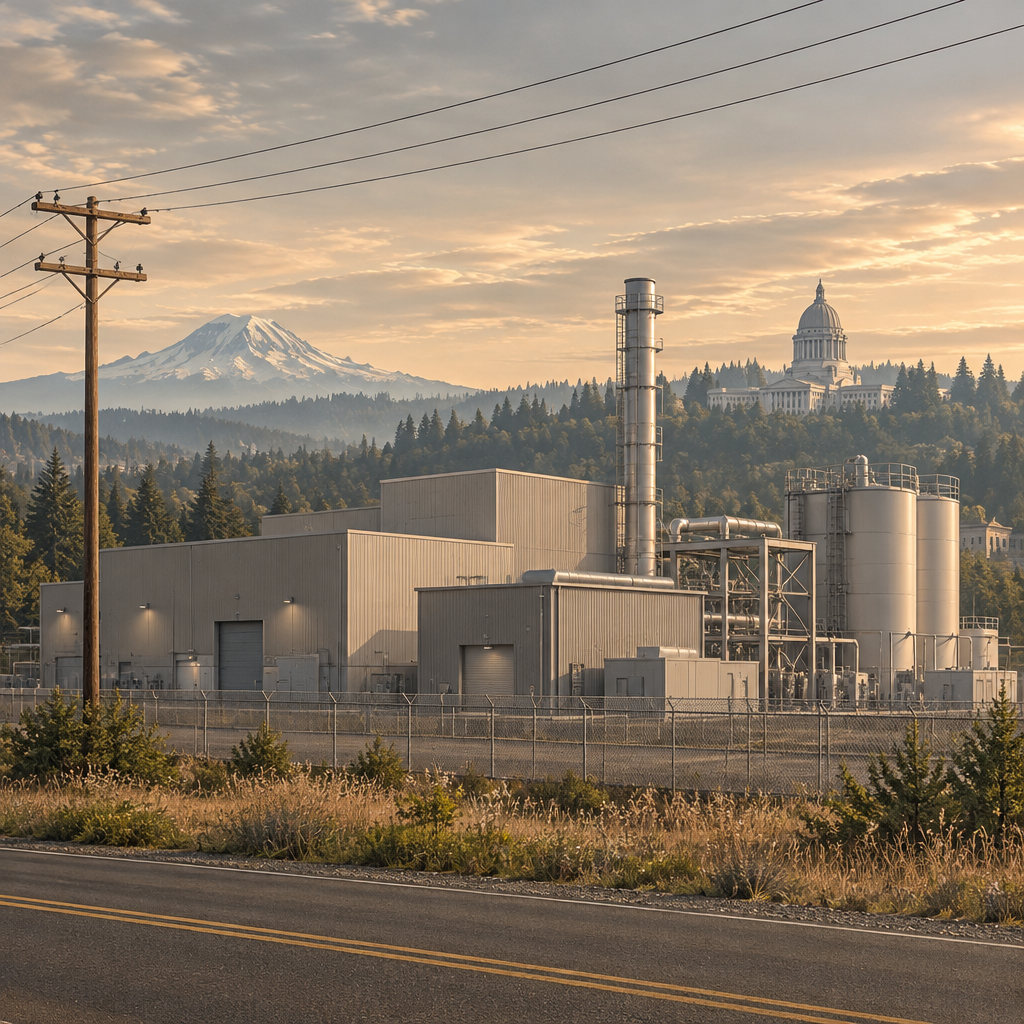
The facts currently established by the notice are limited, but they are enough to frame the main questions. The county says the proposal is for a 19,530-square-foot metal structure, a concrete apron, and a gravel storage area on a 9.15-acre parcel. The intended activity is making and storing concrete forms. The site is at 19332 Ivan St. SW, in the Grand Mound urban growth area, and is zoned planned industrial district.
A building’s floor area is only one part of a site’s potential effects. The apron and storage yard may influence how vehicles move around the property and how stormwater is managed, but the available description supplies no dimensions, drainage design, traffic estimate, or site layout. It would be careless to convert those unknowns into claims about flooding, noise, emissions, or congestion. Those are matters for the plans and technical review to clarify, not conclusions to announce in advance.
The concrete-form use also needs a little precision. The word fabrication can cover different work methods, equipment, materials, and levels of activity. The notice does not identify processes, machinery, chemical use, deliveries, production volumes, or the forms’ intended markets. It therefore does not support claims that the facility would be a high-emission plant, a simple storage warehouse, or anything in between. The project narrative gives the broad purpose, not a full operating profile.
For nearby residents and other interested parties, practical questions include whether access points are adequate, how trucks would enter and leave, what hours the business would operate, and how outdoor storage would be arranged. Other reasonable questions concern water supply, wastewater, fire access, lighting, noise controls, and the handling of runoff from the roof, apron, and gravel areas. Whether every item applies depends on the final plans and county requirements. Asking a specific question is more useful than assuming an answer.
The public process is not a popularity contest. Comments tend to be most useful when they point to a particular plan sheet, location, standard, or potential effect and explain the concern in concrete terms. A nearby property owner might, for example, identify a narrow road segment or a drainage path and ask the county to assess it. That does not guarantee a particular outcome, but it gives reviewers something more workable than a general objection or endorsement.
There is also a basic public-interest question: can an industrial use proceed while protecting neighbors, workers, public services, and natural resources? Those interests are not automatically at odds. Good review should look for a project design that respects the dignity of work and the common good, while requiring the applicant to meet applicable standards. On the facts available, there is no basis to declare either that the project will provide a particular number of jobs or that it will impose a particular burden.
The county’s official site is the starting point for locating its planning services and project records: Thurston County’s website. For the controlling legal framework, the state’s State Environmental Policy Act statute and the SEPA rules are more reliable than broad claims about what environmental review always does. A notice of application begins a public process; it is not the full record.
Timeline and What Happens Next
- The proposal is submitted. The project narrative describes a metal fabrication facility for creating and storing concrete forms. The county notice identifies the requested reviews as site plan review and review for SEPA compliance. The notice does not provide a construction schedule, so no start date can be inferred.
- The county circulates a notice of application. Thurston County Community Planning & Economic Development announced the application. A notice gives the public a concise account of what is proposed and how to comment; it is not necessarily a complete description of every technical detail. I would treat it as a pointer to the county file, not as a substitute for the plans, reports, and review documents.
- Public comments are invited. The notice says comments may be submitted through the county’s Comment on a Project website and gives a deadline of Dec. 3 at 1 p.m. The year is not included in the notice details cited here. That small omission has practical consequences: readers should confirm the date and current status on the county’s live project page instead of assuming that the comment window is open or closed.
- Staff review the application and record. County reviewers assess the materials against the relevant land-use and environmental requirements. The exact sequence, required documents, and schedule depend on the application and local rules. The available project description does not identify a SEPA determination, a hearing date, or a final decision. None should be represented as having happened unless the county record confirms it.
- The county issues a decision or requests further work. Depending on what reviewers find, an application can require revisions, conditions, additional review, or another procedural step. The current notice does not say which path the county will take. If an approval is issued, its terms and any appeal process should be read in the actual decision rather than guessed from the initial notice.
When I analyze a land-use notice, I separate the documented milestones from the expected ones. Submission and notice are documented here. Approval, permits, construction, and operation are not. A project may move through those later steps, but the county record is what will establish whether and when that happens. This is especially important when a short deadline appears without a year in the public-facing details being discussed.
A useful comment can be brief. Identify the project, state the issue, and point to a location, document, or effect that county staff can check. If the concern is truck access, ask about the proposed route and turning movements. If it is drainage, identify the low point, neighboring property, or watercourse at issue. If information is missing, ask whether the county has it in the application file. The goal is a clear record, not a louder argument.
Comparison: Proposed Facility Versus No-Build
The notice provides no information about a competing company or facility, so naming a market competitor would be fiction. The useful comparison for a land-use application is the proposal against a no-build baseline: what the applicant has described, compared with what the notice establishes if this application does not proceed. The baseline below is deliberately limited; the existing use of the site is not described.
| Topic | Conco at Ivan Street proposal | No-build baseline based on the notice |
|---|
| Site | 9.15 acres at 19332 Ivan St. SW, Rochester | Same parcel; current use is not reported |
| Zoning and planning area | Planned industrial district within the Grand Mound urban growth area | Same zoning and planning designation |
| Building | Proposed 19,530-square-foot metal structure | No new building described in this application |
| Other site features | Concrete apron and graveled storage area for forms | No new apron or storage area described in this application |
| Stated activity | Create and store concrete forms | No new activity described in this application |
| Review status | Site plan and SEPA review requested | No project approval is assumed |
| Construction timing | Not reported | Not applicable to this proposal as described |
| Jobs, traffic, utilities, and cost | Not reported | Not quantified in the notice |
The comparison does not establish what is currently on the parcel. No-build means only that this particular application would not go forward as described; it does not mean the land would never be developed, or that another use is permitted. Likewise, the proposed project’s industrial zoning does not settle whether its layout or operations comply with all requirements.
The table also shows why a confident economic or environmental verdict would be premature. The notice states the building size and general use, but it gives no employment estimate, vehicle count, utility demand, operating hours, or cost. Those figures matter if someone wants to weigh the project’s economic contribution against demands on roads and public services. Without them, precise claims in either direction are unsupported.
A genuine competitor comparison would need verified information about another facility serving the same market, including its capacity, location, and operating model. None is identified in the county notice. For a public planning decision, however, the key test is not whether Conco beats a competitor. It is whether the proposed site plan and use meet the applicable rules, and whether any effects can be addressed through design, mitigation, or enforceable conditions.
Common Misconceptions and What to Know
An application is not an approval. This is the most important distinction. A notice that an applicant is requesting review tells the public that a proposal is before the county. It does not mean the county has approved construction, issued every required permit, or concluded that every standard has been met. The decision and any conditions must come from the county’s record.
SEPA review is not a blanket yes or no. Washington’s environmental review law calls for consideration of relevant effects in governmental decisions. It does not mean every project requires a full environmental impact statement, nor does it mean that a project with an environmental review request has already been found harmful. The actual determination, supporting materials, and any mitigation requirements are what matter. The statute is available through the state Legislature’s SEPA chapter, and the detailed procedures appear in the state’s SEPA regulations.
A large parcel does not reveal the final site layout. The site totals 9.15 acres, while the proposed building is 19,530 square feet. That comparison alone does not show how much area would be used for buildings, storage, vehicle circulation, landscaping, or drainage. It also does not establish how much vegetation exists today or would remain. A site plan is needed for those answers.
Industrial zoning does not equal automatic permission. Zoning sets a framework, but projects still face applicable development standards and review. A use can be broadly consistent with a district and still need changes to access, layout, drainage, landscaping, or other details. Conversely, a proposed industrial use should not be described as prohibited just because people dislike it. The record and governing rules should decide the matter.
The words fabrication facility do not tell us how it will operate. The notice says the facility would make and store concrete forms. It does not provide a production process or operating schedule. Assumptions about constant truck traffic, loud machinery, chemical handling, or around-the-clock work are not facts established by the notice. Residents can ask whether the application addresses those topics, but should distinguish a question from a finding.
A public comment is not a vote. The comment process gives people a way to raise relevant facts and concerns. It does not necessarily let the majority decide the outcome by counting support and opposition. The county’s job is to apply the rules and make a decision that can be explained in the record. A concise, evidence-based comment is generally more useful than repeating a position without connecting it to the plans or standards.
Finally, the Dec. 3 deadline should not be treated as current without checking its year and the county’s live record. Public notices are date-sensitive. The county’s project-comment portal is the appropriate place to confirm instructions and status; the main county site is available at thurstoncountywa.gov. If the stated deadline has passed, the record may still be available, but the options for submitting comments could differ. Confirm first.
Frequently Asked Questions
Where is the Conco at Ivan Street project proposed?
The notice places the proposed facility at 19332 Ivan St. SW, Rochester, on a 9.15-acre property in the Grand Mound urban growth area. The site is zoned planned industrial district. Those details identify the parcel and planning context; they do not establish the existing site use or show the final approved layout. The county’s project file is the place to check for maps and application documents.
What would the facility do?
The project narrative says the proposed facility would create and store concrete forms. The notice describes a 19,530-square-foot metal structure, a concrete apron, and a graveled storage area. It does not state the production process, output, staffing, business hours, delivery volume, or the forms’ intended customers. Those details should not be guessed from the word fabrication.
Has Thurston County approved the proposal?
The notice says the applicant is requesting site plan review and review for compliance with SEPA. That is an application-stage description, not evidence of approval. No final decision, permit issuance, construction date, or operating date is reported in the details cited here. Check the county’s current project record for any later determination or decision.
How can people comment, and when is the deadline?
The notice directs people to the county’s Comment on a Project website and gives a deadline of Dec. 3 at 1 p.m. The year is not stated in the notice details cited here, so confirm the date and current submission instructions in the county’s live record. A useful comment identifies the project and raises a specific question or concern tied to the application, a location, or an applicable review issue.
Final Thought
The public record should do the work that speculation cannot. At present, the reported proposal is specific about its basic shape: an industrial parcel, a 19,530-square-foot metal building, a concrete apron, and gravel storage for concrete forms. It is not specific about traffic, employment, utilities, hours, drainage design, or construction timing. Those gaps are not a verdict; they mark the subjects that require documents and review.
That is why the next meaningful development is not another confident prediction about what the facility might become. It is the county’s actual project file: the plans, applicable standards, environmental review materials, comments, staff analysis, and eventual decision. Residents deserve clear information about effects on their property and services. The applicant deserves an impartial review based on rules, not rumor. Workers and the wider community have an interest in both productive employment and responsible stewardship of land and public resources.
The notice gives a Dec. 3, 1 p.m. comment deadline but no year in the details cited here. Verify it before acting. Then read the record, ask targeted questions, and let the evidence—not the label industrial or the mere fact of an application—carry the weight.