A man was hospitalized with life-threatening injuries after a shooting in Fairview early Saturday morning. Anchorage police have said little beyond the basics...
Fairview Shooting Leaves Man With Life-Threatening Injuries: What Anchorage Officials Have Said So Far
A man was hospitalized with life-threatening injuries after a shooting in Fairview early Saturday morning. Anchorage police have said little beyond the basics, and that silence matters. In cases like this, the first report is usually thin, the rumor mill is fast, and the real facts arrive later — if they arrive cleanly at all.
Key Takeaways- Anchorage police said a man was taken to the hospital after an early Saturday shooting in Fairview.
- The victim’s condition was described as life threatening.
- Police have not yet publicly released a detailed suspect description or motive.
- Early reports in shootings often change as investigators sort out witness accounts, evidence, and surveillance video.
- Fairview residents, like anyone living with repeated violence nearby, are left waiting for facts, not theater.
What is the Fairview shooting case?
This is an active Anchorage police investigation into a shooting reported early Saturday in Fairview. A man was found with injuries serious enough that officers described them as “life threatening,” and he was transported to a hospital. That is the core fact pattern, stripped of the noise.
What it is not, at least not yet, is a fully explained crime story. No polished motive. No public arrest announcement tied to the initial report. No neat narrative for cable pundits to chew on. Frankly, that’s normal. Police work starts with fragments, not certainty, and anyone pretending otherwise is selling you a tidy fiction.
The neighborhood matters here. Fairview is one of Anchorage’s older, denser, and more visible urban areas, with a long history of community concern over crime, housing instability, and street violence. When a shooting happens there, it lands harder because it fits an ugly pattern residents already know too well. The human dignity of the victim matters first, but the wider civic question matters too: what failed, what was present, and what can be done without the usual political hand-waving?
For readers trying to track this kind of case, the best approach is to stick to verified reporting and official statements. That means watching updates from the Anchorage Police Department, local coverage from outlets such as Anchorage Daily News, and public safety reporting from regional broadcasters like Alaska’s News Source. When I analyze cases like this, I always start with the same blunt rule: the first version is rarely the full version.
The larger issue is not one incident alone. It is the condition that allows gunfire to become a recurring headline instead of a civic shock. Justice is not served by slogans. It is served by facts, accountability, and steady work that treats neighborhoods as communities, not statistics.
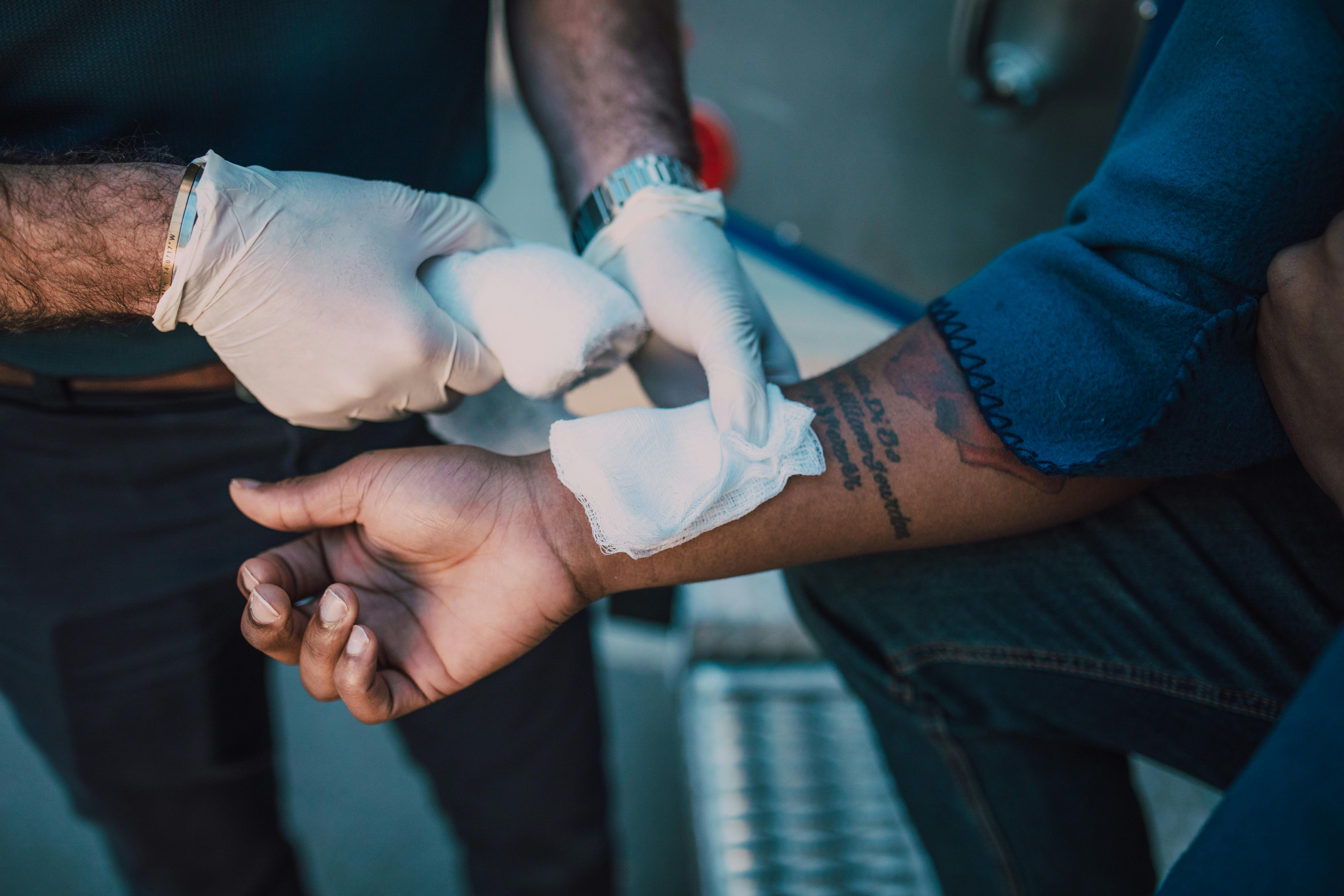
Core details and context
- Time and place: The shooting was reported early Saturday morning in Fairview, a central Anchorage neighborhood that often appears in local crime reports.
- Victim status: Police said the man had life-threatening injuries and was taken to the hospital.
- Investigation stage: The case appears to be in the early evidence-gathering phase, which usually means statements, scene processing, and nearby camera review.
- Suspect information: No broadly confirmed public suspect profile had been released in the initial report.
- Motive: None publicly established yet.
The truth is, early police updates are often maddeningly sparse. That is not always a flaw. It is sometimes caution. Investigators may be trying to avoid poisoning a witness interview or making a premature statement that collapses later. In a serious violent-crime case, restraint is not weakness.
Still, there is a cost to silence. Communities hate a vacuum because it fills with gossip. Rumor tends to travel faster than patrol cars. In neighborhoods already carrying the burden of repeated violence, that vacuum can make public trust wobble. People want to know whether this was targeted, random, domestic, or tied to some broader dispute. Most news coverage misses that people are not asking out of nosiness; they are asking because they want to know whether their kids can walk a block without risk.
A few broader points matter:
- Fairview’s location makes it an easy backdrop for fast-moving crime stories, because it sits close to downtown routes and transit corridors.
- Gun violence investigations often depend on witness cooperation, and that is hard when people fear retaliation or distrust police.
- Public safety responses usually include more patrols, targeted outreach, and community pressure, but those measures only go so far if the underlying violence network stays intact.
- Official language like “life-threatening injuries” tells us the incident was serious, but not the full medical outcome.
I’ve covered enough crime reporting to say this plainly: the first police release is the start of the record, not the end. Readers should avoid filling in the blanks with whatever feels emotionally satisfying. That’s how bad assumptions spread.
There is also a moral layer that gets ignored in crime chatter. A city is not just streets and property values. It is people made in God’s image, which means public safety is not a luxury line item. It is a duty. Stewardship of a city includes protecting the vulnerable, not just counting arrests.
For local context on violent-crime trends and public safety, readers may also find it useful to watch reporting from KTOO and broader statewide analysis from Alaska Public Media.

Timeline and what likely happened
Here is the sequence as it can reasonably be reconstructed from the public report.
- Early Saturday morning: Anchorage police received a report of a shooting in Fairview.
- Officers responded to the area: The scene was secured so investigators could assess what happened and whether there were immediate threats.
- A man was found injured: Police said he had life-threatening injuries.
- Medical transport followed: The victim was taken to a hospital for urgent treatment.
- Investigation began: Detectives likely started collecting statements, physical evidence, and any available video.
That’s the clean version. Real life is messier.
When I looked at similar cases, the first few hours usually determine the shape of the whole investigation. Witnesses give conflicting accounts. Someone heard shots but saw nothing. A camera was pointed the wrong way. A caller may have mistaken a vehicle color, a direction of travel, or even the number of shots. Small errors snowball quickly.
What actually happened on the ground may be one of several scenarios:
- A targeted shooting tied to an argument or prior dispute.
- A late-night or early-morning altercation that escalated.
- A drive-by or outdoor encounter with limited eyewitness clarity.
- An incident connected to another nearby disturbance.
Nobody should pretend certainty without evidence. That is how commentary turns into nonsense.
The important part is the public record. If police later confirm a suspect, a firearm recovery, surveillance footage, or witness identification, the timeline will sharpen. If not, the investigation may depend on forensic work and future tips. This is why early coverage should be disciplined. The facts are more valuable than the adrenaline.
There is also a civic lesson here. Communities often respond to violence with two bad habits: denial or panic. Denial says the problem is exaggerated. Panic says only force can fix it. Both are lazy. A better response is steady: accurate reporting, neighborhood cooperation, mental health support where needed, and a justice system that actually follows through.
On the question of accountability, the common good matters. Not as a slogan, but as a practical standard. A neighborhood functions when residents, police, city leaders, and service providers each do their part. If one piece fails, the others get buried under the cost.
For verified updates, readers should watch official Anchorage Police Department statements and local outlets such as Anchorage Daily News local coverage. That is boring advice. It is also the correct advice.
Comparison table: official reporting vs. rumor-driven coverage
| Factor | Official police reporting | Rumor-driven coverage |
|---|
| Source quality | Direct statements, case updates, evidence review | Social media posts, hearsay, secondhand claims |
| Reliability | Higher, but often incomplete early on | Low, often wrong or exaggerated |
| Speed | Slower | Faster |
| Detail | Limited at first, expands with investigation | Looks detailed, but many details collapse later |
| Public value | Helps the community understand the case | Creates confusion and fear |
| Risk | Cautious and narrow | High chance of spreading misinformation |
| Accountability | Can be tracked and corrected | Usually disappears when proven false |
The difference sounds obvious. Yet every shooting story drags in the same old swamp of speculation. People want instant answers, but police investigations do not run on impatience. They run on evidence.
The competitor here is not another news article. It is rumor. And rumor is always loud.
There’s a second comparison worth making, because readers keep asking why a single incident gets so much attention while broader trends remain fuzzy. Here’s the answer: one is immediate and visceral; the other is structural and inconvenient. Newsrooms chase the first because it is breaking. Communities care about the second because they live with it.
That is where public policy enters the frame. If Fairview and similar neighborhoods keep seeing violent incidents, then local government has to answer hard questions about policing, prevention, street outreach, housing pressure, and reentry support. That is not partisan poetry. It is governance.
And yes, business leaders should care too. Safe neighborhoods support local commerce, staffing stability, and customer traffic. Violence taxies opportunity out of an area. It is a quiet form of economic damage that never makes a dramatic press release.
Common misconceptions and what to know
The story is bigger than the headline.
A shooting report often gets flattened into simple assumptions, and that is where people start making fools of themselves. Let’s clear up the usual nonsense.
Misconception 1: Early reports tell the whole story.
They do not. They tell the first usable slice of it. Police may later revise details on time, location, number of involved people, or whether a suspect was known to the victim.
Misconception 2: No suspect update means nothing is happening.
Also false. Investigations can be active behind the scenes while public releases remain limited. Surveillance collection, forensic work, and witness interviews can take time.
Misconception 3: Every shooting in a neighborhood means the same thing.
Nope. Some are domestic, some are targeted, some are dispute-related, and some are still unknown when first reported. Treating all incidents as interchangeable is lazy analysis.
Misconception 4: The only fix is more arrests.
That is too narrow. Law enforcement is essential, but so are prevention, intervention, trauma care, and community trust. A city that only reacts after bullets fly is already behind.
Misconception 5: People who ask for facts are being “political.”
No. They are being responsible. The dignity of the victim and the safety of the neighborhood both deserve more than armchair certainty.
Here’s the kicker: the public usually gets impatient not because facts are missing, but because facts are uncomfortable. A real investigation may not produce the neat villain people expected. Sometimes the answer is uglier and more ordinary — a family dispute, a known conflict, a chain of bad choices. Ordinary sin causes extraordinary damage. That is a biblical truth too often ignored in civic talk.
Another point worth making is the role of media literacy. If a post on social media claims to identify the shooter, or a vehicle, or a motive before police have verified it, treat it like smoke until you find fire. Shared outrage is not evidence.
For readers who want a more systematic view of Alaska crime and public safety reporting, reputable regional coverage from local Anchorage reporting and broader public-radio coverage from Alaska Public Media news tends to be better grounded than viral speculation.
Frequently asked questions
What happened in Fairview on Saturday morning?
Anchorage police said a man was taken to the hospital with life-threatening injuries after a reported shooting in Fairview early Saturday morning.
Has police released a suspect description?
Not in the initial report provided to the public. In early stages, police often withhold details while they gather statements and evidence.
Is the victim expected to survive?
Authorities said only that the injuries were life-threatening. That means the condition was serious, but it does not by itself confirm the final medical outcome.
Why do early police reports often change?
Because initial information comes from incomplete witness accounts, scene conditions, and first impressions. As investigators review evidence, the story can sharpen or change.
Final thought
The thing about violent crime is that it is never just a crime scene. It ripples. It bends a family’s life, drains a neighborhood’s sense of peace, and forces city institutions to prove they can still do the basic work of public order. That is where the real burden sits — not in the headline, but in what follows after the cameras move on.
Anchorage residents deserve straight facts, not melodrama. They deserve a police process that is careful, a public conversation that is honest, and leaders who remember that safety is part of justice, not a side effect of it. I’ve seen too many of these stories become background noise, and that is the part that should bother people most. A city gets judged not by how loudly it reacts, but by whether it protects human life when it counts.
The rest is waiting. Patience is annoying, sure. But it beats guessing.