Fast-food chains are selling more than sandwiches. They are selling names, habits, and repeat visits, and the sauce on the bun is often the real pitch. Each...
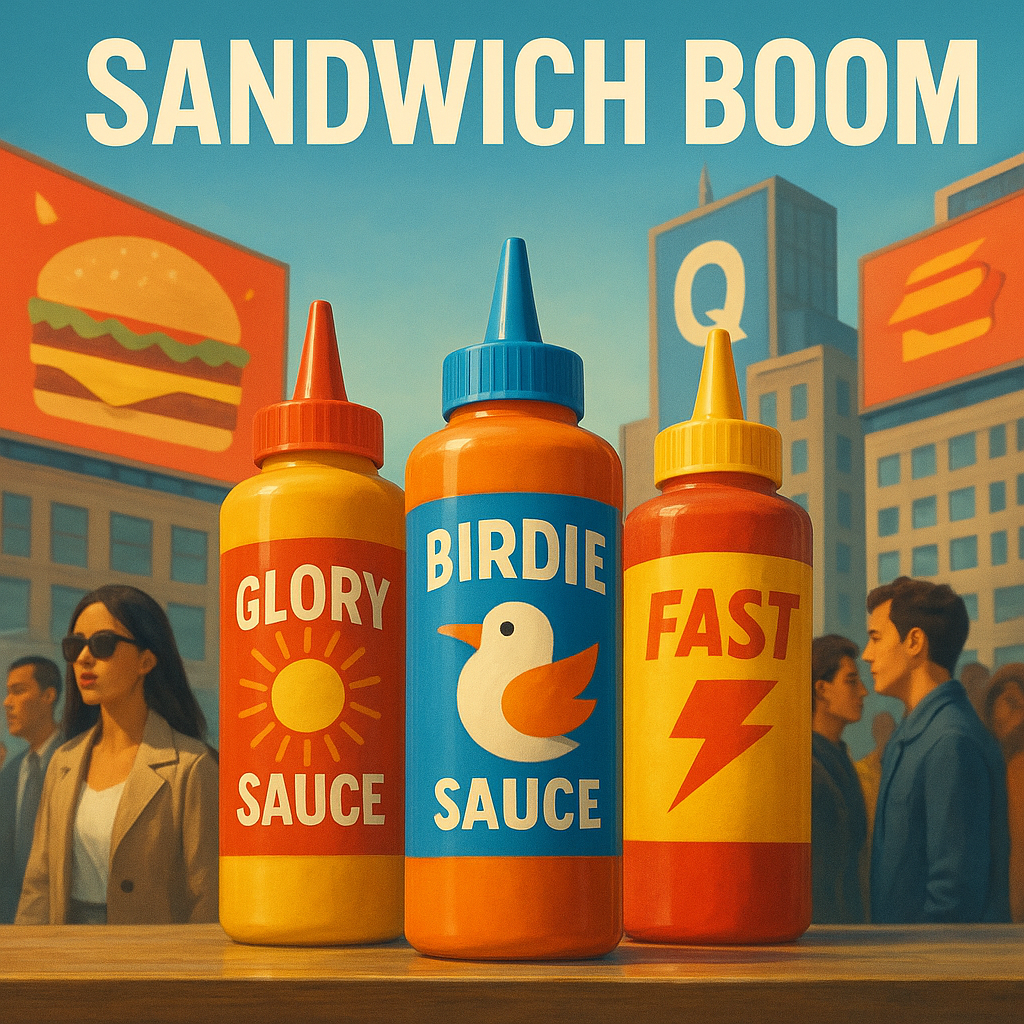
Fast-food chains are selling more than sandwiches. They are selling names, habits, and repeat visits, and the sauce on the bun is often the real pitch. Each sandwich comes with lettuce, pickle, and onion, while “glory sauce” and “birdie sauce” do the heavy lifting for the burgers and chicken sandwiches. Why does that matter? Because condiment branding has become part of how restaurants compete for attention, margin, and loyalty.
Key Takeaways
- Sauce names are not decoration; they are branding tools.
- Simple toppings like lettuce, pickle, and onion give chains a standard base.
- Distinct sauces help restaurants separate burgers from chicken items.
- Consumers often remember flavor cues more than menu descriptions.
- The bigger story is consistency, not hype.
What is glory sauce and birdie sauce? They are named condiments built to anchor a sandwich lineup. Glory sauce is attached to burgers, and birdie sauce to chicken sandwiches, which is exactly the sort of plain-spoken menu strategy that gets buried under marketing noise. One sauce signals beef, the other signals poultry. Simple. Effective. Not magic.
When I look at food branding like this, I see a familiar trick: standard toppings create familiarity, while signature sauces create identity. Lettuce, pickle, and onion are the common base. The sauce is the hook. That is how restaurants keep a menu from feeling generic, even when the ingredients themselves are ordinary. Frankly, most people are not taking notes on food chemistry; they are asking whether the sandwich tastes distinct enough to justify another order.
This kind of naming also helps with recall. A customer may forget the exact burger build, but “glory sauce” is sticky in the mind. “Birdie sauce” does the same job for chicken. The words are a bit goofy, sure, but food chains love memorable names because memory drives sales, and sales drive survival. In business terms, the sauce is a small brand asset. In practical terms, it is just a flavor profile with a label.
There is also a broader point here about stewardship and responsibility. Food companies are not just selling calories; they are shaping routines, budgets, and sometimes family habits. When a restaurant presents a sandwich with clear ingredients and a consistent build, it respects the customer’s time and money. That is a low bar, but a real one.
Core details and context
- Standard toppings matter. Lettuce, pickle, and onion give every sandwich a predictable core. That consistency reduces customer uncertainty.
- Sauce drives identity. Glory sauce and birdie sauce are the features people are likely to talk about, even if they never use those exact names again.
- Burgers and chicken need separation. Chains often split sauce identity by protein because customers already think in those categories.
- Naming can create recall. A named sauce is easier to remember than “special mayo-style spread” or some other bland corporate phrase.
- Menu simplicity helps operations. Fewer moving parts mean faster assembly and fewer mistakes in the kitchen.
- Branding can mask sameness. Let’s be real: a lot of fast-food items are variations on the same formula.
Most coverage of menu items focuses on taste testing and social media buzz. That is fine for clicks, but it misses the business logic. Restaurants use sauce naming to sharpen differentiation in a crowded market, where everyone claims to have the best crispy chicken, the juiciest burger, or the most “authentic” flavor. Those claims are cheap. A repeatable sauce name is cheaper still, and often more useful.
There is also a customer trust angle. If a sandwich contains lettuce, pickle, onion, and a named sauce, the guest knows what to expect. That matters more than slick ad copy. Predictability has value. In a time when households watch every dollar, that kind of straightforwardness is part of the common good, even if nobody in corporate meetings would phrase it that way.
Menu branding also shapes expectations across channels. A social post can make “glory sauce” sound like a bold signature ingredient, while a drive-thru board makes it look like a line item. Same sauce. Different framing. That gap is where perception gets manufactured.
Here’s the kicker: the names themselves do some of the work. “Glory” suggests richness or victory. “Birdie” is playful and chicken-specific. Neither name tells you the full recipe, because the recipe is not the point. The point is to make the sandwich feel like it belongs to one chain, not every chain.
For readers following restaurant and retail food trends, this is part of a larger pattern in business and consumer branding. Chains keep leaning on small signature elements because they are cheap, scalable, and memorable. Not glamorous. Just effective.
Timeline and what actually happened
- The sandwich model got standardized. Fast-food restaurants have long relied on a narrow build: bread, protein, lettuce, pickles, onions, and a sauce. It is cheap, repeatable, and quick to assemble.
- Brand names became part of the recipe. Chains learned that ordinary ingredients sounded more appealing with a branded label. A sauce is not just sauce once it has a name.
- Burger and chicken lines split. As menus expanded, restaurants started assigning different signature sauces to burgers and chicken sandwiches so customers could tell the products apart at a glance.
- Menu boards started doing the marketing. I’ve covered enough consumer food rollouts to know this pattern: the menu itself becomes the ad. If the name is catchy, the chain saves itself some explaining.
- Customers began sharing shorthand online. Social media made these sauce names travel faster than the corporate copy ever could. People talk about taste, but they remember labels.
- The product stayed simple. That is the part most hype merchants skip. The sandwiches do not need ten competing elements. They need a stable base and one or two signature notes.
- The branding became the story. At that point, the sauce is no longer a side note. It is the headline.
If you want the plain truth, this is not complicated. Restaurants are trying to turn a commodity meal into a memorably named one. The chain may talk about flavor innovation, but the operating logic is closer to accounting than artistry. And no, that is not an insult. Good businesses know how to protect margin without pretending every new condiment is a revelation.

Comparison table: signature sauce strategy vs. generic sandwich branding
| Factor | Signature sauce strategy | Generic sandwich branding |
|---|
| Customer recall | Higher, because names stick | Lower, because descriptions blur together |
| Menu differentiation | Stronger between burger and chicken items | Weak, since everything sounds the same |
| Operational complexity | Moderate, but manageable | Low, but less distinctive |
| Marketing value | High for social sharing and ads | Limited unless price is the main hook |
| Pricing support | Better, because perceived value rises | Harder to defend beyond discounts |
| Brand identity | Clear and repeatable | Muddy and forgettable |
| Risk | Sauce misses the mark, whole item suffers | Product feels bland and interchangeable |
The comparison is not subtle. Signature sauces give a chain a sharper identity. Generic branding saves effort but usually loses the memory war. In food retail, memory matters. A lot.
Common misconceptions and what to know
The loudest mistake is assuming sauce names are silly fluff. They are not. They are shorthand. A restaurant that can make “glory sauce” or “birdie sauce” mean something to repeat customers has bought itself a durable bit of mental real estate. That is worth more than people admit.
Another common claim is that the sauce alone makes the sandwich. Not quite. If the lettuce is limp, the pickles are weak, or the onions are chopped carelessly, the whole thing falls apart. The sauce can carry a meal only so far. Quality still matters. Funny how that keeps being true.
Some folks also think named sauces are only about hype. They can be, but they are also about efficiency. A chain can train employees faster when the product is standardized. A named sauce is easier to specify than a vague flavor profile. In kitchen work, clarity saves time and reduces errors.
Then there is the social media angle. People assume online attention always means sales. That is lazy thinking. Attention is not the same thing as repeat business. A sauce name can go viral and still fail if the sandwich does not hold up under normal use. The customer who returns for lunch on a Wednesday is the one that matters, not the person who posted once and moved on.
One more thing: some consumers mistake familiarity for quality. A sauce they recognize feels safer, even if it is no better than a simpler version elsewhere. That is human nature. It is also why honest labeling and straightforward ingredient lists matter. People deserve clarity, not theatrical nonsense.
For anyone reading this through a consumer rights or food policy lens, the bigger issue is transparency. Food companies should be free to market their products, sure, but they should also describe them plainly. Stewardship of a customer’s money begins with telling the truth about what is on the bun.
Frequently asked questions
What is the role of glory sauce on burgers?
It serves as the burger’s signature flavor element, giving the sandwich a distinct identity beyond basic toppings like lettuce, pickle, and onion.
What is birdie sauce used for?
Birdie sauce is the named condiment for chicken sandwiches, helping separate the chicken line from the burger line in both taste and branding.
Why do restaurants use named sauces?
Named sauces help with memory, marketing, and product differentiation. People remember a sauce name more easily than a generic description.
Are signature sauces actually important?
Yes, but not in the dramatic way ads suggest. They matter because they shape customer expectations, support consistency, and make the menu easier to recognize.
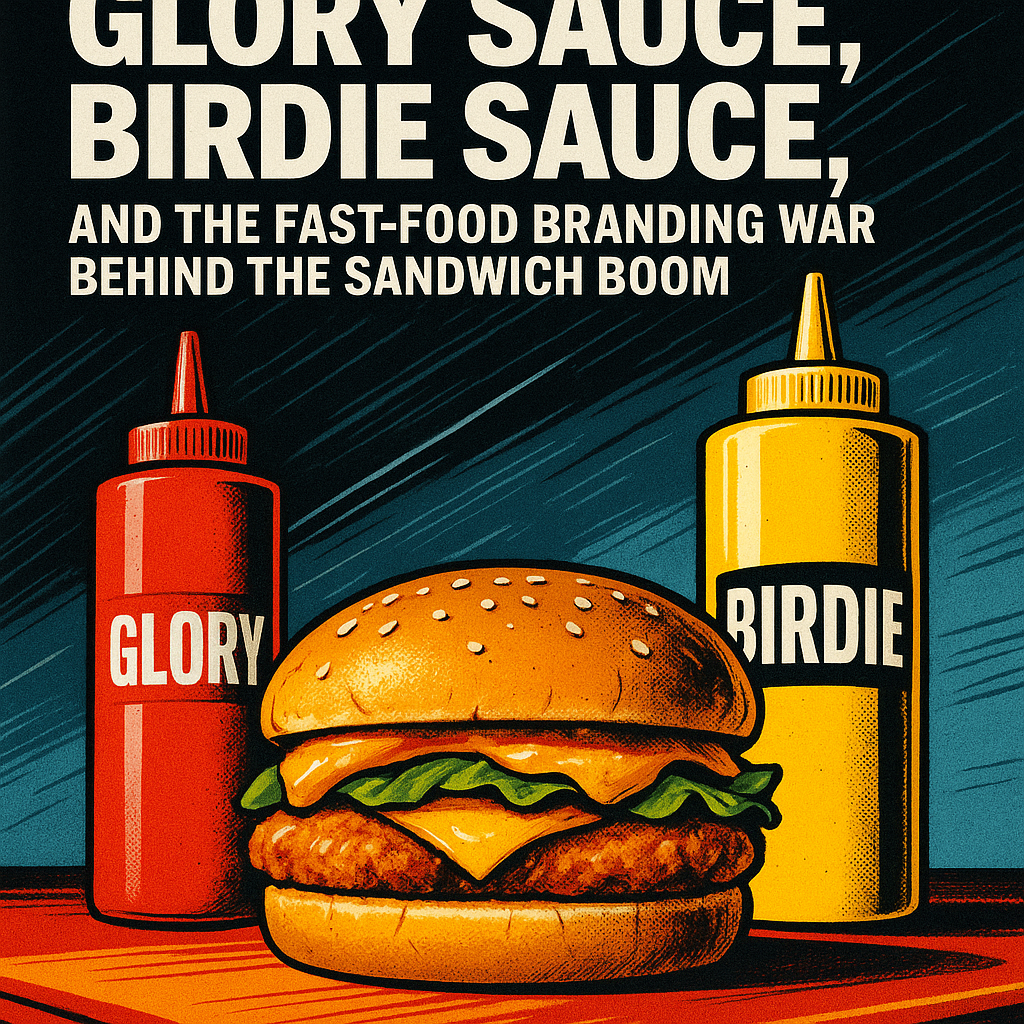
The deeper story here is not about one sauce, one sandwich, or one chain’s clever copy. It is about how modern food businesses compete in a market where the product is often ordinary but the branding has to do the heavy lifting. Glory sauce and birdie sauce are small labels, yet they show how much of the battle happens before the first bite.
Most people do not need a lecture to understand that. They know a good sandwich when they taste one. Still, the labels matter, because language shapes expectation, and expectation shapes satisfaction. That is true in food, business, and just about every other field where people exchange money for something they hope will be worth it. If a chain can keep the build honest, the portions fair, and the sauce memorable, it has done more than many slick campaigns ever manage.
I’ve covered enough consumer trends to know this much: the best food branding does not shout. It repeats. It gets into the head, then into the routine. That is not flashy, but it is real. And in a market full of overpromised junk, a little restraint goes a long way.