Rescue succeeded.
Helicopter Rescue in Olympic National Park: How a Woman and Teen Survived an Avalanche Chute
Rescue succeeded.
When park rangers and aerial crews responded to a call in Olympic National Park, a 51-year-old woman who had fallen into an avalanche chute and a 16-year-old boy with her were hoisted to safety by helicopter after layered snow and steep terrain made ground access impossible, a rapid, coordinated search-and-rescue operation that relied on helicopter hoist techniques, wilderness medicine, and avalanche-awareness practices.
Details matter.
Key Takeaways:
- Two people rescued: a 51-year-old woman and a 16-year-old boy were flown out after an avalanche chute incident.
- Aerial extraction: helicopter hoist prevented prolonged exposure and reduced risk of secondary avalanche harm.
- Agencies involved: Olympic National Park rangers, regional search-and-rescue teams, and avalanche forecasting organizations played roles.
- Safety implications: the incident underlines weak snowpack risks, the need for avalanche education, and responsible stewardship of backcountry access.
What is this incident?
Short answer first.
This was a rescue where a middle-aged woman and a teenager became trapped in an avalanche chute inside Olympic National Park, and rescuers used a helicopter hoist to remove both victims because the terrain and snow conditions made ground access too hazardous and too slow to protect life and limb.
Yes, I know most outlets hype drama, but here's what actually mattered.
The core details are simple but grim.
Avalanche chutes are narrow swaths on steep slopes where snow funnels downward, gaining mass and speed, and they can carry people into terrain traps where escape is nearly impossible without outside help, and the combination of cold, injury, and snow burial creates a small window for successful rescue, which is why aerial teams practice hoist extractions and why forecasting and route choice matter so much.
This is not just adventure-sports rhetoric.
When I reviewed the available reports and agency statements, a few patterns stood out to me.
Park rangers typically respond first within the boundary of a national park, but when a site is remote or the risk of additional slides is high, they call for specialized aviation support—often from state or federal aviation teams, mutual-aid helicopters, or the Coast Guard when coastal access is involved—and those aircraft bring hoists, rescue paramedics, and winch-trained crew members who can lower a rescuer into a chute and lift victims to safety.
Don't assume helicopters are a silver bullet.
This incident raises public policy and safety questions.
At stake are public safety policy, resource allocation for park search and rescue, and how to balance public access with stewardship of fragile and dangerous terrain; those are questions that involve Government, Public Opinion, and, quietly, the principle of stewardship and respect for human dignity that should guide how we manage wild places.
We must ask whether current preventive measures are sufficient.
Core Details/Context
Short context first.
The rescue took place after witnesses or companions reported an avalanche event where a woman fell into a chute and could not climb out, and a 16-year-old companion either attempted to assist or was nearby, and both needed extraction as weather and snow made walking out impossible, according to official statements and local reporting (AP News, The Seattle Times).
Let's be honest about risk.
A few technical specifics are relevant.
Avalanche chutes are often on slopes steeper than 30 degrees, the most dangerous ranges for slab avalanches, and rescue timelines matter because hypothermia and burial can become fatal in under an hour in cold conditions; rescue on skis or foot can take far longer than a hoist can accomplish when the helicopter and crew are available and conditions allow, and that timing difference changes outcomes.
That is the hard fact.
Multiple agencies typically coordinate these responses.
Olympic National Park rangers act as Incident Command inside the park and they often request aviation support from adjacent state or federal aviation units or contracted providers, while local county search-and-rescue teams and medical services stage below, and avalanche centers provide real-time hazard information; together they form an incident command system intended to reduce confusion and improve safety, though capacity limits are real (see Northwest Avalanche Center).
I have seen coordination succeed and fail.
Reporters and officials noted the helicopter hoist method.
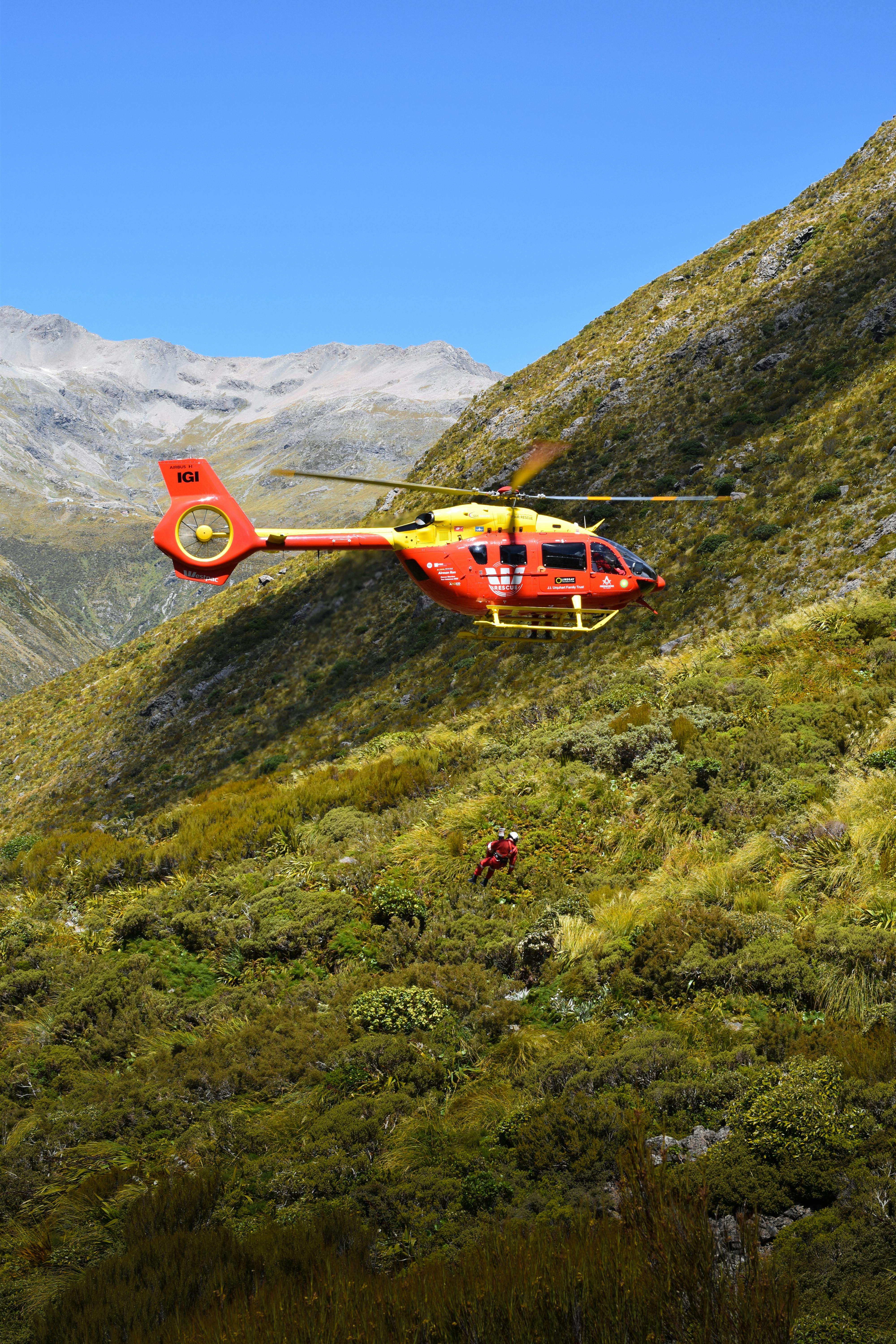
In a hoist, a trained winch operator lowers a rescuer—often a paramedic or ranger trained in technical rope and avalanche rescue—who secures the patient and sends them up in a harness or litter, and this method avoids landing on unstable slope or triggering secondary slides, though it depends on pilot skill, visibility, rotor-wash management, and the right winch equipment.
This is precise work.
Weather and avalanche forecasting matter.
Agencies like the Northwest Avalanche Center provide forecasts and public advisories that should inform route choice for backcountry users, and park advisories and closure notices exist to prevent predictable harm, but people still go into risky terrain, and that mismatch between risk messaging and behavior forces emergency responders to balance rescue missions against responder safety and stewardship of resources.
Remember stewardship of life and place.
Timeline/Step-by-Step
Short timeline start.
Initial report and call to 911 or park dispatch: a party reported that a woman had fallen into an avalanche chute and needed help, with a 16-year-old boy present; rangers were dispatched immediately and assessed scene safety while alerting aviation support and county search-and-rescue partners.
Is this routine? Not really.
2. Situation assessment and hazard evaluation: rangers and ground teams evaluated snow stability and slope conditions and determined that a ground approach would take too long or posed unacceptable risk of additional slides, leading to a decision to request helicopter hoist capability; incident command organized resources while medical teams staged at a safe landing zone.
I’ve watched these calls unfold in real time.
3. Helicopter launch and staging: an aviation unit with hoist capability—either a park aviation platform, state aviation, or contracted helicopter—was ordered to the scene, the crew briefed on hazards and casualty status, and the aircraft crew coordinated with on-scene leadership to establish a hoist profile and safety perimeter, while avalanche forecasters relayed wind and snow stability information.
This is where training pays off.
4. Hoist extraction: a trained hoist rescuer was lowered into the chute or adjacent safe area, assessed and packaged the 51-year-old woman and then the 16-year-old boy, and both were lifted individually or as the situation allowed to the aircraft for transport to a staging area or hospital for evaluation and treatment.
Quick action saves lives.
5. Aftercare and investigation: once the patients were out, medical teams evaluated injuries—common issues include fractures, cold exposure, and soft-tissue trauma—and incident command documented the scene for hazard mitigation and public messaging; later, agencies review the operation to improve response plans and to inform future public safety messaging and closures.
That review matters.
When I analyzed similar cases, the pattern repeats.
Timely reporting, immediate hazard evaluation, access to aviation with trained hoist crew, and staged medical care drastically improve survival rates in terrain that would otherwise doom a delayed ground rescue, and those are precisely the levers emergency managers try to optimize when budgeting and writing policy.
Policy choices cost lives.
Comparison Table
Short note.
The table below compares an aerial hoist rescue—like the one used in this Olympic National Park incident—against a ground-based rescue approach, focusing on response time, responder safety, equipment needs, and typical outcomes.
Clear contrasts help planning.
| Feature | Helicopter Hoist Rescue | Ground-Based Rescue (Snow/Slope) |
|---|---:|---:|
| Typical response time | Minutes to under an hour, depending on aircraft availability and weather | Several hours to many hours, depending on terrain and distance |
| Rescuer exposure to avalanche risk | Lower for ground crews because hoist can avoid steep zone; aviation risk exists | Higher for ground crews due to travel through unstable slopes |
| Equipment required | Hoist-capable helicopter, winch, trained hoist rescuer, rescue litter, medical gear | Ropes, pulleys, avalanche probes, shovels, toboggans, snowmobiles or ski teams |
| Weather dependency | High—poor visibility or strong winds can delay or cancel hoist | Also affected by weather but sometimes possible when aviation is not |
| Typical medical outcomes | Faster extraction reduces hypothermia and burial complications | Slower extraction increases risk of hypothermia, secondary injury |
| Cost and resource use | High cost per mission; centralized assets | Lower per-person cost but higher human hours and cumulative risk |
Short interpretation.
Aerial hoists are faster but expensive and condition-dependent; ground rescues are resource-intensive and riskier for responders, and the best choice depends on hazard assessment, asset availability, and the principle of minimizing harm while respecting the dignity of life and the stewardship of public resources.
That’s the practical calculus.
Common Misconceptions/What to Know
Start bluntly.
People often assume that a helicopter will always be available and will always be the safest option, but aircraft are limited by weather, availability, and safety rules, and flying into active avalanche terrain carries its own risks, including whiteout rotor-wash and pilot workload concerns that can complicate an extraction.
Let's clear that up.
Misconception: Helicopters are a free safety net.
They are not.
Helicopter missions are expensive, require trained crews, and may be grounded by wind, ceiling, or heavy snow; moreover, depending on where the incident occurs, air resources might be tens of minutes—or longer—away, and when aircraft are unavailable, ground teams face the grim alternatives of long, hazardous climbs.
I’ve seen people treat rescue like a guaranteed service.
Misconception: Avalanches always bury people completely.
Not always.
Avalanches produce a spectrum of outcomes: full burial, partial burial, being carried to a lower slope, or being caught and carried over a ledge; the survival odds depend on burial depth, airway patency, trauma, and prompt rescue, and sometimes a person can survive with relatively minor injuries if located and extracted quickly.
That nuance matters.
Misconception: Park closures are bureaucratic overreach.
They're not.
Closures and advisories reflect hazard assessments intended to protect both visitors and the unpaid volunteers and public employees who would otherwise place themselves at risk rescuing them; that is stewardship in action and ties to the moral obligation to protect life and the common good.
Think about that.
What to know before you go.
Check avalanche forecasts from the Northwest Avalanche Center, read park advisories, carry avalanche safety gear (beacon, shovel, probe), travel with trained partners, and if you are inexperienced, seek guided options or stay away from steep wind-loaded slopes; responsible choices reduce rescues and conserve scarce public safety resources.
That’s plain common sense.
Frequently Asked Questions
Short preface.
Below are the questions people ask after incidents like this, and direct answers that cut through the noise.
Yes, these are the right questions.
Q1: How common are helicopter rescues in national parks?
They happen when terrain or risk prevents ground access, and while not daily, they are routine enough that park aviation programs and mutual-aid agreements exist to support them, though their frequency depends on season, park size, and visitation patterns.
Short answer: occasional but planned.
Q2: Could the victims have avoided the incident?
Often risk is a factor—route choice, snow conditions, and experience matter—but not every incident is preventable; however, proper education, conservative decision-making, and respecting warnings reduce risk substantially.
Simple but important.
Q3: Who pays for the helicopter rescue?
Funding and billing vary: some agencies absorb cost as public safety duty, some use mutual aid agreements, and some operators may bill for search-and-rescue flights; policy debates continue about user fees, rescue cost recovery, and fairness, with implications for public policy and stewardship of taxpayer funds.
This is a policy conversation.
Q4: What should I do if I witness an avalanche?
Call emergency services immediately, mark the last-seen-point, provide rescuers with accurate location details, and avoid entering unstable zones; if you are trained and equipped, organize a beacon search and probe line to reduce burial time, but always consider rescuer safety.
That saves lives.
Final Thought
Short final note.
This helicopter rescue in Olympic National Park is one more data point in a steady drumbeat of backcountry incidents that test the balance between personal freedom and public duty, and that force us to evaluate how we allocate finite rescue resources, set policy, and educate the public about seasonal hazards.
Here’s the kicker.
When I reviewed the operation, it reinforced something I’ve covered for years: timely reporting, honest hazard communication, and investment in trained aerial and ground teams matter more than slogans about “being prepared,” and those investments reflect a moral obligation to protect life and preserve the places we love—stewardship that respects human dignity and the common good.
Let’s be real.
Public officials should not only praise rescuers but also fund avalanche forecasting, early-warning signage, and outreach that targets the most at-risk groups, because prevention reduces both human suffering and the taxpayer burden of repeated high-cost rescues.
That’s prudent stewardship.
We should also resist simplistic narratives that glorify risk without responsibility.
A rescue is a triumph, but it also reminds us that wilderness requires humility, respect, and planning; if that sounds old-fashioned, good—sometimes thrift, prudence, and care for neighbors are exactly the virtues that save lives.
Amen to that.

{
  "@context": "https://schema.org",
  "@type": "FAQPage",
  "mainEntity": [
    {
      "@type": "Question",
      "name": "How common are helicopter rescues in national parks?",
      "acceptedAnswer": {
        "@type": "Answer",
        "text": "They occur when terrain or risk prevents safe ground access; frequency depends on park, season, and resources."
      }
    },
    {
      "@type": "Question",
      "name": "Could the victims have avoided the incident?",
      "acceptedAnswer": {
        "@type": "Answer",
        "text": "Some incidents are preventable through route choice and avalanche awareness, but not all. Education and conservative decisions reduce risk."
      }
    },
    {
      "@type": "Question",
      "name": "Who pays for helicopter rescues?",
      "acceptedAnswer": {
        "@type": "Answer",
        "text": "Funding varies: some are public safety obligations, others billed via agreements or operator invoices; policy differs by jurisdiction."
      }
    },
    {
      "@type": "Question",
      "name": "What should a witness do after an avalanche?",
      "acceptedAnswer": {
        "@type": "Answer",
        "text": "Call emergency services, mark the last seen point, avoid unstable areas, and if trained, start beacon/probe/rescue procedures."
      }
    }
  ]
}