Trump’s SAVE America Act could tighten voter verification rules in ways that hit married women hardest. The problem is not the slogan on the bill. It is the...
Trump’s SAVE America Act could tighten voter verification rules in ways that hit married women hardest. The problem is not the slogan on the bill. It is the paperwork burden, the name-change gap, and the quiet way election rules can trip up people who changed their surname after marriage, divorce, or widowhood. Who gets caught? Mostly ordinary voters.
Key Takeaways:
- The SAVE America Act is framed as an election integrity measure.
- Married women are especially exposed if their legal name changed after marriage.
- Matching voter records to Social Security or state ID files can reject valid registrations.
- States already have patchwork rules, so the bill would add another layer of friction.
- The real fight is between fraud prevention and broad access to the ballot.
What is Trump’s SAVE America Act? It is a proposed federal election bill, built around stricter proof-of-citizenship and identity verification requirements, and sold as a fix for supposed voter fraud. The pitch sounds clean. The consequences may not be. If you have covered election law for any length of time, you know these bills rarely hit everybody evenly, because bureaucracies do not care about fairness in the abstract. They care about exact matches, clean fields, and forms that line up neatly. Married women, whose last names often change, are more likely to fall into the cracks.
Here’s the kicker. A law can be “neutral” on paper and still produce lopsided harm in practice. That is not a conspiracy theory. It is how data systems work. State voter rolls are already cross-checked against motor vehicle records, Social Security data, and citizenship documents. When names, hyphens, or marriage records do not match perfectly, records can be flagged, delayed, or rejected. In a nation that claims to prize the common good, the ballot should not depend on whether a clerk can reconcile two databases.
Frankly, the deeper issue is trust. Supporters say extra checks prevent ineligible voting and protect election integrity. Critics say the bill creates more obstacles than solutions, especially for women who changed their names and for people who lack easy access to old documents. Both sides claim to defend democracy. One side worries about fraud that is often tiny in scale; the other worries about eligible citizens being boxed out by bad paperwork. The truth is, both concerns matter, but one is far easier to weaponize than the other.
Most news coverage misses the real story. It is not just about one bill. It is about whether voting in America becomes a privilege for the well-documented or a right for all eligible citizens. That question matters, because the moral measure of a system is not how it treats the perfect filer. It is how it treats the person who is busy, widowed, divorced, recently married, or simply forced to prove herself twice.
What is Trump’s SAVE America Act?
The SAVE America Act is a Republican-backed election proposal associated with Donald Trump’s push for tighter citizenship checks and more rigid voter registration standards. The core idea is simple enough: require stronger proof that a voter is both eligible and who they claim to be. The bill is cast as a response to concerns about noncitizen voting and weak registration safeguards. Supporters frame it as common sense. Opponents call it a barrier dressed up as reform.
I’ve covered enough policy fights to know the label matters less than the plumbing. Election rules are a system of forms, databases, identity documents, and deadlines. When you change the rules at one point in that chain, the friction spreads. That is why married women are a recurring concern in voter ID debates. A woman may register under her married name, yet her birth certificate, passport, Social Security record, mortgage paperwork, or old school records may still use a maiden name. If a law demands exact documentation across all records, plenty of legitimate voters will get flagged.
That does not mean every verification rule is bad. Let’s be real. Elections need safeguards. No serious person disputes that. But policy has to be judged by outcomes, not slogans. If a bill makes it harder for a narrow set of eligible voters to comply, then the burdens are not theoretical. They are real, and they fall unevenly.
In reporting on voter registration and name-change issues, election lawyers and advocates have noted that women who changed surnames can face mismatches across records. That is the sort of administrative fact that sounds dull until it keeps a person from voting. The right to vote is a civic trust, not a scavenger hunt.
There is also a broader question of stewardship. Government, at its best, should steward public institutions so they serve the whole community, not just the people with the neatest paperwork. That is not sentimental talk. It is the practical meaning of justice. A voting system should be careful, yes, but also humble about the ordinary messiness of human life.
Core Details and Context
- Proof-of-citizenship requirements can require passports, birth certificates, or naturalization documents that not every eligible voter has handy.
- Name-matching rules can fail when a woman’s current legal name differs from her birth certificate or older records.
- Data cross-checks often rely on exact matches, which means a hyphen, middle initial, or surname shift can trigger a review.
- State variation makes the problem worse. One state may accept an affidavit. Another may demand a stack of documents.
- Election administration is already strained, so adding more verification steps can slow registrations and create backlogs.
Here is the blunt truth. Most election systems are not designed around the life events of ordinary adults. They are designed around administrative efficiency. That is why name changes matter so much. Marriage, divorce, and widowhood are common, predictable realities. Yet election systems often behave as if every citizen has one permanent identity file stamped from birth and never altered. That is not how human life works.
When I analyzed prior voter verification fights, the same pattern kept showing up: a policy is described as a fraud-fighting tool, then the burden shifts onto people who must prove eligibility through older or less accessible documents. Married women are not the only group affected, but they are one of the clearest examples because surname changes are common and socially normal. If a bill assumes a stable name across all records, it is either careless or intentionally blind.
There is a political angle too. Republicans have long argued that tighter voter checks build confidence after years of partisan claims about election integrity. Democrats counter that the evidence of widespread in-person voter fraud remains thin, while the evidence of administrative burden is thick. Both sides know the argument is not really about a spreadsheet. It is about public trust, turnout, and who gets to define “secure” voting.
And yes, the symbolism matters. A ballot is not just a civic form. It is the instrument by which free citizens participate in public life. In Catholic moral thought, that kind of participation belongs under the heading of human dignity and the common good. The state should not make access to it harder than necessary, especially when the alleged problem is not supported by broad evidence. A law should protect the vulnerable, not punish them for being ordinary.
For broader context on election law and registration hurdles, see the Brennan Center’s research on voter registration barriers and the National Conference of State Legislatures overview of voter ID laws. Those sources are not propaganda machines. They are useful because they show how technical the problem is, and how easy it is for politics to turn technical complexity into a blunt instrument.
Timeline and Step-by-Step
- Trump and allies revive stricter election proposals. The idea is to build a national standard for voter verification, with an emphasis on proof of citizenship and tighter registration control.
- The SAVE America Act is framed as reform. Supporters argue the bill would stop improper registration and strengthen trust in elections. The marketing is tidy. The mechanics are not.
- States would have to compare voter data against more documents. That means more opportunities for mismatches, especially where surnames changed after marriage or divorce.
- Married women face a documentation gap. A voter may have updated her driver’s license, but her birth certificate and older federal records may show a prior surname.
- Election offices review and reject mismatched applications. Even when a voter is eligible, missing or inconsistent records can trigger delay, provisional ballots, or outright rejection.
- Litigation follows. Civil rights groups, state officials, and election lawyers would likely challenge parts of the law, arguing it burdens lawful voters and conflicts with existing voting rights protections.
That sequence is not speculative. It is the standard path of modern election law fights. First comes the bill. Then comes the data mismatch. Then comes the court challenge. Then somebody claims the courts are partisan, which is usually what people say when a law runs into constitutional limits.
Here’s what actually happened in prior voter ID battles: the people most likely to miss a deadline or produce perfect records are often the ones with less time, less money, or less flexibility. That includes working mothers, older women, widows, and people who moved or changed names years ago and never expected those old records to matter again. Bureaucracy loves permanence. Life does not.
Recent coverage from Reuters politics reporting has repeatedly shown that election policy fights are rarely about one document or one office. They ripple through state systems, courts, and local election boards. That matters because the SAVE America Act would not live in a vacuum. It would be filtered through county clerks, DMV records, and overloaded election offices, where small errors become big problems.
Another thing to watch is timing. If a law lands close to an election cycle, confusion rises. If voter education is weak, the burden shifts onto citizens to decipher the rules. The common good is not served by rules so complicated that only lawyers can explain them. A fair civic order should be intelligible to the people governed by it. That is basic justice, not a luxury.
Comparison Table
Here is the plain comparison. The biggest contrast is not between two slogans. It is between two models of election administration.
| Issue |
SAVE America Act |
Current/State-Based Registration System |
| Proof standard |
Stricter federal documentation checks |
Varies by state; often accepts existing registration records |
| Effect on married women |
Higher risk of mismatch if surname changed |
Fewer federal-level barriers, though state rules still vary |
| Administrative burden |
More reviews, more back-and-forth, more delays |
Lower in some states, higher in others |
| Fraud prevention |
Claims stronger prevention through stricter checks |
Relies on existing checks, audits, and state enforcement |
| Access risk |
Greater chance eligible voters are flagged or rejected |
More mixed, but usually less centralized friction |
| Policy tradeoff |
Security emphasis over convenience |
Access emphasis with uneven state safeguards |
The comparison is messy because the real world is messy. Still, the table makes the main point. The SAVE America Act pushes hard toward documentation certainty, while the current system tolerates more variation. That variation is not elegant, but it may be kinder to lawful voters whose records do not match cleanly. And yes, kindness matters in policy. A government that treats citizens as suspects first will eventually damage trust it claims to protect.
Common Misconceptions and What to Know
First misconception: this is only about fraud. No, it is not. Fraud is the headline justification, but the operational effect is broader. It changes who must prove what, when, and with which documents. Most of the burden lands on people who are already eligible and already registered. That is why the debate is so heated.
Second misconception: married women can just bring their marriage certificate. Sometimes yes, sometimes no. A marriage certificate may help, but not every office accepts it the same way, and not every mismatch is solved by one form. Some systems want the exact chain of identity documents, which is where the headache starts. That is bureaucracy for you.
Third misconception: if someone is legally eligible, the system will catch the problem automatically. That is wishful thinking. Automated matching systems are not judges. They are filters. They can flag false positives, especially when names, accents, initials, and hyphens get involved. A false positive in election administration is not a small clerical issue. It is a citizen told, effectively, “Try again later.”
Fourth misconception: people who raise concerns about these burdens are trying to weaken election integrity. Not necessarily. Many are arguing for a lower-friction system that still checks eligibility without making life harder for women who changed their names. That is not anti-security. It is pro-proportion. Good law should be precise, not clumsy.
Here’s the part nobody likes to say out loud. The political fight over voting often turns on who gets believed. Supporters of stricter rules are seen as defenders of order. Critics are seen as complainers or activists. But the actual issue is administrative burden, and burden is measurable. If a rule produces more rejected applications among a predictable class of eligible voters, then the rule is doing more than it admits. You do not need melodrama to see that. You just need records.
For a deeper dive on election administration and voter access, the American Bar Association’s election law resources are useful, and so is AP’s voting rights coverage for recent litigation and legislative developments. Neither source is perfect, but both help separate the hard facts from the partisan fog.
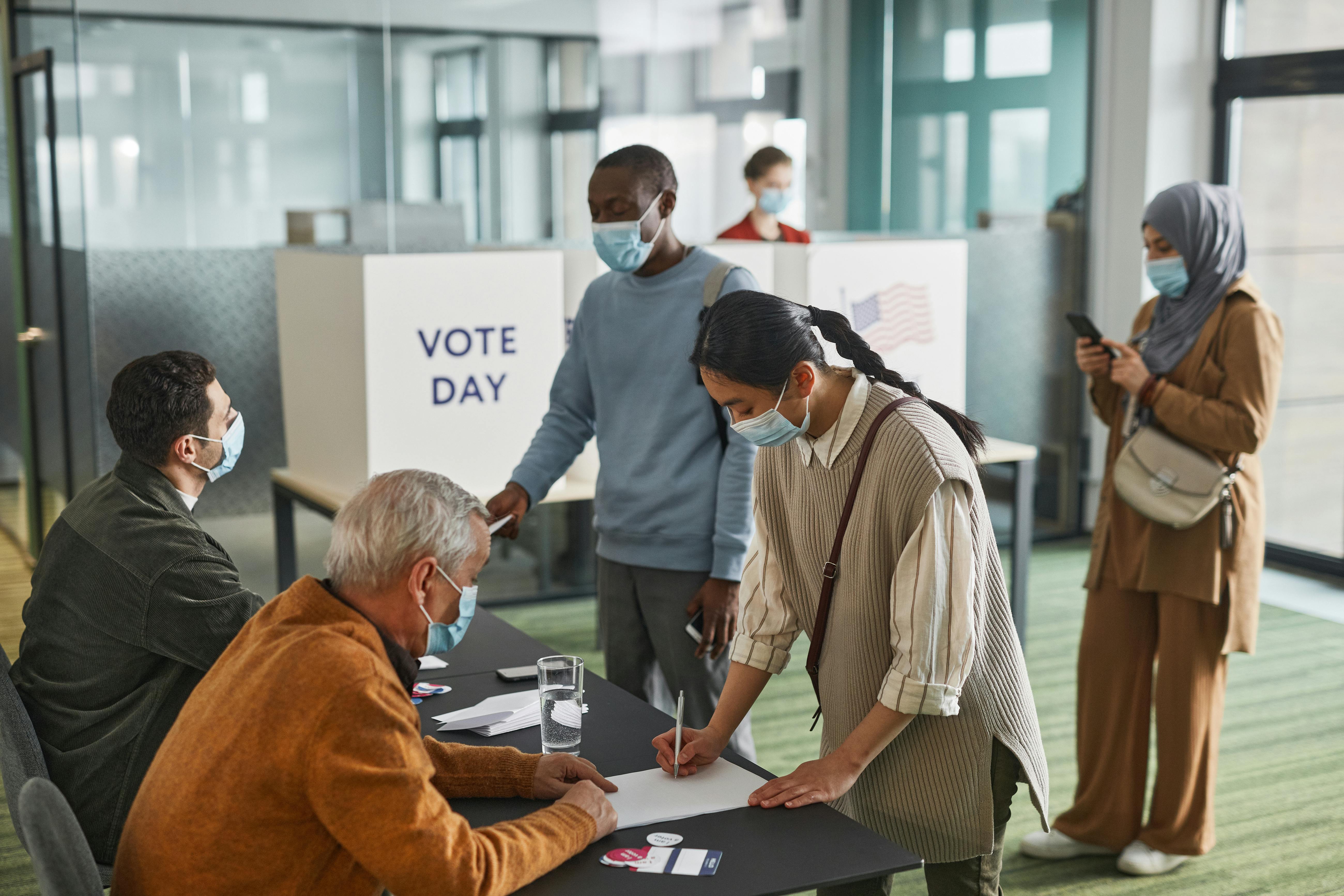
There is also a moral frame worth keeping in view. A just society does not make the exercise of a basic right hinge on the ability to produce the right paperwork at the right moment. That principle comes straight out of the older wisdom about human dignity. People are not filing cabinets. Policies that assume otherwise tend to fail the poor, the busy, and the overlooked.
Frequently Asked Questions
Could the SAVE America Act directly stop married women from voting?
Not in the literal sense for every voter, but it could make registration and ballot access harder for some married women if their legal name changes do not match across records. The risk is indirect but real.
Why are married women especially affected?
Because surname changes after marriage, divorce, or widowhood can create mismatches between voter rolls, driver’s licenses, birth certificates, and federal databases. Exact-match systems often treat those mismatches as problems to fix, not ordinary life events.
Would proof-of-citizenship rules prevent fraud?
They may catch some ineligible registrations, but public evidence of widespread voter fraud is limited. The bigger and more common effect is often added bureaucracy, especially for lawful voters who do not have immediate access to documents.
What should voters do if names differ across documents?
Check your registration early, update your records where possible, and contact your local election office well before Election Day. Do not wait for the last minute. That is how people get burned.
When I look at this fight, I see a familiar pattern. The policy claims to protect the ballot, but it may also raise the cost of participation for people who already live with enough administrative hassle. That is the part politicians usually skip. They talk about abstract security while voters deal with forms, lines, and deadlines. Not exactly noble.
The common thread across these questions is simple. Election rules should preserve integrity without turning identity into an obstacle course. If a law cannot make that balance, it deserves scrutiny, not applause.
Final thought. Voting should not depend on whether your name changed when your life did. If a country truly believes the ballot is sacred, it will treat eligible citizens with care, not suspicion. That includes married women, whose paperwork may lag behind their reality. A serious democracy ought to notice that before the damage is done.