Iran’s Islamic Revolutionary Guard Corps has warned employees at 18 major American companies to evacuate Middle East workplaces immediately. That is not...
Iran’s Islamic Revolutionary Guard Corps has warned employees at 18 major American companies to evacuate Middle East workplaces immediately. That is not routine bluster. It is a serious signal, even if the exact threat level and target list remain murky, because evacuation warnings from a state security force can rattle corporate operations, regional security planning, and crude oil markets in one shot.
- The warning signals a heightened security posture, not just rhetoric.
- U.S. firms with staff, contractors, or assets in the Middle East may need rapid contingency planning.
- Energy, logistics, aviation, and finance are the sectors most exposed.
- The real issue is less the public warning than what comes next: travel restrictions, shutdowns, cyber risk, and possible retaliation.
What is the IRGC evacuation warning?
The Islamic Revolutionary Guard Corps is one of Iran’s most powerful security institutions, with military, intelligence, and political influence that reaches far beyond ordinary law enforcement. When the IRGC issues a warning, people pay attention. When it tells employees at major American companies to leave Middle East workplaces, the message is simple: Iran is signaling possible danger to U.S. corporate personnel, facilities, or interests in the region.
Frankly, this is not the sort of thing a company shrugs off. A notice like this can trigger internal security reviews, executive calls, insurance checks, and crisis communications plans. It can also create confusion, because the public often hears the warning but not the intelligence behind it. That’s the kicker. The warning may be based on real threat reporting, or it may be part deterrence, part theater, part pressure campaign. Sometimes it is all three.
I’ve covered enough security scares to know that the headline is only half the story. The bigger question is what the warning says about Iran’s intent and about the vulnerability of American firms operating in places like the Gulf states, Iraq, Jordan, and elsewhere in the Middle East. The region remains dense with shipping lanes, energy infrastructure, embassy-adjacent business districts, and high-value corporate assets. That mix matters.
The warning also lands in a wider context of regional tension, sanctions pressure, proxy conflict, and the constant risk of escalation between Iran and the United States or Israel. In the Middle East, the line between a political threat and a commercial one is thin. One missile strike, one drone attack, one cyber intrusion, and the consequences can spread from an industrial site to a boardroom to a fuel pump in the United States.
The better way to read this is not as isolated drama, but as a signal flare. When a state-linked force talks about evacuation, it is testing reactions. It is probing. It is trying to shape behavior. And if you think that sounds familiar, it should. Governments do this all the time, because information itself is a weapon.
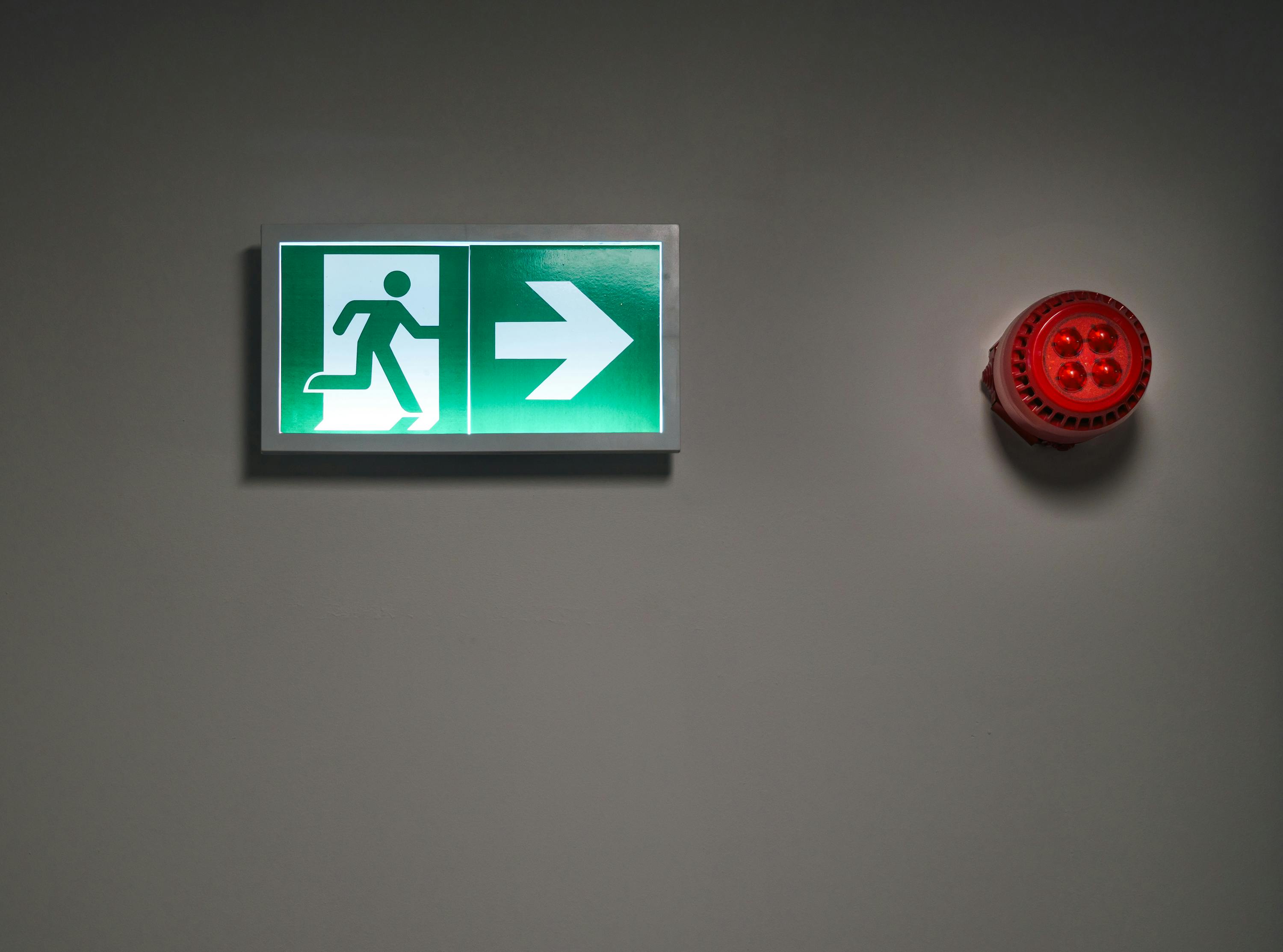
Core details and context
The immediate details are still developing, and anyone pretending otherwise is selling fog. But several facts matter.
- Scope: The warning reportedly touches employees connected to 18 major American companies with Middle East operations.
- Audience: This is not only about diplomats or soldiers. It is about private-sector workers, contractors, and support staff.
- Likely sectors: Energy, engineering, logistics, aviation, technology, and financial services are the most obvious exposure points.
- Risk channels: Physical attacks, missile or drone strikes, roadside violence, port disruption, cyberattacks, and movement restrictions all remain plausible.
- Economic spillover: Even if no one is harmed, the mere threat can raise shipping costs, delay projects, and push insurance premiums higher.
Most coverage stops at the headline and leaves it there. That is lazy. The actual risk is layered. A company with a regional office in Dubai is not facing the same exposure as one with personnel near Iraqi infrastructure, but investors rarely make that distinction at first glance. Markets, as usual, panic before they sort.
There is also a legal and moral dimension. Employers have a duty of care. Not the glossy HR version, the real one. If a company sends people into an elevated-risk zone, it owes them honest guidance, timely evacuation options, and clear communication. Human dignity is not a slogan here; it is the basic standard. A worker is not a replaceable line item.
When I look at this sort of event, I look for three follow-on questions: Does the warning come with a specific deadline? Is it connected to a named incident, such as military activity, arrests, cyber incidents, or sanctions? And are U.S. firms already quietly pulling staff before the public hears about it? Those answers often matter more than the quote itself.
Another point people miss: the Middle East is not one market. It is a patchwork of risk. The United Arab Emirates, Saudi Arabia, Qatar, Kuwait, Bahrain, Iraq, Jordan, and Israel each carry different threat profiles, legal rules, and evacuation routes. A blanket warning can create unnecessary fear if it is not paired with granular intelligence. But a vague warning can also mean the threat itself is broad, hard to pin down, or deliberately ambiguous.
Here’s what nobody tells you in the first hour: companies rarely wait for perfect certainty. They move when the risk crosses an internal threshold. Insurance, labor contracts, aviation access, and executive tolerance all play a role. A corporation may not “panic,” but it can still evacuate staff in a hurry.
That is why this matters beyond the companies named, if names are ever confirmed. The warning creates a chilling effect across the broader business community. Competitors start asking whether they should tighten security. Suppliers wonder whether to reroute shipments. Local workers worry whether foreign management is about to disappear.

The likely response menu is familiar:
- Travel suspension for nonessential staff.
- Remote work shifts for regional teams.
- Site hardening at vulnerable facilities.
- Security briefings and hostile-environment training refreshers.
- Crisis comms for employees and families.
- Coordination with U.S. and host-nation authorities.
Everyone likes to talk tough until payroll, logistics, and liability show up. Then the tone changes. Fast.
Timeline and what probably happens next
The event is still unfolding, so the timeline has to be handled carefully. No fairy tales, no fake precision.
- The warning is issued. The IRGC, or a channel connected to it, signals that employees at major American firms should leave Middle East workplaces. That alone is enough to force internal escalation.
- Corporate security teams verify the claim. I’ve seen this pattern before: firms cross-check with intelligence partners, regional security consultants, local legal counsel, and embassy contacts. If the threat touches shipping, aviation, or energy assets, the call chain gets ugly and fast.
- Executives decide who can stay. Not everyone leaves. That is the uncomfortable truth. Critical staff may remain under guard, while family members and nonessential personnel are pulled out. The decision often balances safety against the practical cost of shutting down operations.
- Travel and movement restrictions go into effect. Companies often limit road travel, cancel site visits, and freeze new assignments. In some cases, they shift workers into secure compounds or hotel districts.
- Markets react. Oil traders, airlines, shipping insurers, and regional lenders all reprice risk. The public may treat that as overreaction, but the market is simply doing what it does: anticipating worst-case scenarios before the facts arrive.
- Governments issue guidance. The U.S. State Department, allied governments, and host nations may update travel advisories or reinforce security around embassies, ports, and business centers.
- Retaliation risk rises. This is the part most commentators skip because it is messy. A warning can be a prelude to a cyber strike, a militia action, a maritime incident, or a political move meant to force concessions. Maybe nothing happens. Maybe something small happens and everyone calls it “contained.” That word should make you nervous.
- Public messaging hardens. Companies issue polished statements about employee safety and business continuity. Governments speak in careful phrases. The public gets the cleaned-up version, not the rough draft.
The real sequence is rarely linear, but the pattern is predictable enough to watch. A warning goes out, security teams scramble, and then everyone pretends they had a plan all along. That is the business of crisis management.
If you want the broader geopolitical frame, this fits the same logic seen in other escalating regional alerts, where military signaling bleeds into corporate planning and public anxiety. Similar patterns have played out in coverage of Middle East conflict developments and in security advisories tied to American personnel abroad at the U.S. State Department.
Comparison table: evacuation warning vs. competitor risk scenario
| Factor | IRGC Evacuation Warning | Ordinary Regional Security Advisory |
|---|
| Source | State-linked military-security body | Corporate security team, embassy, or insurer |
| Tone | Forceful, urgent, politically loaded | Cautious, procedural, risk-based |
| Likely impact | Immediate staff review, possible evacuation | Travel limits, monitoring, minor delays |
| Market reaction | Larger volatility, energy and shipping concern | Smaller, localized response |
| Messaging purpose | Deterrence, pressure, possible escalation | Duty of care, operational caution |
| Public perception | High alarm, geopolitical tension | Routine risk management |
| Business effect | Potential shutdowns, staffing disruption | Limited schedule changes |
The comparison is not perfect, but it tells the story. The IRGC warning is heavier because the source carries state power and the region already sits on a powder keg. A normal advisory tells people to be careful. This one tells them to get out.
Common misconceptions and what to know
The first mistake is to assume every evacuation warning means an attack is guaranteed. It does not. Sometimes warnings are meant to deter action, shape public perception, or create room for political bargaining. Threats are not destiny. That said, brushing them off is foolish.
The second mistake is to assume the danger is only physical. Nope. Cyber risk often rises at the same time as kinetic threats. U.S. companies in the Middle East can face phishing campaigns, network intrusion attempts, communications disruption, and disinformation aimed at employees. One can feed the other.
The third mistake is to think the companies involved are all energy firms. They are often not. American firms in construction, consumer goods, finance, tech, logistics, and consulting also maintain regional offices, contractors, or customer operations. If the warning is broad, the exposure is broad.
The fourth mistake is to treat this as just another news cycle bump. That is where a lot of commentary goes sideways. Escalation in the Middle East rarely stays in one lane. It can touch the Strait of Hormuz, insurance rates, airline routes, port schedules, and even fertilizer and grain markets. People talk about geopolitics as if it were theater. The bill arrives later.
Here’s the real story: corporate employees are often the most vulnerable part of international business, because they sit between governments, markets, and local security conditions. They are expected to show up, stay calm, and absorb risk for the sake of quarterly results. That is not ideal. It is also common.
A more honest frame is stewardship. Companies that profit from international operations have an obligation to protect the people who make those operations possible. Investors, too, should care about whether profit is built on responsible risk management or reckless exposure. Common good beats cheap bravado. Always has.
A few practical things to watch:
- Whether companies confirm voluntary or mandatory evacuations.
- Whether the warning is tied to specific countries or a wider region.
- Whether the U.S. government issues a sharper alert.
- Whether oil prices, shipping costs, or airline shares move sharply.
- Whether there is any mention of cyber incidents alongside the physical warning.
This is where most pundits get lazy. They focus on the tweet, not the ripple effects. The ripple is the story.
For readers following broader corporate risk patterns, see also coverage of U.S. corporate security responses and regional operational disruptions reported by BBC World.
Frequently asked questions
What is the IRGC?
The Islamic Revolutionary Guard Corps is a major Iranian military and security organization with substantial political influence. It operates separately from Iran’s regular armed forces and plays a central role in external security, internal control, and regional proxy activity.
Why would a warning to companies matter so much?
Because American companies operating in the Middle East often depend on staff movement, regional supply chains, and local infrastructure. A warning can trigger evacuations, halt projects, and move financial markets, especially in energy and shipping.
Does this mean an attack is definitely coming?
No. It means the threat environment is elevated. The warning could be tied to a specific intelligence concern, a political signal, or a broader deterrence effort. Still, it should be treated seriously.
Which industries are most exposed?
Energy, aviation, logistics, finance, engineering, and technology firms with regional offices or on-the-ground staff face the most obvious exposure. Any business with physical assets or employees in the region should review security plans.
What is the smartest corporate response?
Verify the threat, protect employees, reduce nonessential travel, coordinate with local and U.S. authorities, and prepare for cyber as well as physical disruption. The point is calm discipline, not chest-thumping.
Final thought
Most people want a clean headline and a tidy answer. Reality refuses both. This warning is important not because it guarantees catastrophe, but because it exposes how fragile international business can be when state power, regional conflict, and corporate exposure collide. I’ve watched enough of these episodes to know the first casualty is usually clarity.
What should matter now is disciplined response: protect workers, verify facts, tighten security, and avoid macho nonsense. A company’s first responsibility is not to posture for investors or feed the news cycle. It is to safeguard people, preserve honest information, and act with restraint when the room is heating up. That principle is old, and it still works.
If the threat proves overstated, good. Let it be overstated. Better an overcautious evacuation than a headline written in blood. If it proves real, then the warning served its purpose. Either way, the next few hours will show whether this is another Middle East scare that fades, or the start of a more serious round of pressure. No fluff, just facts.