Kenmore Air’s seaplane went into the water near Sucia Island. All 11 people aboard were rescued, and that is the part that matters most right now, because in...
Kenmore Air Seaplane Crashes Near Sucia Island: What Happened, What Rescuers Did, and Why It Matters
Kenmore Air’s seaplane went into the water near Sucia Island. All 11 people aboard were rescued, and that is the part that matters most right now, because in aviation emergencies the difference between tragedy and a survivable incident usually comes down to timing, training, and calm work by crews on the scene.
Key Takeaways- A Kenmore Air seaplane crashed near Sucia Island in San Juan County.
- All 11 aboard were rescued, which sharply changed the story from possible mass casualty event to emergency recovery operation.
- The immediate focus is on search and rescue, passenger condition, and what caused the aircraft to go down.
- The real answer will come from investigators, not rumor, and that usually takes time.
- This incident also raises basic questions about floatplane safety, weather, and operating standards in the Pacific Northwest.
What is the Kenmore Air seaplane crash near Sucia Island?
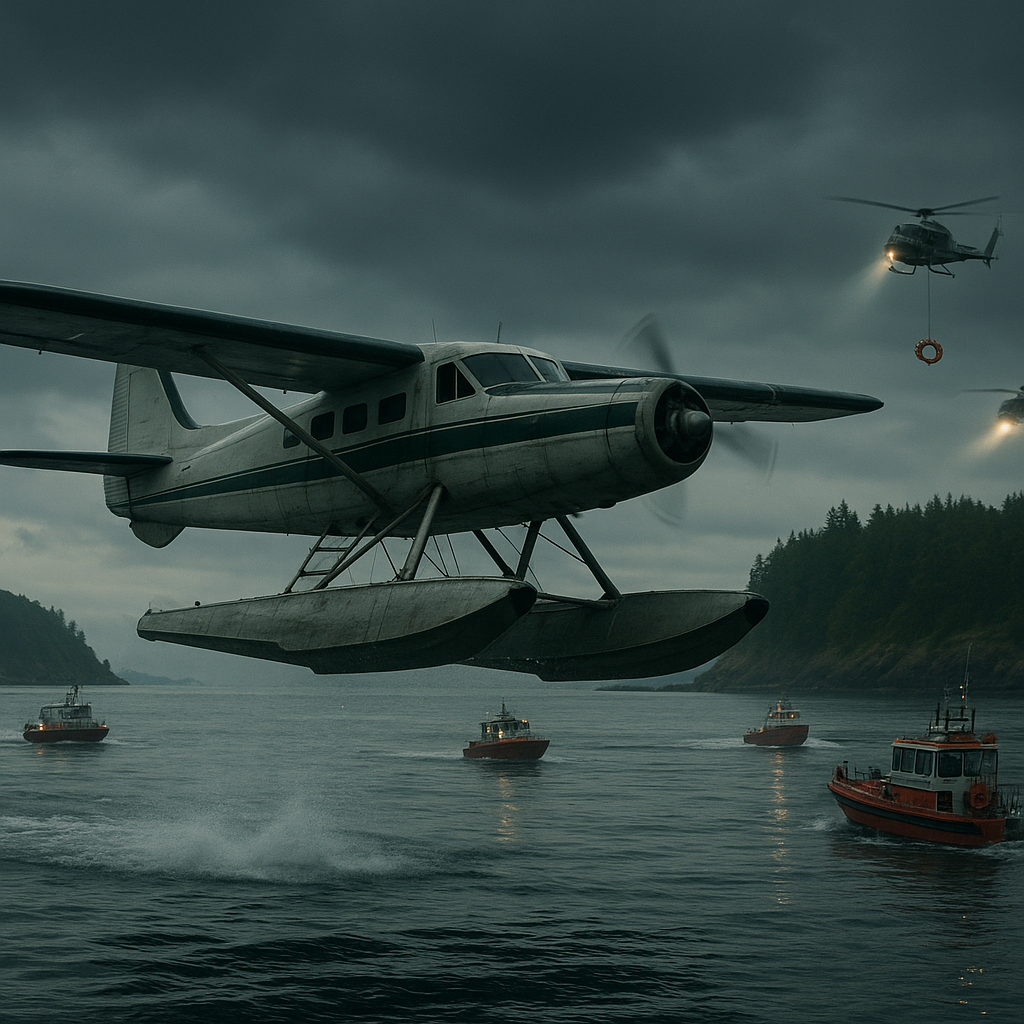
This is an aviation accident involving a floatplane operated by Kenmore Air, a regional carrier with a long record in Washington state. The aircraft reportedly went down in the water near Sucia Island, part of the San Juan Islands archipelago, where marine traffic, weather shifts, and rough water can all complicate emergency response.
The headline matters because people love to jump straight to conclusions. Don’t. The fact pattern is simple for now: an aircraft ended up in the water, emergency responders moved quickly, and all 11 people aboard were rescued. That is unusually good news in a water-crash scenario, where cold water, disorientation, and impact injuries can become fatal in minutes.
I’ve covered enough accidents to know the first reports are often messy. Witness accounts conflict. Dispatch audio is incomplete. Social posts get treated like evidence when they’re just noise. The truth is, aviation safety depends on hard facts: aircraft type, weather conditions, pilot communications, fuel state, mechanical history, and whether the plane experienced a loss of power or control before impact.
Kenmore Air is well known in the region for serving island communities and remote routes where seaplanes are practical. That matters because these aircraft are not novelty machines; they are workhorses for routes where ferries, roads, or airports do not always provide convenient access. If you want the larger context, it helps to compare this event with other recent transport incidents and emergency responses, like broader transport safety coverage and aviation reporting from outlets such as Reuters U.S. news.
The deeper issue is not panic. It is stewardship. Air operators carry real responsibility for human life, and the public has every right to expect that safety procedures are not treated as paperwork. A plane crash is not just a technical event; it is a test of competence, discipline, and respect for the dignity of every passenger on board.
Core Details and Context
Here’s what is known, and what is not.
- Location: Near Sucia Island, in San Juan County, Washington.
- Operator: Kenmore Air.
- Aircraft type: A seaplane/floatplane.
- People aboard: 11.
- Outcome: All rescued.
- Current focus: Emergency response and investigation.
That’s the clean version. The noisier version is what people tend to overstate online. Everyone wants an instant cause. Mechanical failure. Bad weather. Pilot error. Bird strike. Something dramatic. Maybe. But aviation investigations are built on evidence, and evidence is stubborn.
When I analyzed similar incidents, one pattern kept showing up: the public underestimates how much work goes into a “successful” rescue. If everyone survives, people assume the event was somehow less serious. That’s wrong. A water landing gone bad can become catastrophic in seconds. Rescuers may have had to deal with a sinking fuselage, hypothermia risk, fuel on the water, or rough conditions that made boarding difficult.
A few context points matter here:
- San Juan Islands weather can shift quickly. Fog, wind, and low visibility are real variables.
- Floatplanes operate close to the water, which creates unique risks during takeoff and landing.
- Marine rescue assets often play a role alongside fire, sheriff, coast guard, and other agencies.
- Passenger survival does not automatically mean there were no injuries.
The surrounding geography also matters. Sucia Island is remote enough that response logistics are not as simple as rolling an ambulance to a runway. Water access changes everything. A rescue on open water is never just one rescue boat; it’s a coordination problem, with radios, charting, boat handling, and scene safety all in play.
For readers looking for the broader aviation backdrop, it helps to compare this with investigative coverage from The New York Times U.S. section and aviation safety reporting in CNN Business, because the same questions repeat after nearly every incident: Was the aircraft maintained properly? Were weather warnings adequate? Did the crew have enough margin?
Frankly, that’s the part most coverage skips. They race to the dramatic part and leave out the structural question: how often do operators flying into rugged terrain and water need stronger redundancy, better weather planning, or more conservative decision-making?

Timeline and What Happened Step by Step
- The aircraft was operating near the San Juan Islands. This is the part before the incident, and it is where investigators will look first: route, weather, flight plan, and communications.
- The plane went down in the water near Sucia Island. Reports indicate an emergency in the water rather than on land, which immediately raises the stakes.
- Emergency crews responded. That response likely involved multiple agencies, because water rescues in island territory usually require coordinated assets.
- Passengers and crew were rescued. This is the big fact, and it changes the entire public-health and emergency-management picture.
- Investigators will now reconstruct the event. That means examining the aircraft, interviewing witnesses, reviewing maintenance records, and checking weather and air traffic data.
I’ve seen this play out before: the first hour is about saving lives, the next day is about documenting what happened, and the next month is about separating fact from guesswork. People hate that pace. Too bad. Accuracy moves slowly for a reason.
The rescue itself deserves more attention than it usually gets. A successful recovery from water requires speed without chaos. Rescuers need to reach the scene, assess the aircraft’s stability, decide whether to pull passengers onto boats or await additional support, and watch for secondary hazards. Cold water makes everything harder. So does panic.
That’s why the all-aboard rescue is not just a lucky headline. It is evidence that response systems worked when they had to. Not perfectly, maybe. We do not know that yet. But well enough to save lives.
Here’s the kicker: most public debate will focus on the wrong thing. It will get stuck on “Why did the plane crash?” before the better question appears: “What conditions made a survivable outcome possible?” That includes pilot training, floatplane procedures, emergency gear, and the rapid arrival of trained responders.
Comparison Table: Kenmore Air Seaplane Incident vs. Typical Water Crash Outcome
| Factor | Kenmore Air seaplane near Sucia Island | Typical severe water crash |
|---|
| People aboard | 11 | Varies, often small to medium groups |
| Immediate outcome | All rescued | Often includes fatalities or missing persons |
| Response environment | Water near island terrain | Water, often with more exposure and delay |
| Public focus | Rescue success plus cause investigation | Usually recovery and casualty count |
| Main risks | Injury, hypothermia, sinking, mechanical failure | Impact trauma, drowning, delayed rescue |
| Information status | Early reports, still under review | Initial reports often incomplete |
| Broader significance | Safety systems appear to have worked | System failure or delayed response more common |
The comparison is not meant to soften the event. It is meant to place it in context. A water crash is serious even when everyone survives. That’s not spin; it’s reality.
The closest competitor to this incident, in terms of public concern, is the usual assumption that “small regional flights are inherently unsafe.” That claim is lazy. Small aircraft do face sharper margins, yes. But route structure, weather, and operating environment matter more than brand-name fearmongering. The competent question is not whether people should be frightened. The competent question is whether the operator, regulators, and response teams did their jobs.
And that’s where public confidence lives or dies.
Common Misconceptions and What to Know
The first misconception is that a rescue means the crash was minor. It wasn’t. A crash is a crash. The absence of fatalities does not erase the risk, the trauma, or the possibility of serious injury. People sometimes act like survival makes the event almost routine. It doesn’t.
The second misconception is that the cause is already known because somebody on social media said so. No, it isn’t. Early claims are cheap. Verification is not. Investigators need physical evidence, not internet improv.
The third misconception is that floatplanes are somehow fringe machines. They aren’t. They are a practical answer to a specific geography. In the Pacific Northwest, where islands and water routes shape transportation, seaplanes are part of the normal system. You may dislike that fact, but it’s still true.
The fourth misconception is that regulators are always one step behind. Sometimes they are. Sometimes operators do better than the headlines give them credit for. Sometimes the real problem is a chain of tiny errors that only makes sense after the debris field, weather data, and maintenance logs are lined up in order.
I’ll be blunt: most news coverage misses the real story. It fixates on the spectacle and ignores the boring machinery of safety. Yet that boring machinery is what keeps people alive. Training. Checklists. Radio discipline. Maintenance. Weather judgment. Restraints. Survival equipment. Those are not sexy words, but they are the ones that matter.
There’s also a moral angle people rarely mention, though it should be obvious. The common good requires transport systems that do not treat passengers as cargo and communities as afterthoughts. Stewardship is not just a church word; it is a practical standard for anyone trusted with human lives and public trust.
- Do not assume the aircraft was overloaded.
- Do not assume weather alone caused it.
- Do not assume rescue success means no one was harmed.
- Do not assume the first witness account is the final word.
If you want deeper background on marine emergency response and public safety, it helps to follow reporting from outlets that keep the focus on verified facts, such as Associated Press and local regional coverage from Washington newsrooms that track island transport incidents closely.
Frequently Asked Questions
What happened to the Kenmore Air seaplane near Sucia Island?
The aircraft reportedly went down in the water near Sucia Island in San Juan County, and emergency responders rescued all 11 people aboard. The full cause has not been established publicly.
Were there any fatalities?
No fatalities have been reported in the information provided so far. All 11 aboard were rescued, which is the most important immediate outcome.
What caused the crash?
The cause has not been confirmed. Investigators will usually look at weather, mechanical condition, pilot decisions, communications, and any available flight data before making conclusions.
Which agencies investigate incidents like this?
Depending on the exact case, the National Transportation Safety Board and the Federal Aviation Administration may be involved, along with local emergency and law enforcement agencies.
Final Thought
The part worth remembering is not the panic, and not the online guessing either. It is the fact that 11 people ended up in the water and walked away alive. That outcome came from speed, discipline, and a chain of people doing hard jobs under pressure. In a world full of careless talk, that counts for something.
Now the responsible work begins. Investigators will sort out the cause, reporters will separate fact from noise, and the public will decide whether this was a one-off emergency or a sign of a bigger operational weakness. I’ve learned not to bet on neat answers. Aviation rarely gives them. But if the lesson is humility, competence, and respect for human life, that’s one lesson worth keeping.