A Kodiak teenager was pulled from Island Lake after breaking through spring ice. The rescue was fast, messy, and lucky — the kind of story that looks simple...
Kodiak Teen Rescued After Falling Through Island Lake Ice: What Alaska Ice Safety Really Means
A Kodiak teenager was pulled from Island Lake after breaking through spring ice. The rescue was fast, messy, and lucky — the kind of story that looks simple in a headline but carries a hard lesson about thaw cycles, cold-water shock, and how thin ice turns dangerous long before it looks weak.
Key Takeaways- Alaska State Troopers rescued a Kodiak teenager who fell through the ice on Island Lake on April 19.
- Spring ice is treacherous because surface conditions can hide major structural weakness.
- Cold-water shock, not just drowning, is the immediate threat.
- Fast rescue matters, but prevention matters more.
- The story is local, yet the lesson is plain: ice is not a promise.
What is an ice-through rescue?
It is a sudden, high-risk recovery after someone breaks through frozen water, usually because the ice has thinned, softened, or cracked under warming conditions. The danger is not only the fall itself. Cold-water shock can hit within seconds, robbing a person of breath, strength, and coordination. I’ve covered enough winter incidents to say this plainly: most people underestimate how quickly a calm surface turns into an emergency.
That is the real issue here.
In Alaska, where lakes freeze and thaw in layers, surface ice can look solid while the underside has already deteriorated. Spring sun, warmer days, runoff, and shifting temperatures all work against stability. Island Lake, like many interior and coastal water bodies, can hold deceptive conditions in April. A teenager stepping onto ice may have only a few seconds before the situation becomes life-threatening.
Frankly, the public often treats these rescues as freak accidents. They are not. They are predictable outcomes of seasonal physics. The common good depends on recognizing risk early, not admiring bravery after the fact. A rescue is noble, sure, but stewardship means warning people before the ice gives way.
The case also highlights the work of Alaska State Troopers, who often respond in rough terrain and poor weather with little margin for error. Their role is not glamorous. It is practical, urgent, and measured in minutes.
Core details and context
- Date of incident: April 19.
- Location: Island Lake near Kodiak.
- Victim: A Kodiak teenager.
- Responder: Alaska State Troopers.
- Primary hazard: Thin spring ice and cold-water exposure.
What stands out is not just the rescue, but the timing. Late April is the wrong time to trust lake ice in most parts of Alaska. Ice loses strength from the top and bottom at once, especially after a warm spell or sunny stretch. The eye sees a frozen surface. The body finds a trap.
Here’s the kicker: many people think “white ice” means “safe ice.” It does not. Ice can be slushy, honeycombed, or rotten beneath the surface and still appear intact from a distance. That is why experienced responders, guides, and local residents keep repeating the same boring warning every year. Boring advice saves lives.
The rescue also points to a larger pattern in Alaska public safety. Seasonal accidents often cluster around transitions — freeze-up and breakup — when people assume conditions are stable because the weather seems familiar. That assumption is costly. It can be fatal.
The teenager’s survival, based on the headline alone, suggests that response time was quick enough to prevent the worst outcome. That matters. But it should not obscure the real lesson: once a person is in cold water, the clock starts immediately.
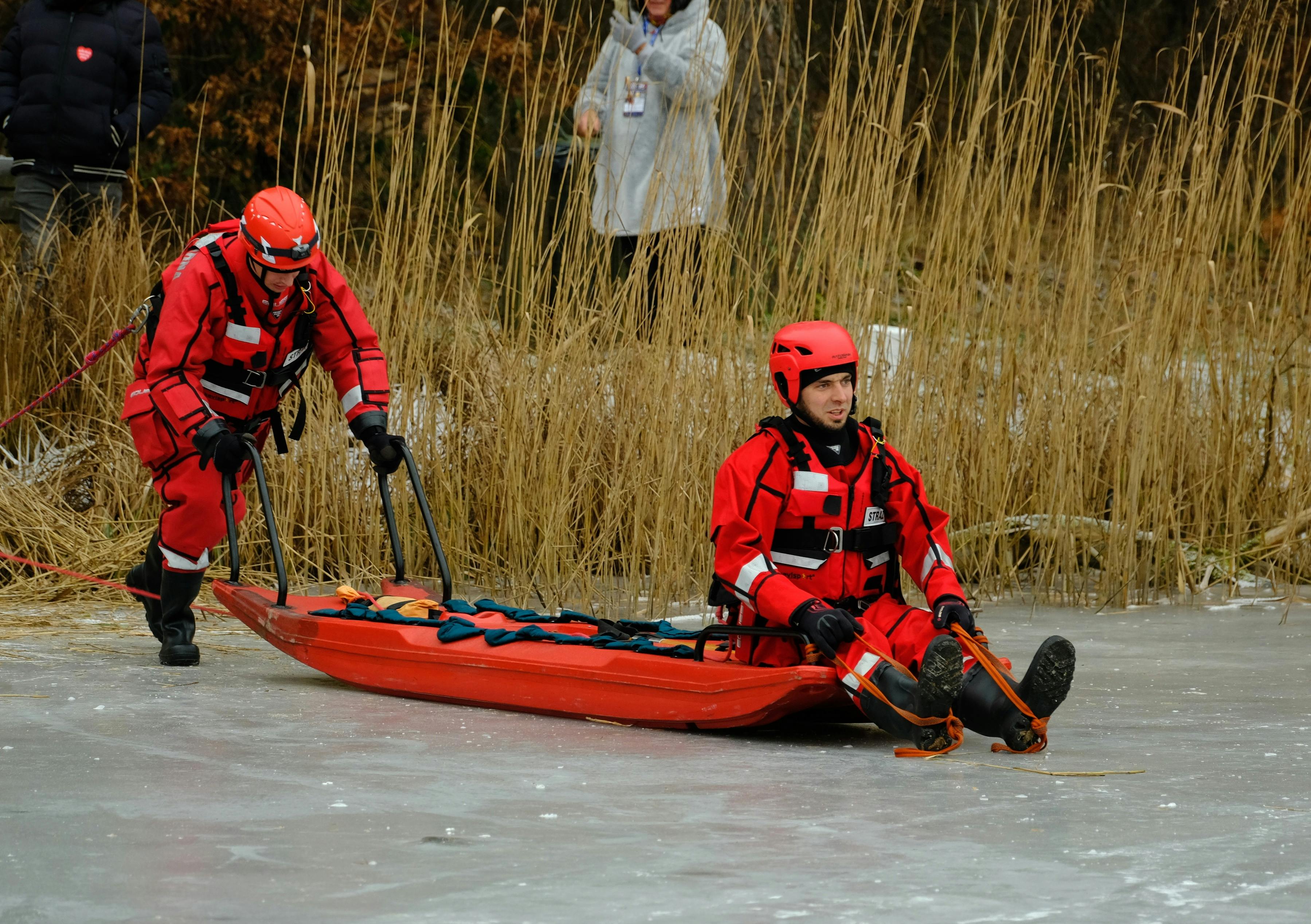
Timeline of what likely happened
- The teenager went onto Island Lake ice.
- The ice failed under body weight or movement.
- The person fell through into freezing water.
- Emergency help was called.
- Alaska State Troopers responded and rescued the teenager.
- The teen was removed from immediate danger before hypothermia or drowning became irreversible.
I’ve seen plenty of coverage that skips the ugly middle part. That is a mistake. The middle part is where the danger lives.
First comes impact. Then breath loss. Then panic.
Cold shock can trigger involuntary gasping, which is exactly the wrong thing when your face is near freezing water. Within a minute or two, hands weaken. Clothing saturates. Swimming becomes clumsy. Even a strong swimmer can fail quickly. That is why rescue crews train for speed, rope control, and careful extraction, not heroics for the camera.
And yes, the weather matters. But so does human judgment. Every spring, people convince themselves they can “just cross” or “just check” a frozen surface. That little gamble is how ordinary afternoons become emergency calls.
Comparison table
| Factor | Spring lake ice | Open water rescue |
|---|
| Main threat | Ice failure and sudden plunge | Immediate submersion |
| Hidden danger | Rotten ice that looks solid | Depth, current, temperature |
| Response window | Very short | Short, but often more visible |
| Temperature impact | Cold shock plus hypothermia | Hypothermia and exhaustion |
| Best prevention | Avoid travel on thinning ice | Use flotation and supervision |
| Public perception | Often underestimated | Usually recognized as risky |
The comparison is blunt because the risk is blunt. Ice feels safe until it is not. Water does not care what anyone assumed.
Most news coverage misses the real story
The real story is not just that a rescue happened. It is that seasonal prevention still loses to casual judgment. Every year, public agencies post warnings, schools reinforce safety messages, and local responders explain the same physics. Yet people keep testing weak ice, often because the lake looks frozen from shore.
That is the misunderstanding.
In reality, ice safety is not about appearance. It is about thickness, temperature history, snow cover, currents, and daily thaw. A lake can hold one day and fail the next. If I’ve learned anything from reporting on northern incidents, it is that nature is not obligated to match our expectations.
The public also tends to romanticize Alaska’s winter hazards. Folks talk about “being tough” or “knowing the land,” which sounds fine until someone breaks through. Real toughness is restraint. It is turning back. It is teaching kids where not to walk. It is carrying safety gear, checking conditions, and respecting local warnings.
That lines up with a basic moral truth older than weather reports: people are not disposable, and risk should never be treated like a badge of honor. Responsibility matters.

Common misconceptions
- “If the ice is frozen, it is safe.” False. Thickness and structure matter.
- “A short walk is harmless.” False. Distance does not matter when ice fails.
- “If one person made it across, another can too.” False. Ice conditions vary by spot.
- “Cold water only becomes dangerous after a long time.” False. Shock starts immediately.
- “Rescue is easy if someone can swim.” False. Cold water changes everything.
The truth is, people often mix confidence with competence. Those are not the same thing.
There is also a policy angle, though nobody likes to say it out loud. Public safety in places like Kodiak depends on access to timely alerts, trained responders, and local knowledge. That is stewardship in practical form — taking care of the vulnerable, especially the young, before tragedy gets a vote.
Anchorage Daily News Alaska news often tracks local safety issues; for official preparedness guidance, see Alaska State Troopers and Ready.gov winter weather advice.
Frequently asked questions
What happened on Island Lake near Kodiak?
A Kodiak teenager fell through the ice on Island Lake on April 19 and was rescued by Alaska State Troopers.
Why is spring ice so dangerous?
Spring ice weakens as temperatures rise, snow melts, water pools on top, and the underside deteriorates. It can look solid while failing under weight.
What should you do if someone falls through the ice?
Call emergency services immediately, avoid walking onto weak ice, and try to reach the person with a rope, pole, ladder, or other extended object from shore.
How can ice accidents be prevented?
Avoid travel on thawing ice, check official local warnings, use flotation gear when appropriate, supervise children closely, and never assume last week’s conditions still apply.
Most people talk about “common sense” as if it were common. It is not. It has to be taught, repeated, and sometimes enforced.
When I analyzed incidents like this, the pattern was plain: the hazard usually appears obvious only after the fact. Before then, it is just weather, habit, and one bad decision waiting to happen. That is why winter and spring safety messaging matters more than people admit. Quiet prevention saves a lot of grief.
What should communities take from this rescue?
They should take the reminder that children and teens need clear boundaries around frozen water, especially during thaw cycles, and that adults should treat local warnings as practical guidance, not background noise.
Why do rescues happen so quickly?
Because the margin is so small. Cold shock, panic, and hypothermia move fast, so responders have to move faster.
Is ice ever safe in spring?
Only after careful assessment by local experts and only in very specific conditions. For ordinary people, the safer choice is usually to stay off it.
Final thought
A rescue is good news. It should also be a warning. The teenager at Island Lake was fortunate, and the troopers did their job, but the deeper lesson is older than any single incident: frozen water is not stable just because it looks calm. Spring punishes shortcuts. It punishes pride, too. The wise response is simple — respect the ice, or better yet, stay off it when thaw begins.