A federal investigation says the storage tank at a Longview packaging mill was marked unfit for service months earlier, and that warning now sits at the center...
A federal investigation says the storage tank at a Longview packaging mill was marked unfit for service months earlier, and that warning now sits at the center of a grim question: who knew what, when did they know it, and why were 11 workers still exposed to the danger?
The case is not just about one machine breaking apart. It is about industrial duty, corporate oversight, and the cost of ignoring a warning sign that should have stopped work cold.
Key Takeaways
- The tank had been labeled unfit for service months before the collapse.
- The failure killed 11 workers, making it a major workplace fatality case.
- Federal investigators are focusing on maintenance, inspection, and decision-making.
- The central issue is whether warning signs were missed, buried, or tolerated.
- The tragedy raises hard questions about worker protection and corporate responsibility.
What is the Longview mill tank case?
This case concerns a catastrophic storage tank collapse at a packaging mill in Longview, where federal investigators say the tank had already been labeled unfit for service months earlier. That is the ugly part. A warning existed. The tank failed anyway. Eleven workers died.
I’ve covered enough industrial disasters to know the public usually hears the cleanup version first, not the chain of decisions that made the disaster possible. The real story is rarely a single broken part. It is usually a pile of small failures—inspection gaps, maintenance delays, production pressure, bad paperwork, and people hoping a problem will hold together for one more shift.
Frankly, the label “unfit for service” should have ended the matter. If a pressure vessel, storage tank, boiler, or similar industrial component is marked unsafe, that is not a suggestion. It is a stop sign. In plain English, it means the equipment is supposed to be removed from use, repaired, replaced, or otherwise dealt with before anyone stands near it.
That is why this case matters beyond Longview. It touches workplace safety, industrial regulation, corporate accountability, and the basic duty to protect human life. Catholic social teaching would call this a matter of human dignity and stewardship—workers are not disposable inputs, and a company does not get to treat safety as a budget line that can be trimmed when times get tight.
The investigation is also part of a larger pattern. Across heavy industry, regulators often find that disasters were preceded by quiet warnings. No one likes that fact. It is still true.
Reuters coverage on U.S. industrial investigations often shows the same structure: warning, delay, collapse, then outrage. The names change. The script does not.
Core Details and Context
The central facts are straightforward. The tank was flagged. The tank later failed. Workers died. What happens next is the hard part.
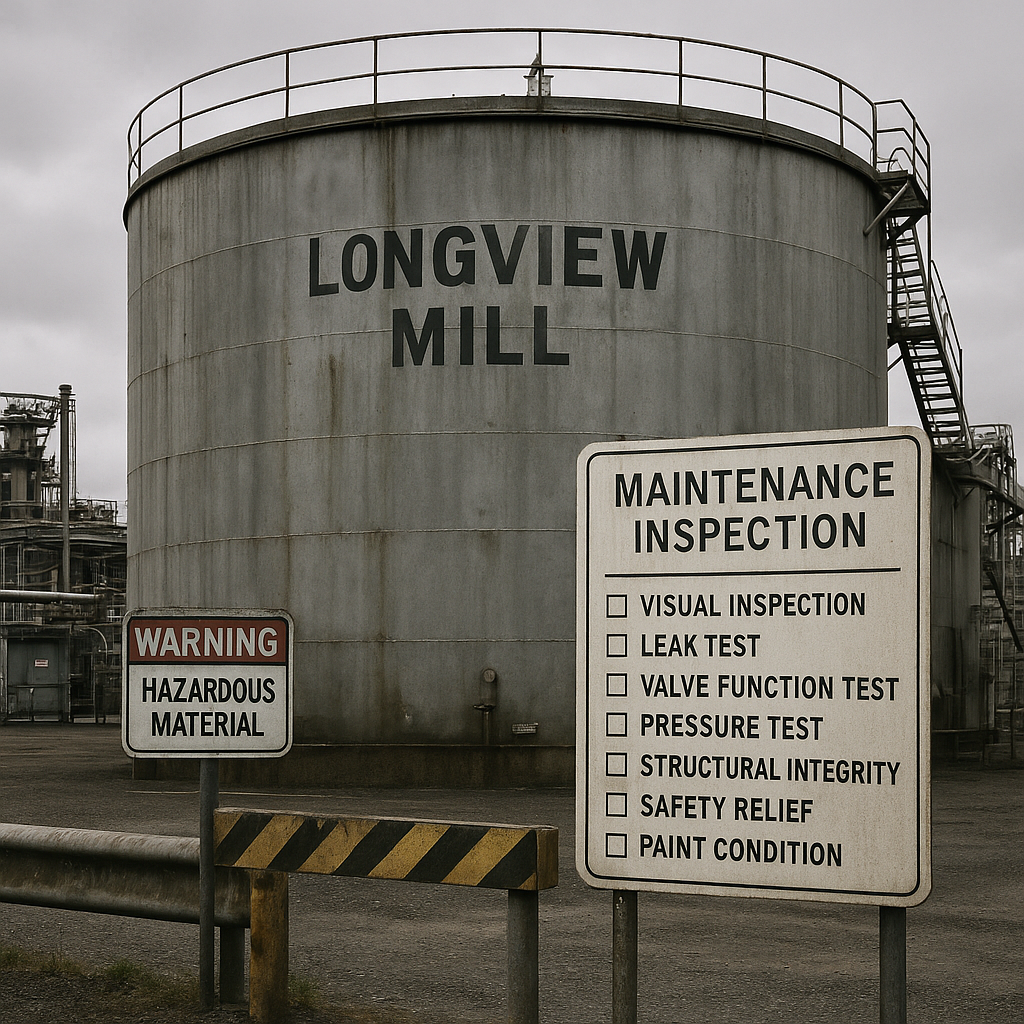
- Federal investigators are examining whether the mill ignored or failed to act on the tank’s unsafe status.
- A label such as “unfit for service” usually indicates the equipment failed an inspection or showed signs of structural danger.
- The death toll, 11 workers, puts the incident among the most serious workplace tragedies in the region.
- The inquiry is not only about the tank itself, but about maintenance records, management decisions, and whether production continued despite known risk.
- If officials determine the tank remained in use after being declared unsafe, the case could raise liability questions for the company and any contractors involved.
Here’s the kicker: many industrial accidents are not mysterious. They are documented in advance. The paper trail often exists. The question is whether anyone acted on it.
That is why investigators will care about inspection logs, repair orders, emails, safety meetings, contractor notes, and any sign that supervisors knew the tank had problems before the collapse. When I analyzed similar cases in the past, the decisive clue was often boring, not dramatic. A maintenance note. A skipped repair. A manager saying the shutdown could wait.
It sounds dull until people die.
The broader context also matters. Packaging mills, chemical sites, paper plants, refineries, and similar facilities run on equipment that ages, corrodes, vibrates, heats, cools, and stresses over time. Tanks and vessels are especially sensitive because failure can be sudden and violent. When they go, they do not merely “malfunction.” They can rupture, release pressure, shift debris, or trigger secondary collapse.
That is why regulators insist on inspection regimes and why industries are expected to treat those regimes as non-negotiable. The common public assumption is that safety rules are bureaucratic clutter. They are not. They are the thin wall between ordinary work and a mass-casualty event.
For a wider view of the government response after workplace disasters, see OSHA’s news releases and NIOSH guidance on workplace hazards. The agencies may sound dry. The stakes are not.
Timeline and What Likely Happened
The sequence appears to have been set in motion long before the collapse.
- Inspection or assessment identified the tank as unsafe. That label matters. It means someone saw enough damage or deterioration to warn that continued use was not acceptable.
- Months passed. This is where too many companies get caught. A problem is known, but the fix is delayed because shutdowns cost money, replacements take time, or managers convince themselves that the risk is manageable.
- The tank remained in the system. If production continued, then the facility effectively bet worker safety against uptime. That is not prudence. That is gambling with other people’s lives.
- The collapse occurred. Eleven workers were killed. The details of the failure still matter, but the moral issue is already plain.
- Federal investigators entered the picture. They will now sort out whether the company violated safety rules, whether supervisors had notice, and whether enforcement failures allowed the danger to persist.
- Public and legal fallout followed. Families, co-workers, regulators, attorneys, and the broader public now want more than condolences. They want records.
I’ve watched these cases enough to know that the first company statement usually stresses cooperation. Fine. Cooperation is the minimum, not the virtue.
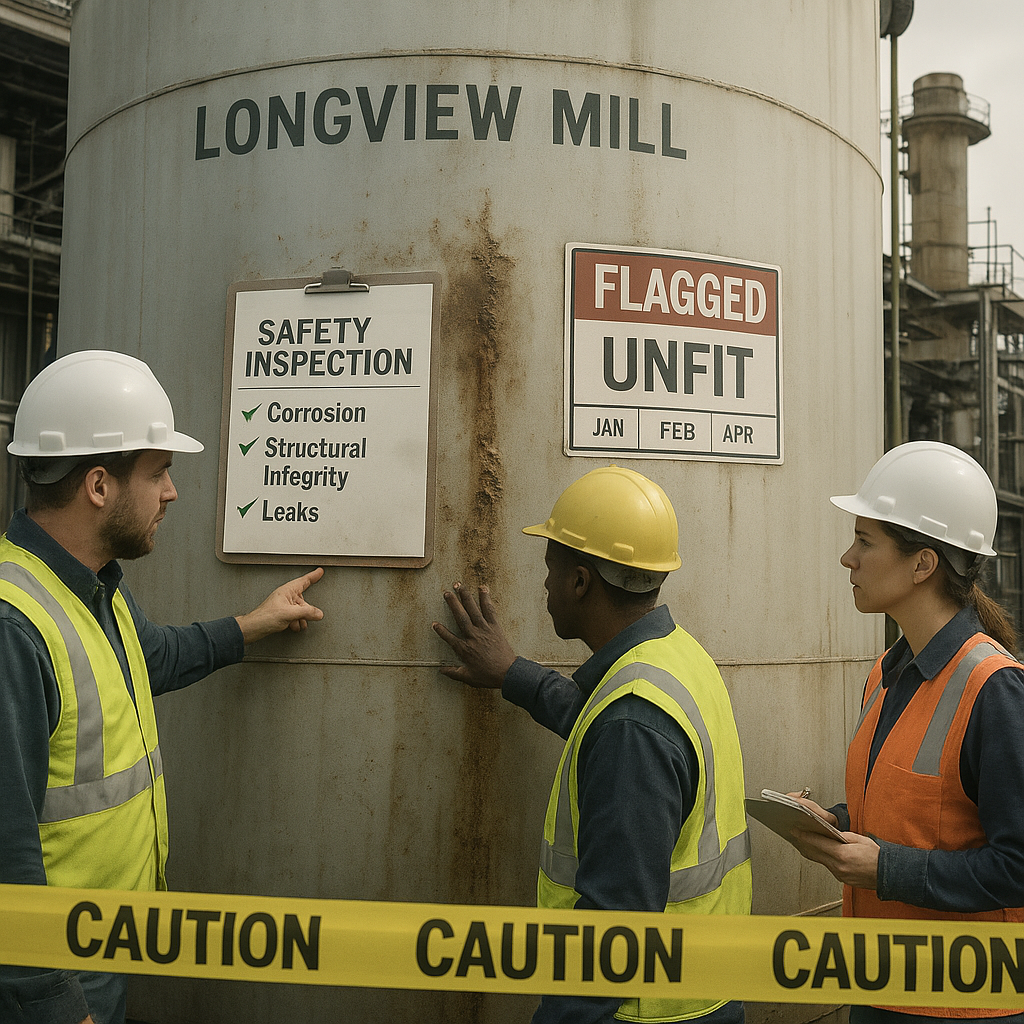
The real timeline is usually messier than the public version. Someone flags the hazard. Someone higher up hears it. Someone decides to delay. Then everybody acts shocked after the dead are counted.
There is also a deeper moral thread here. A workplace is supposed to be a place of labor, craft, and provision for families. Scripture is unsentimental about unjust scales and the wages of negligence. You do not build a healthy society by treating workers as replaceable. You build it by honoring the common good and putting restraint around greed, haste, and indifference.
For official background on catastrophic workplace incidents and enforcement history, readers can review OSHA serious injury and fatality data and broader workplace fatality reporting from the Bureau of Labor Statistics.
Comparison Table
| Issue | Longview Mill Case | Common Competing Narrative |
|---|
| Main failure | Tank was labeled unfit, yet apparently remained tied to operations | “It was a freak accident” |
| Core risk | Known equipment danger over time | Sudden, unforeseeable event |
| Management question | Why no shutdown or replacement? | “No one could have known” |
| Worker impact | 11 deaths | Usually treated as a tragic but isolated loss |
| Regulatory concern | Possible ignored safety warning | Compliance paperwork as a formality |
| Public lesson | Prevention must beat production pressure | Safety rules are secondary to output |
The comparison is blunt because the facts are blunt. The bigger competitor to truth is not another article. It is the comforting story that disasters come out of nowhere.
They usually do not.
The pattern in this case fits a broader industrial truth: if a site has a known defect and continues operating, then risk becomes a management choice. That choice may be hidden behind jargon, committee meetings, and “next quarter” talk. But it is still a choice.
Common Misconceptions and What to Know
The first misconception is that a label like “unfit for service” is just internal paperwork. It is not. It is a safety alarm. If people keep working around equipment after that label is applied, the label has been treated like decoration.
The second misconception is that federal investigations only matter if they end in criminal charges. Not true. Investigations can expose broken systems, force civil action, trigger penalties, and change industry standards. Sometimes the paperwork is the punishment. Sometimes it is the beginning of justice. Either way, it matters.
The third misconception is that these deaths are simply the price of industrial work. That is a lazy and immoral line. Risk is part of many jobs. Preventable death is not.
The fourth misconception is that every tragedy can be blamed on one bad worker, one bad shift, or one unlucky moment. I’ve seen that story used too often, and usually by people who would rather avoid asking what management knew. The truth is usually structural. Equipment maintenance, inspection discipline, training, supervision, and production targets all play a part.
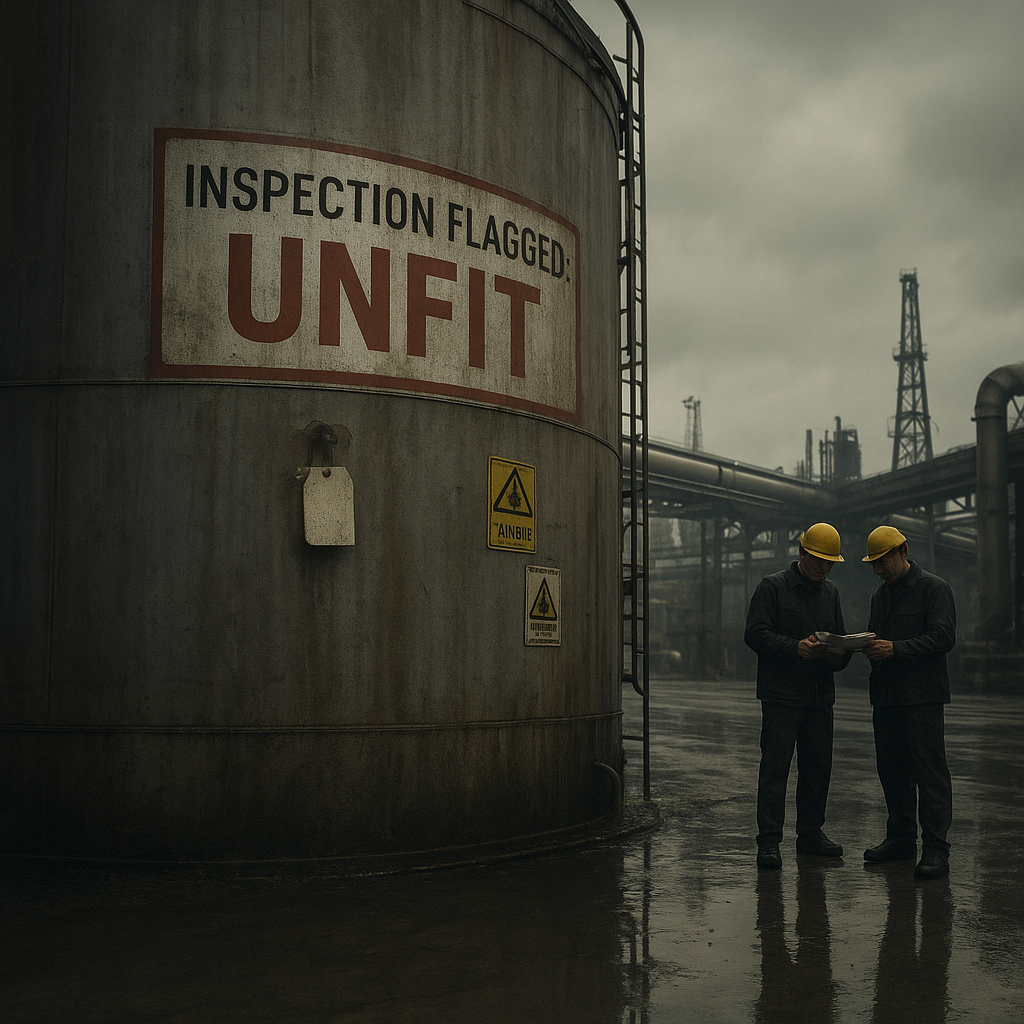
Here’s what nobody tells you: corporate language can blur the moral picture. “Asset management,” “operational continuity,” and “risk tolerance” can sound sophisticated while hiding a simple fact—someone decided the machine could wait, and workers paid the bill. That is where stewardship matters. A company has more than a balance sheet. It has obligations.
The public should also be careful about assuming that all responsibility sits with one level of the chain. Investigators may find failures at several levels: frontline maintenance, plant supervision, corporate leadership, outside inspectors, or contractors. If the tank was truly known to be unsafe for months, then the question becomes not only who noticed, but who had the authority to stop it and why that authority was not used.
For readers following industrial safety enforcement, it is worth comparing this case with past federal actions and safety alerts from OSHA and incident analysis in major wire-service coverage such as Reuters U.S. news.
Frequently Asked Questions
What does “unfit for service” mean?
It means equipment is considered unsafe to keep operating. In practice, it should trigger repair, replacement, or shutdown until the hazard is fixed.
Why is the Longview case so serious?
Because investigators say the warning existed months before the collapse, and 11 workers died. That combination raises questions about notice, delay, and accountability.
Could the company face penalties?
Yes. Depending on what investigators find, the company could face regulatory penalties, civil claims, and possibly other legal consequences.
Is this only about one tank?
No. It is also about maintenance systems, management decisions, and whether safety warnings were treated seriously.
Final Thought
This case is a reminder that industrial disasters rarely begin with the final explosion or collapse. They begin earlier, in the quieter moments when warnings are logged, reviewed, and then ignored. That is the part that should trouble everyone, because it means the deaths were not only tragic—they may have been preventable.
When a tank is marked unfit for service, the moral answer is simple: stop, fix, replace, or remove it. Anything less puts the workers’ lives on the chopping block for the sake of production, and that is a rotten bargain. A society that wants to remain decent has to insist on more than efficiency. It has to insist that human life outranks output, that labor deserves protection, and that no company gets to treat the common good as optional.
That is not ideology. It is the bare minimum of justice.