The No Kings protests have spread fast. After Donald Trump returned to the White House, organizers said the movement widened into more than 3,000 events across...
The No Kings protests have spread fast. After Donald Trump returned to the White House, organizers said the movement widened into more than 3,000 events across the United States, including several Alaska communities, as critics framed the rallies as a warning about executive power and supporters cast them as a noisy but legitimate burst of dissent.

Key Takeaways- More than 3,000 No Kings events were reported nationwide.
- The protests began after Trump’s return to office and focused on fears about concentrated power.
- Alaska saw participation in several communities, showing the reach of the movement beyond big coastal cities.
- The rallies mixed speeches, signs, marches, and local organizing rather than one central national event.
- The bigger story is not just turnout, but how protest networks are being used to pressure policymakers.
What is the No Kings protest series?
The No Kings protest series is a loosely organized wave of demonstrations built around a simple message: no leader should be treated like a monarch, and no office holder should sit above law, limits, or public accountability. That sounds obvious, because it is. Yet the slogan has traction precisely because many Americans feel political power has become too concentrated, too theatrical, and too disconnected from ordinary people.
I’ve covered enough public demonstrations to know this part gets flattened in cable-news chatter. People hear “protest” and imagine one march in one city. That is lazy reporting. The No Kings effort is better understood as a decentralized political action campaign, stitched together by local groups, activists, and citizens who want to signal resistance to what they see as an imperial style of governance. Frankly, the point is not always persuasion. Sometimes it is witness.
The movement’s name does the heavy lifting. It borrows from old democratic and biblical ideas about limits on earthly power. Civil rulers are not divine, and power is supposed to be held in trust for the common good, not hoarded for ego. That moral thread matters, even if the protesters themselves vary widely in ideology, age, and method. Some came to defend civil liberties. Others came because they distrust Trump personally. Some were just angry. Human motives are usually messier than the slogans printed on poster board.
The most recent wave became notable because of scale. More than 3,000 events is not a small showing. It suggests a national network with enough momentum to keep state-by-state and city-by-city pressure alive. The fact that Alaska communities were included also matters. Geography often exposes the real depth of a movement. If it reaches places far from Washington and New York, then it is not merely a media performance.
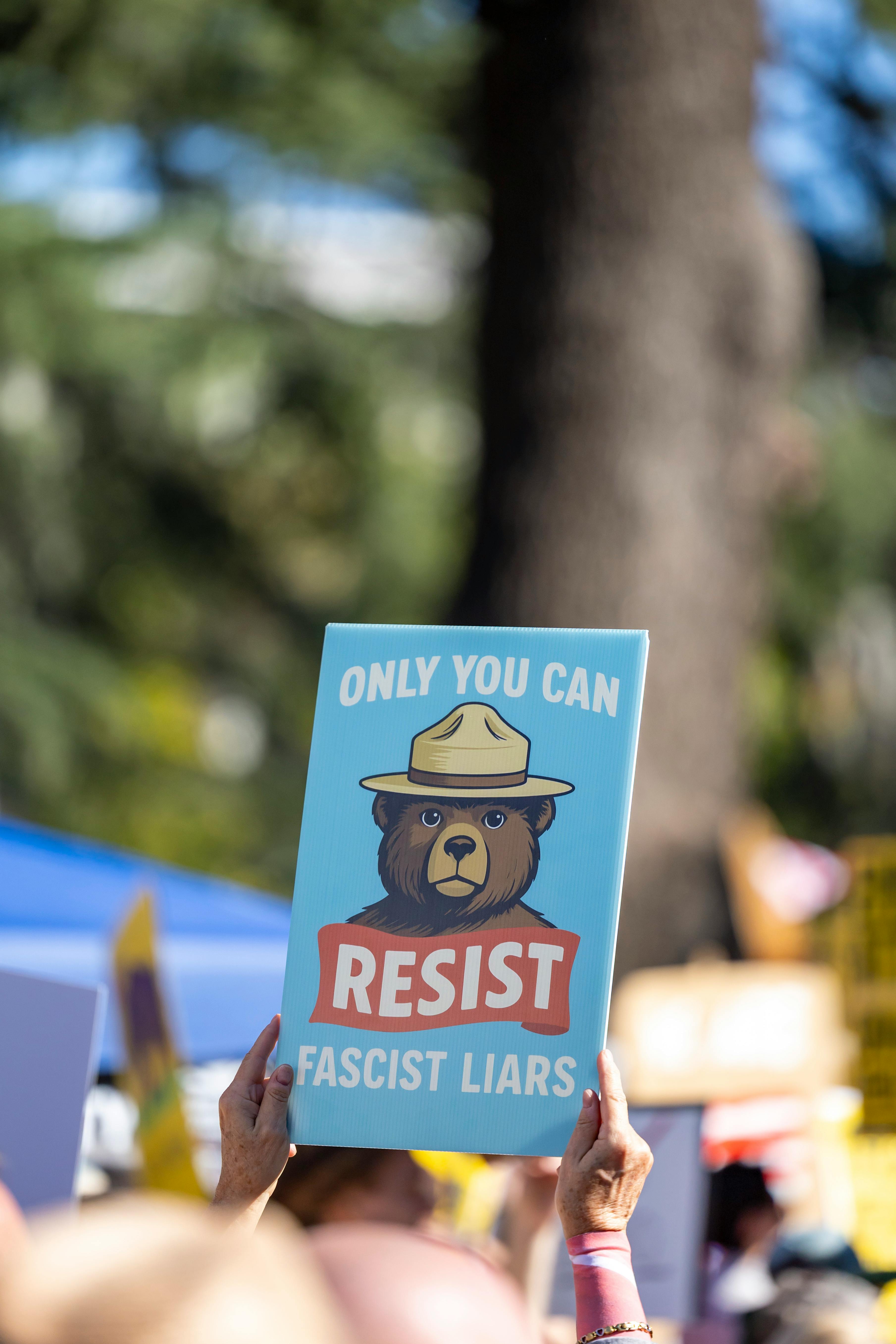
Core Details/Context
The recent protest wave sits inside a broader argument about power, legitimacy, and how far executive authority should go.
- Scale: Organizers and local reports estimated more than 3,000 separate events nationwide. That number matters because it points to distributed organizing, not just one-off mobilization.
- Timing: The protests gained fresh energy after Trump returned to office, which gave opponents a new target and a fresh reason to rally.
- Message: The core slogan rejects monarchic imagery and warns against the idea that any president can act without restraint.
- Geography: Alaska participation shows the movement is not confined to urban hubs. It reached a mix of smaller communities and regional centers.
- Method: The events were varied. Some were marches. Some were rallies. Some were sidewalk gatherings with signs and speeches. That variety helps keep them flexible.
- Political aim: The point is less about one immediate policy demand than about shaping public opinion and signaling resistance to perceived overreach.
- Media effect: Large protest counts can drive coverage, but coverage alone does not change legislation. It can, however, change the mood around legislation, and that matters in politics.
Most coverage treats turnout as the whole story. It isn’t. Turnout tells you there is energy. It does not tell you whether the energy is disciplined, whether it can influence elections, or whether it will fade after the news cycle moves on. That is where people get fooled.
When I analyzed similar protest waves in past political cycles, one thing was clear: the most effective movements combine moral language with local organization. That is where the No Kings effort may have an edge. It gives ordinary people a simple frame, but it also relies on thousands of local nodes that can keep pressure going after the chants stop.
Still, the limits are real.
- Protest numbers can be inflated by enthusiastic counting.
- A large rally does not equal broad national consensus.
- Anti-Trump demonstrations often mobilize faster than they persuade undecided voters.
- Some participants show up to vent, not to build.
- The public may agree with the complaint but dislike the spectacle.
Here’s the kicker: the protests are as much about legitimacy as policy. That means the argument happens in the streets, on screens, in local papers, and in conversations at kitchen tables. It is an argument about whether republican government still feels republican.
For readers trying to follow the larger political context, it helps to compare protest action with actual governing power. National demonstrations can shape the terrain, but legislation still moves through Congress, courts, agencies, and elections. The Constitution does not care how loud your sign is. It cares about limits, procedures, and accountability.
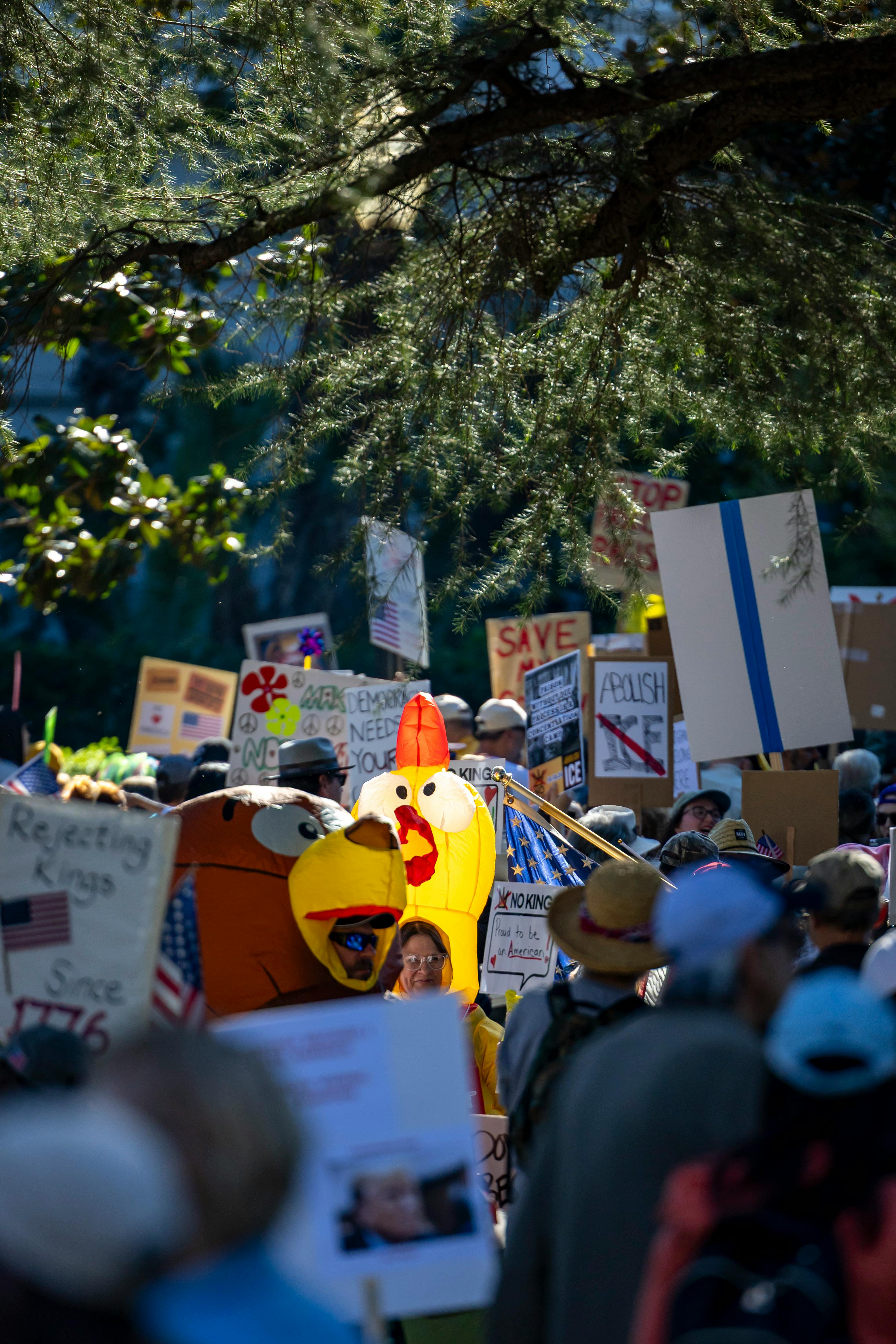
Timeline/Step-by-Step
- Trump returned to office.
The protests took shape after his return, because opponents saw the restart of his presidency as a direct threat to restraints they consider essential. I think that timing is the point: it turns abstract fear into immediate action.
- Local organizers began coordinating events.
The effort did not depend on a single national march. Instead, groups across states built their own versions, which allowed the movement to spread faster and fit local conditions.
- The message crystallized around “No Kings.”
That phrase is blunt. It lands because it is easy to remember and hard to misread. No fancy theory needed.
- Planning expanded into dozens, then hundreds, then thousands of sites.
Once a protest format becomes portable, it can scale quickly. That is what happened here. Community leaders, activists, and volunteers used social media, email lists, and plain old word of mouth.
- Alaska communities joined in.
This is the part that gets overlooked. Protests in far-flung places show the message has travel power. It is not just a big-city habit.
- Coverage and criticism followed.
Supporters described the events as civic resistance. Critics called them performative or partisan. Both reactions were predictable. Both miss the larger question.
- The political effects will show up later.
That is how this usually works. First comes the rally. Then comes the organizing. Then comes the election talk, the fundraising, the candidate shifts, and maybe the policy response.
I’ve seen this pattern before. The crowd gathers first. The consequences come later, if they come at all.
Comparison Table
| Feature | No Kings Protest Series | Traditional Single-City Protest |
|---|
| Geographic reach | Nationwide, with 3,000+ events | Usually one city or metro area |
| Organization | Decentralized local groups | Centralized planning team |
| Message | Anti-monarchy, anti-overreach, pro-accountability | Often issue-specific |
| Media attention | High, because of scale | Moderate to high, depending on size |
| Political effect | Shapes public opinion over time | Can influence a single local issue |
| Weakness | Hard to unify demands | Easier to measure and coordinate |
If you want the simplest comparison, here it is: the No Kings series is broad but messy. A single-city protest is smaller but sharper. Which works better depends on the target. For a national presidency, breadth can matter more than precision. For a city council vote, precision usually wins.
Common Misconceptions/What to Know
A lot of lazy narratives follow protests like this. Let’s clear a few out.
Misconception 1: More events mean more consensus.
No. More events mean more organizing capacity. They do not prove that most Americans agree with the message. A movement can be loud and still be a minority view. That is democracy too.
Misconception 2: The protests are only emotional theater.
That is too neat. Some demonstrations are pure venting, sure. But large protest networks can also build volunteer lists, raise funds, recruit candidates, and pressure local officials. The theater can have an afterlife.
Misconception 3: Alaska turnout does not matter.
It matters because geography reveals durability. If a message reaches communities far from the main political stage, it is not just an echo chamber exercise. It may still be politically narrow, but it is not trivial.
Misconception 4: Street protests automatically change policy.
No. The record is mixed. Often the real effect is indirect: shifting media attention, forcing responses, and strengthening opposition networks. That is less dramatic, but it is how politics actually works.
Misconception 5: Protesters are all the same.
They are not. Some are liberal activists. Some are independents. Some are veterans of prior movements. Some are just citizens who think public office should be served, not worshiped. The moral core here is older than party labels. Human dignity is not a partisan invention.
What to watch now is whether the energy survives contact with normal politics. That means city meetings, state party fights, election season messaging, and legal battles. Street energy decays fast unless it is fed by routine civic work. That’s the hard truth nobody likes to say out loud.
Frequently Asked Questions
What is the No Kings protest movement?
It is a decentralized protest series opposing what participants see as excessive or authoritarian uses of power, especially after Trump returned to office. The message is simple: elected leaders should remain accountable, not act like rulers above the law.
Why are the protests called No Kings?
The name rejects the idea of a president as a monarch. It signals resistance to concentrated power and underscores a democratic belief that government authority comes with limits.
How many No Kings events were held?
Organizers and local reports estimated more than 3,000 events across the United States in the latest wave. That figure suggests wide participation, though exact counts can vary.
Why does Alaska participation matter?
Because it shows the movement reached beyond major coastal cities and into smaller, more remote communities. That kind of spread suggests broader organizing reach, even if the political impact remains uncertain.
Final Thought
The No Kings protests tell us something plain, and it is not flattering to either side. A big chunk of the country still feels the need to shout about limits on power, while the political class keeps pretending that noise and governance are the same thing. They are not. One is a signal. The other is stewardship.
What matters next is whether the movement can turn moral complaint into civic discipline. That is the real test. Protest is easy to admire when it is fresh and loud, but lasting public responsibility takes patience, local work, and a willingness to treat opponents as citizens rather than enemies. That is old wisdom, and it still holds. A republic survives on restraint, not swagger.
```json
{
"@context": "https://schema.org",
"@type": "FAQPage",
"mainEntity": [
{
"@type": "Question",
"name": "What is the No Kings protest movement?",
"acceptedAnswer": {
"@type": "Answer",
"text": "It is a decentralized protest series opposing what participants see as excessive or authoritarian uses of power, especially after Trump returned to office."
}
},
{
"@type": "Question",
"name": "Why are the protests called No Kings?",
"acceptedAnswer": {
"@type": "Answer",
"text": "The name rejects the idea of a president as a monarch and emphasizes democratic limits on power and accountability."
}
},
{
"@type": "Question",
"name": "How many No Kings events were held?",
"acceptedAnswer": {
"@type": "Answer",
"text": "Organizers and local reports estimated more than 3,000 events across the United States in the latest wave."
}
},
{
"@type": "Question",
"name": "Why does Alaska participation matter?",
"acceptedAnswer": {
"@type": "Answer",
"text": "It shows the movement reached beyond major coastal cities and into smaller, more remote communities, suggesting broader organizing reach."
}
}
]
}
```