North Bend House Fire: What We Know About the SE 118th Blaze
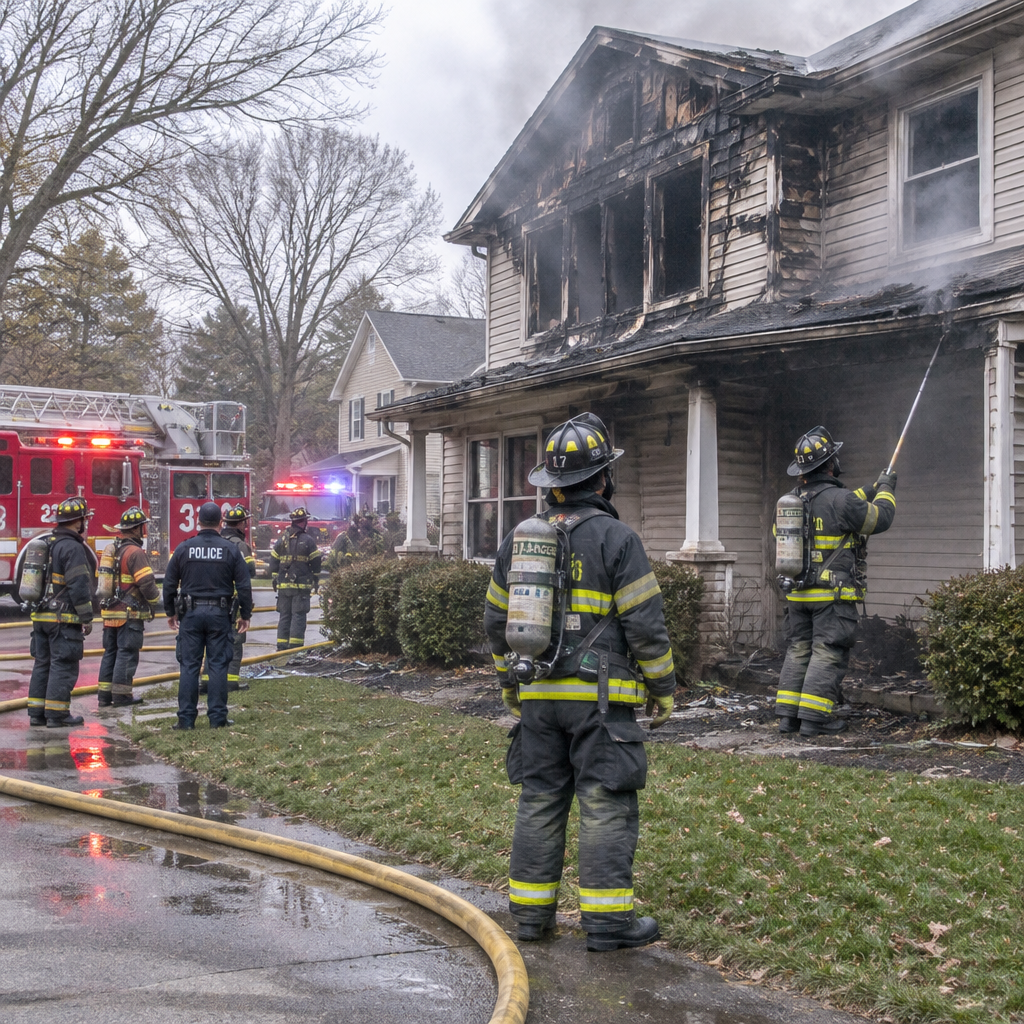
The North Bend house fire on SE 118th left a two-story home fully engulfed Tuesday morning, but everyone escaped and no injuries had been reported, Eastside Fire & Rescue said. Firefighters used a defensive attack, working from outside because flames had spread through the structure; the cause remains under investigation.
The available account does not give a calendar date, an exact time the fire began, or a final damage assessment. Eastside Fire & Rescue said crews were at the scene by 10:04 a.m. Tuesday. That is an arrival time, not a confirmed time of ignition. The distinction matters: in a fast-moving fire, minutes can shape the response, but the public record described here does not establish when the blaze started.
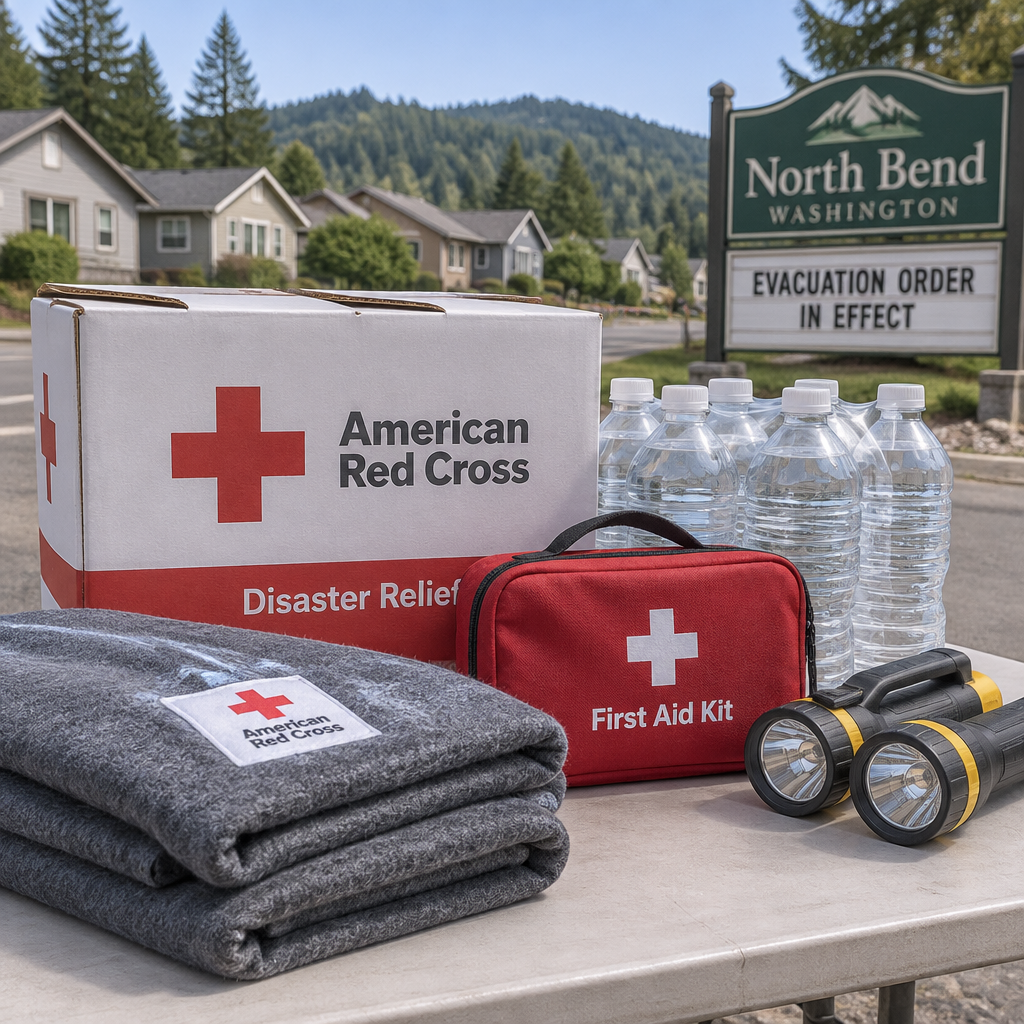
The human toll is clearer than the cause. Romie Brunson, writing in a verified GoFundMe fundraiser, said her aunt and her aunt’s boyfriend lost everything. She reported that two of their three dogs had been found, while several cats had not. The American Red Cross said it was assisting the residents with shelter, food, and clothing. Those services address immediate needs; they do not, by themselves, settle what happens next.
When I separate what is confirmed from what remains unknown, the key point is straightforward: people escaped, responders kept their attack outside, and recovery began while investigators worked to establish the cause. This is a serious loss, but not a reason to fill gaps with guesses. North Bend residents deserve a clear account, not invented details.
What Is the North Bend House Fire?
The North Bend house fire is a reported residential fire at a single-family home on the 48000 block of SE 118th, just outside the Riverpoint area. Eastside Fire & Rescue said the two-story house was fully engulfed and that crews were on scene by 10:04 a.m. Tuesday. The department said everyone made it out safely, with no injuries reported at the time of the account.
A defensive attack is a firefighting approach in which crews work from outside a burning structure rather than entering to fight the fire from within. In plain terms, the incident commander chooses an exterior operation when conditions make interior firefighting too dangerous, or when the fire has advanced so far that an interior push is not a safe or effective option. The fire department’s account says the fire had spread through the house and that crews fought from outside. It does not identify the specific structural or tactical conditions behind that decision.
That boundary is important. An exterior attack does not tell us what started the fire, whether the home’s structure was damaged in a particular way, or how many firefighters and vehicles responded. Those details have not been reported in the account. The phrase describes where crews fought the fire, not a complete record of every action taken at the scene.
The local department’s role is emergency response and fire suppression. Eastside Fire & Rescue’s official website provides general information about the agency, but the incident details here are limited to what the department reported. The American Red Cross has a different role: it supports people facing immediate hardship after emergencies. Its disaster assistance information explains the kinds of help it may provide. Neither agency’s role should be mistaken for a final cause determination.
The phrase “fully engulfed” signals a severe fire, but it is not a technical description of the home’s final condition. The available report does not specify whether the structure was later declared a total loss, how much property damage occurred, or whether nearby homes were affected. Frankly, those may be the first questions readers ask, but the information released so far does not answer them.
Core Details and Context
Several facts form the reliable core of the report. Eastside Fire & Rescue said a single-family, two-story home on the 48000 block of SE 118th was fully engulfed. The location is just outside the Riverpoint area of North Bend. Crews were there by 10:04 a.m. Tuesday, and the department said firefighters fought the fire from outside because it had spread through the house.
The department also said everyone got out safely and that no injuries had been reported. That is the most important immediate outcome. It should be stated plainly, without turning it into a claim that the event was minor. A home can be lost while residents survive; both facts can be true at once. In emergency reporting, property loss and personal injury are separate measures, and one does not cancel out the other.
The cause is under investigation. No cause, origin point, suspected appliance, electrical issue, or other explanation has been announced in the account. Until investigators release findings, familiar explanations remain speculation. A neighbor’s impression, a social-media comment, or the fact that a house burned quickly would not establish how it began. The careful answer is also the less satisfying one: the cause is not yet known publicly.
The fundraiser adds information about the residents’ immediate losses, but it is not an official damage report. Romie Brunson said her aunt and her aunt’s boyfriend lost everything. She said the aunt had lived in North Bend her whole life and described the family’s attachment to the community and their pets. The fundraiser reported that two of three dogs had been found and several cats were still missing. It did not provide the number of cats, their names, or a confirmed search update. Those details should not be guessed at or repeated as if they were independently verified.
The Red Cross said it was providing shelter, food, and clothing. The support is concrete and immediate, though the account does not say how long assistance will last, whether the residents accepted every service, or what other organizations may be involved. The Red Cross’s emergency assistance guidance outlines its general role after disasters; it should not be treated as a case-specific inventory of everything offered in North Bend.
Here’s the kicker: a fire report can establish a few crucial facts while leaving many practical questions open. We know the response was defensive, not why that specific decision was made in technical detail. We know aid was being provided, not what the residents’ long-term housing plan is. Responsible coverage keeps those categories separate. It also recognizes that a home is more than a structure: stable shelter, family ties, work, and community support all matter to human dignity and recovery.
Timeline: What Happened, Step by Step
- The fire spread through the home. The account says the two-story house was fully engulfed and that the fire had spread through the structure by the time crews were fighting it. The exact start time is not reported. Nor does the account describe the first visible flames, who called for help, or how the initial alert reached responders. Those missing details are not a license to reconstruct a scene from imagination.
- Fire crews arrived by 10:04 a.m. Tuesday. Eastside Fire & Rescue gave that time as the point by which crews were on scene. It is the clearest timestamp in the report. It does not tell us when the call came in, how long the drive took, or whether additional units arrived later. I would not treat an arrival time as a dispatch time; they are different points in an emergency timeline.
- Firefighters attacked from outside. Because the fire had spread through the home, crews fought it from outside rather than going in to battle the flames. Firefighters call that a defensive attack. The account does not say when the incident commander made the decision or whether the strategy changed later. It confirms the broad approach, not every tactical step.
- Residents escaped without reported injuries. The department said everyone made it out safely and that no injuries had been reported. That wording identifies the outcome known at the time of the report. It does not disclose how each person exited, whether anyone received an evaluation, or whether every resident was at home when the fire began. None of those details has been reported.
- Recovery help began as the cause investigation continued. A verified GoFundMe fundraiser, written by Romie Brunson, described the residents’ loss and the search for missing cats. The Red Cross said it was providing shelter, food, and clothing. Meanwhile, the fire’s cause remained under investigation. The account gives no later investigative finding, pet-search update, or recovery total.
That order is useful because it shows what can be established without pretending to know more. The fire spread, crews arrived, the operation stayed outside, residents escaped, and assistance followed. The exact clock time of ignition and the reason the fire began remain unanswered. Any fuller timeline would need new information from investigators or the people involved.
Comparison: Fire Suppression and Recovery Assistance
The fire department and the Red Cross are not competitors. They address different needs at different points in an emergency, and comparing their roles is more useful than treating them as interchangeable. The information below reflects what was reported in this incident; it does not claim to list every service either organization offers.
| Area | Eastside Fire & Rescue | American Red Cross |
|---|
| Main role in this report | Fire response and suppression | Immediate support for residents after the fire |
| Reported action | Crews fought the fire from outside the home | Assistance included shelter, food, and clothing |
| Timing stated | Crews were on scene by 10:04 a.m. Tuesday | Assistance was announced after residents lost their home |
| What remains unknown | Crew count, full tactical sequence, and final damage assessment | Duration of aid and any additional services provided |
| Cause of fire | Under investigation; no cause reported | Not responsible for determining the cause |
The distinction is simple but easy to blur. Firefighters address immediate threats at the scene; the Red Cross helps meet basic needs once an emergency disrupts a household. In this case, the fire department’s reported task was to fight a fire that had spread through the structure while keeping crews outside. The Red Cross’s reported task was to help residents with shelter, food, and clothing.
The table also shows why no “winner” or direct competitor belongs here. Fire suppression and recovery assistance do not replace one another. A successful escape does not provide housing, and a shelter referral does not extinguish a fire. Both functions serve the common good, but they answer different questions: How can the immediate danger be addressed? And how can people get through the first stretch after losing a home?
The numbers available are sparse. We have one arrival time, no unit count, no reported cause, and no itemized recovery estimate. That limits comparisons with other fires or with response benchmarks. The U.S. Fire Administration’s home-fire information and the National Fire Protection Association’s home fire safety resources offer broader safety context, but they do not supply missing facts about this incident. That distinction keeps general fire guidance from being passed off as local reporting.
Common Misconceptions and What to Know
Misconception: No injuries means the fire was not serious. The house was reported fully engulfed, and the fundraiser said the residents lost everything. No injuries is a vital outcome, but it does not erase the scale of a property loss or the disruption that follows. People may need somewhere to sleep, clothes, food, transportation, documents, and help locating pets. The department’s injury report and the family’s recovery needs describe different parts of the event.
Misconception: A defensive attack proves firefighters could not reach the home. The report says crews fought the fire from outside because it had spread through the house. It does not say roads were blocked, water was unavailable, or responders were delayed. Defensive describes the firefighting approach. It is not evidence, on its own, of a failure or of the precise hazards crews faced. A tactical decision should be judged with facts about conditions at the scene, and those details have not been published here.
Misconception: The arrival time tells us when the fire began. Crews were on scene by 10:04 a.m. Tuesday. The phrase “by 10:04” marks an arrival benchmark, not the ignition time, call time, or moment the fire became visible. Treating it as any of those would distort the timeline. The account does not provide the missing timestamps.
Misconception: The cause can be inferred from how quickly flames spread. It cannot. Fire investigators examine evidence to determine where and how a fire began, and the department’s report says the cause is under investigation. No public finding is provided here. Until one is announced, claims about an electrical fault, heating equipment, cooking, or any other source are guesses. Familiar explanations are not evidence.
Misconception: The fundraiser is a complete official record. A fundraiser can convey the family’s situation and invite community help, but it is not the same as a fire department report or an investigator’s findings. Brunson’s post is the source for the reported loss of belongings, the dogs found, and the cats still missing. The Red Cross is the source for its stated assistance. Those accounts can be reported accurately without treating either as a full inventory of the incident.
Misconception: A missing-pet count is settled simply because some animals were found. The fundraiser said two of three dogs had been found and that several cats remained missing. That is what was reported at the time. It does not establish whether later searches succeeded, exactly how many cats there were, or what their condition was. The careful course is to preserve the distinction between the initial update and any later result, rather than repeating an old count as a current status.
Most coverage misses this point: accuracy includes saying what is not known. That may sound cautious to the point of dullness, but the alternative is rumor dressed as certainty. A cause investigation deserves time, and a family’s privacy deserves restraint. When I analyze an incident like this, I look for the boundary between a confirmed statement, a personal account, and a question still awaiting an answer. Here, those boundaries are clear enough to report—and important enough not to cross.
Frequently Asked Questions
Where did the North Bend house fire happen?
Eastside Fire & Rescue reported a fire at a single-family home in the 48000 block of SE 118th, just outside the Riverpoint area in North Bend, Washington. The report identifies the block, not a complete street address. No more precise location is needed to understand the event, and private residents should not be identified beyond what has already been reported.
Were anyone injured in the fire?
No injuries had been reported, and Eastside Fire & Rescue said everyone made it out safely. That is the status given in the incident account. It should not be expanded into claims about medical checks or later outcomes, which were not reported. The important confirmed point is that all residents were reported safe from the fire.
What does a defensive attack mean?
A defensive attack means firefighters work from outside a burning building rather than entering to fight the fire from within. The report says crews chose that approach because the fire had spread through the house. It does not describe the specific hazards or command decision behind the tactic, so the general definition should not be mistaken for a detailed account of conditions at this home.
What caused the fire, and what help are residents receiving?
The cause remains under investigation; no cause has been announced in the available account. The Red Cross said it was providing shelter, food, and clothing. A verified GoFundMe fundraiser by Romie Brunson also described the family’s losses and the search for missing cats. The report does not provide an investigation result, a full list of aid, or a later update on the animals.
Final Thought
The most important fact in this report is that everyone got out. The second is that the residents now face a substantial loss, with a family fundraiser describing the home and belongings as gone and some cats still missing. Those facts deserve equal care. Reporting only the dramatic image of a burning house misses the people who must rebuild ordinary routines: a place to sleep, a meal, clothing, documents, a way to care for pets, and a community that remembers them after the fire trucks leave.
There is no need to speculate about the cause to recognize the practical stakes. Investigators need evidence, not online theories. The residents need immediate help and time. The department’s reported defensive operation speaks to the seriousness of the fire, while the absence of reported injuries speaks to a better outcome than the flames might suggest. Neither fact should be inflated into a claim the record cannot support.
A community’s response is measured partly by what it does after the emergency call ends. Red Cross support and local fundraising can help meet urgent needs, while neighbors can offer practical assistance without circulating unverified details. That is stewardship in its plainest form: treating resources, privacy, and human dignity as responsibilities, not props for a dramatic story. For now, the facts are limited but meaningful. Everyone escaped; the cause is still being investigated; recovery has begun.