The Port of Olympia has approved a major change at its airport. On Monday, commissioners voted 5-0 to approve a new ground lease, potentially lasting as long...
Port of Olympia Approves Vesper Aviation Lease and Building Sale
The Port of Olympia has approved a major change at its airport. On Monday, commissioners voted 5-0 to approve a new ground lease, potentially lasting as long as 50 years, and a building sale connected to Vesper Aviation’s acquisition of Glacier Aviation, the longtime fixed-base operator. The deal could support planned Olympia–Spokane flights. What remains unsettled?
Key Takeaways- Commissioners approved the lease and building sale by a 5-0 vote.
- Vesper Aviation is in the process of acquiring Glacier Aviation; the changeover is not described as complete.
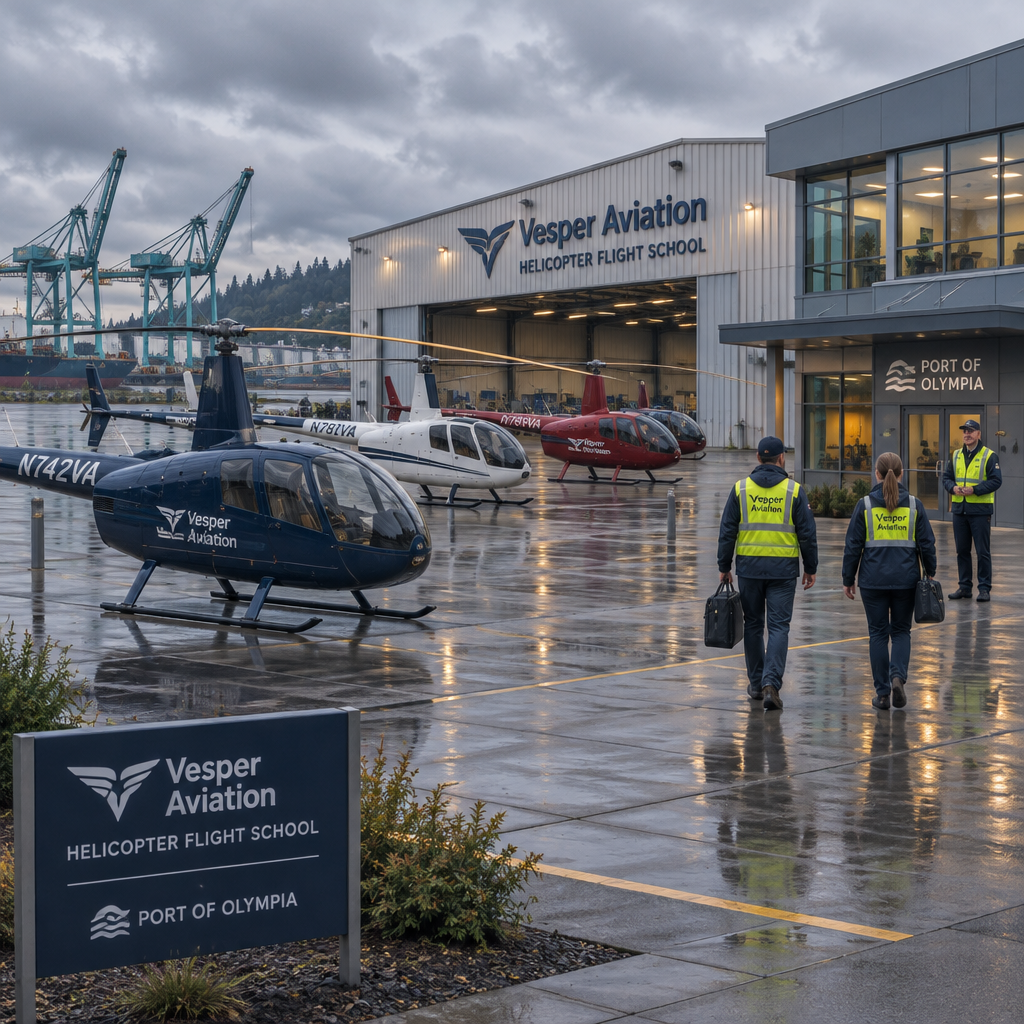
- Glacier’s helicopter flight school is expected to continue and, according to Vesper founder Jon Wenrich, is central to the business plan.
- SeaPort Airlines has announced plans for twice-weekly Olympia–Spokane flights during the Washington legislative session, with service beyond it dependent on customer demand.
- About 20 people spoke at public comment, with views reported as evenly split.
- The exact lease terms, sale price, SEPA determination, and transition schedule have not been reported in the meeting details available here.
This is a property and airport-services decision, not a guarantee that an airline route will succeed. The port has approved an arrangement that could reshape who operates facilities and services at Olympia Regional Airport, while the proposed SeaPort schedule remains conditional on demand beyond the legislative session. Those are related developments, but they are not the same decision.
The distinction matters. A long lease can give an operator time to plan, while also tying public land to terms that deserve careful scrutiny. The vote was unanimous, but public comment was divided, and commissioners asked staff about oversight and environmental review before acting. That is the real story: the commission approved the transition, yet questions about control, costs, review, and future performance still need clear answers.
What Is the Port of Olympia–Vesper Aviation Deal?
A fixed-base operator, commonly called an FBO, provides services that allow aircraft and pilots to use an airport. Those services can include fuel and other support for planes. An FBO is not the airline itself: it serves aircraft operators and customers at the airport, while an airline sells scheduled passenger flights. The Port of Olympia’s airport page offers general information about the airport and its role; it does not, by itself, document the terms of this particular transaction.
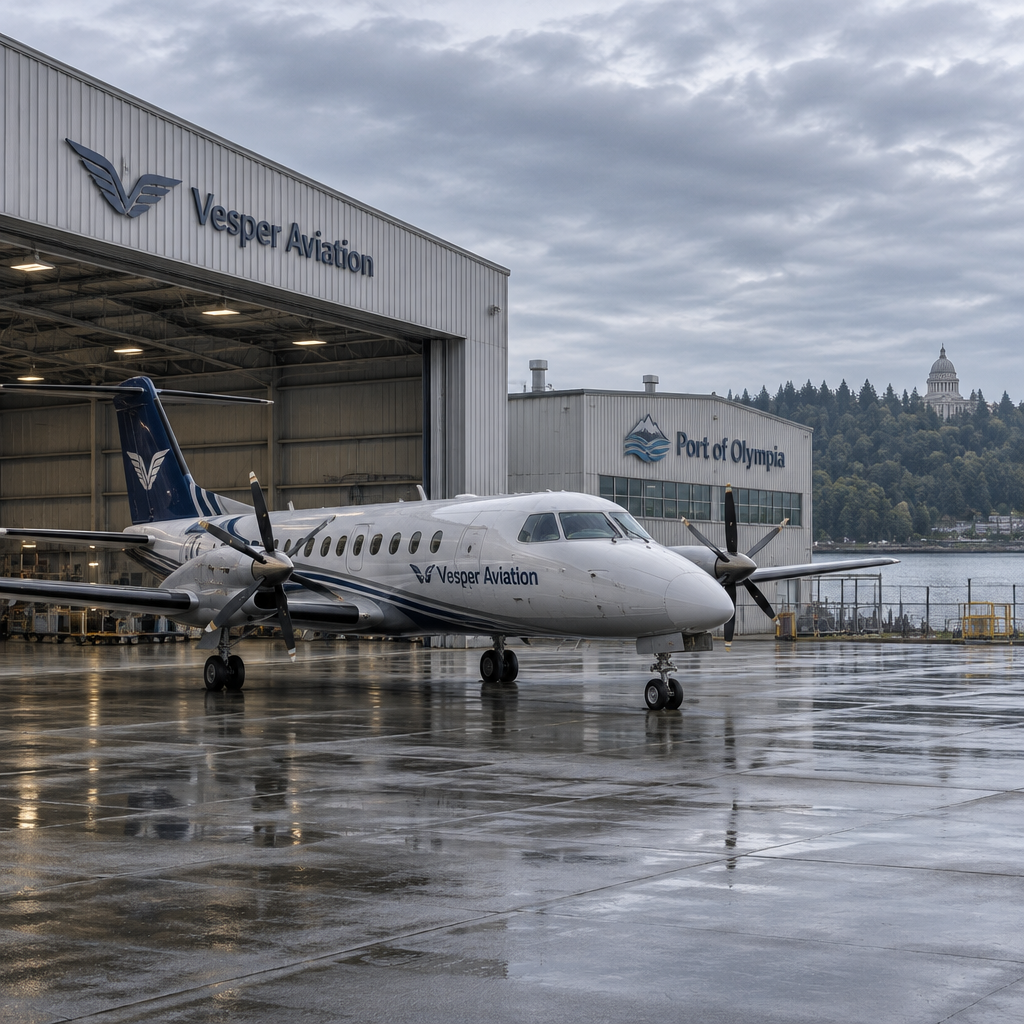
Glacier Aviation has been a longtime airport business. Alongside aircraft support, it has run a helicopter flight school. The commission’s Monday vote approved a new ground lease and the sale of one building to Vesper Aviation, which is in the process of acquiring Glacier. A ground lease governs the use of land, while the building sale concerns a separate asset. The account of the vote says the lease could run for as long as 50 years, but does not give the rent, full term structure, or other commercial conditions.
That gap is significant. A maximum possible term is not the same thing as proof that the operator has received an unconditional 50-year lease. The actual agreement might include milestones, options, renewal provisions, performance standards, or other terms; those details are not reported here. Readers should not treat the longest possible duration as the confirmed length without the contract in hand.
The transaction also intersects with SeaPort Airlines’ stated plan to fly between Olympia and Spokane twice weekly during the upcoming state legislative session. SeaPort has said it may continue service beyond that period if passengers support it. Airport services can help a flight operate, but the commission’s property vote does not establish that the route will run on a particular day, remain in place, or draw enough customers to continue.
When I separate the pieces, the deal looks less like a single airline announcement and more like a change in airport infrastructure and business operations. Vesper would take on the FBO arrangement and building; Glacier’s school is expected to remain part of the operation; SeaPort’s passenger service is a related but separate business decision. Frankly, keeping those distinctions straight is the first test of any coverage of this vote.
Core Details and Context
The commission approved the lease and building sale by a 5-0 vote on Monday. About 20 people spoke during public comment, and the comments were evenly split between people supporting and opposing the proposal. That is evidence of a divided room, not a poll of all airport users, residents, or businesses. No broader survey or public-opinion measure is reported.
The most specific business case came from Jon Wenrich, Vesper Aviation’s founder and chairman. Wenrich told commissioners that buying a standalone FBO would not make financial sense to him if it sold less than 750,000 gallons of fuel annually. He said Glacier currently sells fewer than 200,000 gallons—less than one-quarter of that benchmark, plus or minus—and argued that the flight school is a core part of the acquisition, not a side operation.
That is a useful disclosure, but it is Wenrich’s business assessment. It should not be mistaken for an independently verified industry-wide rule or an audit of Glacier’s accounts. His statement does explain why the school matters to Vesper’s proposed model: if fuel sales alone do not support the operation under Wenrich’s calculation, flight instruction is part of the economic foundation. The meeting details say the school will continue, but do not report the number of students, employees, aircraft, or planned training hours.
Commissioners also asked port staff about the authority the port would retain after the transition. Mike Reid, the port’s community and economic development director, said non-structural work costing $50,000 or less would not require approval from the executive director or commission. Work above that amount, including examples such as a leaking roof repair, a systems upgrade, or building-facade work, would require executive director approval. Major changes under the lease would require commission approval.
Those thresholds are important, but they do not answer every practical question. The meeting account does not define how costs would be grouped, who would classify a project as structural, how the port would inspect work, or what counts as a major change. Contract language and regular reporting will determine how meaningful oversight is in practice. Public assets need careful stewardship, and that calls for rules that residents can understand—not just reassuring summaries at a meeting.
Environmental review was another concern raised by commissioners and the public. Staff addressed questions about whether the change should undergo review under Washington’s State Environmental Policy Act, commonly called SEPA. The meeting details do not state the specific environmental determination, identify a formal decision document, or explain whether review was required, completed, or found unnecessary. The Washington Department of Ecology’s SEPA information provides background on the process, but the exact status of this transaction should be checked against the port’s own decision records and notices.
Timeline: What Happened and What Comes Next
- Glacier operates at Olympia Regional Airport. The business has provided aircraft support, including fuel, and operated a helicopter flight school. It is described as a longtime airport business, but the available details do not give a full history of its contracts, annual finances, or previous lease terms.
- SeaPort announces a proposed Olympia–Spokane service. The airline says it plans twice-weekly flights during the upcoming Washington legislative session. It has also said service could continue beyond the session if customer demand is there. That is a stated plan, not evidence that longer-term service is secured. Fare details, booking conditions, aircraft type, and the exact first and last flight dates are not reported here.
- Vesper begins the process of acquiring Glacier. The acquisition creates the business context for a new port lease and the sale of a building. The reported facts do not establish that the acquisition has closed or specify remaining conditions. That distinction matters because a planned transfer and a completed transfer are not interchangeable.
- The port commission takes public comment. About 20 people speak, with support and opposition evenly divided, according to the meeting account. Commissioners hear the concerns and ask port staff about oversight and SEPA. The speakers’ specific arguments are not detailed here, so it would be wrong to assign positions to particular people or claim that one side raised an issue it did not raise.
- Staff explains approval thresholds. Reid says non-structural work of $50,000 or less does not need executive director or commission approval; more expensive work needs executive director approval, while major lease changes need commission approval. The account does not say that every maintenance decision is subject to a public vote.
- The commission votes 5-0. It approves a new ground lease, which could be as long as 50 years, and the sale of one building to Vesper. The next meaningful milestones are not stated: the closing date, the lease’s effective date, any required approvals, and the environmental decision record remain unclear from the reported details.
When I line up that sequence, the crucial point is that several processes are moving at different speeds. The commission vote is an action already taken. The acquisition is described as underway. The airline’s flights are a plan with a possible extension tied to demand. Treating all three as completed would overstate what is known.
The practical next step is document-based, not guesswork. Residents and prospective customers need the signed lease, sale terms, any environmental review or determination, and reliable route and booking information. Until those records or announcements appear, the careful wording is “approved,” “in progress,” and “planned”—not “completed,” “guaranteed,” or “permanent.”
Comparison: Vesper Aviation and Glacier Aviation
There is no reported data here identifying a direct competitor or establishing which business is the “biggest competitor.” The clearest comparison is therefore between Vesper, the incoming buyer and leaseholder under the approved arrangement, and Glacier, the existing airport business being acquired. They should not be portrayed as competing bidders: the information available describes a transition between them.
| Issue | Vesper Aviation | Glacier Aviation |
|---|
| Position in the transaction | In the process of acquiring Glacier; approved for a new ground lease and building sale | Longtime airport business being acquired |
| Airport role | Expected to take over the relevant operation under the new arrangement | Has provided aircraft support services, including fuel |
| Flight school | Founder Jon Wenrich says the school is a core part of the deal and is intended to continue | Has operated a longtime helicopter flight school |
| Fuel-sales figure cited at the meeting | Wenrich said a standalone FBO would not make financial sense to him below 750,000 gallons annually | Wenrich said Glacier sells fewer than 200,000 gallons currently |
| Lease and oversight | New lease could be as long as 50 years; port approval thresholds apply as described by staff | Prior lease terms and transition obligations are not reported |
| What remains unknown | Final acquisition status, contract terms, financial plan, environmental decision, and operating milestones | Sale price, detailed financials, and transition arrangements |
The table contains one party’s stated fuel benchmark, not a verified comparison of two operators’ audited finances. That caveat matters. A fuel volume can help explain an operator’s reasoning, but it does not independently establish whether the acquisition will be profitable, whether the school can cover costs, or what customers will pay.
The business comparison also highlights a difference between ownership and public oversight. Vesper may make day-to-day choices within the lease, while the port retains specified approval powers for larger work and major changes. The reported thresholds are a starting point; the executed agreement determines the actual rights, enforcement tools, and obligations. A public agency’s approval is not a blank cheque, nor does it mean that commissioners will review every repair.
The official Port of Olympia airport page can help readers understand the airport setting, while the state’s SEPA materials explain the general environmental-review framework. Neither is a substitute for the signed lease or the port’s transaction-specific environmental documents. For this deal, those primary records are what would let the public compare promises with obligations.
Here’s the kicker: the comparison does not prove that Vesper is better or worse than Glacier. It shows what the transaction is supposed to preserve—the school and airport support—and what the public still needs to evaluate: the contract, the financial assumptions, and the quality of oversight.
Common Misconceptions and What to Know
Misconception: The vote guarantees SeaPort’s Olympia–Spokane route. It does not. The commission approved a lease and building sale involving Vesper and Glacier. SeaPort’s twice-weekly service is a separate airline plan, with continuation beyond the legislative session conditional on customer demand. An airport-services agreement may support a carrier, but it cannot create passenger demand or guarantee a route’s future.
Misconception: Vesper has already completed its acquisition. The available account says Glacier is in the process of being acquired by Vesper. That wording describes a transaction underway, not necessarily one that has closed. The commission’s approval of lease and sale measures should not be used to fill in unreported closing conditions or dates.
Misconception: The lease is definitely for 50 years. The reported description is that the lease could be as long as 50 years. Without the signed agreement, readers cannot know the confirmed term, options, conditions, or renewal structure. A maximum possible duration is newsworthy, but it should not be repeated as a final contractual fact unless the documents confirm it.
Misconception: The fuel threshold is a neutral industry standard. Wenrich gave the 750,000-gallon figure as his assessment of what a standalone FBO needs to make financial sense. He also said Glacier sells fewer than 200,000 gallons. Those claims help explain his reasoning, but the information reported here does not establish how the numbers were calculated or whether other operators use the same threshold.
Misconception: All work at the site will require commission approval. Reid said non-structural work costing $50,000 or less would not require executive director or commission approval. More expensive work would require executive director approval, and major lease changes would require commission approval. Those categories are not the same, and the details of how the port will apply them matter.
Misconception: A question about SEPA proves that the deal failed environmental review—or passed it. Neither conclusion follows from the fact that commissioners asked about SEPA. Staff reportedly answered questions, but the specific determination is not included in the account of the meeting. Washington’s Ecology Department describes the broader review framework; the transaction’s own records are needed to establish what determination was made.
The most useful discipline here is to keep reported facts separate from implications. The unanimous vote is clear. The divided public comment is clear. Wenrich’s business rationale and Reid’s description of approval thresholds are clear as attributed statements. The lease’s complete terms, sale price, acquisition closing, route performance, and specific SEPA outcome are not established by those facts. Skepticism is warranted, but so is restraint: unanswered questions are not proof of misconduct.
Frequently Asked Questions
What did the Port of Olympia commission approve?
On Monday, commissioners voted 5-0 to approve a new ground lease and the sale of one building to Vesper Aviation. The lease could be as long as 50 years. The reported details do not provide the sale price, rent, final lease term, or full set of conditions, so those terms should not be assumed.
Is SeaPort Airlines’ Olympia–Spokane route guaranteed?
No. SeaPort announced plans for twice-weekly flights during the upcoming Washington legislative session, with service potentially continuing afterward if there is customer demand. The port’s vote concerns airport property and the Vesper–Glacier transition; it does not guarantee the route or its duration.
Will Glacier Aviation’s helicopter flight school continue?
Vesper founder and chairman Jon Wenrich said the flight school will continue and is a core part of the deal. The meeting details do not specify whether staffing, student capacity, schedules, or operating arrangements will change. The commitment is important, but the exact operating plan has not been reported here.
What did port staff say about oversight and SEPA?
Mike Reid said non-structural work costing $50,000 or less would not require executive director or commission approval; work above that amount would require executive director approval, and major lease changes would require commission approval. Staff also addressed SEPA questions, but the specific environmental determination is not stated in the meeting details available here.
Final Thought
The vote gives Vesper a path to take on a substantial airport role, but approval is the beginning of public accountability, not its end. A lease that may extend for decades deserves scrutiny proportionate to its duration: clear terms, visible maintenance standards, enforceable commitments, and accessible reporting on work that falls below commission-approval thresholds. That is not hostility to private enterprise. It is ordinary stewardship of public property.
There is a plausible operational case for keeping the flight school as part of the business. Wenrich says the fuel sales alone fall well below the level he considers necessary for a healthy standalone FBO, and he describes the school as essential to the deal. That explanation should be tested against the actual business plan, but it is more useful than pretending a fuel-only model will automatically support the operation. The school also represents instruction, skilled work, and a service that could matter to the airport community.
The public should keep asking practical questions: What exactly did the port sell and lease? What does Vesper have to maintain? How will the commission learn about substantial work? What environmental decision was made, and where can residents read it? Will the flight school remain open on terms that serve students and workers? Those answers ought to come from documents and measurable commitments, not guesswork.
The airline plan deserves the same sober treatment. Twice-weekly service could give travelers another option between Olympia and Spokane, but the test will be actual schedules, fares, reliability, and passenger demand. If the flights continue, the reasons should be visible; if they do not, that outcome should not be confused with the separate question of whether the airport lease was responsibly negotiated.
A unanimous vote settles the commission’s decision. It does not settle every question raised by the decision. The public interest is best served when the port publishes the records, Vesper meets clear obligations, and claims about service and economic benefit are measured against what happens on the ground.