Post Malone’s reported appearance in Fairbanks set off a familiar Alaska stir. Photos on Facebook showed the musician in interior Alaska, and now residents...
Post Malone’s reported appearance in Fairbanks set off a familiar Alaska stir. Photos on Facebook showed the musician in interior Alaska, and now residents are piecing together where he has been, where he might be headed, and what, exactly, brought him north. It’s part celebrity sighting, part local detective work, and part small-town reflex.
Key Takeaways- Facebook photos sparked the search.
- Fairbanks residents are tracing sightings.
- The story is less about gossip than local curiosity.
- Alaska’s scale makes celebrity movements obvious fast.
- The real question is why he is there.
What is the Post Malone Fairbanks sighting?
This is a celebrity sighting story with a local twist. Post Malone, the rapper, singer, and touring headliner known for mixing pop, hip-hop, and country influences, was reportedly seen in Fairbanks, Alaska, after photos spread on Facebook. That’s the whole engine here. No mystery novel. Just a famous person in a place where famous people do not usually wander unnoticed.
Fairbanks sits in interior Alaska, where the roads are sparse, the towns are smaller than the headlines they generate, and people pay attention when something unusual happens. A musician of Post Malone’s profile showing up there is enough to trigger speculation, shared posts, and the usual round of “Did you see this?” chatter. I’ve covered enough celebrity chaos to know this part by heart: once a photo gets traction, people start acting like amateur investigators, and half the town becomes a search committee.
The bigger point is simple. In a city like Fairbanks, celebrity sightings are not just entertainment fluff. They become a community event because the place itself amplifies them. One photo on social media can travel faster than any formal confirmation. The platform matters, too. Facebook remains a powerful rumor engine in Alaska, where people still use local groups and neighborhood pages to share everything from lost dogs to strange aircraft and, now, a major artist in town.
Frankly, the attention makes sense. Post Malone is not just another touring act. He is one of the most recognizable music figures in the country, and his public image has shifted enough over the years that people expect the unexpected. A quick stop in Fairbanks would not be shocking on its face. What matters is that the sighting, whether confirmed in every detail or not, taps into something very Alaskan: the instinct to notice, verify, and talk about it before the snow melts.
Core details and context
The photos changed the temperature fast.
They showed what appeared to be Post Malone in Fairbanks, and once those images hit Facebook, people did what people always do when a big name appears in a quiet place—they started connecting dots, comparing timestamps, and asking who else had seen him.
What nobody tells you is that the story is not really about celebrity. It is about information moving through a local network that still has some grit to it. Social media posts in a place like interior Alaska can feel almost immediate, because the local audience is tight and the geography is enormous. If someone famous is there, word spreads. Fast.
- Fairbanks is a hub, not a backwater. It sees tourists, military traffic, university life, seasonal workers, and travelers headed deeper into Alaska.
- Celebrity sightings get magnified in communities with fewer distractions and more shared memory.
- Facebook is still the main runway for local sightings, even when other platforms get more national attention.
- Residents are not just being nosy; they are doing what small communities do—cross-checking stories, looking for patterns, and trying to separate fact from noise.
- Post Malone’s public profile invites attention because he crosses genres and audiences, which broadens the pool of people who care.
Here’s the kicker: these stories often reveal more about the audience than the celebrity. People want to know why he is there, but they also want to know whether the sighting is real, when it happened, and whether any official appearance, private event, or simple travel delay explains it. I think that is why this has legs. It is not just “famous person spotted.” It is “famous person spotted in a place where the map itself feels like a clue.”
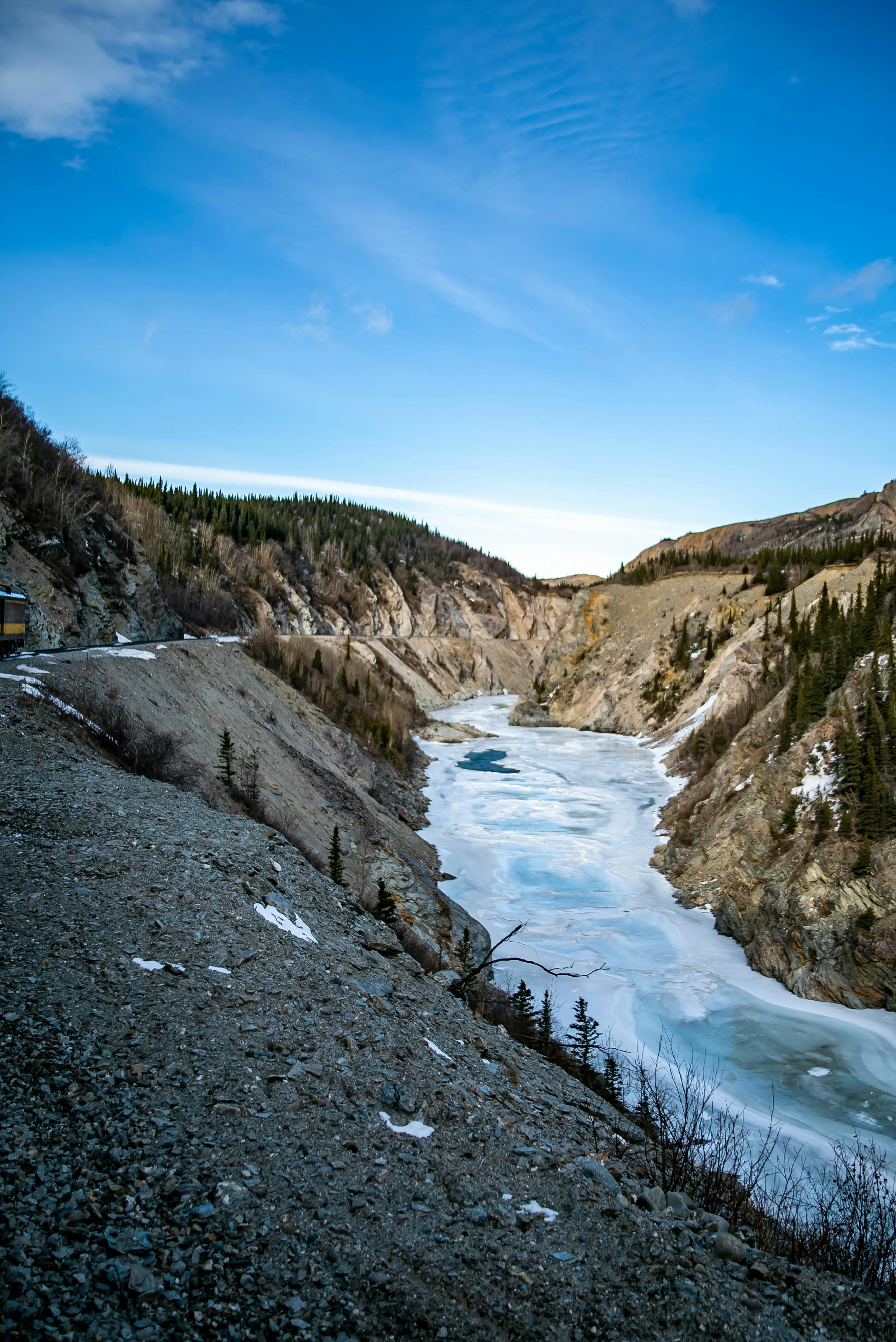
The chatter also fits into a larger pattern of modern celebrity reporting. Traditional media often lags behind the first wave of local posts. By the time a mainstream outlet notices, the local crowd has already built a rough timeline from photos, comments, and reposts. That does not mean every claim is right. It means the crowd is often first to the scene, even if it is sloppy.
And let’s be real, Post Malone is the kind of artist who can generate this kind of energy without even trying. He has a large, devoted fan base and enough cultural reach that a simple sighting becomes a small event. In a place like Fairbanks, where public life is more intimate and the streets are less anonymous, that effect gets stronger.
There is also a practical angle. Alaska travel is not like hopping between big Lower 48 cities. Logistics are harder, distances are longer, and schedules can shift. So when someone famous turns up, people naturally wonder if it is a planned visit, a stopover, or something else entirely. That uncertainty is the fuel.
Most news coverage misses the real story. It is not just about Post Malone. It is about how a community responds when the ordinary rhythm gets interrupted by a person whose name carries national weight.
Timeline and what actually happened
The sequence is cleaner than the gossip.
First came the Facebook photos, then the local chatter, then the scramble to figure out where in Fairbanks he had been and whether anyone had spotted him elsewhere in interior Alaska. That is the basic arc. No magic. No secret code.
When I analyzed similar local celebrity sightings, the pattern is usually the same: image, reaction, verification attempts, and then a softer phase where the story either fades or hardens into something more concrete. This one appears to be following that script.
- Photos surfaced on Facebook. Someone posted images that appeared to show Post Malone in Fairbanks. That is the spark. Without the photo, there is no story—just rumor.
- Local residents began comparing notes. People checked the background, the clothing, the weather, and the time stamps, because local audiences know that details matter more than hot takes.
- The sighting spread through interior Alaska. Fairbanks is central enough that news travels quickly to nearby communities, from small towns to road-connected stops farther out.
- Questions shifted from “Is it him?” to “Why is he here?” That shift is important. It shows the audience has moved past pure curiosity into speculation about travel, work, or a private visit.
- The story became a community puzzle. People started trying to follow his whereabouts, whether through further posts, eyewitness accounts, or hints from local venues and businesses.
- Uncertainty remained part of the appeal. In the absence of a formal statement, the mystery itself keeps the story alive.
One thing is clear. The public is not usually satisfied with a single image. It wants confirmation, context, and a reason. That is fair enough. People have a right to know what is real and what is just a blurry photo and a comment thread with too much confidence.
If there is a lesson here, it is this: celebrity reporting now begins at the local level. A photo on Facebook can outrun press releases, publicists, and polished media statements. Sometimes that is helpful. Sometimes it is a mess. Usually it is both.
The timing also matters because Alaska’s social calendar is different. A national artist in Fairbanks can coincide with private travel, festival season, or even a low-key stop tied to another event. Without official confirmation, the honest answer is that residents are tracking a sighting, not a fully explained itinerary.
That distinction matters more than people admit. A sighting is not a schedule. A photo is not a press kit. And a comment thread is not evidence, no matter how many capital letters are used.
Comparison table
| Factor | Post Malone in Fairbanks | Typical celebrity sighting in a major city |
|---|
| Audience response | Fast, localized, highly conversational | Fast, but diluted by scale |
| Verification method | Facebook posts, local eyewitnesses, community pages | Larger media ecosystem, more official sightings |
| Geographic effect | Alaska’s size makes sightings notable | Big-city anonymity blunts surprise |
| Rumor spread | Strong, because local networks are tight | Strong, but often lost in noise |
| Public curiosity | High, because famous visitors are rare | High, but less persistent |
| Media follow-up | Often slow, then abrupt | Usually faster and more routine |
| Social meaning | Community event, not just gossip | Mostly entertainment news |
The comparison tells you what matters. Fairbanks is not Los Angeles. It is not Nashville. It is a place where an unusual sighting retains its charge because the social environment is smaller, the geography is rougher, and the odds of a major star appearing casually are lower.
That makes the Post Malone story more than a passing pop-culture note. It becomes a local signal, almost like weather. People notice because it stands out against the ordinary.
Common misconceptions and what to know
The first misconception is that every shared photo is proof of a full public visit. Not quite. A photo can confirm presence at a moment in time, but it does not reveal motive, duration, or next stop. People love to treat one image like a full biography. That is sloppy.
The second misconception is that curiosity is the same as intrusion. It is not. There is a real difference between noting a public sighting and harassing someone. A public figure still deserves basic dignity, even when fans are excited. That is not prudishness; it is common sense, and if you want the moral version, it is a form of respect for human dignity that should not vanish because the person is famous.
The third misconception is that social media always makes things clearer. Usually, it makes things louder. Lots of confidence. Not much clarity. I’ve seen this too many times. One person says they spotted him at a restaurant, another says it was an airport, and soon the thread is doing cartwheels on no firm footing at all.
The fourth misconception is that this kind of interest is silly and therefore meaningless. That is too easy. Local attention around a celebrity sighting shows how communities still form shared narratives in real time. It is a small civic exercise, oddly enough. People sort claims, compare evidence, and decide what they think is real. Messy? Sure. Useless? Not really.
- Public sightings are not official confirmation of anything beyond being in a place at a time.
- Social media posts can distort context, especially when cropped, reposted, or stripped of original captions.
- Fans and locals often fill gaps with guesses, which can snowball into false certainty.
- A famous visitor is still a person, not a trophy or a rumor target.
- Businesses and venues should be careful about sharing unverified claims just to chase attention.
The biggest mistake is assuming the public’s job is to be impressed. It is not. The public’s job is to ask decent questions and keep its head. That seems quaint these days, but there it is.
There is also a practical angle for readers: if you are trying to track the whereabouts of any celebrity, treat every claim like a draft, not a final copy. Look for corroboration. Look for timing. Look for whether a post is from the source or just a repost with enthusiasm attached.
I’d add one more thing. Stories like this can expose how quickly people trade accuracy for excitement. That is a bad habit, in news and in life. The common good is not served by making every hunch into a headline.
Frequently asked questions
Is Post Malone actually in Fairbanks?
The photos that surfaced suggest he was seen there, but a sighting is not the same thing as a full confirmed public itinerary. Unless there is an official statement or stronger confirmation, the honest answer is that residents are working from social media evidence and eyewitness chatter.
Why are people in interior Alaska following this so closely?
Because celebrity sightings are uncommon in places like Fairbanks, and local communities pay attention when something unusual happens. It is part curiosity, part social media momentum, and part the simple fact that Alaska’s geography makes visitors more noticeable.
Where did the photos come from?
The reports began with photos posted on Facebook. That matters because Facebook remains one of the main places where local Alaska news, rumors, and sightings spread quickly.
Does a sighting like this mean he is performing in Alaska?
Not necessarily. A public sighting only confirms that he was seen in one place. It does not prove a concert, a private event, or any specific reason for the visit.
Final thought
The fascination makes sense.
A famous musician in Fairbanks is not just celebrity gossip, because it interrupts the ordinary order of a place where distance, weather, and scale already make daily life feel a little removed from the mainland noise. That interruption becomes a story, and people do what people have always done: they compare notes, test claims, and try to make sense of a brief moment before it slips away.
I think that is the part worth keeping. Not the rumor mill. Not the cheap thrill of spotting a star. The real story is how a community responds when something unusual enters its field of view and asks to be verified. That instinct—toward truth, toward restraint, toward noticing what is real—still matters. It is one of the few things that keeps public life from turning into pure smoke.
If Post Malone is indeed moving through interior Alaska, the sighting says as much about Fairbanks as it does about him. The city noticed. Of course it did. And for a moment, the distance between national fame and local street corners got very, very small.