Puget Sound News: Public Safety, Local Rules and Conservation in Focus
Puget Sound’s latest headlines put immediate public safety beside slower-moving questions about local rules, wildlife and the region’s changing seasons. Reports describe fatal crashes and shootings, proposed enforcement against unpermitted food vendors, a small gain in the endangered Southern Resident orca count, and weather events affecting the coast. Together, they show how local news moves between urgent incidents and decisions whose effects unfold over months or years.
What These Puget Sound Headlines Show
This is not one breaking event. It is a collection of reports from western Washington and nearby communities, spanning crime, transportation, local regulation, wildlife, sports and weather. Treating them as one story would blur important differences; reading them together, however, reveals what local reporting has to handle at once: immediate danger, public responsibility and long-term stewardship.
The most urgent items concern lives and safety. The headlines report that a minimart clerk near Seattle Center was killed in a shooting, that a late-night T-bone crash in South Hill left one driver dead and another hospitalized, and that a motorcycle rider died in a collision with a semi-truck on I-5 in Seattle. Another report describes a semi-truck brake failure on State Route 18 in Auburn causing a seven-vehicle crash. These summaries establish the broad events, but not the full investigative record. They do not give confirmed causes in every case, and an early report should not be mistaken for a final finding.
Other headlines point to decisions that are less immediate but still consequential. Pierce County is proposing a crackdown on unpermitted food carts and kiosks. Two South King County schools have canceled varsity football seasons over safety concerns, while seeking junior varsity opportunities for players. Neighbors near Seattle’s Kerry Park are calling for safety changes after a street-party shooting. Those stories raise questions about enforcement, risk and access to public places—questions that deserve facts before easy answers.
The wildlife report offers a different kind of news. The Southern Resident killer whale population reportedly rose by two animals in the latest census, marking a second year of growth. That is welcome, but a small increase does not erase the pressures facing an endangered population. NOAA’s Southern Resident killer whale species information provides background on the species’ protected status and conservation needs.
Frankly, the strongest common thread is not that every story has the same cause. It is that public decisions must be proportionate to the evidence, whether officials are investigating a collision, writing vendor rules or protecting wildlife.
Core Details and Context
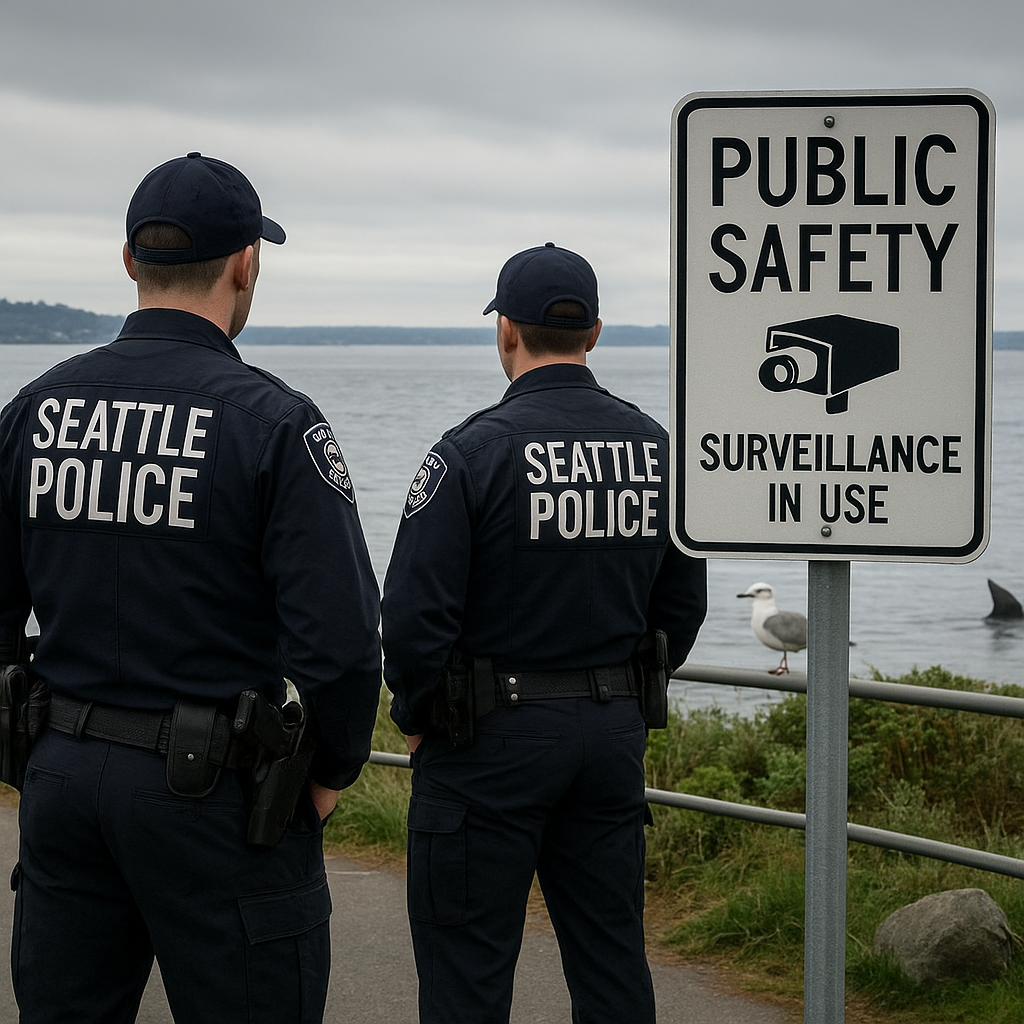
Several parts of the news list call for careful reading. A headline is a compressed account, not a case file. The shooting near Seattle Center and the shooting connected to a street party near Kerry Park are separate reports; the supplied material does not establish that they are related. It also says a suspect fleeing a shooting crashed into a Pierce County deputy’s patrol car, but does not provide enough information to connect that incident to any other shooting in the list. Combining separate events would be careless.
The traffic reports likewise describe distinct crashes. The South Hill T-bone collision is under investigation, and the headline says speed may have played a role—not that investigators have established it as the cause. The Auburn crash is attributed in the headline to brake failure and involved seven vehicles. The I-5 collision involved a motorcycle and a semi, shut down four lanes, and was followed by a reopening of northbound lanes. Those are different roads, circumstances and investigations. WSDOT’s traffic alerts and travel information can help readers check current road conditions, but incident-specific conclusions should come from investigators or formal reports.
The county’s proposed vendor rules deserve the same distinction between proposal and policy. The headline says Pierce County seeks tighter regulations for unpermitted carts and kiosks, rather than licensed food trucks. It does not spell out the proposed penalties, inspection process, public-health rationale or implementation date. Those details matter. Rules can protect customers and responsible businesses, but enforcement should be clear, consistent and fairly applied. A small vendor should not have to guess which permit applies; customers should not have to guess whether basic safeguards are in place.
School sports illustrate another balancing act. Two South King County schools have canceled varsity football seasons over safety concerns and are working to arrange junior varsity competition, described as exhibition games, so players can still participate. The headline does not specify the precise safety issue or the number of athletes affected. It does, however, signal that administrators judged varsity play unacceptable under the circumstances. The dignity of work and the common good matter here in a practical way: players deserve safe conditions, honest explanations and reasonable alternatives, not a promise that participation must continue at any cost.
Then there is the orca census. A two-whale increase is a real piece of positive news, but population counts can change with births, deaths and the identification of individual animals. One encouraging annual result is not proof that recovery is secure. NOAA’s species information is a useful baseline; any claim about the latest count should be checked against the census source and its date.
Here’s the kicker: these headlines differ not only in subject, but in how much they tell us. Some report a clear outcome, such as lanes reopening. Others report an investigation, a proposal or a call for changes. Readers should keep those categories separate.
Timeline: What the Headlines Say Happened
The supplied material does not provide publication dates for most items, so a day-by-day chronology cannot be responsibly reconstructed. The sequence below organizes the reported developments by what happened, not by an invented date.

- A fatal shooting was reported near Seattle Center. The headline says a clerk was shot and killed inside a gas station minimart and that police shut down the site. It does not identify a suspect or provide a charging decision. Those details should be confirmed through law enforcement or later reporting, not guessed from a brief summary.
- A separate neighborhood safety concern followed a street-party shooting near Kerry Park. Neighbors called for safety changes in an area known for its Seattle skyline views and visitor traffic. The report points to a public-place safety debate; it does not establish which specific changes officials will make or whether they have agreed to any.
- Traffic investigators responded to several serious crashes. In South Hill, one driver died and another was hospitalized after a late-night T-bone crash; speed was described as a possible factor. In Auburn, a reported brake failure led to a seven-vehicle crash on SR 18. In Seattle, a motorcycle-and-semi collision killed the motorcyclist and closed four northbound I-5 lanes before they reopened. I read these as separate events, not evidence of one regional cause.
- Other incidents added to the public-safety picture. The headlines include a driver striking a power pole and a restaurant in north Seattle, two 11-year-old boys falling from a second-story window in West Seattle, and a shooting suspect crashing into a deputy’s patrol car while fleeing. The supplied summaries do not say whether these cases are connected; there is no basis to connect them.
- Schools and county officials faced decisions about risk and rules. Two South King County schools canceled varsity football seasons, while exploring junior varsity games. Separately, Pierce County proposed tighter action against unpermitted carts and kiosks. One is an immediate program decision; the other is a proposed regulatory change that still needs details and public explanation.
- Wildlife and weather supplied a longer view. The latest Southern Resident census reportedly added two whales for a second consecutive year. The headlines also describe rough surf and coastal erosion associated with the remnants of Hurricane Rachel, while Hurricane Simon remained offshore of Mexico’s west coast. For current storm information, the National Weather Service hurricane safety page offers general guidance, but it does not verify the specific storm claims in these headlines.
- The region looked back as well as ahead. One item recalls the Columbus Day windstorm of October 12, 1962, described as the Northwest’s greatest windstorm even 64 years later. Historical comparisons are useful, but any ranking depends on the measure used—wind speed, damage, deaths or geographic reach. A memorable label is not a substitute for the underlying records.
Most news coverage gives the biggest headline the most space. The sequence here shows why that can mislead: a fatal incident demands immediate attention, while rule changes, school decisions and species recovery require sustained scrutiny after the first alert fades.
Comparison: Proposed Vendor Enforcement and Licensed Food Trucks
The supplied headline draws a useful distinction between unpermitted carts and kiosks and licensed food trucks. It does not provide the proposed text of the rules, so this comparison describes only what the report says and what remains unknown.
| Issue | Unpermitted food carts and kiosks | Licensed food trucks |
|---|
| Status in the headline | Target of Pierce County’s proposed crackdown | Explicitly distinguished from the proposed focus |
| Regulatory position | Described as unpermitted; precise missing permits are not stated | Described as licensed; specific license requirements are not listed |
| Proposed county action | Tighter regulations are being sought | The headline says the proposal is aimed elsewhere |
| What readers still need | Draft rules, permit process, enforcement plan, fees and effective date | The same clarity about applicable standards and inspections |
| Fairness question | Will vendors receive clear notice and a workable path to compliance? | Will licensed businesses be treated consistently under existing rules? |
| Public-interest question | How will the county balance sanitation, safety and access to small-scale vending? | How will the county preserve fair competition and customer confidence? |
The headline’s distinction matters. A business that has met licensing requirements should not be casually grouped with an operation that has not. At the same time, a proposed crackdown is not proof that every unpermitted vendor poses a health risk, just as a license by itself does not answer every question about day-to-day compliance.
A sound policy would explain what permits are required, how vendors can obtain them, what standards inspectors apply and what happens when a vendor falls short. It would also explain whether the goal is public health, land-use control, fair competition or some combination. Those aims can overlap, but officials should say which problem they are trying to solve. Otherwise, the rule risks looking arbitrary even if its purpose is legitimate.
For residents, the practical test is simple: can a vendor understand the rules before enforcement begins, and can the public see that the rules protect customers without imposing needless burdens? For officials, the test is whether the policy is enforceable and consistent. A proposal should be judged on its actual text, not on the word “crackdown.”
Common Misconceptions and What to Know
Misconception: A headline tells the whole story. It does not. The supplied crash summaries provide selected facts, not complete police reports, witness accounts or final determinations. “Speed may have played a role” is materially different from “speed caused the crash.” In the same way, a report that a suspect crashed into a deputy’s patrol car does not establish a conviction or disclose the full evidence. Follow-up reporting and official records matter.
Misconception: Separate shootings must be connected. The headlines describe a fatal shooting near Seattle Center, a street-party shooting near Kerry Park and another shooting linked to a fleeing suspect in Pierce County. Nothing in the supplied material says they involve the same people or circumstances. Similar wording is not evidence of a link. Police statements and court records are the proper sources for confirmed connections.
Misconception: Two more orcas means the population has recovered. The latest census reportedly shows a second year of growth, which is welcome. But the population remains described as endangered in the supplied headline. Annual movement is not the same as durable recovery; readers should look for the full count, census method and longer-term trend. NOAA’s Southern Resident killer whale page explains the species’ conservation status and pressures.
Misconception: A proposed vendor crackdown is already law. The report says Pierce County is proposing tighter regulations. Until officials publish and adopt the details, the exact requirements and consequences remain unsettled. The distinction between a proposal and an enacted rule is basic, but it is routinely lost in headline shorthand.
Misconception: Every safety concern has one obvious fix. Neighbors calling for changes after a street-party shooting deserve to be heard, but the best response depends on verified facts and the place involved. Likewise, canceling varsity seasons may protect students in the short term, but families deserve to know the safety rationale and what alternatives exist. Serious policy is not a slogan; it is a choice among real costs and risks.
Misconception: Coastal damage requires a storm to make landfall. The supplied headline says remnants of Hurricane Rachel stirred rough surf and eroded the Long Beach, California coastline even though the storm stayed offshore. Offshore systems can still affect surf and shoreline conditions. Specific impacts should be checked against weather and coastal authorities, particularly because the supplied storm item is fragmentary and does not offer a complete forecast or damage assessment.
Frankly, skepticism should cut both ways. Do not accept a confident claim just because it matches your fears, and do not dismiss a credible report because it is inconvenient. Ask what is known, who confirmed it and what is still under investigation.
Frequently Asked Questions
What happened in the reported Seattle Center shooting?
The supplied headline reports that a gas station minimart clerk near Seattle Center was shot and killed, prompting a large police response and closure of the station. It does not give the victim’s name, a suspect’s identity, a motive or the status of any charges. Those details should be confirmed through later police updates or reliable follow-up reporting.
Did the Southern Resident orca population recover?
No such conclusion follows from the headline alone. It reports that the endangered population increased by two whales in the latest census, for the second year in a row. That is encouraging, but the population is still described as endangered. A longer-term trend and the conditions affecting survival are needed to assess recovery.
What does Pierce County’s food-vendor proposal cover?
The headline says the county wants tighter rules for unpermitted food vendors such as carts and kiosks, rather than licensed food trucks. It does not state the detailed requirements, penalties, permit costs or timeline. Readers should consult the proposed rules or county announcements before assuming what vendors must do.
Why were two South King County varsity football seasons canceled?
The supplied headline says the districts cited safety concerns and were working to schedule junior varsity competition, described as exhibition games, to preserve playing time. It does not identify the specific concern or explain each school’s decision. The districts’ statements are needed for those details.
Final Thought
These headlines are a reminder that a region’s public life is not arranged into neat categories. A family may be following a fatal crash while a business owner waits to learn what a county rule will require, a student wonders whether a season will continue, and conservationists look for signs that a threatened whale population can hold its gains. Each story asks the public to pay attention in a different way.
The immediate incidents deserve accurate, humane reporting. That means naming what is confirmed, withholding what is not, and resisting the urge to turn fragments into a complete narrative. The slower issues deserve follow-through: a proposed regulation should be assessed against its actual text; school safety decisions should come with clear explanations; and a small population increase should be treated as hope, not proof that the work is finished.
I see one practical standard running through all of it: public authority is strongest when it serves people fairly and takes responsibility for shared resources. That includes safe roads and public spaces, rules that small businesses can understand, and careful attention to the natural systems that sustain the region. None of those goals excuses guesswork or overreaction. They call for evidence, proportion and steady stewardship—less dramatic than a breaking-news alert, perhaps, but more useful once the alert is gone.
A headline can tell us where to look. It cannot do the work of judgment for us. The next question is whether officials, institutions and readers follow the facts far enough to make sound decisions.