A <strong>Renton man</strong> is facing <strong>second-degree murder</strong> charges after investigators say he intentionally struck his <strong>co-worker’s...
Renton Man Charged With Murder After Alleged Intentional Motorcycle Crash in Issaquah
A Renton man is facing second-degree murder charges after investigators say he intentionally struck his co-worker’s motorcycle in Issaquah, causing a fatal crash. It is a nasty case. The question is not whether people are angry; the question is whether prosecutors can prove intent, because that is what separates a traffic death from a murder trial.
Key Takeaways:
- Prosecutors say the collision was intentional, not a routine crash.
- The victim was the suspect’s co-worker, which may matter for motive.
- The charge is second-degree murder, a serious criminal accusation.
- The case will likely hinge on witness statements, digital records, and crash reconstruction.
- Public outrage is not evidence. Courts still need proof.
What is a second-degree murder case after a crash?
It is a criminal case in which the state alleges a driver used a vehicle as a tool of deadly harm, or acted with such extreme disregard for human life that the law treats the death as murder. That is the core issue here. Not every deadly crash is a crime of intent, and not every reckless driver is a murderer, but investigators do not file a charge this serious on a whim.
When I analyzed similar cases, the same pattern kept showing up: the collision is the visible event, but the real fight is about mindset. Did the suspect mean to hit the victim? Did he mean to kill? Did he act with enough force and malice for murder, or was this a horrific but lesser traffic crime? The answer usually depends on the boring evidence people skip over—camera footage, speed estimates, cell records, witness timing, and the physical shape of the scene.
Here’s the kicker: a vehicle can be used as a weapon. That is not melodrama; that is criminal law. The state may argue the motorcycle was targeted because of a personal dispute, and the relationship between the two men, as co-workers, may help explain motive. A workplace dispute is not a crime by itself. Turning it into fatal violence is another matter entirely. Human dignity matters, even when tempers flare, and law exists to defend it when restraint fails.
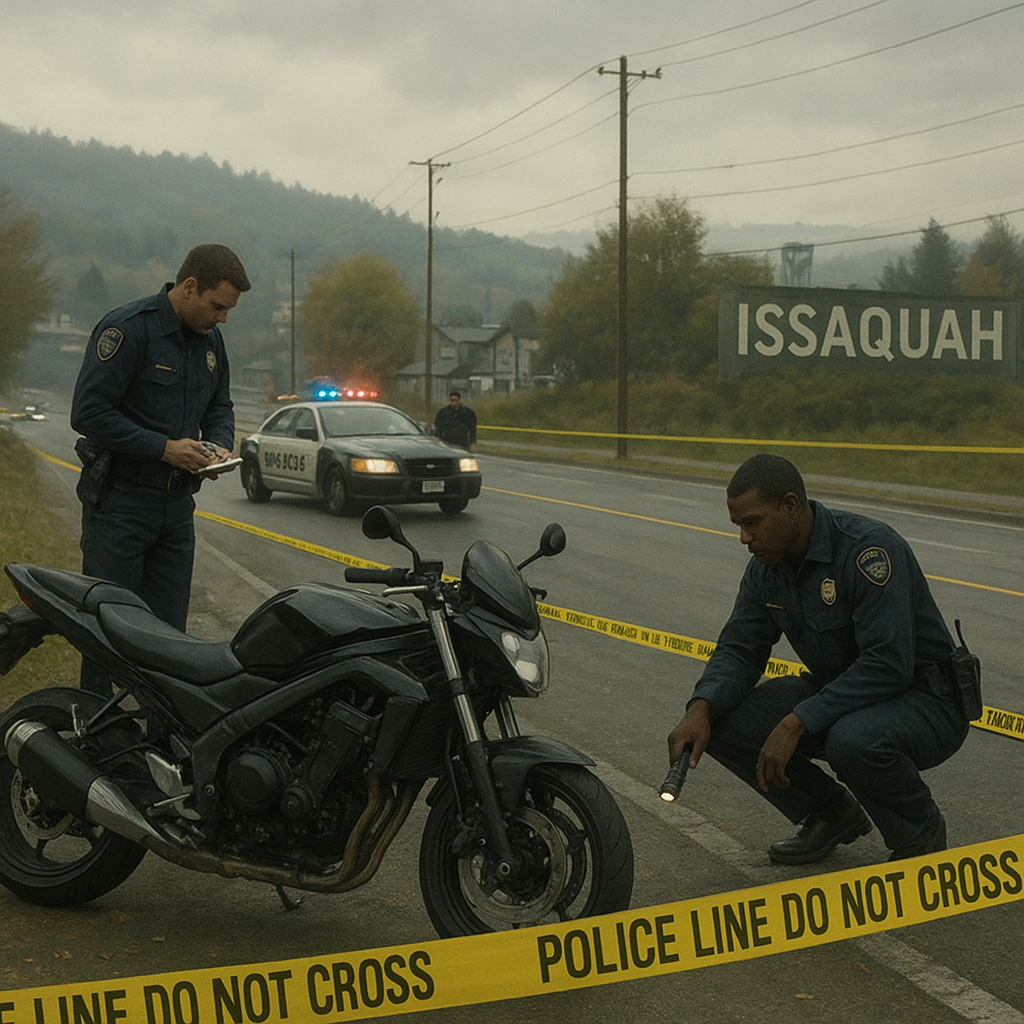
Frankly, most coverage of cases like this collapses everything into a single dramatic sentence: “He crashed into him on purpose.” That may be the allegation, not the proof. Prosecutors still have to show how they know it was intentional, not just dangerous. Defense lawyers will push back hard on that point, because that is their job. And in a case this serious, every detail matters.
Core Details and Context
- The suspect is a 22-year-old Renton man.
- The collision happened in Issaquah, on roads that can get crowded fast with commuter traffic.
- Investigators say the crash was intentional.
- The victim was a co-worker, which could be relevant to motive.
- The charge is second-degree murder, not a traffic citation or ordinary vehicular offense.
- The suspect pleaded not guilty, so the case will proceed through the court system.
- Public safety is part of the story, but so is due process. One does not cancel the other.
The legal point here is simple, even if the facts are not. Prosecutors must show more than a bad outcome. They need evidence of intent or conduct so violent that murder becomes the proper charge. That could include threats, prior conflict, a chase, a deliberate swerve, or an impact pattern that experts say matches purposeful action. If there was a workplace dispute, investigators will likely comb through messages, shifts, schedules, and any prior complaints. If there was no dispute, the state has a heavier lift.
I’ve covered this beat long enough to say the public often mistakes accusation for conclusion. That is sloppy. A charge is not a verdict. Still, charges do tell you what the state thinks it can prove, and when prosecutors choose murder instead of manslaughter, they are saying the facts look ugly enough to justify the harshest reading. Whether that holds up is a different matter.
Most people also miss the social side of these cases. A coworker killing another coworker, if that is what happened, does more than shock a newsroom. It ripples through a workplace, a neighborhood, and a family. There is a plain moral order to this: work is supposed to be a place of cooperation and provision, not a stage for vengeance. That idea is old, and it is still right.

Timeline and Step-by-Step
- Workplace contact or conflict appears to have preceded the fatal incident.
- The motorcycle collision occurred in Issaquah, and the victim died as a result.
- Police and investigators collected evidence from the scene, witnesses, and any available records.
- Authorities concluded the crash may have been intentional.
- Prosecutors filed a second-degree murder charge against the Renton man.
- The defendant entered a not guilty plea.
- The case now moves through hearings, evidence review, and likely motions over what the jury can hear.
When I look at the sequence, the real work begins after the arrest, not before it. That is where the state and defense start hammering at each other. Was there enough evidence to support murder? Did the suspect make statements that show intent? Did surveillance cameras capture the route? Did the motorcycle’s damage pattern show impact from a direct strike rather than an accident? Those details decide cases.
Here’s the part that gets ignored in TV shorthand: crash reconstruction is not guesswork. Experts can estimate speed, angle, braking, and impact points. Phone data can show where a person was and whether they were communicating before the collision. Witnesses can place vehicles in relation to each other. None of that is glamorous. It is, however, what courts actually rely on. I trust that more than any hot take.
Before trial, the defense may argue that the state overread the evidence, that the collision was reckless but not murderous, or that some other factor caused the fatality. That is why “what actually happened” matters more than the first headline. The law requires proof beyond a reasonable doubt, not a headline-friendly narrative.
Comparison Table
| Factor | Alleged Intentional Motorcycle Crash Case | Ordinary Fatal Traffic Crash |
|---|
| Alleged intent | Yes, according to investigators | Usually no |
| Charge level | Second-degree murder | Vehicular homicide or traffic offense |
| Evidence focus | Mindset, threats, conflict, reconstruction | Speed, impairment, negligence |
| Possible penalty | Very severe prison sentence | Generally lighter than murder |
| Public reaction | Outrage, scrutiny, workplace fallout | Tragedy, but usually less criminal heat |
The comparison is blunt, because it has to be. A routine crash is tragic. An alleged deliberate strike is something else entirely. The legal consequences are different because the moral blame is different. That distinction matters, and it should. In any decent system, the law must account for intent, not just impact.
Common Misconceptions and What to Know
- “If it was a crash, it can’t be murder.” Wrong. Vehicles can be used intentionally.
- “A not guilty plea means innocence.” No. It means the state must prove the charge.
- “If prosecutors charged murder, they already know everything.” They do not. They believe they have enough to proceed.
- “Public anger should decide the outcome.” Not even close. Courts need evidence.
Here’s what nobody tells you: many people want a clean villain and a clean reason. Real life rarely obliges. Intent can be inferred, but inference is not certainty. A strong defense will challenge the state’s timeline, witness reliability, and any claim that the crash was deliberate rather than tragic and reckless. That is why this case is about evidence, not slogans.
Another misconception is that workplace ties make the case simple. They do not. A co-worker relationship may help establish motive, but motive is only part of the picture. Prosecutors still need a coherent chain that links the defendant’s conduct to the death. That chain must survive cross-examination. If it does not, the charge can weaken fast.
There is also a broader public-safety angle here. When a dispute between coworkers turns violent, the damage extends beyond two people. Families lose someone. Employers face shock and liability. Witnesses carry the scene in their heads for years. The common good gets torn up by one bad act. Catholic moral thinking puts weight on that: the life of the worker is not disposable, and justice must answer to that truth.
Frequently Asked Questions
What does second-degree murder mean in Washington?
It generally involves intentional killing without premeditation, or conduct so dangerous and reckless that prosecutors treat it as murder rather than a lesser crime.
Can a motorcycle or car crash lead to murder charges?
Yes. If investigators believe the vehicle was used intentionally to cause fatal harm, murder charges can follow.
Why does the co-worker relationship matter?
It may help investigators establish motive, prior conflict, or a history of threats or disputes.
What happens after a not guilty plea?
The case moves into pretrial hearings, evidence review, possible plea talks, and, if needed, trial.
For reference on Washington homicide law and court process, see the state second-degree murder statute, the Washington Courts guide to criminal cases, and local reporting such as KOMO News local coverage and The Seattle Times. For a federal perspective on traffic safety and crash risk, see the National Highway Traffic Safety Administration.
Final thought: this case is not just about one violent moment on a road in Issaquah. It is about whether anger crossed the line into murder, and whether the justice system can prove that claim cleanly enough to hold up in court. The law should do two things at once: protect the innocent and demand accountability. If it forgets either duty, it fails the people it is supposed to serve.