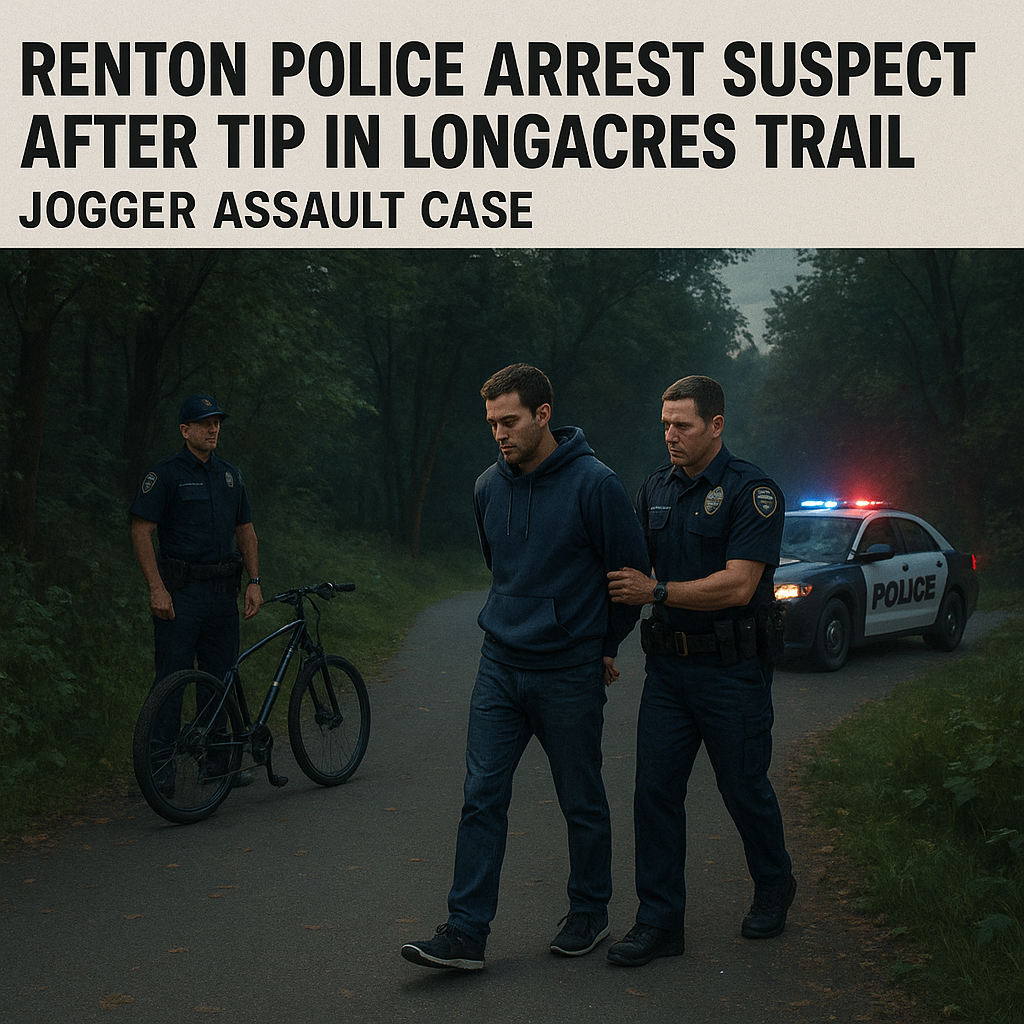
Renton police arrested a man after a public tip helped crack a sexual assault case on the Longacres Trail. That is the headline. The larger story is public...
Renton police arrested a man after a public tip helped crack a sexual assault case on the Longacres Trail. That is the headline. The larger story is public safety, evidence, and the fragile trust people place in shared spaces that are supposed to be open, usable, and plain safe.
Key Takeaways- A public tip helped lead to an arrest.
- The case involves a sexual assault on the Longacres Trail.
- Police still need to prove the case in court.
- Trail safety questions now sit front and center.
- Victim dignity and due process both matter.
What is the Longacres Trail assault case?
The case involves the reported sexual assault of a jogger on or near the Longacres Trail in Renton, Washington, and the arrest of a man after investigators received a tip from the public. That is the basic fact pattern. The rest is the part people usually ignore because it is less tidy and far more important.
This is not just a police blotter item. It is a test of how a city handles violent crime in a public corridor used for exercise, commuting, and daily movement. People assume trails are safe because they are familiar. Frankly, that assumption can get expensive fast. Familiarity is not security.
When I look at these cases, I see the same mistake repeated: people want a fast ending more than a careful one. They want an arrest, a clean villain, and a quick return to normal. Real investigations do not work like TV reruns. Evidence comes in pieces, witness accounts can conflict, and police have to build something a prosecutor can actually use. That part matters.
The public tip is the key detail because it shows how community reporting can move a case forward. Somebody paid attention and spoke up. That is civic duty, plain and simple. It is also a reminder that public safety is shared work, not a service that arrives by magic when sirens start. In a decent society, people protect one another by noticing what does not fit.
There is a moral edge here too. A sexual assault is not just another offense category. It is an attack on bodily dignity and personal safety, and that should shape how officials, journalists, and neighbors talk about it. The victim is not a prop in a public debate. The victim is the person harmed. That should never be lost in the chatter.
Most coverage stops at the arrest. That is the lazy version. The better question is whether the trail itself created needless risk. Was the area well lit? Could a jogger be seen from nearby streets or businesses? Were police patrols based on actual risk, or on assumptions? Good stewardship of public space means more than mowing grass and putting up a sign. It means taking responsibility for the conditions people must pass through every day.
Core Details and Context
- Renton police say the arrest followed a tip from the public.
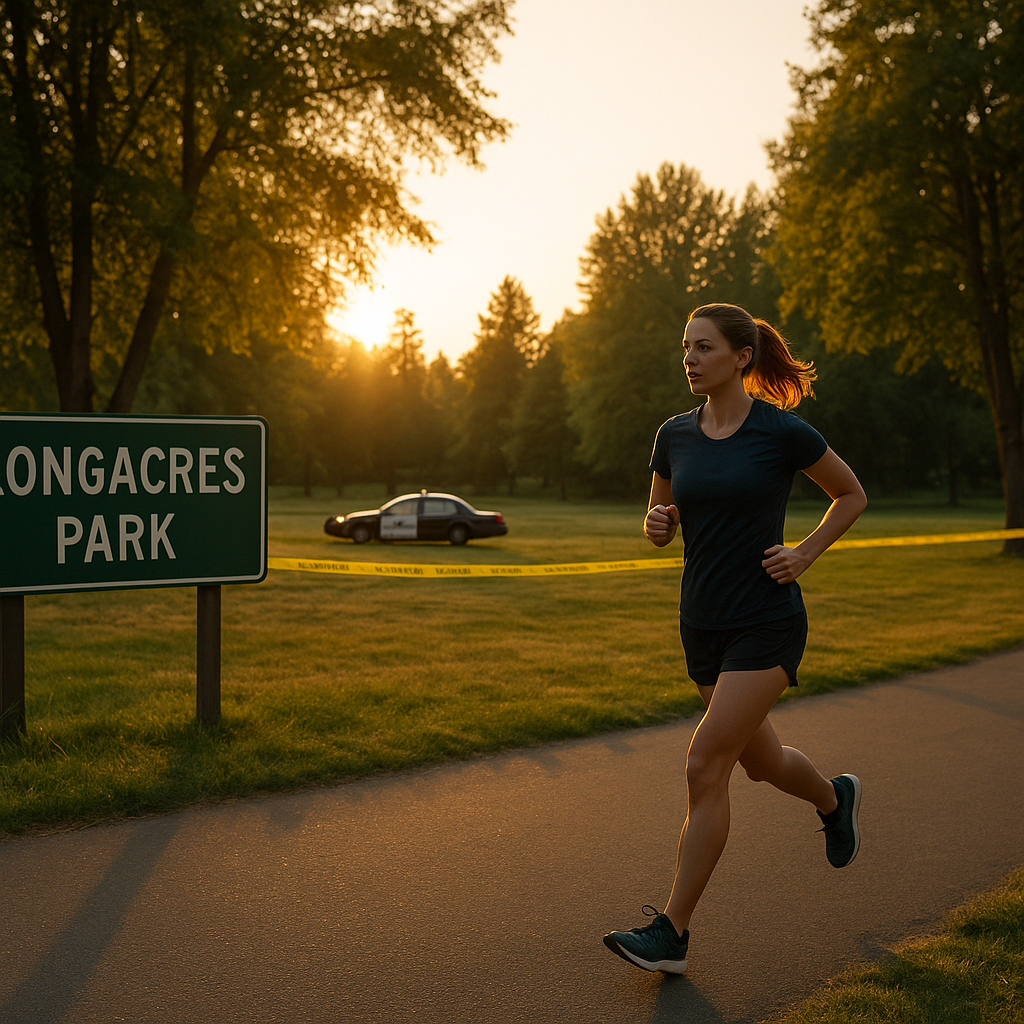
- The victim was a jogger, which matters because runners are often alone and focused on pace, not every shadow.
- The incident took place on the Longacres Trail, a shared public route that should support recreation, not fear.
- Sexual assault cases demand careful reporting. The victim’s privacy is not a footnote.
- An arrest is not a conviction. Courts decide guilt, not internet certainty.
- Community tips can help, but they do not replace forensic evidence, surveillance review, or witness checks.
Here’s the kicker: one arrest does not mean the safety problem is solved. It may mean the exact opposite. Sometimes a case exposes how thin the margin of safety really was. A trail can look harmless in daylight and feel exposed by dusk. People assume foot traffic equals protection. Sometimes it does. Sometimes it just means more witnesses after the fact.
I've covered enough local crime stories to know the usual pattern. Officials promise reviews, extra patrols, maybe better lighting, and then attention drifts. The expensive fixes get delayed, because they are boring and because nobody gets applause for trimming brush or improving sight lines. Yet those are the things that actually reduce risk. Not speeches. Not slogans.
There is also a practical reason to stay sober about this case: public confidence depends on a process that looks fair. If police moved too fast without proof, that would be a problem. If they moved too slowly, that would be a problem too. The system is supposed to balance speed, evidence, and justice. That is not bureaucracy for its own sake. It is the rule of law doing its job.
For broader local reporting on law enforcement and public confidence, see King 5 local crime coverage and Seattle Times local news coverage. The details change from case to case, but the core question remains the same: what keeps people safe before violence happens?
That question should lead to ordinary, practical things:
- Lighting that actually reaches dark corners.
- Vegetation trimmed so sight lines are clear.
- Visible patrols in high-use hours.
- Easy reporting tools for suspicious behavior.
- Prompt warnings when a pattern emerges.
None of that is glamorous. It is also the difference between a public space and a place people start avoiding.
Timeline and Step-by-Step
- The assault was reported to police.
- Detectives opened an investigation and began gathering statements and evidence.
- Investigators likely reviewed any available surveillance, route details, and witness information.
- A public tip came in and gave police a usable lead.
- Investigators linked the tip to a suspect and moved to arrest him.
- The case now heads toward charging review and court proceedings.
That sounds neat on paper. It almost never feels neat in real life. When I analyze cases like this, the public tip is usually one tool in a larger file, not some miraculous fix. Police still have to verify identity, confirm the timeline, and make sure the evidence stands up under scrutiny. Otherwise they risk trashing the case before it reaches a courtroom.
Let's be real: people want instant arrests in violent crime cases, but they also want absolute accuracy. Those demands clash. Officers have to act quickly enough to protect the public, but carefully enough to avoid a bad arrest. That balance is the whole point of due process. It protects the accused, yes, but it also protects the integrity of the case and the victim’s chance at justice.
The next steps matter more than the press release. Prosecutors will decide whether the evidence supports charges. Defense counsel will examine the file and push back where it is weak. The victim may need privacy protections and support services. Residents will want to know whether the trail had known blind spots or prior complaints. This is where the story stops being a police headline and becomes a city responsibility.
There is a broader lesson here about public space. Communities are judged not only by how they react to harm, but by whether they prepare for it. A city that takes the common good seriously does not wait for a bad headline to inspect lighting or trim back overgrowth. It does that work before a jogger is put at risk. That is stewardship, not theatrics.
If you want another example of how public order stories shape trust, see AP News coverage of criminal justice and local safety. The details vary, but the tension does not: people want protection without overreach, and fairness without delay.
Comparison Table
| Factor | Longacres Trail case | Typical unsolved trail assault |
|---|
| Investigative status | Suspect arrested | No arrest or unknown suspect |
| Public role | Tip helped identify suspect | Public may have no useful lead |
| Community impact | Fear, plus some reassurance | Longer uncertainty and anxiety |
| Accountability | Case can move to prosecutors | Investigation may stall |
| Evidence needs | Still must be proven in court | Often stuck with partial evidence |
| Safety response | Trail review likely | Review may be delayed |
The table makes the point cleanly. An arrest changes the conversation, but it does not end it. The best outcome is not a headline. It is a working system: evidence collected properly, charges filed if warranted, support for the victim, and actual safety improvements after the fact.
Common Misconceptions and What to Know
- Misconception: An arrest means the case is finished. Not even close. It only means police have enough to move forward.
- Misconception: Trail attacks cannot be prevented. False. Lighting, sight lines, patrols, and maintenance all matter.
- Misconception: Public tips are just noise. Sometimes they are junk, but sometimes they are the reason an arrest happens.
- Misconception: Safety is only a police job. Also false. Parks staff, city planners, residents, and trail users all share responsibility.
- Misconception: Talking about safety harms victims. Not if it is done carefully and with privacy in mind.
Most news coverage misses the real story. It obsesses over the arrest and skips the dull work that reduces harm. Lighting. Visibility. Brush clearing. Patrol timing. Reporting tools. Those are not headline magnets, but they save people from danger. That is the part worth paying for.
When I look at cases like this, I keep coming back to one hard truth: communities often spend more energy reacting to violence than preventing it. That is backward. A city that treats public space as a moral responsibility does not wait for harm before acting. It treats safety as part of the dignity of work, movement, and ordinary life. People should be able to run, walk, and bike without scanning every bush like they are in a war zone.
The smartest questions now are practical ones. Were there known problem spots on the trail? Could someone be seen from nearby roads or businesses? Were cameras working? Were complaints taken seriously before the assault? Those questions are not ideological. They are basic management. If officials dodge them, residents should be suspicious.
Frequently Asked Questions
What happened on the Longacres Trail in Renton?
Renton police say a jogger was sexually assaulted on or near the Longacres Trail, and a man was later arrested after a public tip helped identify him.
Does an arrest mean the suspect is guilty?
No. An arrest means police believe they have enough evidence to proceed. Guilt is decided in court.
How did police identify the suspect?
Police said a tip from the public helped lead them to the suspect. Investigators still need to verify the evidence and build a case that can stand up in court.
What should trail users do to stay safer?
Stay aware of surroundings, share routes when possible, avoid isolated areas in poor light, and report suspicious behavior quickly.
The hardest part of public safety is that it is usually invisible until it fails. Then everyone notices. This Renton case should not just be filed away as another arrest. It should push local officials, residents, and trail managers to take shared spaces seriously. A decent city owes people prudence, care, and the unglamorous work of prevention.
That is not sentimental talk. It is common sense with a conscience.