A mainland accident left more than 15,000 customers in the San Juan Islands without power on Wednesday morning. The outage spread fast, and that matters...
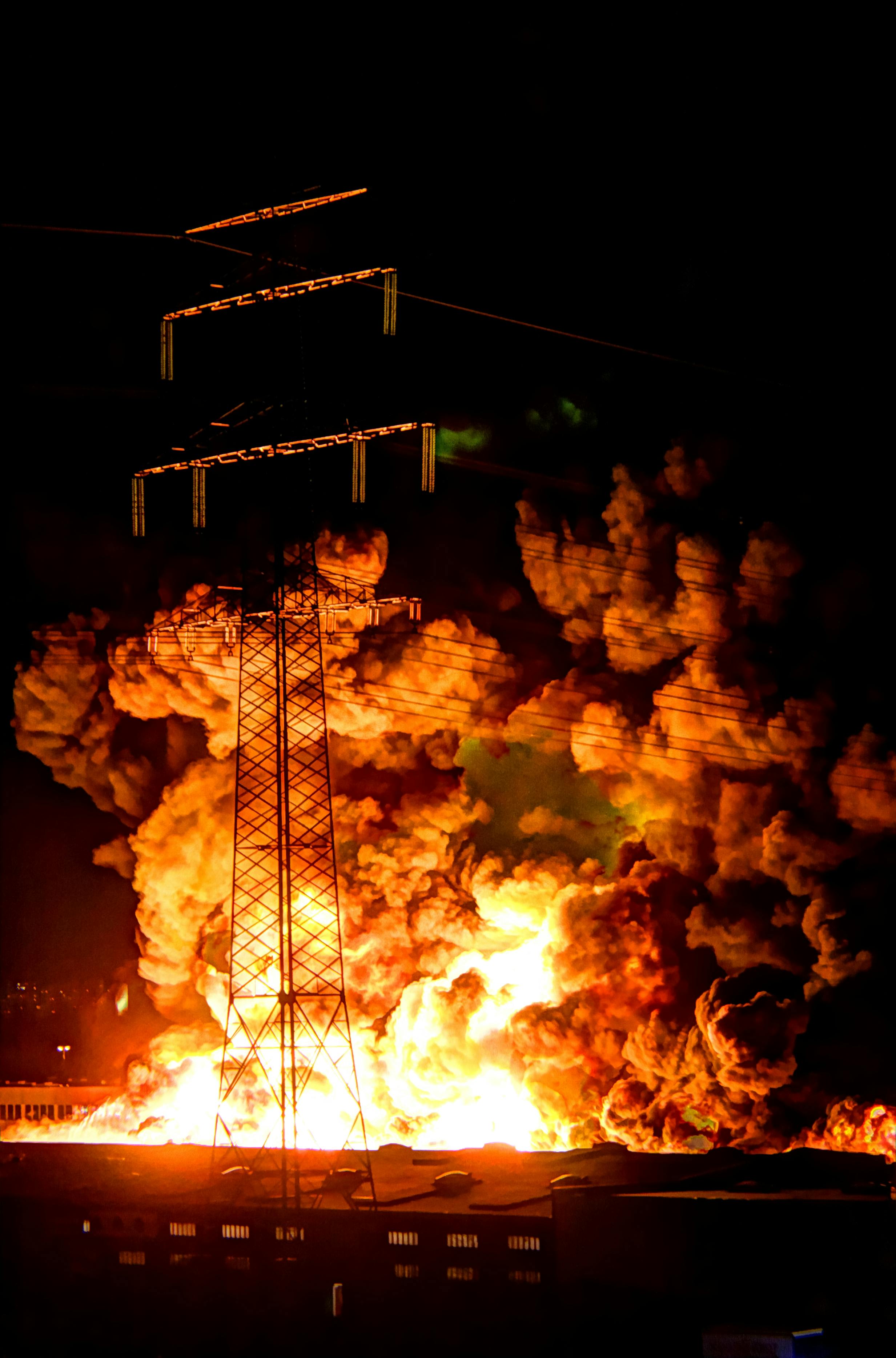
A mainland accident left more than 15,000 customers in the San Juan Islands without power on Wednesday morning. The outage spread fast, and that matters because island grids are brittle in a way mainland users rarely notice. One break upstream can darken homes, clinics, stores, and ferries. That is the whole story, stripped of spin.
Key Takeaways
- More than 15,000 OPALCO customers lost power after a mainland accident disrupted service.
- The event shows how dependent the San Juan Islands are on a narrow chain of infrastructure.
- Outages like this hit more than convenience; they affect health, work, food storage, communications, and public safety.
- The real issue is not just repairs, but system resilience and how much redundancy the region actually has.
What is the San Juan Islands power outage?
This outage is a regional electricity disruption affecting the San Juan Islands after an accident on the mainland interrupted the power supply serving the islands. OPALCO, the local utility cooperative, reported that over 15,000 customers lost power Wednesday morning. That number is not small. It covers households, small businesses, and public facilities that depend on steady electricity for daily life.
Here’s the basic point. The islands do not sit on a fat, isolated grid with endless backup. They rely on transmission links and utility coordination that run through a limited number of pathways. When something goes wrong on the mainland, the islands can get hit hard and fast. Frankly, that is the part most people skip over when they treat outages as a brief inconvenience.
I’ve covered infrastructure failures long enough to know the first report is usually the cleanest and the most incomplete. The headline says “accident,” but the useful questions are different: What failed? Was it a vehicle strike, a line issue, a substation problem, or something else? How much redundancy existed? How quickly can crews isolate the fault and restore service? Those details decide whether this is a short black-out or a longer mess.
The larger issue is stewardship. Electricity is not magic. It is a human system built from poles, wires, substations, labor, and planning. When that system is thin, the burden falls on ordinary people first. Elderly residents, families with medical devices, workers on tight schedules, and small shops with refrigerated goods all absorb the cost. That is why infrastructure reliability is not just a technical matter. It is a matter of the common good.
Core details and context
- OPALCO serves the islands and is responsible for local distribution, but it cannot control every upstream failure on the mainland.
- The outage affected a wide set of customers, which suggests the disruption hit a major feeder or transmission point rather than a tiny isolated line.
- Island communities tend to be more vulnerable because fuel delivery, backup generation, and repair access are all harder than on the mainland.
- Communication during outages can be uneven, especially if cell towers, internet service, and local business systems are also affected.
- The first priority in events like this is usually public safety, then fault isolation, then restoration.
Most coverage stops at the count of affected customers. That is lazy. The better story is why one upstream accident can knock out power to so many people at once. The answer, usually, is a chain with too few breaks in it. The grid is built for efficiency, not always for toughness. Those are not the same thing.
The outage also exposes the awkward truth about remote places: they are often treated as though distance is a quaint detail, until something breaks. Then everyone remembers that spare capacity is expensive, repair crews need time to travel, and bad weather or marine logistics can slow everything down. The islands live with that reality every day.
There is also a business angle. Grocers lose cooling. Restaurants lose prep capacity. Marinas, docks, and service shops lose transaction systems. Even brief outages can spoil inventory and interrupt payroll or bookings. For a region that depends on tourism, local commerce, and seasonal flow, the ripple effect is wider than people think.
Let’s be real: utilities do not get enough credit when things work, and too much blame when the system they inherited is fragile. Both can be true. The right question is not whether customers are angry. They should be. The question is whether the region has invested enough in redundancy, vegetation management, equipment hardening, and emergency coordination.
When I look at outages like this, I look at three layers: source failure, distribution weakness, and recovery speed. If the source was a simple accident, the event may be short-lived. If the distribution network is weak, the outage becomes a warning. If recovery drags, then it becomes a policy problem.
Timeline and what happened
- Before Wednesday morning — The islands were operating normally, with customers drawing power through the standard utility network tied to mainland supply paths.
- Mainland accident occurs — A disruption on the mainland affected the electricity flow serving the islands. OPALCO identified this as the cause of the outage.
- Large-scale loss of service — More than 15,000 customers were left without power across the San Juan Islands.
- Utility response begins — Crews and operators assessed the damage, isolated the fault, and worked to determine restoration steps.
- Public impact spreads — Homes, businesses, and essential services had to adapt immediately, using backups where available and waiting for updates.
- Restoration planning — The practical question became how quickly the affected segment could be repaired and service restored without creating additional failures.
I’ve seen this pattern before. One upstream event, then a cascade of inconvenience, then a round of reassuring statements while people sit in the dark. Sometimes the statements are fair. Sometimes they are theatre. The difference is in the detail.
The key issue is that island outages are rarely just about light bulbs going off. They touch food safety, water systems, phone charging, internet access, and medical equipment. If you care about human dignity, you care about those ordinary things. No sermon needed. It is just decent judgment.
The timeline also matters because it shows the limits of local control. OPALCO can respond, communicate, and repair within its role. But if the trigger is on the mainland, the fix may depend on another utility, another crew, another jurisdiction, or another part of the grid. That creates delay. Delay creates uncertainty. Uncertainty is what people hate most.
Some readers will ask whether this should have been preventable. The honest answer is: maybe, partly, or not at all, depending on the accident. But preventability is not the only issue. Resilience is. A system that fails often because one thing goes wrong is not a strong system. It is a thin one.
Comparison table
| Factor | San Juan Islands outage | Typical mainland outage |
|---|
| Primary cause | Upstream mainland accident | Local line fault, weather, or equipment failure |
| Customers affected | 15,000+ | Often smaller, though sometimes much larger |
| Restoration difficulty | Higher due to access and dependencies | Usually easier with broader crew access |
| Backup options | Limited, more fragmented | Often more neighborhood-level redundancy |
| Impact on daily life | Heavy, because islands rely on fewer alternatives | Serious, but usually with faster workarounds |
| Main vulnerability | Narrow supply chain | Weather, aging equipment, localized damage |
| Public response | High urgency | High urgency, but usually easier to stage repairs |
The comparison tells the story better than the slogans do. Island grids are not fragile by accident; they are constrained by geography, cost, and engineering tradeoffs. But that does not absolve anyone. It just means the region should be honest about the risk.
Most people hear “15,000 customers” and think of a service map. I think of freezers, oxygen concentrators, missed shifts, and the elderly waiting for lights that should have stayed on. Small communities run on trust as much as wires. When that trust gets stressed, officials and utilities need to speak plainly.

Common misconceptions and what to know
Misconception 1: An outage is just an inconvenience.
No. That idea is comfortable because it lets outsiders shrug. But a blackout can interrupt medical care, spoil food, stop business operations, and cut off communications. For some households, even a few hours matters a great deal.
Misconception 2: The utility is always the whole problem.
Also no. A utility can be competent and still be exposed to a failure it did not create. Mainline accidents, transmission damage, and regional faults can hit hard even when local crews are prepared. Still, preparedness is part of the job.
Misconception 3: Power restoration is only about speed.
Speed matters, sure. But careful restoration matters too. Rushing power back through a damaged system can create more trouble. The smarter move is safe isolation, then restoration, then review.
Misconception 4: Remote communities should just “adapt.”
That line gets thrown around by people who never had to keep groceries cold or medical devices running. Adaptation has limits. Justice, in practical terms, means giving people reliable infrastructure, not expecting them to absorb endless disruption.
The truth is, outages expose priorities. If a region funds preventive maintenance, backup generation, and hardened links, it is making a statement about who matters. If it underinvests and hopes for the best, that is a different moral choice, whatever the budget spreadsheet says.
Another myth says that because outages are common, they are normal. Not quite. Common is not the same as acceptable. Roads crack too. That does not mean we stop fixing them.
One more thing: public communication matters. People can tolerate bad news better than vague news. Say what happened. Say what is known. Say what is not known yet. Then say when the next update comes. That is not rocket science.
When I analyze events like this, the deepest issue is often hidden in plain sight: resilience is a form of respect. It respects labor, household stability, and the basic order of daily life. You do not need theology to see that, but it helps sharpen the point.
Frequently Asked Questions
What caused the power outage in the San Juan Islands?
OPALCO said the outage was triggered by an accident on the mainland that disrupted power serving the islands. The exact mechanical cause was not fully clear in the initial report.
How many customers lost power?
More than 15,000 customers across the San Juan Islands were without electricity Wednesday morning.
Why are island outages harder to fix?
Island systems depend on limited supply routes, fewer alternate feeds, and more complex logistics for repairs. Crews, equipment, and backup resources often take longer to deploy than on the mainland.
Are outages like this preventable?
Not always. Some are caused by sudden accidents. But their impact can be reduced with stronger infrastructure, better redundancy, and quicker coordination between utilities and emergency responders.
Final thought
A blackout is never just a blackout. It is a stress test for how a community values preparedness, mutual obligation, and the quiet systems that make ordinary life possible. The San Juan Islands outage showed how quickly a mainland accident can reach across water and interrupt thousands of lives at once. That should bother anyone with a functioning sense of responsibility.
I’ve seen enough of these stories to know the real measure comes later. Not in the first headline. Not in the first statement. The measure comes in how quickly power returns, how clearly the public is told what happened, and whether anyone learns the right lesson afterward. If the answer is “we’ll hope it doesn’t happen again,” that is not a plan. It is wishful thinking in a hard hat.
A decent society does not wait for pain to teach it what prudence should have already said. It plans, maintains, and repairs because people matter. That is the whole point.