SeaTac Demands Answers From Port Over Airport Immigration Operation
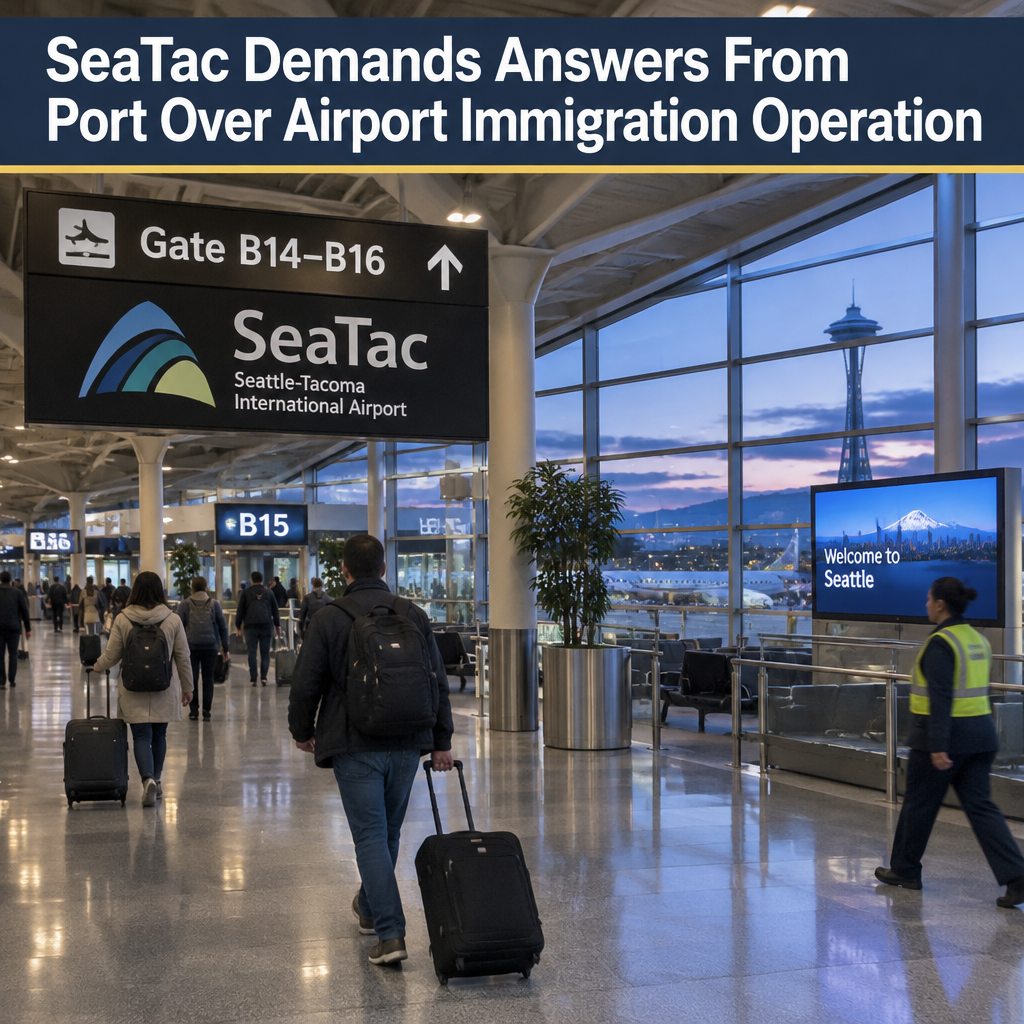
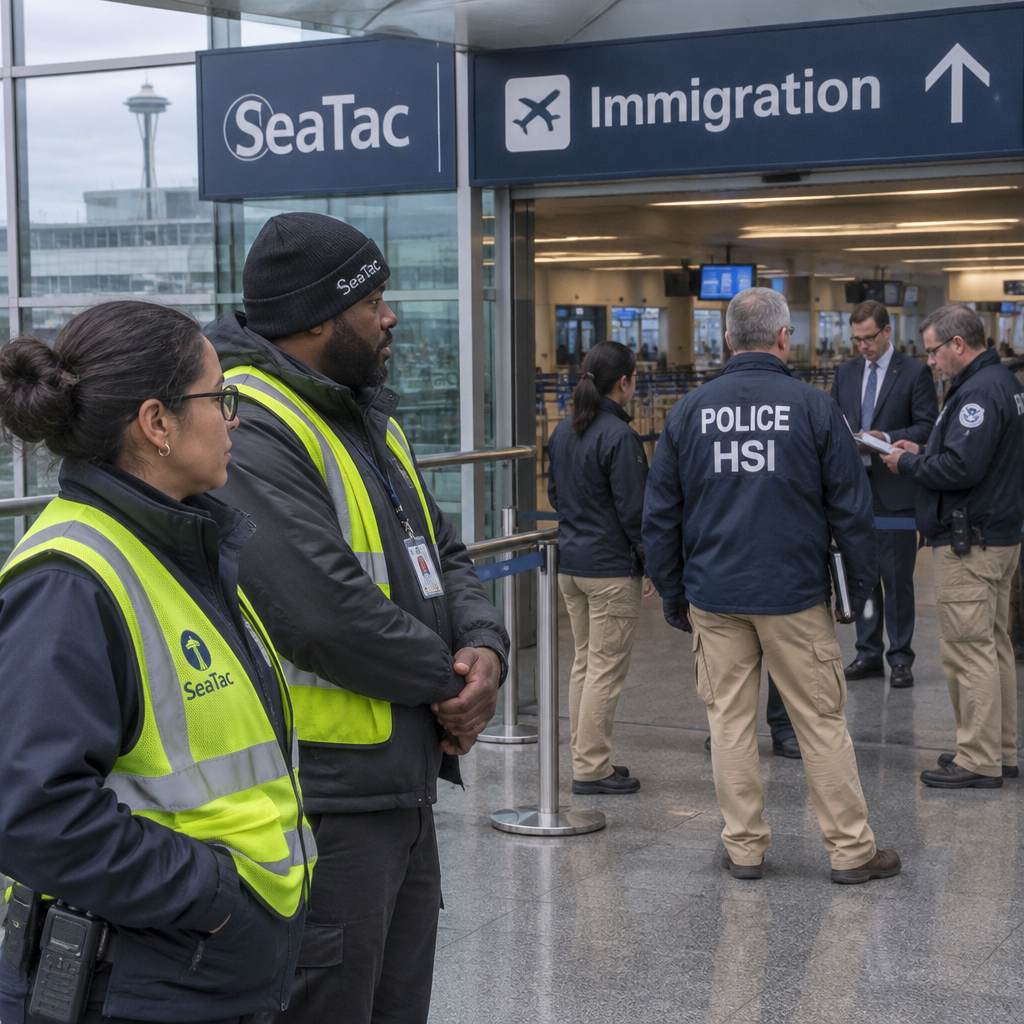
SeaTac is demanding a public account of a federal immigration operation at Seattle-Tacoma International Airport after the Port of Seattle acknowledged that Transportation Security Administration officials gave its personnel limited advance notice. The city wants the Port to explain what it knew, correct its earlier public statement, and release findings from an independent investigation.
The disagreement is about more than a disputed sentence. It concerns how airport operators, federal agencies, local government, workers, and travelers share information when immigration enforcement takes place at a major public facility. SeaTac says residents should not have to guess which agency acted or whether local leaders received a clear account. The Port, meanwhile, has called for an independent investigation led with outside legal counsel, a step the city says it welcomes.
The city’s demand arrives alongside a separate but related dispute over airport growth. SeaTac has temporarily stopped permits for certain airport-related projects while it considers the effects of development and the community’s role in airport decisions. Those two questions—public accountability and the costs of hosting a major airport—now sit side by side. Neither should be waved away as a public-relations quarrel.
What Is the SeaTac–Port Dispute About?
At its center is a mismatch between what SeaTac says the Port initially told the public and what the Port later acknowledged about advance notice. According to the city, the Port said immigration enforcement actions at SEA were conducted “without the Port’s participation or knowledge.” After U.S. Rep. Pramila Jayapal raised the issue, the Port confirmed that TSA officials had given its personnel limited advance notice of the federal operation.
Those statements do not, by themselves, establish that Port employees participated in the enforcement action. Nor does limited advance notice establish exactly what the Port knew, when it knew it, or whether anyone at the Port could influence what happened. Those distinctions matter. Treating “notice,” “knowledge,” and “participation” as interchangeable would blur the very questions the city is asking the Port to answer.
The city wants the Port to publish a full timeline, explain why its Nov. 21 statement was wrong, and acknowledge the operation’s effects on airport workers and nearby residents. It also wants the Port to change its procedures and federal advocacy. SeaTac’s requested changes include clearer protections for passengers and families during enforcement actions and expanded Know Your Rights resources for travelers and workers.
Frankly, “limited advance notice” is a starting point, not a complete account. It leaves open practical questions: Which Port personnel received notice? What did the message say? How close to the operation did it arrive? Was it shared with airport leadership or local officials? The available account does not report those details, and they should not be guessed at.
The Port Commission has called for an independent investigation with outside legal counsel. SeaTac says it supports that step and expects the findings to be released publicly. Independence will matter, but so will the scope of the review: investigators need enough access to records and relevant personnel to establish a chronology, and the public needs a report that explains its conclusions in plain language.
This is also a local-governance issue. SeaTac says residents bear the daily costs of hosting the airport within city limits, including noise, air quality concerns, traffic, and demands on public safety. That does not automatically give the city control over federal enforcement or every Port decision. It does make a serious case for timely notice, honest public statements, and a meaningful local voice when airport operations affect the community.
The SeaTac City Council’s public information and the Port of Seattle newsroom are the official channels to watch as the dispute develops.
Core Details and Context
Several separate issues are being discussed at once. Keeping them apart is the best way to avoid overstating what is known.
- The federal operation: The city describes an immigration enforcement operation at SEA last weekend. The information available here does not identify the federal agency that carried it out, the number of officers involved, the people affected, or the legal authority used. SeaTac’s deputy mayor says the public should know which agency acted and what authority it exercised.
- The Port’s advance notice: The Port has acknowledged that TSA officials gave its personnel limited advance notice, according to SeaTac’s account. That disclosure is narrower than a finding that the Port planned, approved, or took part in enforcement. The investigation should establish what the notice contained and how it was handled.
- The Nov. 21 statement: SeaTac says the Port initially told the public that enforcement actions at SEA happened without Port participation or knowledge. The city now wants an explanation of why that statement was wrong. The exact wording, context, and basis for the later correction should be part of the public record.
- The investigation: The Port Commission has called for an independent investigation with outside legal counsel. SeaTac welcomes it and expects the complete findings to be published. The city’s position is clear; the investigation’s mandate, schedule, and findings are not reported here.
- The city’s requested reforms: SeaTac is asking for clearer procedures to protect passengers and families during enforcement actions, expanded Know Your Rights resources for workers and travelers, and changes to the Port’s practices and federal advocacy.
- The development pause: Ordinance No. 26-1028 pauses permits for construction, expansion, or modification of airport-related facilities for six months. The city says it applies to 31 near-term projects in the Port’s Sustainable Airport Master Plan and remains in effect through May 24, 2027.
The city’s statements raise legitimate questions about transparency, but an accusation is not the same as a completed finding. The Port’s acknowledgment of limited notice does not settle whether the Nov. 21 statement was inaccurate because of an error, incomplete information, or a different interpretation of “knowledge.” The investigation should resolve that distinction with records rather than speculation.
The development freeze also deserves precise treatment. SeaTac says the pause applies to permits for construction, expansion, or modification of airport-related facilities; it should not be described as a shutdown of SEA or a blanket halt to every airport activity. The city identifies 31 near-term projects within the Sustainable Airport Master Plan as affected. The Port’s Sustainable Airport Master Plan information can help readers understand the planning framework, but the city’s ordinance and project list are needed to determine how each proposal is treated.
The hearing scheduled for Jan. 12 gives residents a chance to examine the development pause in public. That meeting is a separate process from the investigation into the immigration operation, though the same underlying issue runs through both: who gets a voice when decisions at the airport carry consequences for SeaTac residents?
Here’s the kicker: city leaders are not just asking for a better press release. They are arguing that a community hosting a large airport should have dependable procedures for safety, communication, public input, and accountability. Those demands can be tested against evidence and written policy. They should not be reduced to a partisan argument over immigration.
Timeline: What Happened and What Comes Next
The events described so far form two tracks: the response to the federal operation and SeaTac’s pause on airport-related permits. The known chronology is short, and important gaps remain.
- February: SeaTac adopts a position on detention facilities. The city says it became the first city in the nation to block new or expanded immigration detention facilities. The statement establishes SeaTac’s position on detention development; it does not establish what authority any federal officers exercised at the airport months later. Local policy and federal enforcement should not be confused.
- Nov. 21: The Port issues an initial public account. SeaTac says the Port told the public that immigration enforcement actions at SEA were carried out without Port participation or knowledge. The account now sits at the center of the city’s request for an explanation. The available information does not state who drafted the statement or what records were reviewed before it was issued.
- After Jayapal raises the issue: The Port acknowledges limited advance notice. The Port confirms that TSA officials had given its personnel limited advance notice, according to the city. That is a meaningful fact, but it is not a full timeline. The timing, recipients, content, and circulation of the notice remain unreported.
- Last weekend: A federal immigration operation takes place at SEA. SeaTac describes the operation as an enforcement action at the airport. The city’s account does not identify the acting agency or provide details about the operation’s scope, the people involved, or its legal basis. Those are among the questions Deputy Mayor Senayet Negusse says the public deserves answered.
- Saturday: SeaTac calls for disclosure and reform. Mayor Mohamed Egal says residents, airport workers, and travelers deserve honesty and a voice in what comes next. Negusse says the public should know which agency acted, what authority it used, and who will answer for its actions. The city also asks the Port to release a full timeline and address the impact on workers and neighbors.
- Days before the demand: The development permit pause takes effect. Under Ordinance No. 26-1028, SeaTac pauses permits for construction, expansion, or modification of airport-related facilities for six months, through May 24, 2027. The city says 31 near-term Sustainable Airport Master Plan projects are affected.
- Jan. 12: A public hearing is planned. The City Council plans to hear public comment on the development pause. Residents can use that process to ask which projects are covered, what criteria apply, and how the pause will affect planned work. The hearing is not, on the information available, the Port’s independent investigation into the enforcement operation.
I read the timeline as a test of institutional candor, not proof of a broader conspiracy. A careful investigation should say what each agency knew and when, identify what records support that account, and be candid about unanswered questions. If the evidence does not support a claim, the report should say so. If records show that public statements were incomplete, the report should explain how that happened and what will change.
The same care applies to the permit pause. A six-month hold can create time for review, but it can also complicate planning and delay projects. Whether that trade-off is worthwhile depends on the ordinance’s scope, the public’s input, and the reasons for each decision—not on slogans about growth or obstruction.
SeaTac’s Position and the Port’s Response
The Port is not a commercial competitor to SeaTac. It is the other central institution in this dispute, so a comparison of their stated positions is more useful than pretending they are rivals in a marketplace.
| Issue | SeaTac’s stated position | Port’s reported position or action |
|---|
| Advance notice | Wants a full timeline and an explanation of the earlier public statement. | Confirmed that TSA officials gave Port personnel limited advance notice, according to the city. |
| Participation in enforcement | Wants the public to know which agency acted and what authority it used. | The initial statement, as described by SeaTac, said the Port did not participate; the Port has called for an independent investigation. |
| Public accountability | Wants findings released publicly and a clear account of the impact on workers and neighbors. | Port Commission called for an independent investigation with outside legal counsel. |
| Passenger and worker protections | Seeks clearer procedures and expanded Know Your Rights resources. | The reported information does not specify whether the Port has adopted those requested changes. |
| Airport development | Paused permits for specified airport-related work through May 24, 2027, with a Jan. 12 hearing planned. | The pause covers 31 near-term projects in the Port’s Sustainable Airport Master Plan, according to SeaTac. |
The comparison shows a basic difference in emphasis. SeaTac is pressing for public explanation and local input; the Port has announced an independent review. Those positions are not necessarily incompatible. A review can answer the city’s questions, but only if its mandate covers the timeline, the Nov. 21 statement, communication with federal agencies, and the consequences for airport users.
There are also limits to what this table can prove. The Port’s full response is not reproduced in the city’s account, and the investigation’s scope is not specified. It would be premature to say that the Port has accepted every reform SeaTac requested—or rejected them. Silence on a particular proposal is not a decision.
The development dispute is related politically but distinct procedurally. The city’s permit pause concerns airport-related facilities and the Sustainable Airport Master Plan; the investigation concerns what officials knew about a federal enforcement action. A public hearing can clarify the first. Records and interviews may clarify the second. Mixing them together risks making both harder to resolve.
For the public, a useful standard is simple: publish the documents that can be released, explain any redactions, and provide dates for the next steps. Airport operations involve overlapping authorities, but overlapping authority is not a license for vague explanations. People should be able to distinguish what the Port knew, what TSA communicated, what federal officers did, and what local officials can lawfully control.
Common Misconceptions and What to Know
Misconception: Limited advance notice proves Port participation. It does not. Notice can mean different things, from a general alert to operational details, and the reported facts do not say what was communicated. The Port’s acknowledgment warrants questions, not a leap to conclusions about coordination or approval.
Misconception: The Port’s initial statement and later acknowledgment are automatically irreconcilable. They may be in tension, as SeaTac argues, but the words “participation” and “knowledge” are not identical. The Port needs to explain why it issued the earlier statement and what it understood at the time. An independent review should assess the documents, not merely choose one institution’s interpretation.
Misconception: The public already knows which agency carried out the operation. The city’s account does not identify that agency. Deputy Mayor Negusse explicitly says the public should know who acted and under what authority. Until an official account supplies those details, readers should avoid filling the gap with assumptions about federal agencies, tactics, or legal powers.
Misconception: SeaTac’s permit pause closes the airport or stops all projects. The city describes a six-month pause on permits for construction, expansion, or modification of airport-related facilities. It identifies 31 near-term projects in the Sustainable Airport Master Plan as affected. The stated measure is not a closure of SEA, and the precise treatment of individual projects depends on the ordinance and city process.
Misconception: The development pause itself resolves the immigration dispute. It does not. The pause addresses permits and airport growth; the demand for disclosure addresses the enforcement operation and the Port’s public statements. Both touch on local accountability, but they require different records, decision-makers, and remedies.
Misconception: Asking for transparency means taking a side on immigration policy. SeaTac’s deputy mayor explicitly frames the issue as accountability regardless of a person’s position on immigration. A public institution can enforce the law while still identifying which agency acted, explaining the authority involved, and providing clear processes for affected people. Due process and human dignity are not partisan decorations; they are basic tests of responsible government.
The public should also be wary of confident claims about the investigation before it starts producing findings. “Independent” is a label, not a guarantee. The public will need to know who selected the outside counsel, what questions investigators are authorized to answer, whether they can review relevant communications, and when a report is expected. The information available here does not report those details.
Nor should the costs SeaTac describes be treated as background noise. Traffic, air quality, noise, and public-safety demands affect people who live and work near the airport. Airport expansion can bring jobs and connectivity, but those benefits do not erase local burdens. Stewardship of public resources means weighing both sides, and the dignity of work includes the safety and fair treatment of the people who keep an airport running.
A sober account will take time. That is no excuse for a silent one.
Frequently Asked Questions
What did the Port acknowledge about the immigration operation?
According to SeaTac, the Port confirmed that TSA officials had given Port personnel limited advance notice of the federal immigration operation at SEA. That acknowledgment does not establish that Port employees participated in enforcement or reveal what information the notice contained. The city wants the Port to publish a full timeline and explain why its Nov. 21 statement said the Port had no participation or knowledge.
Which federal agency carried out the operation, and what authority did it use?
The information available in SeaTac’s account does not identify the agency or state the legal authority it used. Deputy Mayor Senayet Negusse says the public should be told which agency acted, what authority it exercised, and who will answer for its actions. Those details remain open questions pending a fuller official account.
What is the Port’s independent investigation expected to examine?
The Port Commission has called for an independent investigation with outside legal counsel. SeaTac says it welcomes the investigation and expects all findings to be released publicly. The reported information does not specify the investigation’s formal scope, schedule, or access to records, so those details should not be assumed. The city wants the review to clarify the timeline, the earlier statement, and the effect on workers and neighbors.
What does SeaTac’s airport-development pause cover?
Ordinance No. 26-1028 pauses permits for construction, expansion, or modification of airport-related facilities for six months, through May 24, 2027. SeaTac says the pause includes 31 near-term projects in the Port’s Sustainable Airport Master Plan. The City Council plans a public hearing on Jan. 12; the ordinance and hearing are the places to look for project-by-project details.
Final Thought
The core question is not whether the Port can control every federal action at an airport. The question is whether public institutions can provide a reliable account when government power is exercised in a place used by workers, families, and travelers every day. SeaTac is entitled to ask what the Port knew, when it knew it, and why its first public statement differed from the later acknowledgment of limited advance notice. The Port is entitled to have its actions assessed on evidence rather than accusation. Those principles fit together.
The investigation will be judged by what it can establish and what it is willing to publish. A useful report will lay out a timeline, separate confirmed facts from disputed claims, identify the limits of what investigators could learn, and recommend practical changes where the record supports them. If the review finds no Port participation, it should say so clearly. If it finds that a public statement was incomplete or misleading, it should explain why and how future statements will be checked.
SeaTac’s development pause raises a parallel question about who bears the cost of airport growth. The Jan. 12 hearing should give residents a real chance to weigh in, not simply mark a procedural box. Jobs and transportation links matter. So do clean air, safe streets, honest communication, and the common good of the people who live beside the airport.
No one benefits from premature certainty. The public benefits from documents, clear answers, and rules that apply before a crisis—not just after one. That is a modest demand, and a necessary one.
FAQ structured data