Seattle Celebrates the 2031 Women’s World Cup—But Hosting Matches Is Still Up for Grabs
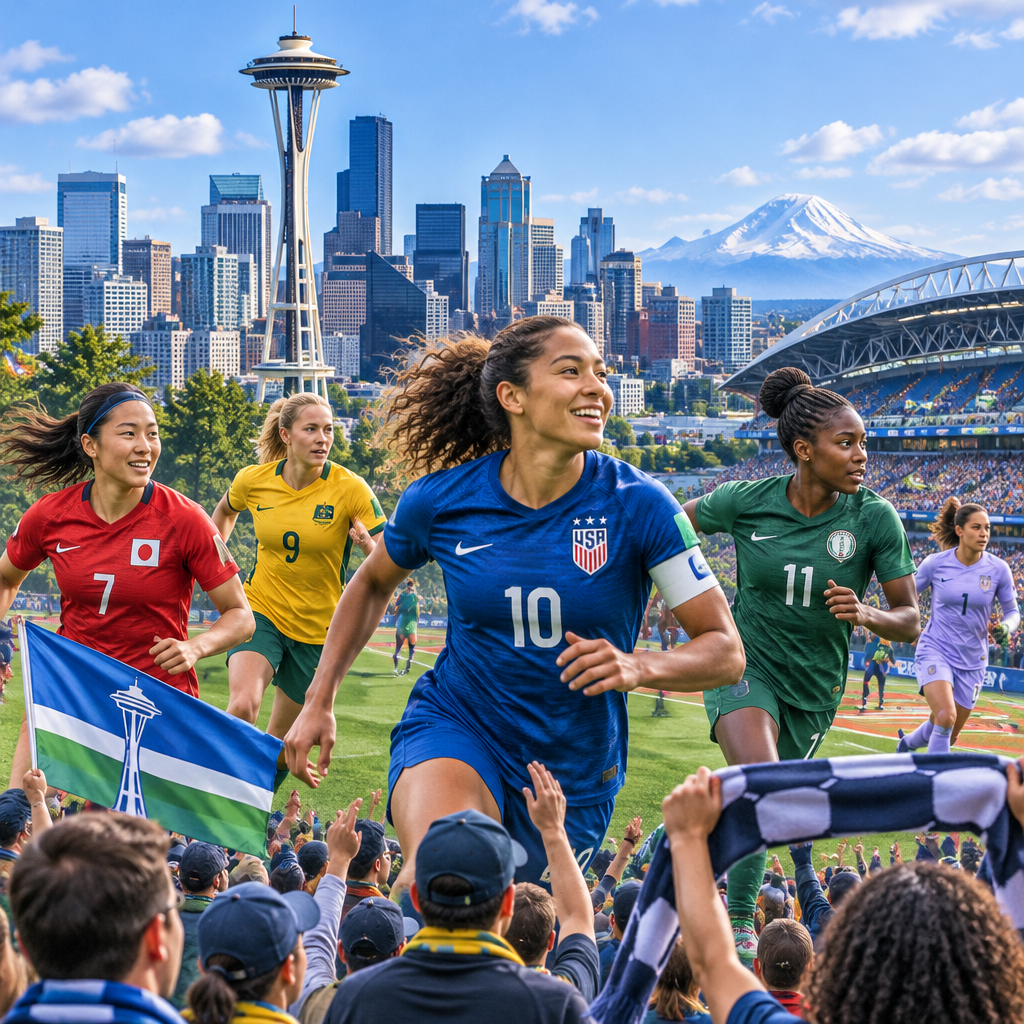
Seattle is celebrating FIFA’s award of the 2031 Women’s World Cup to a joint bid from the United States, Mexico, Costa Rica and Jamaica. The city is among more than 30 candidates seeking match-host status, but FIFA has not yet chosen host cities. Monday night’s red, white and blue lights mark a milestone—not a confirmed place on the tournament schedule.
The skyline display is scheduled to include Lumen Field, Rainier Square, Rainier Tower, the Seattle Convention Center, Seattle Courtyard Marriott, T-Mobile Park and Tower 1201. It offers a visible celebration, while the consequential work happens in meeting rooms, budgets and venue assessments. A light show can show enthusiasm; it cannot settle FIFA’s checklist.
That distinction matters for residents, businesses and soccer fans. A World Cup brings attention and visitors, but hosting also involves transport, security, staffing, facilities and public spending. When I examine the reported details, the strongest story is not simply that Seattle wants the tournament. It is that the city has a credible case to make—and still has to prove it meets the requirements.
What is Seattle’s 2031 Women’s World Cup opportunity?
The opportunity is straightforward: Seattle is competing to be one of the cities that stages matches during the 2031 FIFA Women’s World Cup. FIFA awarded the tournament to a joint bid from the United States, Mexico, Costa Rica and Jamaica. That country-level decision determines where the competition will be held, but it does not automatically award Seattle a match, a training site or a fan event.
The distinction between a host country and a host city is easy to miss. A country can win the right to stage a tournament while FIFA and local organizing bodies continue reviewing individual venues and cities. Seattle is one of more than 30 candidate cities, according to the reported announcement. FIFA has not yet named the final list of host cities, so Seattle remains in contention rather than confirmed.
The 2031 edition is expected to be a major expansion. Seattle Reign FC says it will be the first Women’s World Cup held across four countries and the first with 48 teams and 104 matches. Those numbers matter because they affect the scale of the event: more teams mean more fixtures, more travel, more training needs and a larger demand for accommodation and transport. The match total also creates more chances for participating cities, though the number of host cities and the allocation of matches have not been reported here.
For Seattle, the bid draws on a local sports identity that includes the Reign, the WNBA’s Seattle Storm and the Professional Women’s Hockey League’s Seattle Torrent. The Reign, a founding NWSL team in 2013, anchors the city’s women’s soccer history. Seattle’s claim that all three teams play within city limits is a distinctive point in its pitch, not proof that FIFA will favor the city.
The tournament is also a civic and commercial prospect. Local businesses may seek visitor spending; public agencies would need to coordinate services; and residents would experience both the excitement and the practical demands. I think the useful test is whether plans serve the common good after the final whistle, not merely whether they produce a memorable week of publicity. The FIFA Women’s World Cup information page provides the governing body’s tournament context, while the Seattle Reign represents one of the city’s central soccer institutions.
Core details and context
Seattle has a real case to present. It has an established professional women’s soccer club, teams in three women’s leagues, an existing stadium and recent experience preparing for a global soccer tournament. None of these points is a substitute for FIFA’s selection criteria, but together they give the city a credible starting position.
The city’s experience with the 2026 men’s World Cup is part of that case. Seattle hosted six matches, and the reported figures say more than 1.2 million fans attended celebrations and community events across Washington. That total refers to events across the state, not necessarily match attendance in Seattle, and the distinction should be kept clear. The Seattle Local Organizing Committee’s chief executive, April Putney, said hundreds of organizations and thousands of residents took part in the effort, which delivered more than 35 community and legacy projects.
That record may help demonstrate operational capacity: organizing teams, businesses and public agencies around a large event is difficult, and experience can reveal what needs fixing. But past success does not remove new questions. The 2031 tournament will have a different format, different participating countries and potentially different operational demands. FIFA will decide whether Seattle’s venue, transport plans and wider proposal meet the requirements for this competition.
Mayor Katie Wilson framed the city’s pitch around women’s sport and civic life. She said Seattle has teams, fans, businesses, investors and women leaders who have helped make women’s sports a significant part of local culture and the economy. Beth Knox, chair of the Seattle Local Organizing Committee board and president and CEO of the Seattle Sports Commission, pointed to the city’s championship-winning women’s teams and community support for women athletes. Those statements express the city’s ambition; they are not independent evaluations of the bid.
The eventual host decision will carry costs as well as potential gains. Large events can bring visitor spending and international attention, but public agencies still have to account for transport, safety, accessibility, staffing and the use of public funds. Frankly, the marketing pitch is the easy part. A sound plan should also protect residents’ access to services, treat workers fairly and leave facilities and community programs in good order. That is a matter of stewardship, not just event management.
The Seattle Sports Commission and the Seattle 2026 organizing committee offer relevant context about the city’s major-event work. The important caveat is that the 2026 record is evidence of experience, not a promise of a 2031 award.

Timeline: what has happened and what comes next
- Seattle builds its women’s sports base. The Reign joined the NWSL as a founding team in 2013. Over time, Seattle also became home to the Storm and Torrent. This history gives the city a recognisable women’s sports identity, though FIFA’s decision will rest on its formal process rather than local reputation alone.
- The four-country bid wins the tournament. FIFA awarded the 2031 Women’s World Cup to a joint bid from the United States, Mexico, Costa Rica and Jamaica. That established the countries that will host the competition. It did not settle which cities within those countries will stage matches.
- The expanded tournament format raises the scale. The 2031 event is described as the first Women’s World Cup with 48 teams and 104 matches, as well as the first to be held across four countries. More matches can spread opportunities among cities, but they also increase the need for coordination, venue availability and dependable travel plans.
- Seattle cites recent event experience. The city hosted six men’s World Cup matches in 2026. The local organizing committee also reported more than 1.2 million attendees at celebrations and community events across Washington, along with more than 35 community and legacy projects. I would read those figures as evidence of mobilization, not as a direct measure of whether the city is ready for every 2031 requirement.
- Seattle makes its public case. Mayor Katie Wilson and Beth Knox emphasized the city’s women’s teams, fans and community support. The planned Monday night skyline lighting is another public signal of interest, with seven named sites scheduled to display red, white and blue.
- FIFA’s city selection remains pending. More than 30 candidate cities are seeking matches, and FIFA has not announced the final host cities. The reported announcement says FIFA is expected to share more about its selection process after awarding the tournament. Until those criteria and decisions are public, claims about Seattle’s chances remain speculation.
The sequence matters. First came the country award; now comes the city-level contest. People sometimes treat the two as one decision, but they are separate steps, and the second is where Seattle’s stadium, transport and operational plans will be tested. The city can celebrate the first result while still doing the unglamorous work needed for the next one.
Seattle versus other candidate cities
Seattle’s largest competition is not one named rival in the reported information. It is the wider field of more than 30 candidate cities seeking a limited number of match-host positions. FIFA has not yet released the final host-city list or, in the details available here, a complete comparative scorecard. A fair comparison must therefore separate known facts from unknowns rather than invent rankings.
| Measure | Seattle | Other candidate cities collectively |
|---|
| Current status | Candidate seeking matches; not yet confirmed | More than 30 cities are candidates; individual outcomes not reported |
| Women’s professional teams | Reign, Storm and Torrent play in Seattle | Comparable team details are not provided |
| Recent World Cup experience | Hosted six men’s World Cup matches in 2026 | City-by-city experience is not reported here |
| Community event record | More than 1.2 million attended celebrations and community events across Washington; 35-plus legacy projects reported | Comparable figures are not provided |
| Final FIFA decision | Pending | Pending |
The table shows what Seattle can document from the reported account and where the comparison stops. It does not show that Seattle is ahead of its competitors. Without FIFA’s criteria, venue reviews and comparable information for the other candidates, assigning a ranking would be guesswork dressed up as analysis.
Seattle’s visible advantages include a deep women’s sports culture and recent tournament operations. Its 2026 experience could help staff anticipate pressure points, such as crowd movement and coordination between agencies. Its women’s teams also give the bid a local base that can support community engagement beyond the match dates. Here’s the kicker: those are useful assets only if they match what FIFA asks cities to deliver.
Other candidate cities may have their own strengths, including stadium capacity, transport links, training facilities or government support. Those details are not reported in the announcement, so it would be irresponsible to fill the blank cells with assumptions. FIFA may also weigh practical factors that are not visible in a public celebration, including scheduling, venue conditions and the ability to meet tournament requirements across a multi-country competition.
A transparent selection process would help residents understand the trade-offs. It should explain what standards cities must meet, how proposals are assessed and what commitments a host city would take on. Seattle’s bid deserves serious consideration, but public enthusiasm should not be mistaken for a completed evaluation. The U.S. Soccer bid announcement is a useful reference for the joint bid; it does not answer the separate question of which cities will host matches.
Common misconceptions and what to know
Misconception: Seattle has already been selected. It has not. Seattle is among more than 30 candidate cities seeking matches, and FIFA has not announced host cities. Monday’s lighting plans celebrate the tournament award to the four-country bid, not a confirmed Seattle hosting decision. That distinction should be in every headline that covers the celebration.
Misconception: The host-country award automatically gives Seattle matches. It does not. The countries received the tournament, while city selection is a separate stage. A host country can include several cities in its proposal, but FIFA must still decide which candidates meet the relevant requirements. Until that decision is made, a Seattle fixture list is fiction.
Misconception: A larger tournament guarantees more matches for every candidate. The 48-team, 104-match format expands the event, but it does not guarantee a place for every city seeking one. More fixtures create additional scheduling needs and more potential opportunities, yet the number of selected cities and the distribution of games have not been specified in the reported information. Bigger does not mean automatic.
Misconception: A big crowd proves the public benefits were evenly shared. The reported 1.2 million figure covers celebrations and community events across Washington. It does not, by itself, state how many people attended matches, how much local businesses earned, or how the costs and benefits were distributed. Attendance is useful, but it cannot answer every question about economic impact or accessibility.
Misconception: Past success settles future readiness. Seattle’s six 2026 men’s matches and community projects are relevant experience. The 2031 competition has a different tournament structure and will require its own plans. A good track record should prompt confidence, not complacency. FIFA’s assessments and the city’s eventual commitments still matter.
Misconception: Celebration and scrutiny are opposites. They are not. Residents can welcome the chance to host the world and still ask how public resources will be used, what improvements will remain afterward, and whether workers and neighborhoods will benefit. The common good is a better measure than a short burst of attention. In plain terms, civic pride should not require turning off the lights on sensible questions.
Frequently asked questions
Has Seattle been chosen as a host city for the 2031 Women’s World Cup?
No. Seattle is one of more than 30 candidate cities seeking matches, but FIFA has not yet selected or announced the host cities. The tournament award went to a joint bid from the United States, Mexico, Costa Rica and Jamaica. The city-level selection is a separate decision, so Seattle’s participation remains uncertain until FIFA completes that process.
Which countries will host the 2031 Women’s World Cup?
The tournament was awarded to a joint bid from the United States, Mexico, Costa Rica and Jamaica. It is expected to be the first Women’s World Cup staged across four countries. The award establishes the host countries, but it does not establish which cities will stage matches within them.
How many teams and matches are planned for 2031?
The tournament is planned to feature 48 teams and 104 matches. Seattle Reign FC describes it as the first Women’s World Cup to use that format. The larger field and match schedule will make city selection and event coordination especially important, but no Seattle match allocation has been announced.
Why does Seattle believe it can host matches?
Seattle points to its women’s professional teams, its history supporting women’s soccer, six men’s World Cup matches hosted in 2026 and a reported record of community engagement. The local organizing committee said hundreds of organizations and thousands of residents took part in the 2026 effort, which delivered more than 35 community and legacy projects. Those are credentials, not a guarantee: FIFA’s selection criteria and final city decisions remain decisive.
Final Thought
The red, white and blue skyline will make a strong photograph. It will not answer the harder question: can Seattle turn a bid into a well-run event that leaves residents better served after the visitors depart? That answer depends on more than a stadium and a cheering crowd. It depends on transport plans that work, venues that meet requirements, accessible public spaces, fair treatment for workers and clear accounting for public commitments.
Seattle has reasons to be confident. Its women’s teams give the city a meaningful sporting identity, and the 2026 World Cup provided recent experience coordinating major events. The reported legacy projects also suggest that organizers tried to extend some benefits beyond match day. But I would not confuse a strong résumé with a final decision. FIFA has not chosen host cities, and the comparative details needed to judge the candidates are not yet reported.
The right approach is neither cynicism nor cheerleading. Residents can enjoy the moment and ask for a transparent selection process, clear budgets and a practical plan for the common good. If Seattle is selected, the measure of success should include who can take part, what the city learns and what remains useful afterward. If it is not, the women’s sports culture that made the bid compelling will still be here. That, more than a lit skyline, is the city’s lasting asset.
JSON-LD FAQPage Schema