Seattle educators are staring down a deadline. With the first day of school only a week away, district staff and union leaders are pushing a tentative deal to...
Seattle educators are staring down a deadline. With the first day of school only a week away, district staff and union leaders are pushing a tentative deal to avoid a strike, but the real answer is still in the hands of teachers and school workers who must decide whether the terms are enough.
Key Takeaways:
- Seattle Public Schools and educators’ unions are racing the calendar.
- A vote on a tentative agreement could prevent a strike and delayed classes.
- The core fight centers on staffing, pay, workload, and student support.
- A missed deal would hit families fast, with childcare and schedules thrown into chaos.
What is the Seattle educators vote about?
Seattle’s school labor fight is plain enough, even if the language around it gets dressed up by press releases and polished statements. Educators are voting on a proposed contract deal that could settle major disputes with Seattle Public Schools before the school year begins, and if they reject it, a strike remains on the table. That means buses, classrooms, meal programs, special education services, and family routines could all be disrupted at once.
The issue is not just pay. It never is. The bargaining list usually includes class sizes, staffing levels, special education support, counseling, planning time, and safety. Those are the bones of the matter. When I look at school labor disputes like this, the real question is whether the district is funding a system that actually serves children, or simply managing a shortage with a lot of hand-waving.
Frankly, public education is one of the clearest tests of stewardship. Schools are not just payrolls and buildings; they are communities with obligations to children, parents, and the staff who keep the place running. If the adults in the room cannot agree on a basic standard of fairness, the common good takes the hit first, and the kids pay for it later.
This fight also fits a familiar national pattern. Districts say budgets are tight. Workers say staffing is too thin. Parents say they need stability. Everyone is right about at least part of it. The problem is that none of those truths cancels the others. For background on broader school staffing pressure, see Education Week’s reporting on staffing shortages, which helps explain why these fights keep surfacing in city after city.
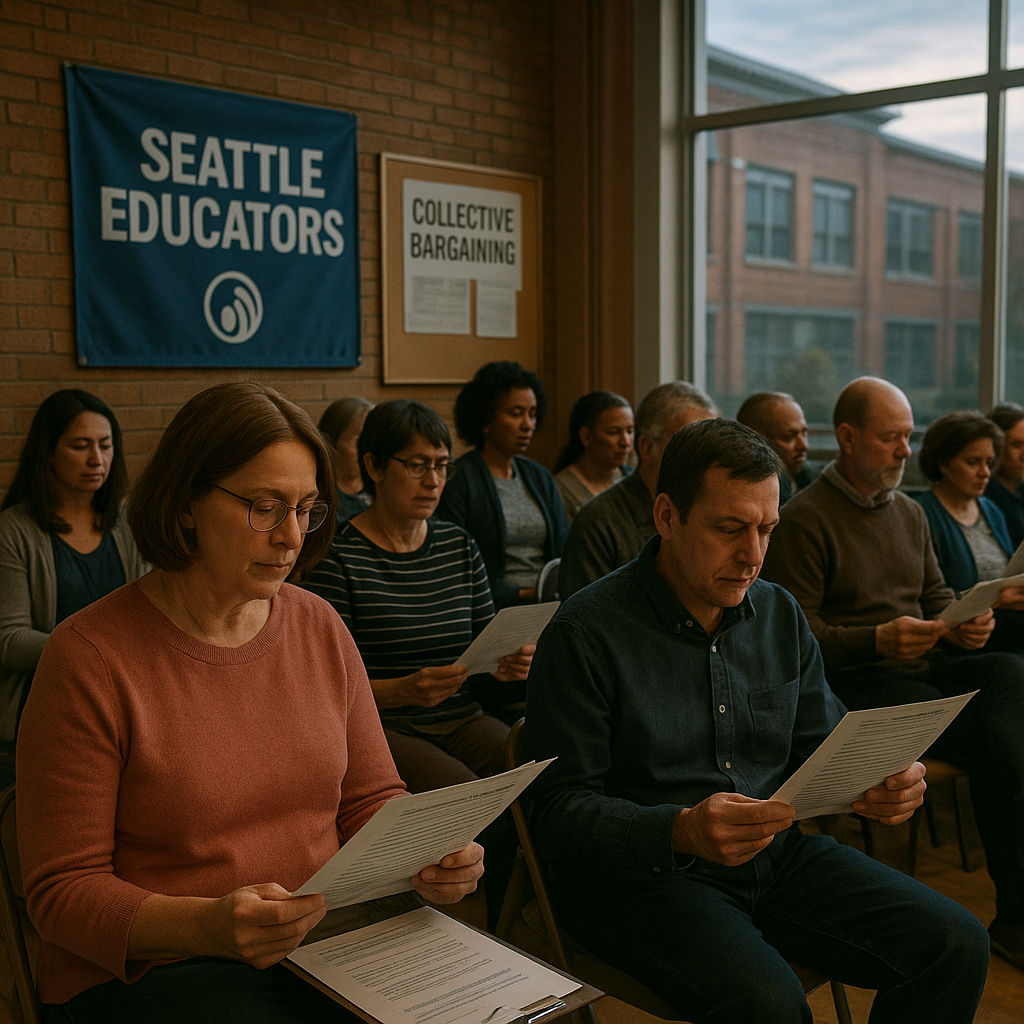
Core Details/Context
The core of the dispute is usually this: educators want a contract that matches the reality of the classroom, while the district wants a deal it can afford without blowing up the budget. That sounds tidy. It is not. In practice, it means long meetings, wage tables, staffing formulas, and a lot of talk about children while adults argue over numbers.
Here’s the kicker: the public often hears only about salary. That is the lazy headline. The deeper conflict usually involves working conditions that shape student learning every day. A thinner support staff means more time spent on crisis management and less on instruction. A bigger class means less attention for each child. Fewer counselors mean more pressure on teachers to act as social workers, disciplinarians, and academic coaches all at once.
The tentative deal under vote likely aims to reduce that tension, but the exact details matter more than the cheers. If the agreement leaves staffing gaps untouched, the district may avoid a strike now and invite another one later. If it overpromises without a stable funding plan, the bill just gets kicked down the road. I’ve covered enough labor negotiations to know that both sides love to declare victory before the ink dries.
- Time is the pressure point. A week before school starts is no time for slow drama.
- Classroom staffing is the real lever. Pay matters, but staffing shapes daily learning.
- Special education support is often decisive. Families notice shortages fast.
- Delays hurt low-income families hardest. Childcare, work schedules, and transit plans all get scrambled.
- A deal on paper is not the same as a functioning school. Implementation is where the trouble shows up.
For a broader view of how public employee bargaining affects city budgets and services, Brookings has a useful analysis. It is not flashy, but it gets the point: public labor negotiations are about services as much as wages.
The district’s position is usually framed as fiscal responsibility. That phrase gets used a lot, and sometimes it means discipline. Sometimes it means delay. The union’s position is usually framed as student support, and that also can be sincere. The truth, as usual, sits in the uncomfortable middle: if a district chronically understaffs classrooms, it is not saving money so much as passing costs onto teachers, parents, and children.
Seattle families should also watch the legal and procedural side. In many school districts, a vote by union members is only one step. Ratification, district approval, and formal implementation can all take time. That matters because school calendars do not wait for anyone’s committee schedule. If the vote fails, the next few days could bring picketing, emergency childcare planning, and frantic messaging from schools.
For context on how strikes can affect school systems quickly, see NPR’s coverage of teacher strikes and school delays. The pattern is familiar, and that is exactly why it is stressful.

Timeline/Step-by-Step
The sequence matters. Not because timeline charts are exciting — they are not — but because school labor fights turn on deadlines, not slogans.
- Negotiations continue before the school year begins.
District leaders and union representatives keep talking under time pressure, with both sides trying to avoid a public collapse.
- A tentative agreement is presented.
This is the first real checkpoint. It suggests enough movement to send a deal to members for review, but it does not mean the dispute is over.
- Educators review the terms.
Teachers and school staff look at pay, staffing, workload, safety, and support services. This is where optimism meets the fine print.
- Members vote.
If they approve the deal, a strike is likely avoided, at least for now. If they reject it, the pressure jumps immediately.
- A strike threat becomes real.
Schools may delay opening, reduce services, or switch into emergency protocols. Families feel this first and hardest.
- District and union either finalize the agreement or return to the table.
If the vote fails, both sides usually try again, but with less time and more public tension.
When I analyzed similar labor disputes, one thing stood out: the public often assumes the vote is a clean yes-or-no moment. It is not. It is usually a verdict on trust. Do educators believe the district will honor the deal? Do they think the numbers are honest? Do they see a path to better conditions, or just a pause before the next fight? Those are moral questions as much as practical ones. Work has dignity, and people notice when institutions treat that dignity as a line item.
The timing also places parents in a brutal position. If you need childcare, the calendar does not care about bargaining sessions. If you work hourly, missed school coverage can cost real money. If your child receives special education services, a delayed start can mean more than inconvenience — it can mean regression, confusion, and a disrupted routine.
That is why labor talks in education hit harder than many other public sector disputes. School is not a factory shift. It is a web of obligations, and when that web tears, the damage spreads fast.
For reporting on how school systems prepare for openings and disruptions, The Seattle Times education coverage remains a key local source. Local reporting matters here. National punditry does not carry a child to school.
Comparison Table
| Issue | Seattle Educators’ Deal | Biggest Competitor: Strike/Work Stoppage |
|---|
| Goal | Approve contract and start school on time | Pressure district to improve terms through disruption |
| Effect on students | More stability, fewer service gaps | Delayed classes, uncertain support, lost instructional time |
| Effect on families | Predictable schedules and childcare planning | Scrambled plans, missed work, higher stress |
| Effect on educators | Improved pay and/or working conditions if accepted | More leverage, but also lost wages and public friction |
| Risk level | Lower immediate risk, but enforcement matters | High short-term disruption, uncertain long-term gains |
| Public reaction | Usually relief, unless the deal looks weak | Mixed sympathy, with frustration growing fast |
The comparison is blunt because the choice is blunt. Either the district and unions strike a deal that keeps classrooms open, or the city gets a labor fight that reaches into kitchens, morning commutes, and workplace attendance.
It is worth saying plainly that strikes are not automatically reckless. Sometimes they are the only tool left when bargaining stalls. But they are also not free. Someone always pays. That is the part cable coverage often skips because it is less theatrical than a rally. Families, especially working families, absorb the shock first.
For a view of how labor disputes can shift public opinion and policy pressure, The Wall Street Journal’s education coverage often tracks the budget and governance side. Useful, if you can stand the jargon.
Common Misconceptions/What to Know
People love a neat story. Labor disputes rarely provide one.
Misconception 1: This is just about teacher pay.
No. Pay matters, sure, but it is only one slice. Staffing levels, class size, special education support, planning time, and classroom safety are usually in the mix. If you ignore those, you are not reading the dispute correctly.
Misconception 2: A tentative deal means everything is fixed.
Not even close. Tentative means tentative. Members can reject it. Implementation can lag. Hidden problems can surface once school starts and real schedules collide with promises on paper.
Misconception 3: Strikes are purely about adults versus kids.
That framing is cheap and usually wrong. The dispute is often about whether adults can sustain the conditions needed to teach children properly. A system that burns out workers eventually shortchanges students. That is not ideology. It is arithmetic.
Misconception 4: District budget claims settle the argument.
They do not. Budgets show constraints, not moral innocence. A district can be financially pressed and still underinvest in essential staffing. It can also be genuinely limited by revenue, state funding formulas, and reserve requirements. Both can be true. Annoying, I know.
The truth is that public school labor disputes expose what a city says it values. If the talk is all about children, but the staffing ratios remain thin, the rhetoric rings hollow. If the union posture ignores fiscal limits and asks for more than the district can reasonably sustain, that is not solidarity — it is fantasy in a suit.
The better frame is stewardship. School systems hold public money, but they also hold public trust. That means responsibility on both sides: management must fund and staff schools honestly, and unions must push hard without turning every issue into a permanent standoff. That balance is harder than slogans, but it is closer to justice.
When I look at coverage of these fights, one thing stands out: media outlets often focus on the dramatic deadline and skip the structural causes. That is the real story. Seattle did not arrive here overnight. Staffing shortages, budget stress, and rising expectations have been building for years.
For data on school staffing and labor pressure, state education labor resources and local district filings can help, though Seattle’s case is its own mess with its own numbers. Local context matters. Always has.
Frequently Asked Questions
What happens if Seattle educators reject the deal?
If members vote it down, union leaders can return to bargaining, and a strike becomes more likely. Schools may delay opening or operate under emergency plans if talks fail before the first day of classes.
Why are school labor talks happening right before classes begin?
Because school budgets, staffing plans, and labor negotiations often move slowly until the deadline hits. That is not good planning; it is just how these fights often unfold. The calendar forces decisions.
Will students lose classroom time if there is a strike?
Yes, possibly. Even a short strike can delay instruction, disrupt services, and create a ripple effect for families. Younger students and special education programs are often hit hardest.
What issues are usually most important in these contracts?
Pay, class size, planning time, special education staffing, counselors, and classroom support. These are the issues that shape whether schools run well or limp along.
Final Thought
This vote is bigger than one contract. It is a test of whether Seattle can treat education as a real civic duty rather than a seasonal argument. Schools should not have to beg for enough staff to do the job. Neither should families have to brace for crisis every August.
I’ve watched enough public negotiations to know the ending is rarely clean. Still, the better outcome is obvious. Reach a deal that respects the people doing the work, protects students from disruption, and gives families a stable start to the year. Anything less is just a delay dressed up as progress. And that, frankly, is no way to run a school system.