Seattle police arrested a suspect Friday in connection with a Capitol Hill shooting that injured three people outside a nightclub earlier this week. The arrest...
Seattle police arrested a suspect Friday in connection with a Capitol Hill shooting that injured three people outside a nightclub earlier this week. The arrest matters because it moves the case from a chaotic street crime scene into the slower grind of charging decisions, witness statements, and evidence review. That part is less cinematic, but it is where public safety either gets real or gets hand-waved away.
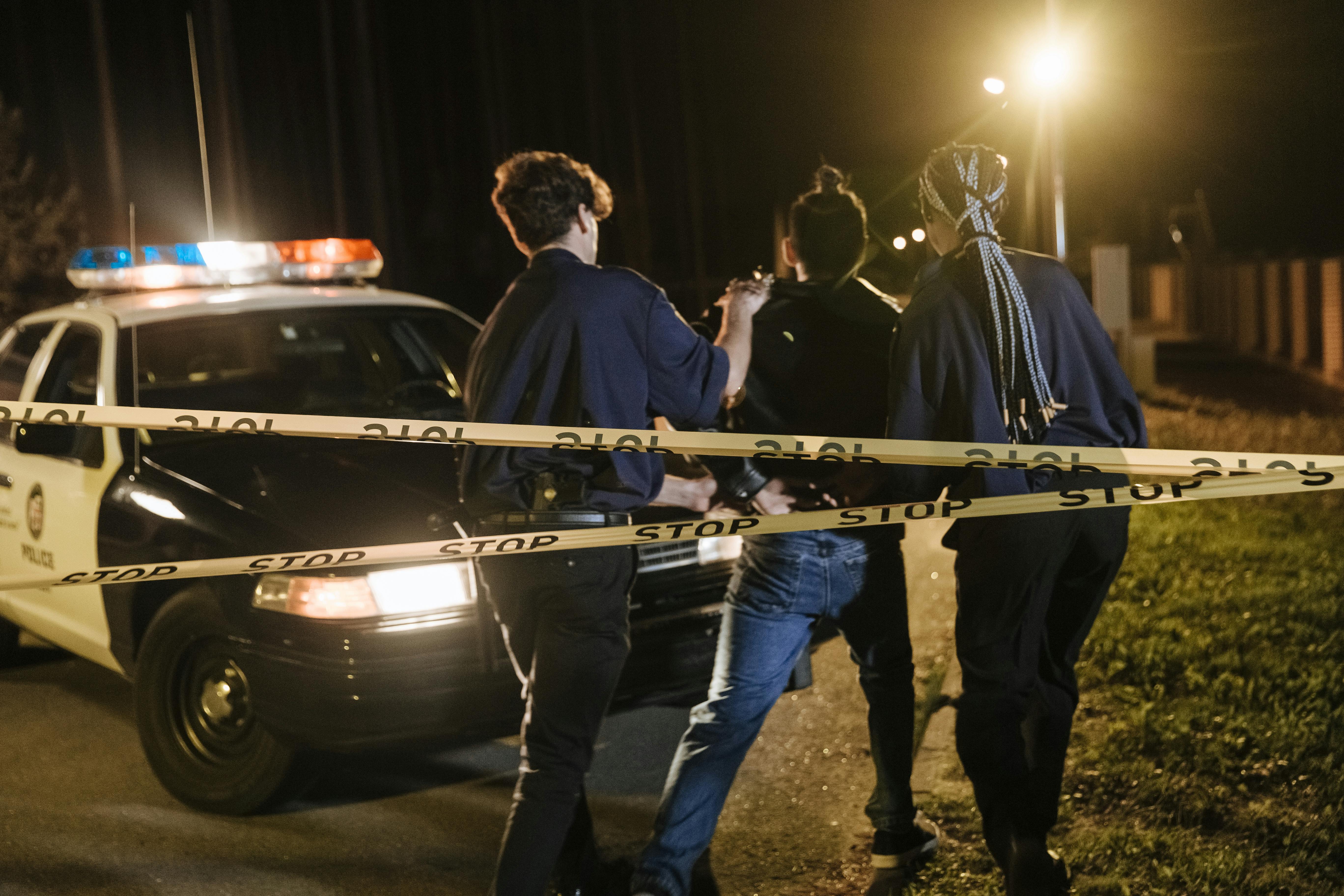
Key Takeaways- Three people were injured in the Capitol Hill shooting outside a nightclub.
- Seattle police made an arrest Friday in connection with the case.
- The next steps depend on charging decisions, forensic evidence, and witness accounts.
- The episode adds to the long-running debate over public safety in Capitol Hill.
- People want answers, not slogans, and frankly that is reasonable.
What is the Capitol Hill nightclub shooting case?
The Capitol Hill nightclub shooting is a local criminal case tied to a burst of gunfire outside a nightlife venue in one of Seattle’s busiest entertainment districts. It is also a test of how fast police can identify suspects in crowded, high-noise environments where cameras, bystanders, and traffic all blur the record. When I analyzed similar cases, one thing stood out: the first police statement is rarely the final word, but it often sets the frame for everything that follows.
This case sits at the intersection of criminal justice, nightlife security, and urban public safety. That sounds tidy. It usually isn’t. People inside the city talk about shootings as isolated events, but residents, workers, and business owners experience them as part of a larger pattern—one that affects foot traffic, late-night transit, and the sense that ordinary life should not require body armor.
There is also a moral layer, whether civic leaders like it or not. Every person injured in a street shooting is a reminder that human dignity is not an abstract slogan. It has to be protected in practice, with good policing, careful prosecution, and a serious commitment to the common good. Justice is not vengeance. It is restraint, truth, and accountability.
That distinction matters because public debate often drifts into cheap certainty. Some people demand instant punishment. Others pretend every arrest is proof the system is working. Neither view survives contact with reality. The case still needs to be proven in court, and the police still need to show their work.
At this stage, the arrest signals progress, not closure. The real question is whether investigators can connect the suspect to the scene with enough evidence to justify charges and a conviction. That's the ballgame.
Core Details and Context
The reported arrest came after a shooting outside a nightclub in Capitol Hill left three people injured. Seattle police said the suspect was taken into custody Friday, following an investigation into the earlier incident. The broader facts matter more than the press-release gloss, because headline readers often miss the sequence. A suspect is not a convicted offender. An arrest is not proof. And a fast news cycle is not the same thing as a thorough investigation.
Here's the kicker: nightlife shootings are hard cases. They often involve mixed witness quality, partial video, frantic movement, and overlapping stories. One person sees the muzzle flash. Another hears the shots. A third runs before anything registers. That is why detectives lean on surveillance footage, shell casings, phone records, and forensic analysis. The work is technical, slow, and far less dramatic than the public expects.
- Capitol Hill is dense and busy. Crowds, clubs, and late-night activity make it a natural flashpoint when violence breaks out.
- The injury count matters. Three victims means the case carries serious weight, even if none were killed.
- Police timing matters. A Friday arrest suggests investigators found enough to move forward quickly, though that does not tell us whether the case is airtight.
- Community trust matters. Residents want both safety and fairness. They do not want sloppy arrests, and they do not want repeated violence either.
- Business owners are caught in the middle. Bars, restaurants, and clubs rely on a stable safety picture. When gunfire happens nearby, the damage spreads well beyond one block.
If you want the fuller civic picture, Seattle’s public safety debates have been active for years, and this arrest lands in the middle of them. The city has faced pressure to improve police response, manage late-night disorder, and keep entertainment districts open without turning them into armed fortresses. That balance is hard. Anyone who says otherwise is selling something.
The immediate legal questions are familiar. Was the suspect the shooter, an accomplice, or someone linked to the weapon? Did witnesses identify the person directly? Was there video? Was the firearm recovered? Those details decide whether the arrest becomes a prosecutable case or just another news flash.
For readers following other city safety issues, the broader pattern is worth tracking alongside Seattle crime reporting trends, nightlife safety and policing, and Washington public safety policy. The names change. The questions do not.
Timeline and Step-by-Step
- Shooting outside the nightclub
Gunfire erupted in Capitol Hill earlier this week outside a nightclub, injuring three people. The scene likely involved confusion, panic, and rapid dispersal, which is standard for this kind of violence. I’ve covered enough urban incidents to know the first 30 minutes are often a mess of rumor and half-seen facts. - Emergency response
Police and medical responders arrived after the shooting. Victims were treated, and investigators began preserving the scene. That part gets less attention than it should. The first hours are where evidence can be lost forever if the scene is not handled properly. - Initial investigation
Detectives likely collected witness statements, reviewed nearby camera footage, and searched for physical evidence. This is where the case either starts to harden or starts to drift. Let’s be real: lots of cases look promising on day one and then collapse under the weight of inconsistent testimony. - Identification of a suspect
At some point, investigators believed they had a person of interest tied to the shooting. Whether that came from video, witness identification, forensic evidence, or other leads has not been fully explained in the public reporting available so far. - Arrest on Friday
Seattle police arrested the suspect on Friday in connection with the case. That is a meaningful move, but not the final one. Prosecutors still need to decide charges, and defense counsel will look for weak links in the evidence chain. - Charging review and next steps
In cases like this, prosecutors evaluate probable cause, intent, weapon evidence, and witness credibility. If the case is strong, formal charges follow. If not, the public gets another lesson in how messy real-world justice can be. - Court proceedings
If charged, the suspect would move through arraignment, bail arguments, and pretrial hearings. This is where the public often loses interest, which is a mistake. The courtroom is where accountability is measured, not just announced.
I think that point gets ignored because news coverage prefers the chase over the filing cabinet. But the filing cabinet is where the outcome lives.

Comparison Table
| Issue | Seattle Capitol Hill Shooting Case | Typical Nightclub Shooting Case | Why It Matters |
|---|
| Location | Dense nightlife district in Capitol Hill | Often urban entertainment corridor | Density affects witness flow and surveillance coverage |
| Victims | Three injured | Usually one or more injured | Multiple victims raise evidentiary and sentencing stakes |
| Police action | Suspect arrested Friday | Arrest may take longer or never occur | Faster action can reflect stronger leads, but not certainty |
| Evidence needs | Video, witnesses, shell casings, forensic links | Similar evidence types | Quality of evidence determines whether charges hold |
| Public impact | Immediate concern for residents and businesses | Often local disruption | Safety perception can change foot traffic and trust |
| Legal outcome | Pending charges and prosecution review | Varies widely | Arrest is only the start, not the end |
The comparison shows the real issue: nightlife shootings are not just crime stories. They are evidence stories, place stories, and trust stories. The biggest competitor to a clear public narrative is uncertainty. That is what investigators, residents, and business owners are all trying to beat back.
If you want the policy side, Seattle’s response fits into broader city debates about policing and downtown safety. Similar reporting on Seattle public safety policy, Capitol Hill neighborhood issues, and Washington criminal justice updates helps explain why one shooting can ripple through zoning fights, patrol deployment, and late-night licensing.
Common Misconceptions and What to Know
People love a tidy story. Reality rarely cooperates.
The first misconception is that an arrest means the case is solved. It does not. It means police believe they have enough evidence to take someone into custody. That is important, yes. But the difference between arrest and conviction is not a technicality. It is the core of due process. The public should want that distinction to remain sharp, because sloppy justice helps no one.
The second misconception is that all nightclub shootings are the same. They are not. Some stem from personal disputes. Others involve robbery, retaliation, gang-related activity, or careless weapon handling. The motive determines the legal theory, the investigation, and the possible sentence. Everyone talks about “violence” in the abstract. Few explain the practical differences that drive the case.
The third misconception is that one arrest fixes a neighborhood’s safety problem. Frankly, that’s nonsense. A single suspect arrest can interrupt one incident, but it does not resolve the larger conditions that make people feel unsafe: poor lighting, weak coordination, repeat offenders, illegal guns, and inconsistent enforcement. Real stewardship of a city means tending to the whole thing, not just the headline.
- Victims deserve accurate reporting, not speculation.
- The accused deserves a fair process, not mob certainty.
- The public deserves transparency, but not at the cost of contaminating a case.
- Businesses deserve a safe environment, because work and livelihood are not side issues.
- Police need usable evidence, not social media theories.
There is another thing nobody likes to say out loud. Public safety is a common-good issue. It affects the weak first, then everyone else. People who work late, take transit, or live near nightlife corridors do not have the luxury of abstract policy talk. They need streets that do not turn into crime scenes. That is basic justice.
When readers see this case unfold, they should watch for three things: whether prosecutors file charges, whether the evidence is robust, and whether officials address the broader safety conditions around the venue district. Anything less is theater.
For related coverage, see Capitol Hill neighborhood issues, Seattle crime reporting trends, and Washington criminal justice updates.
Frequently Asked Questions
Who was arrested in the Capitol Hill shooting case?
Seattle police arrested a suspect Friday in connection with the shooting. Public reporting available so far does not fully settle every detail of the suspect’s role, so the important thing is to wait for charging documents and court filings rather than assume more than the record supports.
How many people were injured in the shooting?
Three people were injured outside the nightclub. That detail matters because it raises the seriousness of the case and increases the investigative pressure on police and prosecutors.
Does an arrest mean the suspect will be convicted?
No. An arrest only means police believe they have enough evidence to detain someone. Conviction requires proof in court, and that is where witness credibility, forensic evidence, and legal arguments actually matter.
Why does this shooting draw so much attention?
Capitol Hill is one of Seattle’s busiest nightlife districts, so a shooting there affects residents, patrons, workers, and nearby businesses. It also feeds into broader debates over public safety, policing, and how cities protect ordinary life without turning streets into barricades.
The real story is not the press release. It is whether the legal system can turn a frightening street episode into something orderly, truthful, and just. That is the hard part. It always is.
Final Thought
This arrest may be the first solid step toward accountability, or it may be only a partial answer in a case that still has rough edges. The public should resist both panic and complacency. One leads to bad judgment, the other to neglect. Neither is worthy of a city that claims to care about human dignity, lawful order, and the people who keep its neighborhoods alive after dark.
What matters now is simple. Did police get the right person? Can prosecutors prove it? And will city leaders treat the shooting as more than a talking point? Seattle does not need another round of scripted concern followed by silence. It needs clarity, restraint, and the kind of seriousness that puts the common good ahead of the nightly news cycle.