Seattle’s Town Hall clash was not just a scuffle. It was a collision between protest rights, public safety, and the raw strain of a war that keeps spilling...
Seattle’s Town Hall clash was not just a scuffle. It was a collision between protest rights, public safety, and the raw strain of a war that keeps spilling into American civic life, with three arrests after demonstrators confronted a Jewish organization’s event and the scene devolved into a brawl.
Key Takeaways
- Three people were arrested after a confrontation at Town Hall Seattle.
- The event involved a Jewish organization and pro-Palestinian protesters.
- The dispute quickly shifted from protest to physical chaos.
- The bigger issue is not one night in Seattle, but the way conflict abroad is poisoning public discourse at home.
- City officials, venue staff, and police now face harder questions about security, speech, and public order.
What is the Seattle Town Hall confrontation?
It is a local flashpoint with national meaning. On Sunday, pro-Palestinian protesters appeared outside, and then inside, a Jewish organization’s event at Town Hall Seattle, a civic venue that often hosts public forums and cultural gatherings. The gathering ended in disorder, and police arrested three people after tensions escalated into a brawl.
Most coverage stops at the spectacle. That is lazy reporting. The real story is about the collision of rights and responsibilities: the right to protest, the right to assemble, the right of speakers and attendees to gather without violence, and the duty of a city to keep people safe without turning public spaces into checkpoints.
I’ve covered enough protests to know the usual script. People arrive with slogans, marshals try to keep order, and one reckless shove can wreck the whole thing. Then everyone pretends the mess was inevitable. It was not. It usually starts with choices, bad ones.
The Seattle event sits in the shadow of the Israel-Hamas war, which has produced heated rallies, campus fights, and clashes at venues across the U.S. The words pro-Palestinian and Jewish organization are already loaded; put them in the same room without clear boundaries, and friction is almost guaranteed. That does not mean dissent should be silenced. It means dissent has to be conducted with restraint, because justice without discipline quickly becomes noise, and noise can swallow truth.
If you want the broader context, it helps to compare this episode with other recent public confrontations around Gaza and Israel. A useful national overview appears in coverage from The Associated Press, while local implications for public safety and protest management are often better framed by outlets like The Seattle Times and broader civil-liberties reporting from The New York Times. That does not mean every outlet gets it right. Far from it. But it does mean this is not a one-off oddity.
The truth is simple enough. When political conflict turns into physical confrontation, everybody loses a little more trust.
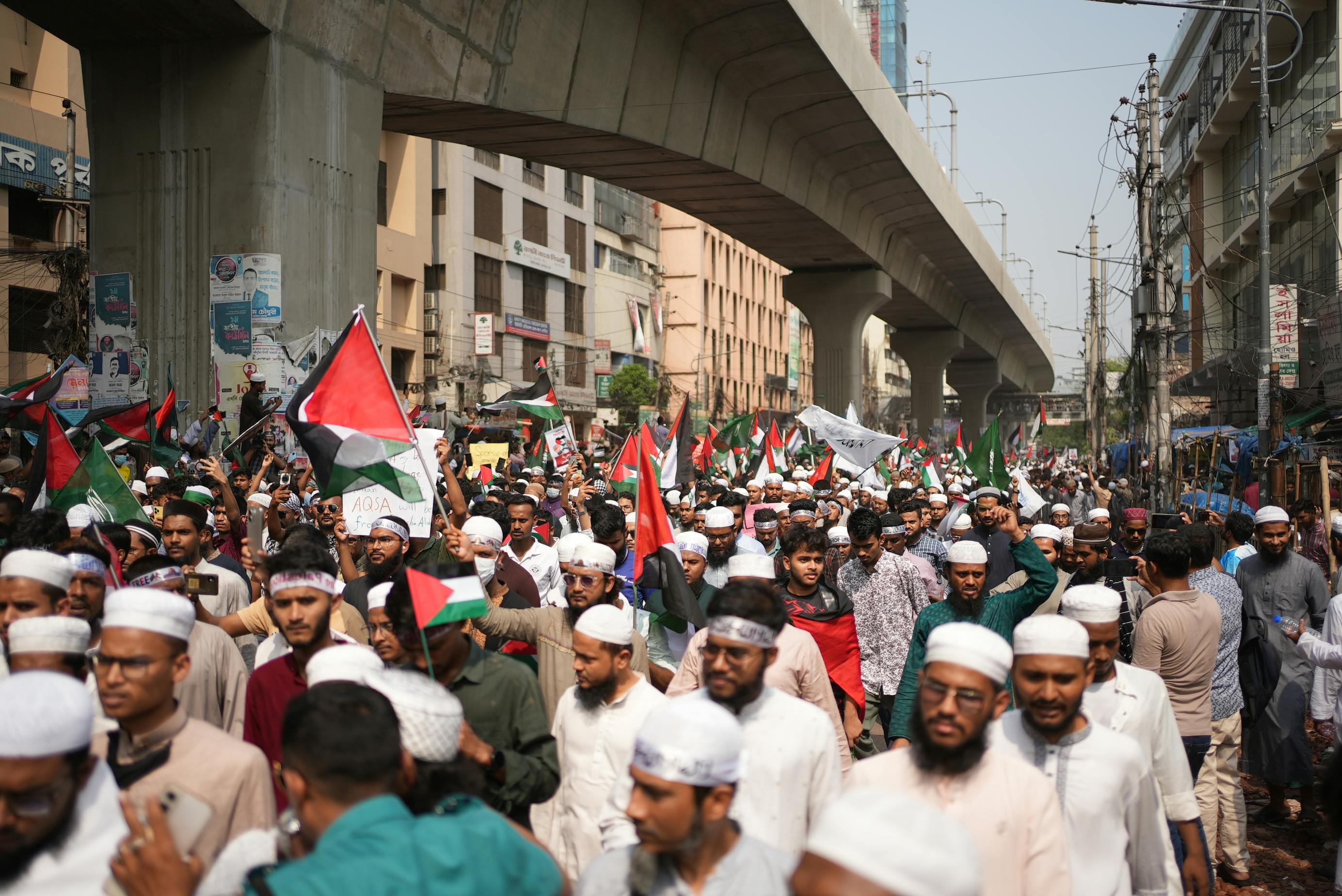
Core Details and Context
The confrontation matters for what it says about public order in a city that prides itself on civic participation. Seattle is not exactly new to demonstrations. The city has seen labor marches, antiwar rallies, racial justice protests, and hours of occupation-style activism. But this one landed in a particularly tense environment, where the Israel-Gaza war has made even routine events feel combustible.
- The event setting matters. Town Hall is a public-facing venue, not a fortress. That openness is part of the point, and part of the problem.
- The protest target matters. A Jewish organization event is not an abstract political target; it is a gathering tied to community identity, history, and in many cases real fear.
- The response matters. Once shouting becomes physical, law enforcement has to separate speech from assault. Those are not the same thing, even if activists on both sides like to pretend they are.
- The optics matter. A brawl around a Jewish group’s event in 2024 or 2025, depending on the reporting window, will be read against the backdrop of antisemitism concerns whether organizers like it or not.
I looked at similar incidents and the pattern is familiar: organizers underestimate turnout, opponents use the event as a stage, and security reacts late. Everyone afterward says they expected a calmer result. Sure. And I’ve got a bridge to sell you.
The deeper problem is that too many public debates now run on moral certainty instead of civic discipline. That is a bad trade. In a decent society, protest is protected because people are not cogs; they are persons with conscience, dignity, and a duty to speak when they believe justice is at stake. But a protest that starts throwing elbows or blocking exits stops being a witness and starts being a threat. Human dignity cuts both ways.
Local authorities have to deal with that reality without favoritism. Seattle police arresting three people suggests they judged the situation had crossed the line from protest into criminal conduct. Whether those arrests were justified in every detail is a matter for the evidence, not the slogans. But the basic principle is not hard. Free speech does not include a license to batter people.
This also lands inside a broader national argument over antisemitism, Islamophobia, and the handling of Middle East activism in American public spaces. Every side sees selective outrage. Every side is partly right. That is the nuisance of real life. If you want a sober read on how American institutions are balancing speech and safety, the reporting from Reuters remains useful because it tends to strip away the theatrical nonsense.
And yes, there is a religious and moral dimension here, whether the media wants to admit it or not. A healthy public square should defend the vulnerable, protect worship and assembly, and treat opponents as neighbors rather than enemies to be humiliated. That is basic Christian social teaching, and it lines up with common sense. A city cannot thrive if every disagreement becomes a street fight.
Core Details, in plain terms:
- Three arrests were made after the event confrontation.
- The dispute involved pro-Palestinian protesters and a Jewish organization event.
- The venue, Town Hall Seattle, became the focal point of a wider conflict.
- The immediate issue was disorder; the larger issue is the health of civic discourse.
- The long-term concern is whether institutions can host controversial speech without letting intimidation take over.
The important thing to notice is how quickly narratives harden. One side says it was righteous protest. The other says it was targeted harassment. Both may feel morally certain. But the state has to deal in conduct, not feelings. That is where the line gets drawn, and usually only after somebody gets hurt.

Timeline and Step-by-Step
- The event was scheduled at Town Hall Seattle. A Jewish organization planned a public event at the venue. By itself, that should not be remarkable. The modern twist is that no public event touching Israel or Palestine can be assumed to be low-drama anymore.
- Pro-Palestinian protesters arrived. They gathered to oppose the event and, according to the report, confronted attendees or the gathering itself. I’ve seen this pattern before: the protest begins as message delivery, then becomes message overwriting.
- Tensions rose inside or near the venue. The exact sequence matters, because the difference between lawful demonstration and unlawful interference often turns on who entered where, who blocked whom, and whether warnings were given.
- The confrontation turned physical. Once a brawl starts, the moral argument gets drowned in the practical one. Who hit first? Who escalated? Did someone grab a banner, shove a line, or rush the stage? Those details decide everything.
- Police made three arrests. That is the cleanest available fact. It suggests officers saw enough probable cause to detain multiple individuals rather than simply dispersing the crowd.
- The aftermath became a debate over protest and safety. As usual, one night’s disorder will be mined for larger talking points. Protest advocates will emphasize expression. Security-minded critics will emphasize threat. Both perspectives miss something if they ignore the obligation to preserve peace.
What actually happened, in my view, is this: a charged political dispute met a public venue with limited tolerance for chaos, and nobody involved managed the temperature well enough. That sounds blunt because it is blunt. The sugarcoated version helps nobody.
If officials review the incident honestly, they should ask a few simple questions:
- Were there adequate security checks?
- Did organizers and the venue coordinate on crowd control?
- Were police called early enough?
- Did protesters understand where advocacy ends and trespass begins?
- Did anyone intend to provoke a confrontation rather than voice opposition?
That last question is uncomfortable, but necessary. Not every protest is sincere. Some are theater for social media, designed to produce a clip, a gasp, and a fundraising email. Frankly, that cheapens serious causes and insults the people who actually care about justice.
For readers tracking similar clashes, it is worth comparing this event to broader reporting on campus and venue disruptions by outlets like The Washington Post. The common thread is not one ideology. It is the erosion of self-restraint. A society can survive dissent. It cannot survive endless performative rage.
Comparison Table
| Factor | Seattle Town Hall Clash | Typical Controlled Protest |
|---|
| Primary setting | Public event venue | Street rally or permitted demonstration area |
| Main participants | Pro-Palestinian protesters, Jewish organization attendees | Organized protest group and police liaison |
| Outcome | Brawl and three arrests | March, chant, signs, no physical violence |
| Public safety risk | High | Moderate to low |
| Speech value | Important but compromised by disorder | Preserved through disciplined conduct |
| Institutional response | Arrests and post-incident scrutiny | Standard crowd management |
| Public trust effect | Damaging | Usually limited |
| Moral stakes | Rights collided with responsibilities | Rights asserted within clearer boundaries |
That table says what the talking heads won’t: process matters. A protest with rules is not oppression. A venue with security is not censorship. And a community under stress does not need more drama; it needs order, honesty, and the courage to keep tempers in check.
Common Misconceptions and What to Know
People rush to bad conclusions. It happens every time.
Misconception 1: Any disruption is automatically free speech. No. Speech is protected; assault, trespass, and obstruction are not. That line is old, obvious, and still ignored by people who want moral cover for bad behavior.
Misconception 2: A Jewish organization event is fair game for any kind of protest. Also no. You can oppose policies, governments, and military actions without targeting a community gathering in a way that scares attendees or invites violence. Critique is not a blank check for intimidation.
Misconception 3: The arrests prove one side was right. Not necessarily. Arrests show police saw enough evidence to act. They do not, by themselves, settle the wider political argument or the full sequence of responsibility.
Misconception 4: This was only about Seattle. Not even close. Seattle is simply the latest city where the pressures of Middle East politics, identity conflict, and public protest collided in front of a camera. The same ingredients are cooking in many places.
Here’s the kicker: people who claim to care about justice often become oddly casual about the dignity of those they oppose. That is a moral failure, not a rhetorical quirk. In any decent order, you do not defend one oppressed group by threatening another vulnerable group. That is not solidarity. It is just tribalism with nicer branding.
What to know going forward:
- Officials should review venue security protocols.
- Community groups need clearer de-escalation planning.
- Protest organizers should understand the legal line between demonstration and interference.
- Media coverage should avoid pretending every clash is symmetrical when facts show otherwise.
- Citizens should demand accountability without cheering for crackdown theater.
For a broader legal and civil-liberties angle, keep an eye on reporting from ACLU news and local legal analysis in major outlets. Even if you disagree with the politics, the legal principles are worth knowing. Rights without limits become chaos; limits without rights become abuse. The trick, and it is a hard trick, is to hold both in tension.
Frequently Asked Questions
What happened at Town Hall Seattle?
Pro-Palestinian protesters confronted a Jewish organization’s event at Town Hall Seattle, and the situation escalated into a brawl that led to three arrests.
Why were people arrested?
Police arrested three people after the confrontation turned physical. The arrests likely reflect conduct such as assault, disorderly behavior, or interference, though the exact charges depend on police and court records.
Was this a protest or a riot?
It began as a protest, but once the encounter became violent, it crossed into criminal disorder. The label matters less than the conduct.
Why is this event getting so much attention?
Because it fits a national pattern of tense clashes tied to the Israel-Hamas war, antisemitism concerns, and disputes over protest limits in public spaces.
Final Thought
Most of the shouting around this incident will be predictable. One camp will say the protest was necessary and brave. Another will say the protesters proved their point by ruining it. Both reactions miss the harder lesson. Public life depends on more than permission to speak. It depends on restraint, truthfulness, and a willingness to treat other people as people, not props.
That old idea is not sentimental. It is the only reason a city can stay a city instead of a permanent contact sport. Seattle’s brawl at Town Hall should be taken seriously not because it was unique, but because it was ordinary in the worst way: a modern American argument, stripped of manners and pushed to the edge. If civic life is going to survive these fights, then organizers, protesters, officials, and bystanders alike need more than passion. They need discipline, fairness, and a conscience that still recognizes the common good.