Second suspect in Olympia home invasion caught after bicycle chase. A Thurston County deputy chase ended when the suspect fell from a bicycle and was arrested...
Second Suspect in Olympia Home Invasion Caught After Bicycle Chase
Second suspect in Olympia home invasion caught after bicycle chase. A Thurston County deputy chase ended when the suspect fell from a bicycle and was arrested, closing a visible part of an investigation tied to a home invasion in Olympia. The dashcam video shows the chase through parking lots. It is short, blunt, and hard to spin.
Key Takeaways- Thurston County deputies arrested the second suspect after a bicycle pursuit in Olympia.
- Dashcam footage shows the chase moving through parking lots before the suspect fell.
- The arrest is part of a broader home invasion investigation, not the whole case.
- Police tactics, public safety, and accountability all matter here.
What is happening in the Olympia home invasion case?
The short version is this: deputies in Thurston County arrested a second suspect tied to an Olympia home invasion after a bicycle chase through parking lots ended in a fall and an arrest. The dashcam footage is important because it gives the public a direct view of the pursuit, the stumble, and the handcuffs. That said, video is evidence, not explanation. It shows what happened, not everything that led to it.
Most news coverage gets too excited about the chase and too lazy about the investigation. That is a mistake. The home invasion is the core crime. The bicycle pursuit is the visible piece people can see and argue about online. I’ve covered enough police incidents to know that the loudest part is rarely the most important part. The question is not just how the arrest happened. It is why deputies believed this suspect needed to be detained in the first place.
There is also a public-safety angle that people keep flattening into slogans. Police have a duty to protect people, but they also have to avoid turning every pursuit into a hazard. A bicycle chase is not a car chase, but it is not harmless either. Parking lots, driveways, pedestrians, and moving vehicles create risk fast. Justice requires firmness, yes, but also restraint. That is not soft talk. It is common sense.
The case sits squarely inside law enforcement, public safety, and criminal procedure. Investigators still need to sort out the home invasion facts, identify any remaining suspects, and present the evidence in court. The arrest may be the most visible event, but it is still just one step in a larger legal chain.
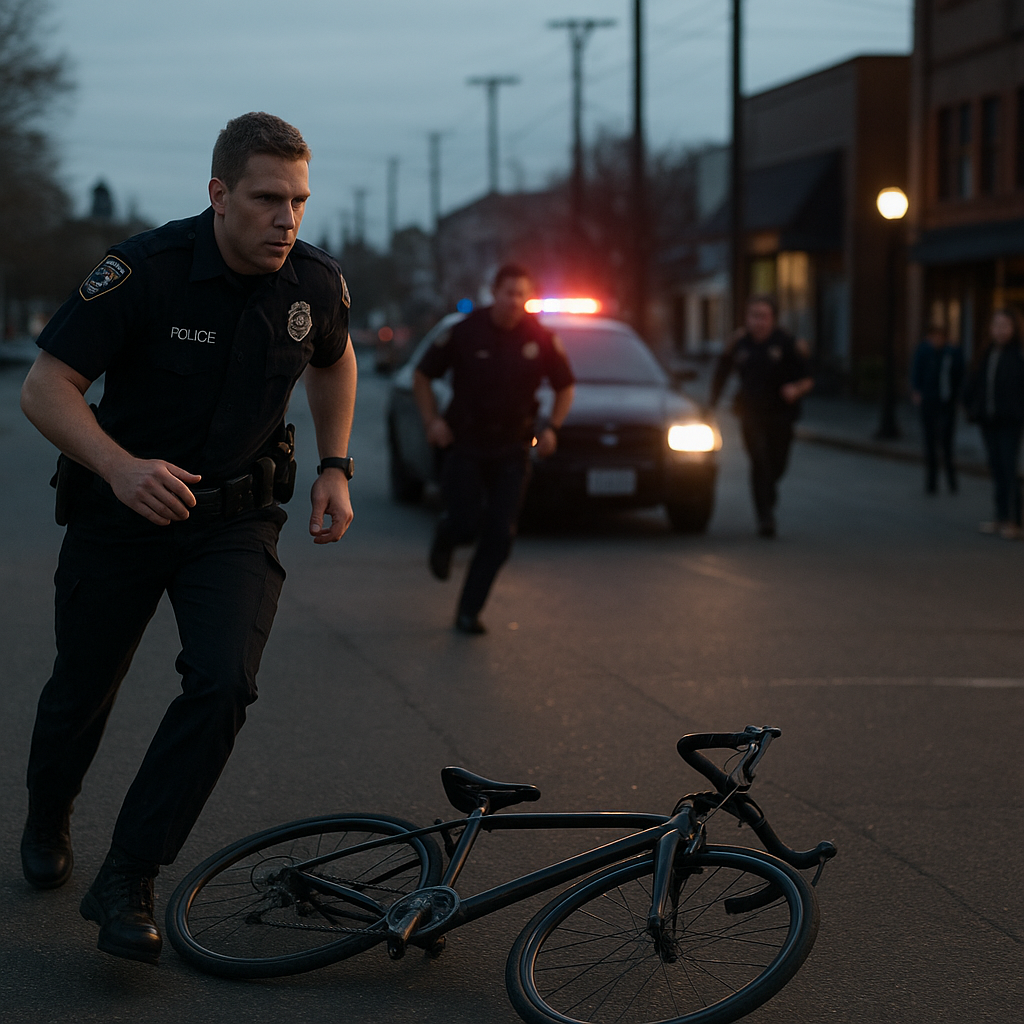
Core details and context
- Location: Olympia, Washington.
- Agency involved: Thurston County deputies.
- Event: A suspect linked to a home invasion was chased on a bicycle.
- Result: The suspect fell and was arrested.
- Evidence: Dashcam footage captured the pursuit through parking lots.
The useful part of the video is that it cuts through guesswork. You can see deputies following the suspect. You can see the motion through the lot. You can see the arrest after the fall. But here’s the kicker: a clip like this still leaves a lot unsaid. It does not tell you the quality of the tips that led officers there, the witness statements behind the case, or whether there were additional suspects nearby. It does not tell you whether the suspect was armed, whether the home invasion was planned, or how investigators linked the pieces together.
That missing context matters because people tend to overread dramatic footage. A chase looks decisive. It is not a verdict. It is not even the full arrest story. The legal system still has work to do. Prosecutors will have to decide what charges fit. Defense counsel will get a chance to challenge the state’s account. And the public, if it wants the truth, will need to wait for court filings rather than internet theater.
For readers tracking public safety in Washington, this case fits a familiar pattern. Search-and-arrest operations often begin with one reported crime, then unfold into a chain of identification, surveillance, pursuit, and detention. That chain can be efficient when handled well. It can also expose weak pursuit policy if officers improvise too much. A civil society depends on the state doing hard things with discipline. That is stewardship, really—of power, of safety, and of human dignity.
Relevant reporting on nearby public-safety issues can be helpful for context. See also local law and justice coverage, regional crime reporting, and Northwest breaking-news coverage for broader patterns in police response and criminal investigations.
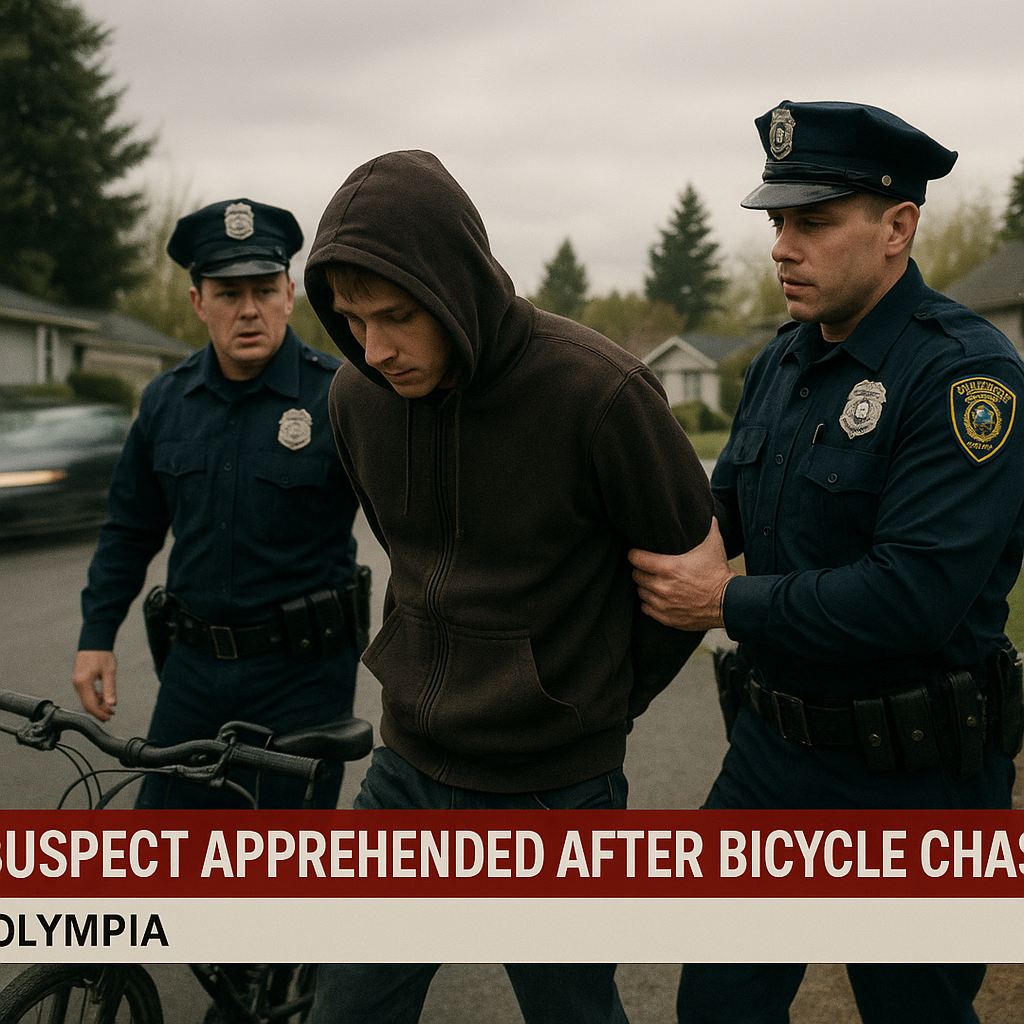
Timeline and what actually happened
- A home invasion occurred in Olympia.
- Investigators identified a second suspect linked to the case.
- Thurston County deputies located the suspect in the area.
- Dashcam video shows the suspect riding a bicycle through parking lots.
- Deputies pursued him while trying to keep control of the scene.
- The suspect fell from the bicycle.
- Officers arrested him after the fall.
- The arrest became part of the wider criminal investigation.
When I analyze a case like this, I ask one plain question: what did officers know at each step? That matters more than the spectacle. Police work should be judged by decisions, not by the dramatic end frame. If deputies had credible evidence tying the suspect to a violent home invasion, the pursuit looks different than it would if they were acting on a thin lead. That distinction is boring to the crowd and essential to the law.
The timeline also helps strip away one common error. People assume the video starts at the beginning. It never does. By the time the camera rolls, officers may already have information from witnesses, dispatch, patrol observations, or prior contact. The public usually sees only the last few seconds and then builds a whole moral argument around them. That is not analysis. That is guesswork with a microphone.
Another overlooked point is that bicycle pursuits can be deceptively tricky. They are slower than car chases, but they still involve moving bodies in public space. A suspect on a bike can dart between parked vehicles, disappear around corners, or enter a crowded area. Officers need to weigh capture against risk in real time. That is the kind of split-second judgment people love to criticize after the fact and hate to make themselves.
Comparison table
| Factor | Olympia bicycle chase suspect | Typical foot pursuit |
|---|
| Mode of flight | Bicycle | Running |
| Terrain | Parking lots and open paths | Sidewalks, alleys, and streets |
| Visibility | High because of dashcam coverage | Often variable and fragmented |
| Risk to public | Moderate, depending on nearby traffic and pedestrians | Moderate to high in dense areas |
| Police response | Vehicle support plus foot follow-up | Usually foot pursuit or containment |
| Evidence value | Strong visual record | Often depends on bodycam or witness accounts |
| Outcome | Suspect fell and was arrested | Depends on speed, terrain, and backup |
The comparison is useful because it shows what makes this case distinct. A bicycle chase is not a car chase, but it is not a harmless jog either. There is enough speed to create risk and enough mobility to complicate arrest. The camera makes the sequence easier to follow, which is good, but it also makes it easier for viewers to think they understand everything. They usually do not.
If you compare this with a more common street foot pursuit, the visual clarity is the biggest difference. Here, the public gets a clean sequence. That can help accountability. It can also invite overconfidence. People see the fall and assume the rest is obvious. The rest is the investigation, and that part is rarely obvious at all.
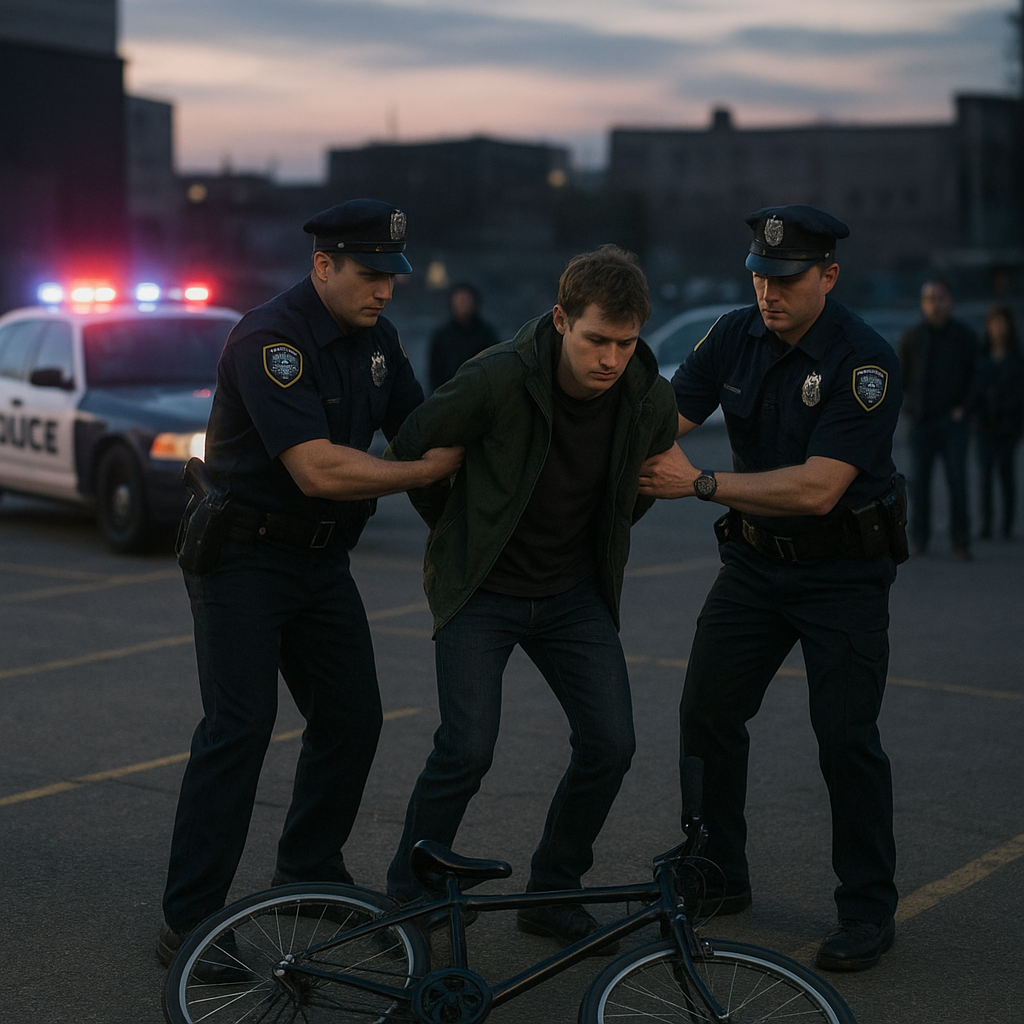
Common misconceptions and what to know
One common claim is that because the suspect fell off a bicycle, the chase was somehow trivial. That is wrong. Even low-speed pursuits can be dangerous in parking lots and near traffic. A person on a bike can still collide with cars, pedestrians, or officers. The danger is not just speed. It is unpredictability. Frankly, that is what gets people hurt.
Another misconception is that dashcam video tells the whole story. It doesn’t. It gives one angle, one sequence, and one visible outcome. It does not tell you how investigators built probable cause. It does not show the earlier witness reports, the surveillance work, or the legal reasoning that may have guided the arrest. Good reporting respects those gaps instead of pretending they do not exist.
There is also the lazy assumption that an arrest settles the matter. Not even close. An arrest is not a conviction. It is a step. The prosecution still has to file charges and prove them. Defense attorneys still get to test the evidence. That is how a fair system works. People tend to forget that when the footage feels satisfying.
Here is the part that matters beyond one case. Public safety is not just about catching suspects quickly. It is about doing so without treating the person as disposable. A Catholic view of public life starts from human dignity, even for accused people, while still insisting on justice for victims and neighbors. That balance is not a slogan. It is the moral floor for a functioning community.
Everyone loves a neat narrative. The truth is messier. The arrest is real, the concern for the home invasion is real, and the need for careful process is real too. Those things can sit in tension without canceling each other out.
Frequently asked questions
What is known about the second suspect?
The suspect was arrested after a bicycle chase in Olympia linked to a home invasion investigation. Deputies used the chase and arrest to close part of the active search, but the legal case may continue to develop.
Was anyone hurt during the chase?
The available information indicates that the suspect fell from the bicycle before arrest. Any injury details would need confirmation from official reports, court filings, or law enforcement statements.
Why does the dashcam video matter?
Dashcam video gives the public a clearer record of how the chase unfolded. It can support accountability, but it still does not explain the full investigation or the basis for the arrest.
Does the arrest mean the case is over?
No. An arrest is only one stage in a criminal case. Prosecutors still need to review the evidence, decide on charges, and move through the court process.
Final thought
People will remember the bicycle. They should not stop there. The visible chase is only the sharp edge of a larger case that involves investigation, charging decisions, public safety, and the basic duty of government to protect the common good without losing sight of human dignity. That is the hard part. It always has been.
I’m skeptical of any coverage that treats the video as the whole truth. Footage helps, but it never replaces context. In this case, the arrest may look quick and clean, yet the broader questions remain: how the suspect was identified, what charges follow, and whether the police response was measured as well as effective. Those are the questions that matter after the clip stops playing.
Ultimately, a serious community does not judge justice by the drama of a fall. It judges it by whether the response was lawful, proportionate, and attentive to the people affected—victims, officers, and even the accused. That is the standard worth keeping.