Federal agents arrested at least 21 community members in Shelton on June 28, according to the Washington Immigrant Solidarity Network. That number matters, not...
Shelton Arrests Expose the Real Cost of Federal Immigration Raids
Federal agents arrested at least 21 community members in Shelton on June 28, according to the Washington Immigrant Solidarity Network. That number matters, not just because it is large for a single local operation, but because it sits inside a broader federal enforcement pattern that keeps reshaping public trust, local policing, and immigrant life in Washington state. What happened in Shelton is not an isolated burst of activity. It is part of a larger argument over who gets protected, who gets targeted, and whether government power is being used with restraint.
Key Takeaways
- At least 21 people were arrested in Shelton on June 28, per the Washington Immigrant Solidarity Network.
- The case raises questions about federal enforcement priorities, local cooperation, and due process.
- Immigration raids often affect families, employers, schools, and churches far beyond the arrest itself.
- The real issue is not just enforcement, but whether it is proportionate and just.
What is happening in Shelton?
Shelton is a small city in Mason County, Washington, and this arrest operation pulled it into a national fight over immigration policy, enforcement tactics, and civil rights. The Washington Immigrant Solidarity Network said federal agents arrested at least 21 community members on June 28. The reporting matters because community groups often document these events faster than official agencies explain them, and that gap leaves room for confusion, fear, and bad assumptions.
When I look at cases like this, the first question is not whether immigration law exists. Of course it does. The real question is how it is enforced, against whom, and with what level of transparency. Frankly, a federal arrest operation can be legal and still be reckless in its execution. People tend to hear “immigration enforcement” and assume every target is a hardened offender. That is not how these sweeps usually work in the real world.
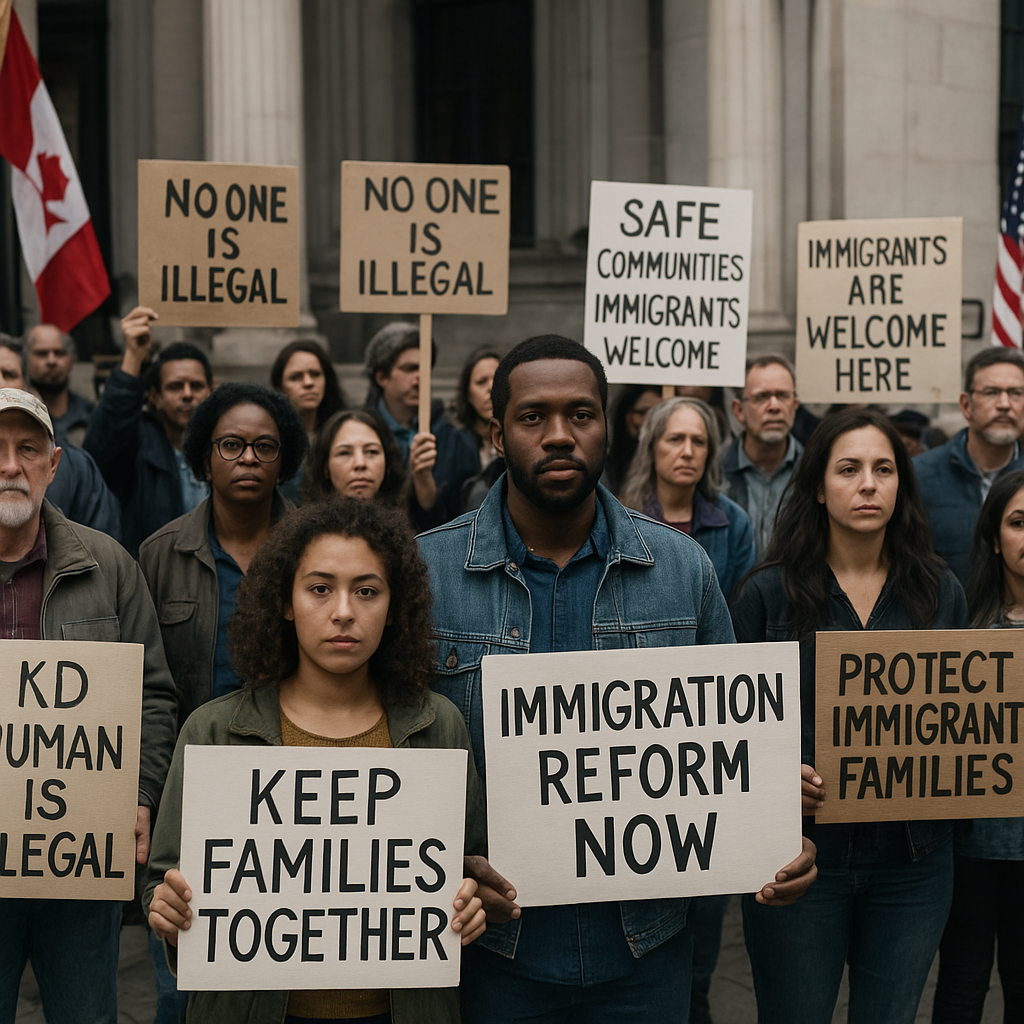
Most coverage misses the human chain reaction. One arrest can mean a missed shift, a child left at school without a ride home, a rent payment blown up, or a congregation suddenly missing half its choir. Those outcomes are not side effects; they are the actual social cost of state action. Catholic social teaching would call attention here to human dignity and the common good, because law without mercy becomes a blunt instrument.
The headline number, 21, should also be handled carefully. It tells us something, but not everything. It does not tell us who was arrested, what charges were cited, whether warrants were used, or whether all those arrested were subject to removal proceedings. That missing context is precisely why people should keep their skepticism turned on.
Core Details and Context
The Shelton arrests should be read alongside broader federal immigration activity in the Pacific Northwest, where enforcement stories regularly expose tension between national policy and local reality. Washington has a large immigrant population, including workers in agriculture, food service, construction, caregiving, and small business. That means federal sweeps do not stay neatly confined to the people taken into custody. They ripple outward.
Here is the kicker:
- Federal agents are typically acting under national immigration authority, not local city policy.
- Community groups often become the first source of public information after raids.
- Employers can face staffing disruption within hours.
- Schools and churches often absorb the emotional fallout.
- Local law enforcement may not control the operation, but residents still blame the nearest authority they can see.
Everyone talks about “public safety,” but few explain that safety for one group can feel like fear for another when enforcement is broad and poorly explained. That does not mean all enforcement is wrong. It means the government has a duty to act proportionately and with precision. Justice is not served by theatrical displays of force.
The Washington Immigrant Solidarity Network has been an important watchdog in these cases because it documents arrests, supports affected families, and fills the information vacuum left by agencies that move first and explain later. That pattern is not unique to Shelton. Similar tensions have shown up across the country whenever ICE or other federal authorities conduct large operations. Readers looking for the wider context can compare this with recent coverage of ICE worksite enforcement trends, which shows how arrests often extend beyond a single suspect and into entire labor crews.
- Local reports often emerge before federal confirmation.
- Numbers can change as agencies sort custody records.
- Some people are detained, not immediately charged in court.
- Civil immigration cases and criminal cases are not the same thing.
That last point matters. A person can be legally vulnerable in immigration court without being accused of a violent crime. Yet public debate tends to blur those lines because the political incentives are obvious. Fear sells. So does outrage. Accuracy, less so.
Timeline and Step-by-Step
- June 28: Federal agents carried out an operation in Shelton.
- Same day: At least 21 community members were arrested, according to the Washington Immigrant Solidarity Network.
- Following hours: Families and advocates began trying to identify who had been taken and where they were held.
- Soon after: Public concern spread through immigrant communities, employers, and local faith groups.
- Thursday publication: The report made the arrests public, putting pressure on authorities to clarify the scope and purpose of the operation.
I have covered enough enforcement stories to say this bluntly: the first report is rarely the full report. Agencies often say little at the start, then provide carefully worded explanations later, after public attention has cooled. That is not transparency. It is damage control.
When raids happen, a second timeline unfolds that rarely gets enough attention:
- children wait for parents who do not come home,
- workplaces scramble to fill shifts,
- lawyers search for detention locations,
- local advocates organize hotlines and legal referrals,
- and family members trade rumors because official answers are slow.
That is why timing matters. A raid that lasts an hour can generate weeks of consequences. In policy terms, that means the cost of enforcement is not measured only in arrests. It is measured in trust, labor disruption, and the strain imposed on civic life.
If you want a useful comparison, look at how immigration enforcement interacts with local institutions in other states, including the broader debates covered in U.S. immigration enforcement and local response. The same pattern repeats: federal action, local uncertainty, and a race to reconstruct facts after the fact.
And yes, the lack of clear information fuels rumor. That is predictable. It should be avoidable.
Comparison Table
| Factor | Shelton Federal Arrests | Typical Local Criminal Arrests |
|---|
| Main authority | Federal agents | City or county police |
| Legal basis | Immigration enforcement | Criminal code violations |
| Public notice | Often limited at first | Usually more immediate |
| Family impact | High, often cross-border | Usually more localized |
| Workplace disruption | Common | Less common |
| Community fear | Broad and lasting | Case-specific |
| Transparency | Often delayed | More routine reporting |
| Policy debate | Immigration, civil rights, federal power | Local crime and policing |
The table is simple because the reality is simple. Immigration arrests are not just another police action. They carry a different legal structure, a different emotional weight, and a different political charge. That is why people react so strongly when federal agents show up in a place like Shelton.
Compared with ordinary criminal arrests, immigration operations tend to create more collateral stress because the legal issues are often tangled with family status, work authorization, and language barriers. A robbery arrest usually stays within the criminal justice frame. An immigration arrest can tear through a household, a church community, and an employer at once.
The biggest competitor to the official narrative is not another agency. It is silence. Silence lets both the government and its critics fill in the blanks with whatever suits them. That is a bad way to handle public power, and it puts the burden on ordinary people who are already carrying enough.
Common Misconceptions and What to Know
The first misconception is that every immigration arrest involves serious criminal conduct. Not true. Some people detained in operations like this are facing civil immigration issues, prior removal orders, or administrative violations, not violent crime. That distinction is not a lawyer’s hobbyhorse. It is the difference between public understanding and public confusion.
The second misconception is that federal action automatically means local approval. Also false. In many communities, residents may distrust or oppose the raids even if local police did not execute them. People hear “law enforcement” and assume one united front. In reality, federal, state, and local priorities often clash.
The third misconception is that the number 21 is the end of the story. It is not. It is the starting point. Who was taken? Were families notified? Were any minors affected indirectly? Were interpreters available? Was legal counsel accessible? These are not minor details. They are the substance.
Let’s be real:
- Public debate often turns human beings into abstract “cases.”
- Politicians often speak in slogans because slogans are cheap.
- Agencies often release too little, too late.
- Advocates sometimes overstate numbers, but that does not make the underlying concern disappear.
The moral question underneath the legal one is plain enough. A society that values the dignity of work, the stability of families, and the common good cannot treat people as disposable just because they are politically convenient to target. That does not cancel law. It demands better law enforcement, with restraint and accountability.
Readers who want to understand the human side of enforcement can also look at related coverage such as immigrant rights in Washington state, which tracks how legal status affects daily life long before any arrest occurs.
One more thing. People often assume that if a raid is controversial, it must be unlawful. Not necessarily. The lawful/unlawful divide is narrower than the just/unjust divide. That is where public debate usually gets sloppy.
Frequently Asked Questions
What happened in Shelton on June 28?
Federal agents arrested at least 21 community members in Shelton, according to the Washington Immigrant Solidarity Network. The organization reported the arrests on Thursday, but detailed federal confirmation and case specifics were not immediately available.
Why does this matter beyond Shelton?
Because immigration enforcement affects more than the people arrested. It can disrupt families, employers, schools, churches, and local trust in government. That makes the event part of a larger policy fight over federal power and due process.
Were the arrests criminal or civil immigration cases?
The available report does not provide enough detail to say. Immigration enforcement can involve civil detention, criminal allegations, or both. That is why rushing to broad conclusions is a mistake.
What should residents do after a raid like this?
They should verify information through trusted legal aid groups, keep records, and avoid spreading rumors. Families often need language support, legal referrals, and a calm plan more than they need speculation.
Final Thought
The Shelton arrests are not just another enforcement headline. They are a reminder that federal power lands hardest on people with the least room to absorb it. That is the part too many commentators skip because it is inconvenient, and because empathy is harder to sell than outrage.
When I look at cases like this, I keep coming back to one plain standard: government should protect the common good without grinding down the vulnerable. That is not sentimental. It is practical, and it is old wisdom. A society cannot function for long if families fear every knock on the door, if work crews vanish overnight, and if public institutions speak in riddles after taking real people into custody.
Frankly, the deeper failure is not only in the raid itself. It is in the chronic gap between enforcement and explanation. A lawful system owes the public more than silence, and it owes the people affected more than paperwork after the fact. Justice without clarity is a mess. Justice without restraint is worse.