Sound Transit is poised to vote on whether to move ahead with a light rail fare gate pilot, and if the agency approves it, the program would begin in 2029 at...
Sound Transit is poised to vote on whether to move ahead with a light rail fare gate pilot, and if the agency approves it, the program would begin in 2029 at 14 stations. That is the short version. The longer version is about cost, security, fare collection, rider behavior, and whether a more controlled station design actually improves transit without turning rail access into a chokepoint.
Key Takeaways
- Sound Transit is considering a fare gate pilot for 14 light rail stations.
- If approved, the pilot would start in 2029.
- The debate is not just about fares; it is about access, enforcement, safety, and station flow.
- Supporters say gates could reduce fare evasion and improve order.
- Skeptics worry about cost, delays, and the chance that barriers burden honest riders more than rule-breakers.
What is the fare gate pilot?
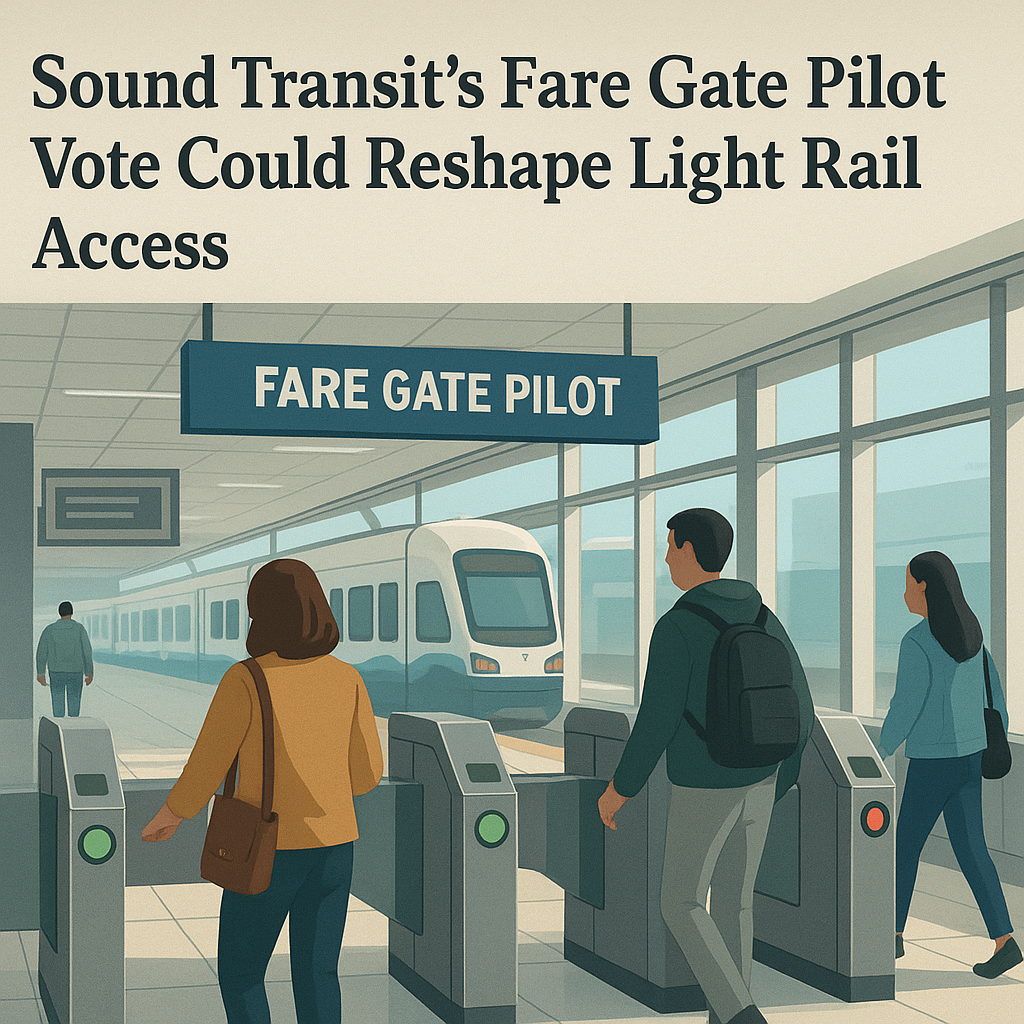
A fare gate pilot is a test of physical barriers at station entrances, designed to make riders tap or otherwise validate payment before entering the paid area. Simple enough. But the real question is whether this is a practical fix or just a shiny wall with a price tag.
Sound Transit already runs a regional rail system that depends on open or semi-open station access, with inspectors, proof-of-payment rules, and periodic enforcement. Fare gates would change that model by using controlled entry points, more like a traditional subway system. That sounds neat on paper, and maybe it is, but transit systems are not paper. They are messy, human, and expensive to run.
When I analyze transit policy, I usually find that agencies like the idea of visible control because it looks decisive. Riders notice gates. Politicians notice gates. Budgets notice gates too, usually for the wrong reasons. The better question is whether the gates solve the right problem. Fare evasion matters. So does speed, equity, and station usability. Public money ought to serve the common good, not just optics.
The pilot would reportedly cover 14 light rail stations and would not amount to a systemwide transformation right away. That matters. Pilot programs can reveal whether a policy works before an agency commits to a full rollout. Frankly, that is the only sane way to test something this expensive.
Supporters argue the gates could help protect fare revenue and reduce unauthorized entry. Critics counter that riders who already pay may end up waiting longer, while people intent on skipping payment may simply find another way around. Both views have merit. The devil, as usual, is in station design, staffing, and how well the agency pairs gates with enforcement.
Core details and context
Here is what stands out.
- Start date: If approved, the pilot is expected to take effect in 2029.
- Scope: The program would be in place at 14 light rail stations.
- Purpose: Reduce fare evasion, improve access control, and test whether gates change rider behavior.
- Policy context: The vote comes amid broader pressure on transit agencies to show they can manage safety, cleanliness, and fare compliance without making systems harder to use.
- Operational challenge: Gates require maintenance, monitoring, and disability access accommodations.
The biggest mistake in coverage of fare gates is treating them like a simple yes-or-no question. They are not. They are a bundle of trade-offs. The agency has to weigh fare revenue against capital costs, rider convenience against enforcement, and perceived security against actual throughput. That is the whole ball of wax.
There is also the equity issue. Some riders depend on transit because they do not have alternatives. Any gate system has to work for people with mobility devices, strollers, bags, temporary injuries, and inconsistent tap-card literacy. A policy that appears orderly but creates friction for the public is not good stewardship. It may even violate the basic idea that transit should serve people, not sort them.
A few practical points matter more than slogans:
- Gate systems need open, durable designs that do not jam when traffic spikes.
- Emergency egress must remain obvious and fast.
- Fare inspectors and station staff still matter; gates alone are not a magic shield.
- Station architecture can determine whether riders bottleneck at one choke point or move smoothly.
- If the agency does not measure outcomes carefully, the pilot becomes theater.
Most news coverage misses the quiet issue: fare gates can change how a station feels. Open systems feel porous and easy. Closed systems feel controlled and maybe safer, but also more rigid. That shift can affect rider trust. People notice when public services treat them like citizens and when they treat them like suspects.
If you want to see how transit agencies frame these questions elsewhere, it helps to look at broader reporting on infrastructure and governance, including public transit funding debates and city infrastructure planning where the same tension appears: the promise of order versus the risk of over-engineering a human system.
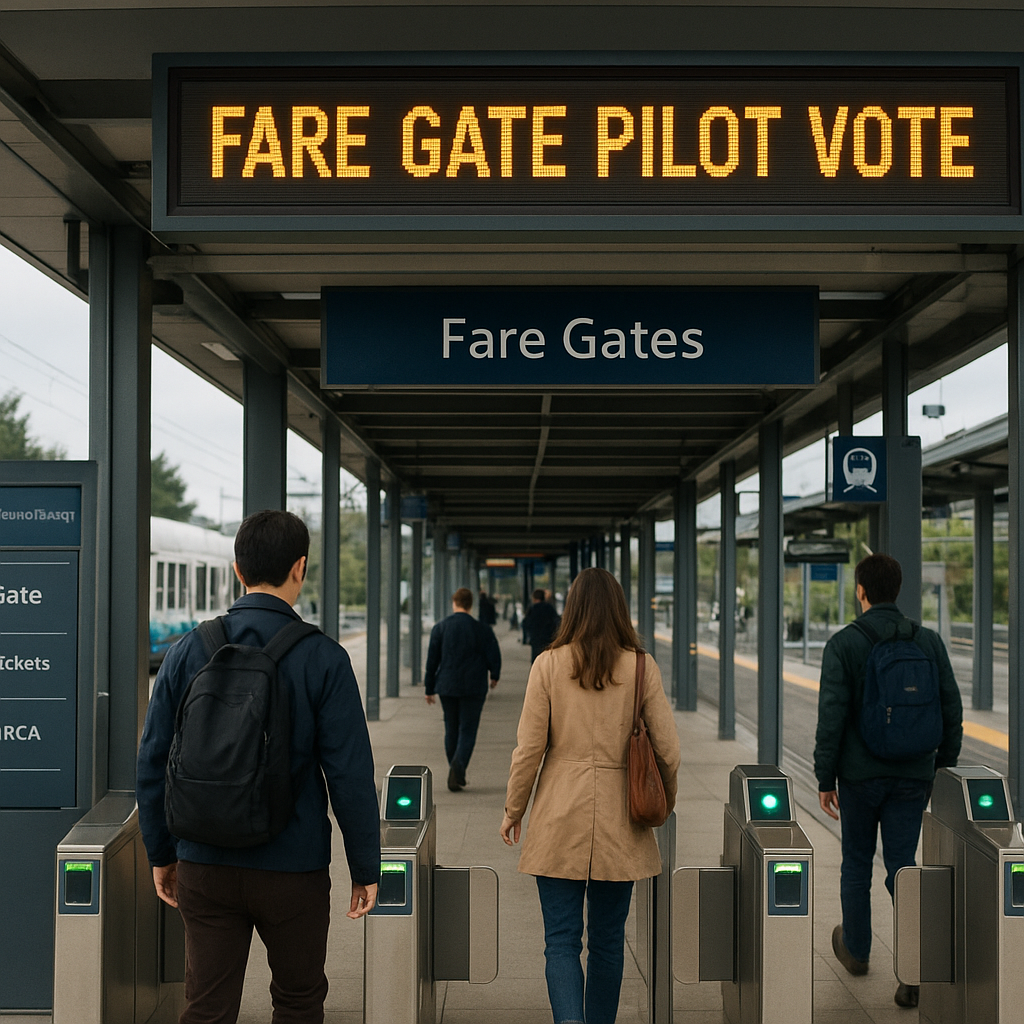
The timeline also matters because 2029 is not around the corner. It gives Sound Transit time to design, test, procure, install, and refine. That is good. It also means the agency has time to overcomplicate the thing. Let’s be real, bureaucracy has a talent for turning a simple station gate into a five-year odyssey.
Timeline and what happens next
- The board votes. Sound Transit members will decide whether to move the pilot forward. That vote is the first real gate, pardon the pun. If the board says no, the project stops or gets reworked.
- Planning and procurement follow. If approved, the agency would move into design and vendor selection. That stage often takes longer than people expect, because payment systems, mechanical hardware, software integration, and station-specific modifications must all line up.
- Station selection gets finalized. The pilot is expected to involve 14 stations, but the exact mix will matter. High-ridership stations, transfer points, and stations with unusual layouts will each pose different problems.
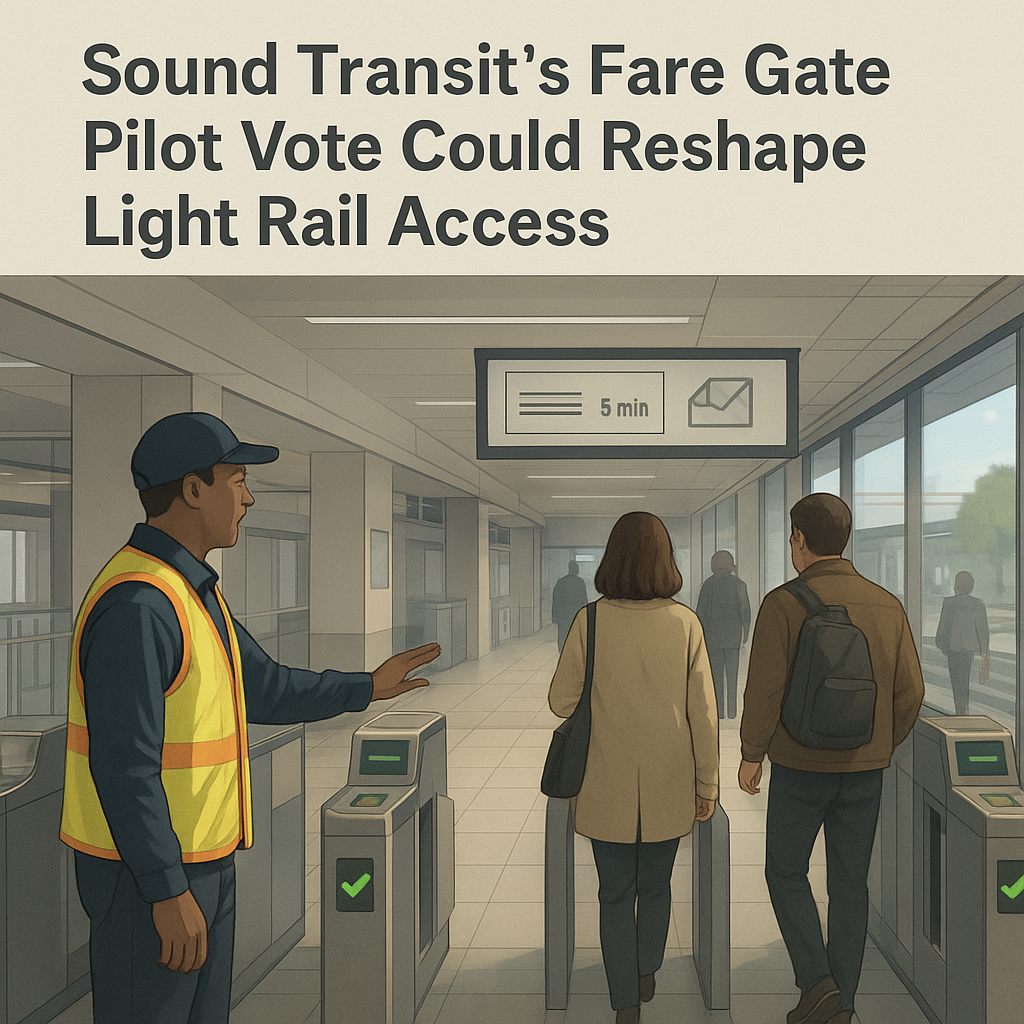
- Accessibility review becomes critical. I have covered enough public projects to know this: if accessibility is treated as an afterthought, the project will draw justified criticism. Gates must be wide enough, reliable enough, and easy enough to use for everyone.
- Testing and public education begin. Riders need clear instructions. No one likes learning a new system by getting stuck at a barrier while a train is boarding. That is just bad policy and bad manners.
- Pilot launch in 2029. If all proceeds as planned, the gates would go live at the selected stations. Then the real work starts: measuring whether fare evasion declines, whether boarding slows, and whether riders adapt.
- Evaluation and possible expansion. A pilot is only useful if Sound Transit commits to publishing the results. Otherwise, it becomes a trial with no verdict.
The timeline is important because transit reforms often get judged by their announcement rather than their execution. That is nonsense. The policy lives or dies in the details. How many lanes are open? How quickly can people enter? What happens when a gate fails? What does a disabled rider experience at 7:30 a.m. on a wet weekday? Those are the real questions.
One thing I would watch closely is whether the agency defines success narrowly as lower fare evasion. That would be too cheap. A decent public system must also measure reliability, accessibility, and rider experience. Human dignity is not a bonus metric.
For readers following similar transportation and policy debates, the dynamics echo what shows up in reporting on Seattle transit expansion, regional infrastructure policy, and urban mobility reforms. Same old story, really: officials promise efficiency, while the public asks whether the fix creates a new mess.
Comparison table: fare gates vs. existing open-access model
| Feature | Fare Gate Pilot | Existing Open-Access Model |
|---|
| Entry control | High, through physical barriers | Lower, with proof-of-payment enforcement |
| Fare evasion deterrence | Stronger at the point of entry | Depends on inspections and compliance |
| Upfront cost | Higher | Lower |
| Operating complexity | Higher maintenance and monitoring | Lower hardware burden, but more enforcement labor |
| Rider convenience | Can be slower or more structured | Easier, faster, and more flexible |
| Accessibility considerations | Needs careful design and testing | Usually simpler station flow |
| Station feel | More controlled, more closed | More open, less restrictive |
| Failure risk | Mechanical and software failures can block flow | Enforcement gaps and evasion remain issues |
The biggest competitor here is not another product. It is the current system. That is why the comparison matters. Fare gates are not competing against a glossy ideal. They are competing against the actual station experience riders already know.
The open model has real strengths. It is cheaper to maintain, simpler to move through, and less likely to trap people behind a broken mechanism. But it also leaves room for fare nonpayment and can make enforcement feel uneven. Fare gates, by contrast, promise visible order, yet they introduce mechanical risk and can be punishing if they are poorly designed.
I have seen too many public agencies mistake visible hardware for real reform. Hardware is not policy. It is a tool. If Sound Transit uses gates without staffing, data review, and passenger accommodations, the project may only shift problems from one place to another.
Common misconceptions and what to know
A lot of the chatter around fare gates is sloppy. Here is what to know.
Misconception 1: Fare gates automatically stop fare evasion. No. They reduce easy skipping, but determined riders can still tailgate, force entry, or exploit weak points. A gate is a barrier, not a moral force field.
Misconception 2: Open stations mean no enforcement. Also no. Open systems can work with inspections, ticket checks, and targeted compliance efforts. The issue is not binary. It is about whether enforcement is consistent and visible.
Misconception 3: Gates always make transit safer. Sometimes they help with crowd control. Sometimes they create bottlenecks, anxiety, or confusion. Safety is measured in outcomes, not in the presence of metal.
Misconception 4: This is only about money. Not quite. Money is part of it, sure. But policy here touches on order, fairness, station design, and the public’s trust that transit rules apply equally. Justice matters in small things too.
The honest view is this: fare gates are neither a cure-all nor a scam. They are a trade. Some systems are worth the trade; some are not. The question for Sound Transit is whether the likely gains justify the costs and operational headaches.
One thing nobody tells you often enough is that transit riders notice fairness more than speeches. If paying riders see others slipping through while they wait, resentment grows. If gates make everyone slower for the sake of symbolic control, resentment grows too. Public agencies can lose trust both ways.
There is also a broader civic lesson here. A transit agency is a steward of shared goods. That means it should not chase fashionable fixes just because they look tough. It should choose the option that best serves the whole community, including workers, students, older adults, and people with disabilities. That is the common good in plain English.
If you want to compare how public institutions manage similar questions, see reporting on transit fare policy, public infrastructure oversight, and community safety initiatives, where the same hard question comes up again and again: what is the actual problem, and what policy addresses it without making life worse for everyone else?
Frequently asked questions
Will the fare gate pilot happen automatically?
No. Sound Transit has to vote to approve it first. If the board does not approve the plan, the pilot does not move forward as proposed.
When would the pilot begin?
If approved, the program is expected to take effect in 2029.
How many stations would have fare gates?
The pilot would be present at 14 light rail stations.
Why are fare gates controversial?
Because they promise better fare control but can also add cost, maintenance, and rider inconvenience. Critics worry that barriers may burden honest riders more than people who already avoid paying.
Final thought
Sound Transit’s vote is not really about a gate. It is about what kind of transit system the region wants to build: one that trusts riders and enforces rules with lighter touch, or one that relies more heavily on physical control. Neither path is free of pain. The sensible choice is the one that respects riders, protects public money, and keeps the system open to all who need it. That is the standard, and frankly, it should not be controversial.