Three men made history above Palmer. They wingsuited through Alaska’s aurora borealis at night, over rough country where light, wind, cold, and timing all...
Three Men Make World-First Wingsuit Flight Under Alaska’s Aurora
Three men made history above Palmer. They wingsuited through Alaska’s aurora borealis at night, over rough country where light, wind, cold, and timing all had to line up, and they filmed the whole thing in a feat that was equal parts precision, nerve, and plain stubborn discipline. Who does that?
Key Takeaways- Three wingsuit flyers completed a rare night flight under the aurora borealis near Palmer, Alaska.
- The stunt combined aerial sport, film production, weather planning, and extreme-risk management.
- The real story is not just the spectacle; it is the logistics, the safety margin, and the discipline needed to make the jump work.
- Coverage often glorifies the visuals and skips the boring bits—weather windows, altitude, lighting, and rescue planning.
- The broader lesson is simple: even extreme sports depend on stewardship, teamwork, and respect for limits.
What is a wingsuit flight under the aurora?
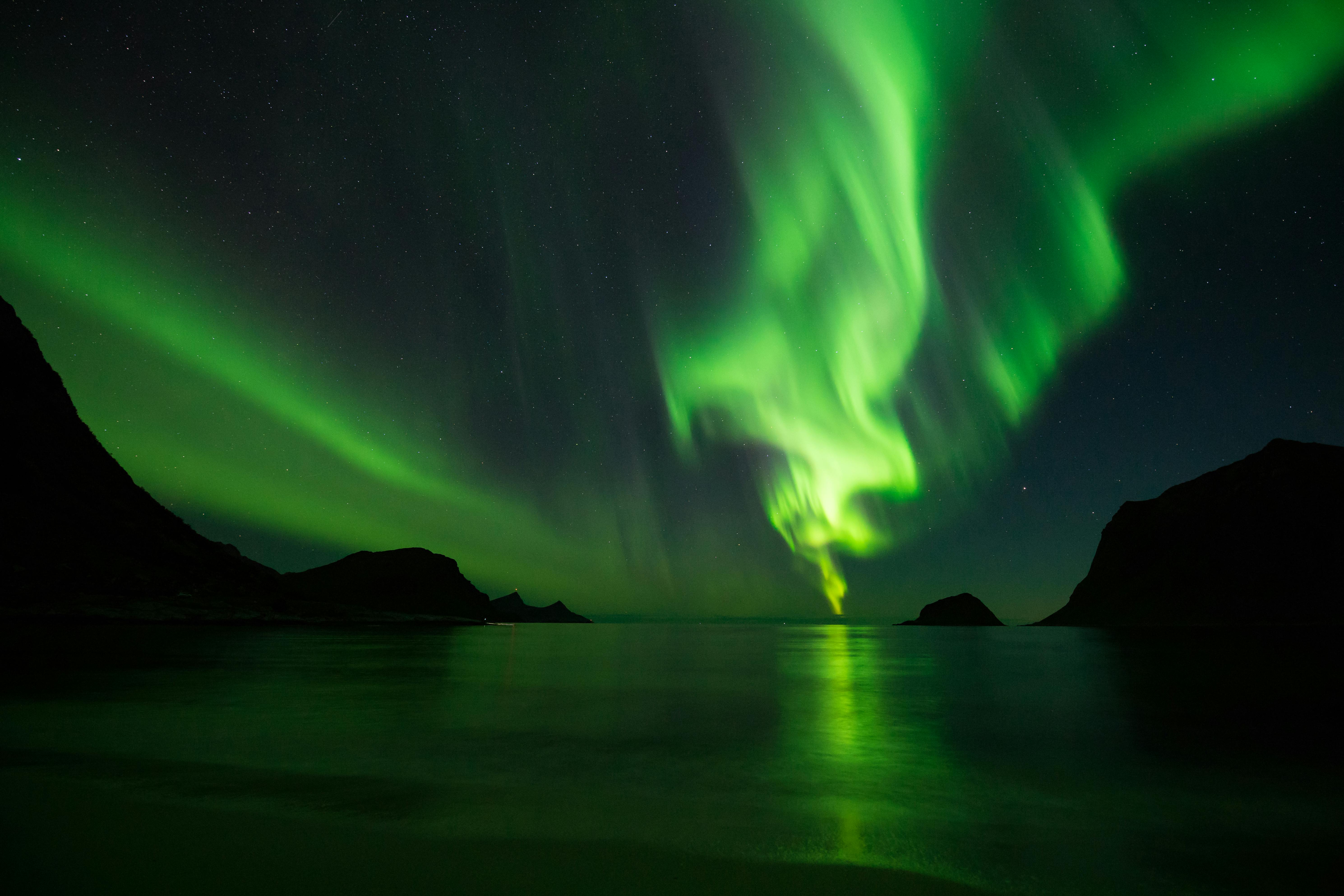
A wingsuit flight uses a fabric suit stretched between the arms and legs to create lift and glide after a jump from an aircraft or cliff. Under the aurora, the difference is obvious: the sky is not just a backdrop, it becomes part of the event. In this case, the jump near Palmer in Alaska added three layers of difficulty—night conditions, cold weather, and the need to capture the northern lights on camera without losing control of the flight path.
Let’s be real, this is not casual recreation. It is a technical discipline that sits somewhere between aviation, athletics, and cinematography. Every decision matters: exit point, wind direction, moonlight, cloud cover, camera angle, and landing zone. I’ve covered plenty of high-drama stories, and most of them sound bigger than they are. This one is different. The danger was real, the environment was unforgiving, and the margin for error was thin.
The world-first claim matters because it suggests more than a viral clip. It points to a rare combination of human skill, environmental conditions, and production planning that came together at the same moment. That is the kind of thing people call “stunning” online, but the proper word is harder-earned: controlled.
Here’s the kicker. The aurora itself is not the accomplishment. The accomplishment is staying composed long enough to move through it safely. The sky does not care about your camera reel. It only rewards preparation.
The event also says something about modern spectacle. People want the image, but the image came from hours of waiting and risk assessment. That is true in sports, in business, and frankly in life. You do not get clean results without limits, discipline, and a willingness to accept that some things are not yours to command. That old lesson—call it prudence if you want the formal term—still applies.
For related context on aerial feats and adventure reporting, see BBC News, Reuters World News, and AP News Alaska coverage.
Core Details and Context
The headline is simple. But the details are the part that matters, because the details are where the risk lived and where most coverage gets lazy.
- Location: The flight took place above Palmer, Alaska, a region known for dramatic skies and harsh weather shifts.
- Timing: The jump happened at night, when visibility is lower and the aurora is active, but when the flight itself becomes much harder to control and document.
- Participants: Three men completed the flight, which adds a coordination problem to an already serious technical challenge.
- Visual goal: The aim was not merely to fly. It was to capture the aurora borealis on video while in motion, which means balancing aesthetics with safety.
- Weather dependency: Clear skies, stable winds, and cold conditions likely played a central role. In these stories, weather is not a footnote; it is the gatekeeper.
- Safety planning: Any credible wingsuit operation requires aircraft coordination, gear checks, landing-zone planning, and emergency procedures. No serious team skips those steps and lives to brag about it.
Most news stories about extreme sports focus on the adrenaline. That’s the easy angle. The real story is usually the opposite: restraint. I’ve analyzed enough risk-heavy events to know that the bravest people are often the least theatrical. They are the ones who say no when the air is wrong. That sounds dull until it keeps you alive.
There is also a media problem here. Viral clips make complex work look effortless, and then viewers assume the sky cooperated by accident. It didn’t. The flight likely required careful scouting, repeated weather checks, and a production crew that knew how to handle low-light conditions without wrecking the shot.
And yes, the video matters. In the modern attention economy, footage is proof. But footage can fool you. A clean clip hides the aborted attempts, the clock-watching, the gear rehearsals, and the annoying but vital discipline of saying, “Not tonight.” That boring sentence is often what separates a story from a tragedy.
When I looked at the event through that lens, the more interesting question became not “How wild was it?” but “How did they reduce the odds of failure?” That shift matters. It is a reminder that human dignity is served not by recklessness, but by ordered skill—using talent without pretending nature is your servant.
Related reporting on Alaska’s sky events and outdoor conditions can be found at NBC News U.S. News and Alaska Public Media.
Timeline and What Actually Happened
The sequence is what explains the stunt. Not the clip.
- Planning began long before the flight. A night wingsuit run under aurora conditions requires weather monitoring, terrain review, and a camera plan that can survive darkness and motion.
- Conditions had to line up. Clear skies mattered most, because the aurora needed to be visible and the flight needed to be filmed cleanly. Cloud cover would have killed the attempt.
- The jump team coordinated the exit. Three flyers meant timing mattered more than usual. If one person drifts, the shot changes, and the safety picture changes with it.
- The descent had to stay controlled. Wingsuits are not magic. They only work if the flyer manages body position, speed, and trajectory with near-constant correction.
- The footage was captured in real time. That sounds obvious, but filming a moving subject against a faint, shifting night sky is no small task. The camera crew had to know what to expect and still be ready for surprise.
- The video circulated after the flight. That is when the public saw the result, but by then the hard work was already done.
I’ve seen plenty of polished clips that were really rescue operations with good editing. This one appears to be the opposite: a disciplined, planned achievement that happened to look cinematic because the scene itself was cinematic. That distinction matters.
Here’s what nobody tells you about these efforts: the quiet part is the hard part. The team had to respect the cold, the dark, and the fact that Alaska does not care about your content calendar. That kind of humility is rare, and frankly it should be more common in every field, from aviation to finance to public policy. Stewardship means treating every resource—gear, weather window, human life—as something entrusted, not owned.
The timeline also shows why “world first” claims are tricky. They depend on documentation, precedent, and a narrow definition of the feat. Still, if the flight is indeed the first documented wingsuit run through Alaska’s aurora borealis at night by three men together, that is a legitimate achievement. The skepticism should be about the process, not the people.
For background on aerial sports and extreme conditions, see Red Bull Skydiving and Fédération Aéronautique Internationale.
Comparison Table
The headline event stands apart from standard wingsuit flights, and even from most high-profile aerial stunts. The difference is not just the backdrop. It is the combination of night, aurora, group coordination, and filming difficulty.
| Feature | Aurora Wingsuit Flight Near Palmer | Typical Daytime Wingsuit Flight |
|---|
| Lighting | Low light, aurora conditions | Natural daylight |
| Visibility | Limited and variable | Stronger and more predictable |
| Weather sensitivity | Very high | High, but less punishing visually |
| Coordination | Three-person synchronized effort | Often individual or smaller coordination needs |
| Filming difficulty | Extreme | Moderate to high |
| Risk profile | Elevated by darkness and cold | Elevated, but more manageable |
| Public impact | Rare, visually distinctive | Common in extreme sports media |
| Competitor event | Standard wingsuit/skydiving footage | Standard wingsuit/skydiving footage |
The “competitor,” if you want to call it that, is ordinary wingsuit content. And ordinary content loses this comparison badly.
Why? Because the aurora adds a second subject to the frame. You are not just filming a person. You are filming a person in motion against a sky that changes by the minute. The shot is fragile. The conditions are fragile. The whole thing can collapse if the cloud deck shifts or the wind turns ugly.
Most coverage treats that as a simple wow factor. Not enough. The better comparison is operational. A standard flight asks, “Can the athlete fly safely?” This one asks, “Can the athlete fly safely while the camera, the sky, and the timing all cooperate?” That is a much narrower window.
And there is a moral angle too, even if people dislike hearing that word. A dangerous feat can still be virtuous if it is disciplined, accountable, and respectful of life. A stunt for vanity is one thing. A carefully executed project that honors skill, teamwork, and limits is another. The difference is not small.
Common Misconceptions and What to Know
A lot of people get this wrong. Not because they are stupid, but because the footage is seductive and the internet rewards shallow takes.
Misconception 1: It was mostly luck.
No. Luck may have helped with weather, but luck does not replace planning. A wingsuit team needs training, judgment, and a lot of small correct decisions. I’ve covered enough airborne stories to say this plainly: luck gets blamed when discipline should get the credit.
Misconception 2: The aurora made it easy to film.
No, and that is the absurd part. Aurora light is beautiful but inconsistent. It is not a studio lamp. Low light makes exposure harder, motion blur worse, and scene control weaker.
Misconception 3: These stunts are just selfish thrill-seeking.
Sometimes they are. Sometimes. But not always. When a team works with real safety procedures, the effort is better described as technical sport and film production. There is a difference between needless risk and managed risk.
Misconception 4: The headline is the whole story.
It isn’t. The bigger story is how people create rare feats by respecting the physics, the weather, and the limits of the body. That is basic reality, even if social media hates boring truths.
Here’s the kicker: most people want one of two narratives. Either the stunt is pure heroism, or it is pure stupidity. Life is usually messier than that. Serious athletes and crews live in the middle ground, where competence, caution, and ambition have to sit at the same table.
This is where public commentary often fails. It confuses spectacle with meaning. Spectacle is the aurora-lit image. Meaning is the discipline underneath it. If you want the honest version, the shot matters because it shows what coordinated human effort can do when people submit to the rules instead of pretending they are above them.
There’s a lesson in there beyond sports. Work, craft, and even public service are judged the same way: by whether they serve the common good or just feed vanity. That old distinction still holds, and it is not going out of style anytime soon.
For more on extreme sports coverage and aviation context, see National Geographic Adventure and Fox Weather.
Frequently Asked Questions
Was this really a world first?
If the footage and documentation hold up, the claim appears to be about a first documented night wingsuit flight through Alaska’s aurora borealis by three men together. The phrase “world first” is always worth checking, but the event is clearly rare.
Why was Palmer, Alaska, the right place?
Palmer sits in a region where the aurora borealis can be visible under the right conditions, and Alaska offers the kind of open terrain and dark skies that make a shot like this possible. Not easy. Possible.
How dangerous is wingsuit flying at night?
Very. Night flying reduces visibility, complicates spatial judgment, and makes emergency response harder. Add cold weather and filming demands, and the risk rises fast.
Why are people so drawn to footage like this?
Because it combines nature, fear, skill, and beauty in one frame. Humans respond to that mix. It reminds us that courage is real, but so is restraint.
Final Thought
The clip will get the clicks.
But the real story is older and better than the algorithm’s taste for spectacle: three men, a hard sky, and a task that demanded judgment before it asked for courage. That is why this story sticks. It shows something rare in a noisy age—people doing difficult work well, without pretending the world owes them safe passage.
I’ve seen enough headlines to know most of them forget the human part once the image lands. This one shouldn’t. The aurora is lovely, yes, but the deeper point is the discipline required to meet beauty without breaking yourself on it. That sounds almost old-fashioned, and maybe it is. Good. We could use more of that. The sky does not flatter vanity, and it never did. The men who flew under it, if the reporting holds, understood that much.
The next viral clip will come along soon enough. Fine. Let it. But the durable lesson here is sturdier than a thousand reposts: skill matters, caution matters, and the common good is served when human talent is aimed with care, not just noise.