Thurston County’s latest food safety inspection reports show the usual mix of clean kitchens, fixable lapses, and a few cases that need close attention. The...
Thurston County Food Safety Inspections Put Local Eateries Under the Microscope
Thurston County’s latest food safety inspection reports show the usual mix of clean kitchens, fixable lapses, and a few cases that need close attention. The numbers matter because restaurant hygiene is not theater; it is public health, worker discipline, and basic stewardship of the meals people trust every day.
Key Takeaways:- Thurston County inspection reports show which eateries passed, which need corrections, and which may face follow-up.
- Most findings are routine: temperature control, handwashing, sanitizer use, and equipment cleanliness.
- A bad score is not always the end of the story, but repeated violations are a real warning.
- Food safety is about human dignity as much as compliance; people should not pay for sloppy handling with their health.
- The smartest move is simple: read reports, ask questions, and watch for repeat problems.
What is Thurston County food safety inspection reporting?
Thurston County food safety inspection reporting is the public record of how local restaurants, cafés, bakeries, grocery delis, and other food establishments are performing under health rules. The reports typically note sanitation, food storage, employee hygiene, pest control, equipment condition, and whether the business corrected problems on site.
That sounds dry. It isn’t.
These inspections are one of the few tools ordinary people have to see inside a kitchen without wearing an apron and a face shield. When I’ve looked at inspection systems over the years, the pattern is usually the same: most places are doing ordinary, decent work, but a smaller group keeps stumbling over the same avoidable mistakes. Temperature abuse. Dirty prep surfaces. Poor handwashing. Cross-contamination. Nothing glamorous, just the kind of carelessness that can make people sick.
Frankly, the public often reads these reports backwards. A spotless score can breed laziness in consumers, while a rough report can trigger panic. Both reactions miss the point. A report is not a moral verdict. It is a snapshot. A business can have one bad day and still be fundamentally sound. But if the same violation shows up again and again, that is not random noise. That is a habit.
There is also a deeper civic point here. Food service workers handle something close to sacred in the ordinary sense: the meals that sustain families, elders, children, and people working long shifts. Stewardship matters. So does fairness. Health departments are not there to humiliate owners. They are there to protect the common good, because a community that treats sanitation as optional ends up paying for it later.
For readers who want the broader public-health context, the federal standard-setting backdrop is useful. The FDA Food Code sets the model many local agencies adapt, while the CDC explains foodborne illness basics in plain language. For Washington-specific rules, the Washington State Department of Health food safety page is the place to start.
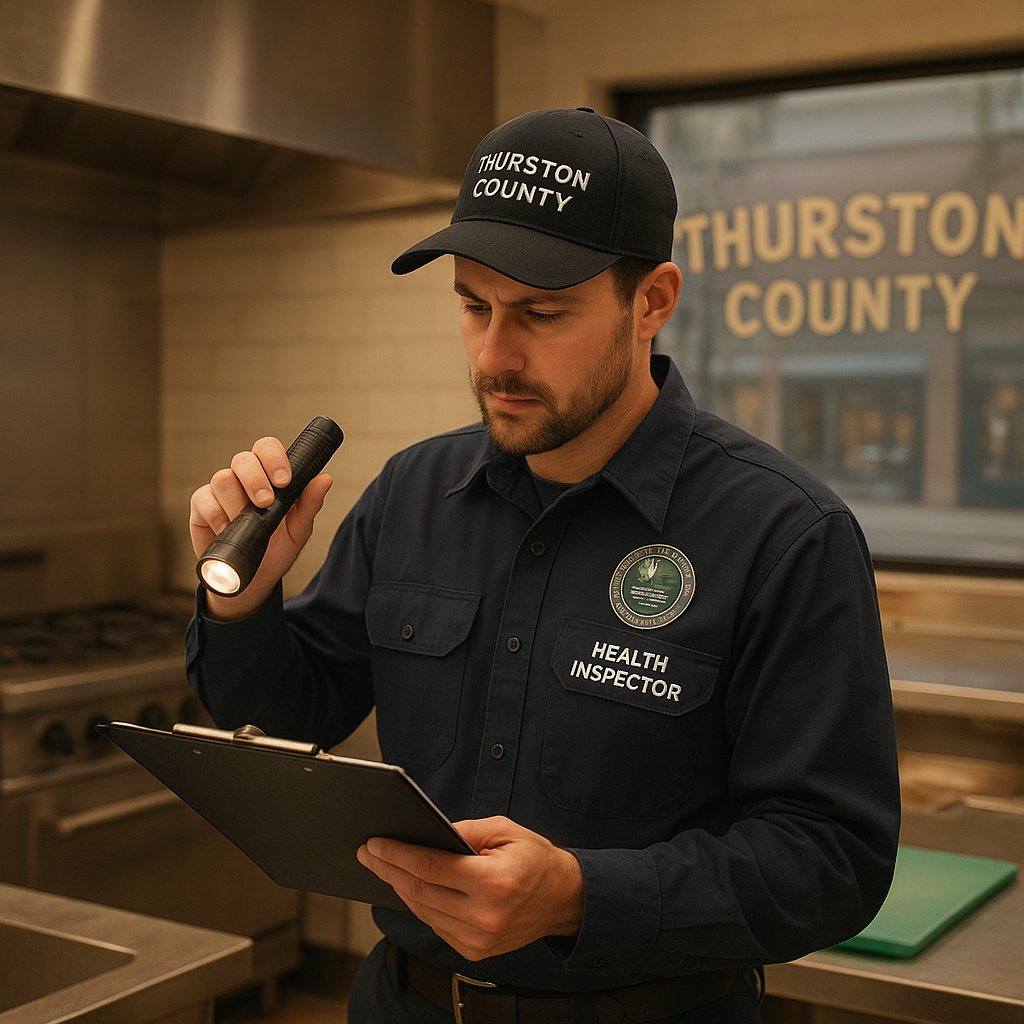
Core Details and Context
Here’s the kicker: most food safety reports are not about dramatic outbreaks. They are about small, repeated failures that look boring until somebody gets sick. A half-hour in a cooling case matters. So does a worker touching ready-to-eat food after handling raw meat. So does an underheated sanitizer bucket that is effectively decorative.
The latest Thurston County reports, like most county inspection rounds, tend to focus on a narrow set of concerns:
- Temperature control: Hot food needs to stay hot enough, cold food cold enough. Not because regulators love numbers, but because bacteria do too.
- Handwashing and gloves: Gloves are not magic. If hands are dirty, gloves just spread the problem around.
- Cross-contamination: Raw and ready-to-eat foods should not share surfaces, pans, or utensils unless sanitation is done properly.
- Cleaning and sanitizing: Clean is not the same as sanitized. People confuse that all the time.
- Pest activity: One mouse sighting can be bad luck. Repeated signs of pests point to a bigger facility issue.
- Equipment maintenance: Broken fridge seals, failing thermometers, or damaged sinks are the kind of “we’ll fix it later” excuses that inspectors hate and customers should, too.
Most news coverage misses the real story. It fixates on the worst score, then moves on. But the real signal is in patterns over time. If a place keeps getting cited for the same thing, then management has chosen not to solve it, or it cannot manage the basics. Either way, that is important.
The county’s system also reflects a plain fact of public administration: inspection is only as strong as follow-up. A report with no correction deadline is little more than paperwork. A report with a prompt recheck has teeth. That distinction matters more than catchy headlines.
A few practical truths are worth saying out loud:
- A single low score does not prove negligence.
- A history of repeat violations does indicate risk.
- Good restaurants can have bad days.
- Bad operators often hide behind pretty menus and social media polish.
Let’s be real: diners often judge by ambiance, not by the sink behind the prep line. That is human. It is also why inspection reports exist.
Local eating establishments have a responsibility that goes beyond profit. They serve children, workers, seniors, and people with weakened immune systems. A business can chase margins all day long, but it still owes the public clean food and honest handling. That is not a sentimental idea. It is a basic moral duty, and common sense, which has become oddly rare.
If you want to verify a specific Thurston County listing, the county’s environmental health or food safety portal is the authoritative source. Washington also participates in national reporting practices that track violations, corrective actions, and routine follow-up. For a wider lens on outbreak investigations and inspection relevance, the CDC’s guidance on foodborne illness outbreaks shows why those little details can snowball fast.
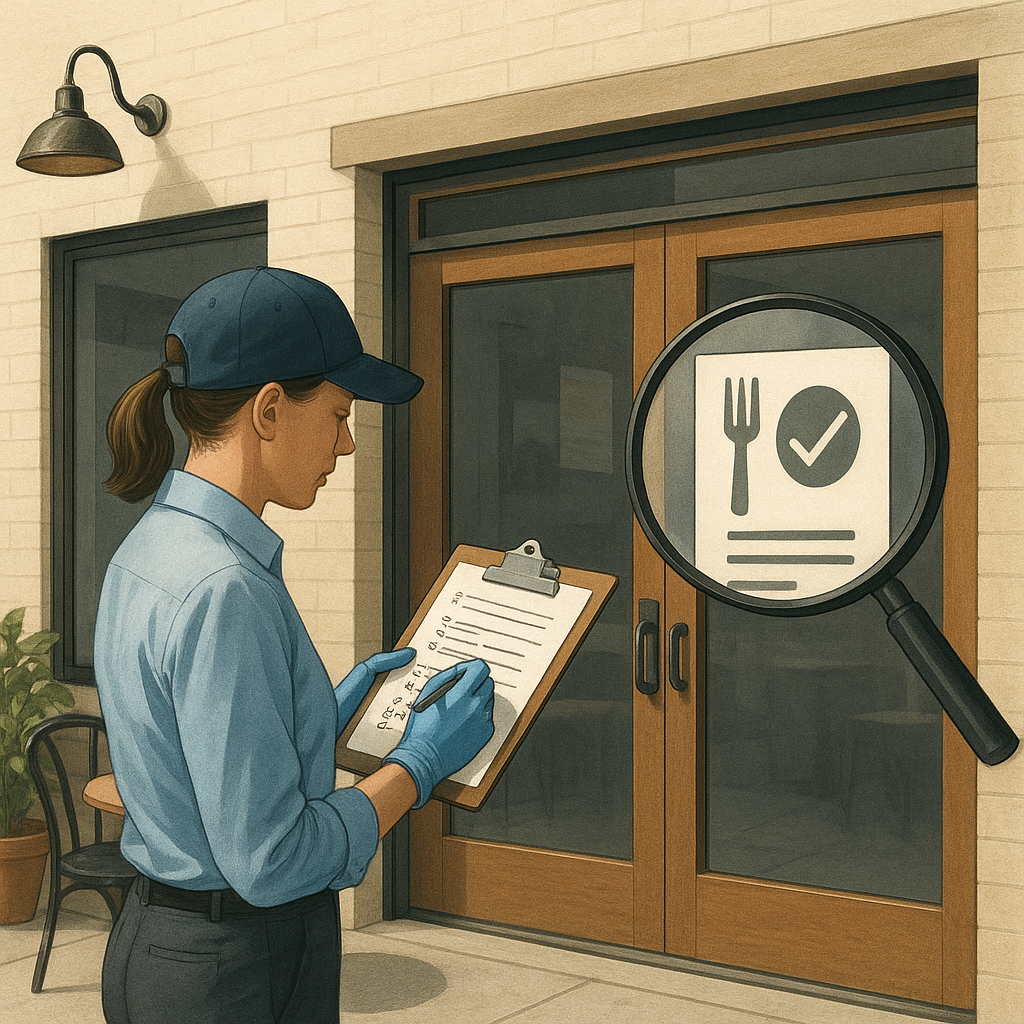
Timeline and Step-by-Step: How a food inspection usually works
- Routine inspection is scheduled or triggered
County health staff visit a restaurant based on the routine cycle or because of a complaint, complaint pattern, or follow-up requirement. I’ve covered enough public-health enforcement to say this plainly: most inspections are not surprise raids. They are methodical checks.
- The inspector reviews active risk points
They look at food storage temperatures, food-contact surfaces, handwashing access, sick-worker policies, cleaning supplies, and equipment status. They also watch how employees actually work. Paper policies mean little if staff are not following them.
- Violations are documented
Findings may be labeled as minor, moderate, or critical depending on the system used. Critical issues usually mean the business must act quickly because a real health risk exists.
- Corrections are made immediately when possible
Some problems can be fixed on the spot. A mislabeled container can be corrected in minutes. A refrigerator failing to hold temperature is not so simple.
- Follow-up happens if needed
Reinspection or administrative review may follow if the issue is serious or repeated. That is where weak operators get exposed. Not in the headline, but in the paperwork and the second visit.
- The public can review the result
That public access is the point. If customers cannot inspect the inspector’s findings, then the system becomes a private club. Public health should not work that way.
Here is the part that gets overlooked: enforcement works best when the public understands it. When diners know what the violations mean, they make better choices. They can ask direct questions. They can notice whether a business is improving or merely pretending to.
I think that is where much of the current coverage falls short. It treats inspection reports like a scorecard for gossip. In reality, the reports are a map of operational discipline. And discipline, in food service, is not a luxury. It is the price of admission.
Comparison Table
Below is a plain comparison between routine food safety compliance and the main competitor to public trust: repeated violations without correction. That competitor is ugly, but it is real.
| Factor | Routine Compliance | Repeated Violations |
|---|
| Public risk | Lower | Higher |
| Customer confidence | Usually stronger | Erodes fast |
| Management response | Proactive | Reactive or delayed |
| Inspection outcome | Fewer corrections | More follow-up visits |
| Long-term costs | Lower | Higher due to waste, retraining, and enforcement |
| Reputation | Stable | Fragile |
| Worker culture | More disciplined | Sloppy habits can spread |
There is no mystery here. Businesses that keep kitchens clean and procedures tight usually do better in the long run. Those that cut corners often end up paying in complaints, wasted product, and worse reviews. More importantly, they risk people’s health.
If one wanted to compare this to a wider national standard, the better benchmark is not “did they avoid a scandal?” It is whether they can maintain safe processes day after day. That is the difference between a restaurant built on habits and one built on excuses.
Common Misconceptions and What to Know
One common myth is that inspection reports are mostly bureaucratic busywork. Not true. They are a public-health filter. Imperfect, yes. Useless, no.
Another myth says that a single violation means a place is unsafe. Also false. Context matters. A missing label or a minor paperwork error is not the same as a refrigerator that can’t hold temperature or evidence of pest infestation. People love to flatten everything into outrage. It saves them from thinking.
A third myth is that diners should only trust chain restaurants because they have corporate systems. That is too neat by half. Corporate structure can help, but it can also hide sloppiness behind a brand logo. Independent eateries can be excellent because an owner pays attention and cares. I’ve seen that enough times to know the difference.
Here’s the real issue: consumers often confuse charm with safety. A busy dining room, good lighting, and a slick menu do not mean the kitchen is clean. Nor does a rough-looking storefront mean the food safety practices are weak. The report is the report.
Another thing people miss is how hard this work can be. Food service workers are under pressure, short on time, and often poorly paid. That matters. A decent health system should enforce standards without pretending workers are disposable. Good policy respects both the customer and the cook. That balance is not sentimental; it is just.
The public should also remember that a report is a moment in time. A business may fix issues within hours. Or it may not. That is why follow-up matters so much. A one-time check without accountability is theater.
If you are trying to make sense of a Thurston County report, ask these questions:
- Were the issues corrected right away?
- Do the same violations appear in older reports?
- Was the problem about procedure or actual contamination risk?
- Did management respond in a serious way?
Those questions cut through the noise. They tell you more than a star rating ever will.
For readers who want to understand how local oversight fits into broader food safety enforcement, the USDA food safety resources and FDA foodborne pathogen guidance are useful reference points.
Frequently Asked Questions
What do Thurston County food safety inspection reports show?
They show whether a food business is meeting sanitation, temperature control, employee hygiene, and equipment standards, along with any violations and corrections noted by inspectors.
Does one violation mean a restaurant is unsafe?
Not necessarily. A single minor issue can be corrected quickly. Repeated or critical violations are a bigger concern, especially if the same problems keep showing up.
How often are restaurants inspected?
Inspection frequency depends on local rules, risk level, and complaint history. Higher-risk operations and businesses with recurring issues usually get more attention.
Why should customers care about inspection reports?
Because food safety is not abstract. It affects whether meals are handled properly, whether workers follow basic hygiene, and whether a business respects public health obligations.
The reports are not there to entertain anyone. They exist because contamination does not care about your brand loyalty, your reservations, or your favorite server. It follows the weak spot.
Final thought: the best restaurants are not the ones that never get checked. They are the ones that treat being checked as normal and useful. That is the mark of a serious operator—one that understands food is a service to people, not a shortcut around responsibility.