Thurston County is staring at a hard number. Officials are weighing cuts to close a $5.5 million budget gap, and one of the ideas on the table is canceling the...
Thurston County Weighs County Fair Cuts as Officials Face a $5.5 Million Gap
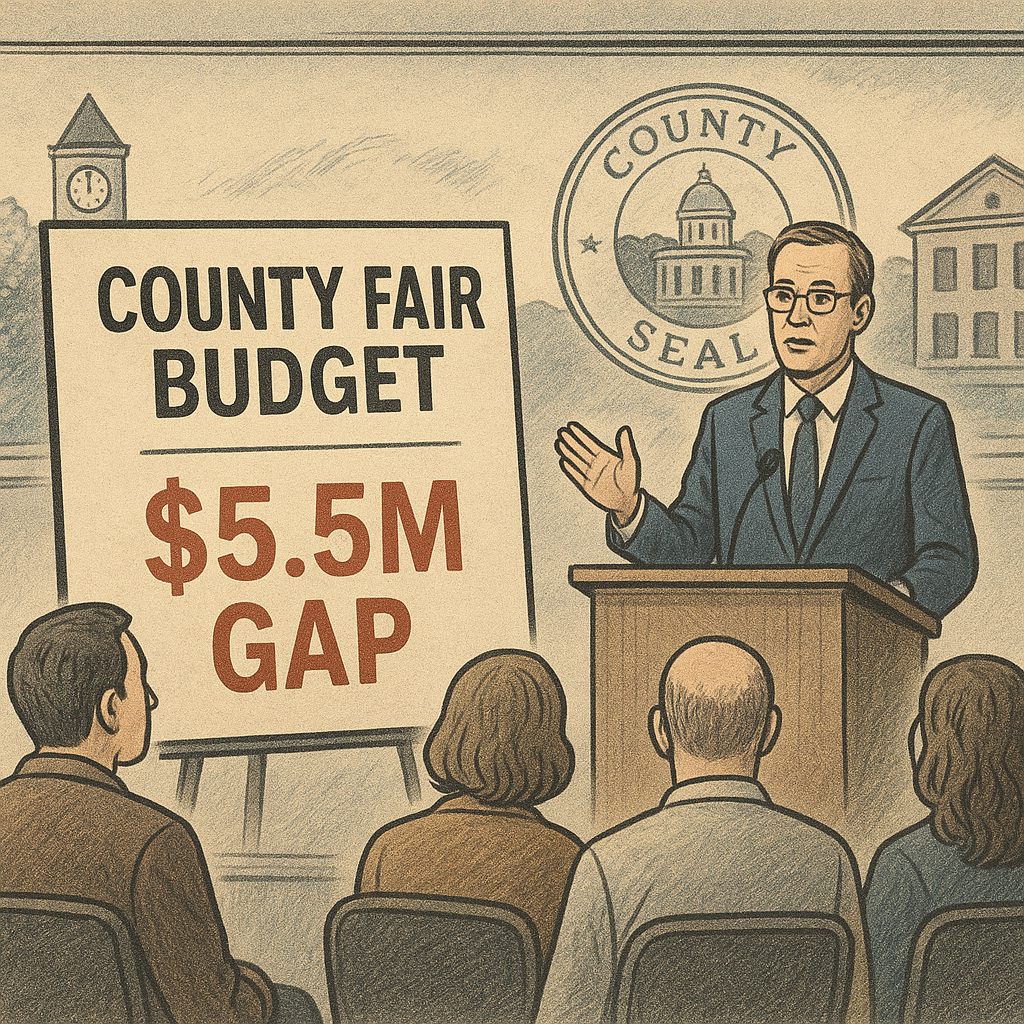
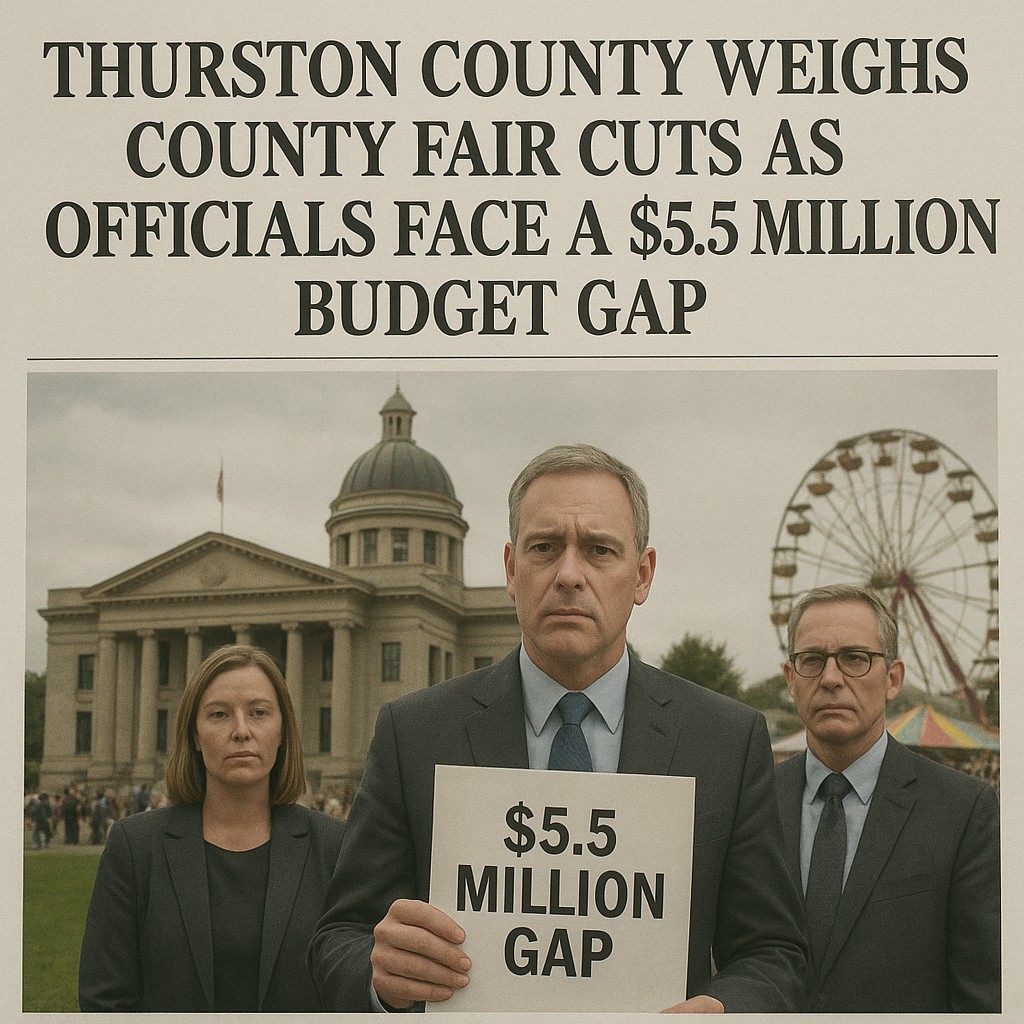
Thurston County is staring at a hard number. Officials are weighing cuts to close a $5.5 million budget gap, and one of the ideas on the table is canceling the county fair. That sounds simple. It is not.
Key Takeaways
- Thurston County officials are considering deep cuts to address a $5.5 million shortfall.
- Canceling the county fair is among the options under review.
- The debate is not just about events; it is about services, priorities, and public trust.
- Budget pressure forces ugly choices, and there is no painless fix.
What is Thurston County’s budget cut debate? It is a local government fight over what stays funded when revenues do not match spending, and the county fair has landed in the crosshairs because it is visible, discretionary, and politically easier to target than core services. I have covered enough local budgets to know this part of the story: the loudest cuts are often not the biggest dollars, but the ones people can picture.
Frankly, that is why the fair matters in this debate. A county fair is not just rides and livestock. It is youth programs, 4-H, FFA, small vendors, civic pride, and a yearly reminder that public money supports more than pavement and payroll. County leaders are being asked to weigh stewardship against symbolism, and that is where the trouble starts. When I look at local budgets like this, I see a familiar pattern: government officials try to trim the edges first, then realize the edges are tied to the center.
The county’s $5.5 million challenge is part accounting, part politics, and part trust. Residents want basic services to work. They also want the county to avoid slashing community institutions that bind people together. The real question is not whether the fair is nice. It is whether canceling it would actually solve enough of the problem to justify the loss. That is the kicker.
What is the Thurston County fair cut debate?
The Thurston County fair cut debate is the local argument over how to close a $5.5 million gap without wrecking county operations, and it has become a test of priorities in Politics, government finance, and public accountability. Budget cuts at the county level are rarely neat. They usually come with trade-offs that hit real people, not spreadsheet ghosts.
The county fair is an easy target on paper because it is seasonal and public-facing. But easy does not mean wise. Local officials are not just deciding whether to hold an event. They are deciding whether county government should continue supporting a tradition that serves youth exhibitors, families, volunteers, and local businesses. That matters more than the bureaucratic chatter lets on.
Most news coverage treats budget cuts as if they were abstract. They are not. They are about what a community owes itself. A government has a duty to steward limited resources well, but stewardship is not the same thing as cutting anything that makes headlines. It should mean protecting the common good, especially where children, families, and local civic life are concerned.
The fair also sits in a gray zone between essential service and discretionary spending. That makes it vulnerable. If a county is short on funds, leaders often look first at what can be paused, reduced, or eliminated without immediately shutting down roads or emergency response. Yet that logic can be shortsighted, because social value does not always show up in a ledger.
The harder issue is whether the county’s financial problem is temporary or structural. If the gap is a one-time mismatch, cutting recurring community programs may be overkill. If it reflects deeper revenue weakness or rising costs, the county may be headed for a longer fight. Either way, the fair has become a proxy battle over fiscal discipline, public patience, and what kind of county Thurston wants to be.
Core Details and Context
Thurston County’s budget squeeze is not happening in a vacuum. Local governments across Washington have been wrestling with rising labor costs, inflation, deferred maintenance, and uneven revenue growth. When I analyzed similar county budgets, the same theme kept showing up: elected officials can promise fiscal restraint, but they still have to pay for people, equipment, buildings, and mandated services. Reality is rude like that.
The fair proposal stands out because it is visible and emotional. Here is what matters:
- $5.5 million is not pocket change. County officials need meaningful reductions, not symbolic gestures.
- Canceling the fair would save money, but not necessarily enough. The public may assume one cut fixes the whole mess. It usually does not.
- Core services come first. Public safety, health, courts, and basic administration are harder to trim than community events.
- The fair supports more than entertainment. Youth programs, agricultural education, local vendors, and volunteer groups all have skin in the game.
- Political pain is part of the calculation. Canceling the fair may be popular with budget hawks and bitter with residents who see it as a county tradition.
The officials hearing these proposals are being forced into triage. That is the honest word for it. They are deciding what can survive with less money and what cannot. A county fair often looks like a soft target because people assume it is optional. But public institutions are tied together more tightly than that. Cut one strand, and you may weaken several others.
There is also the matter of public trust. Residents are usually willing to accept difficult cuts if the county explains them clearly and shows that everyone is sharing the burden. They are less forgiving when decisions appear arbitrary or politically convenient. People can smell nonsense a mile off. If the fair is canceled while waste elsewhere goes untouched, officials will hear about it.
For background on how local government choices affect public budgets more broadly, see our coverage of local budget cuts and what they really mean, along with our report on public spending on community programs. Those pieces help explain why these decisions rarely stay in one lane.
Timeline and Step-by-Step
Here is the basic sequence of how this sort of county budget fight unfolds, and yes, I have seen it enough times to know the script.
- Revenue and spending forecasts are updated. County staff identify the gap, then project whether it comes from lower revenue, higher costs, or both. In Thurston County’s case, the shortfall cited is $5.5 million, which is large enough to force real cuts.
- Departments and programs are asked to identify savings. Officials usually start with a list of reductions. Some are painful, some are technical, and some are obvious to the public. Canceling the county fair lands in the visible category, which is why people notice it first.
- The public hears proposals and reacts. This is where the politics gets loud. Residents defend favorite services. Critics ask why government cannot trim elsewhere. Everyone has a theory. Few have the numbers.
- Officials rank cuts by impact and feasibility. This is the hard part. The county has to weigh legal obligations, staffing needs, service levels, and community consequences. If I were to put it bluntly, not all cuts are created equal.
- A final package is adopted. After debate, amendments, and probably a few irritated speeches, the county settles on a plan. It may include the fair, or a reduced version, or some other compromise that nobody likes very much.
- Residents live with the result. That part is often ignored. Budget fights do not end when the vote passes. They show up later in the form of reduced services, fewer events, and renewed demands for accountability.
What actually happened here, at least in broad terms, is familiar to anyone who follows county government: officials presented options under pressure, and a local institution got placed on the chopping block because it is one of the few things people can imagine cutting. That does not make it the best cut. It just makes it the easiest one to explain in a meeting.
If you want a parallel, look at how other jurisdictions have handled similar trade-offs in our reporting on local government budget crunches and public hearings on fiscal policy. The pattern is the same: the front-end debate is about numbers, and the back-end debate is about values.
Comparison Table
| Option | Estimated Financial Impact | Public Reaction | Effect on Community Life | Political Risk |
|---|
| Cancel the county fair | Moderate savings | High opposition from residents, vendors, youth groups | Significant loss of tradition and community activity | High |
| Reduce fair scale | Lower savings than full cancellation | Mixed; some support, some disappointment | Fair continues in reduced form | Medium |
| Cut multiple smaller programs | Potentially larger combined savings | Harder for public to track | Spreads pain across departments | Medium to high |
| Use reserves or one-time funds | Temporary relief only | Often popular at first | Preserves current services short term | Medium; future gap remains |
| Raise revenue or fees | Can close part of gap | Usually unpopular | Preserves services better than cuts alone | High, depending on method |
The biggest competitor to canceling the fair is not another event. It is the idea of spreading the pain across many smaller cuts. That approach is less dramatic, and that is exactly why governments often prefer it when they can. It is also less satisfying for critics who want a clean answer. But clean answers are rare in local finance.
The table also shows the real trade-off: canceling the fair may save money, but it does so at a visible social cost. Smaller cuts may be less emotionally charged, yet they can still add up to more savings without killing one community event. That is why the debate deserves more than a headline and a shrug.
For related context on public funding choices, our coverage of county spending and local economies explains why local governments often choose breadth over spectacle when budgets tighten. Sometimes the boring answer is the sensible one.
Common Misconceptions and What to Know
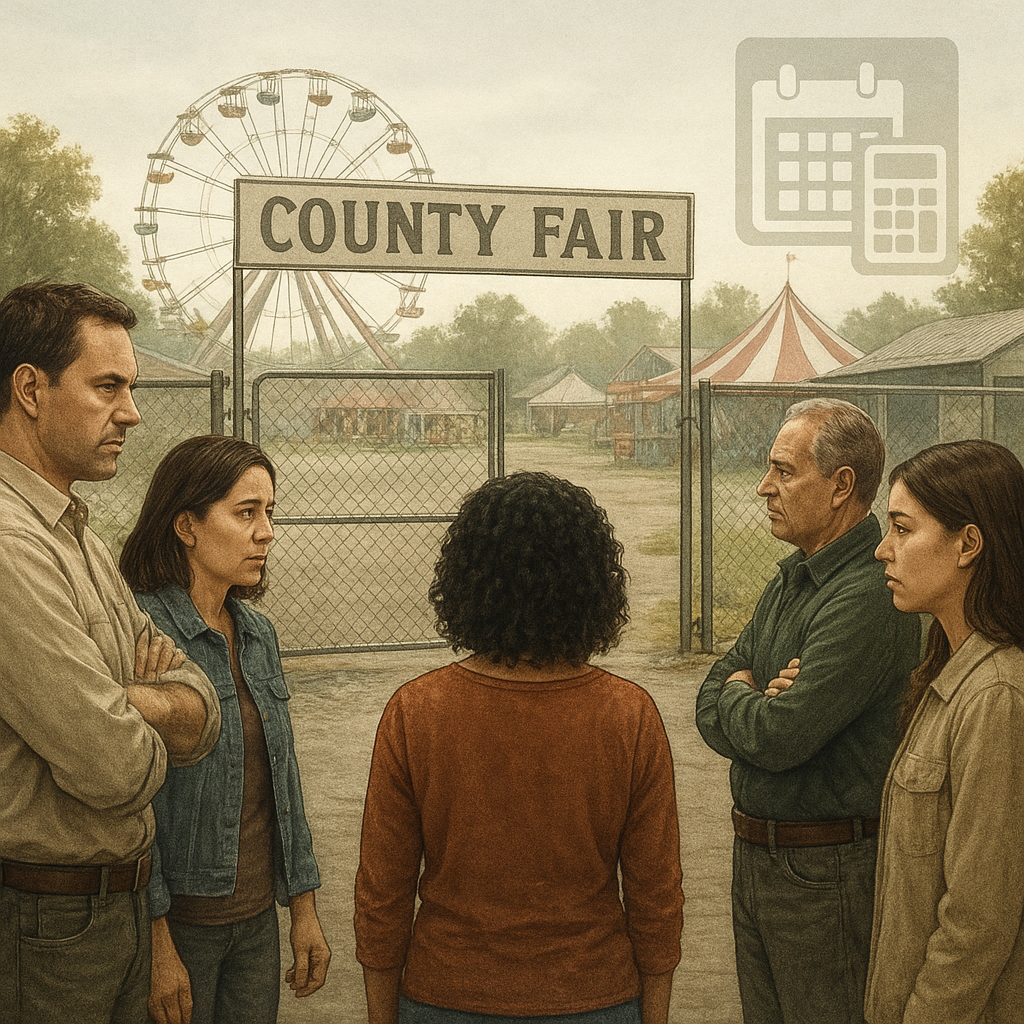
One misconception is that canceling the fair would solve the county’s financial problem by itself. It would not. Not unless the fair is carrying a far bigger cost than the public expects, and there is no sign of that from the basic facts at hand. Most budget gaps are patched with many cuts, not one dramatic move.
Another bad assumption is that a fair is merely entertainment. That is lazy thinking. County fairs support agricultural education, volunteer networks, and local small businesses. They also give young people a place to show projects and learn responsibility. In a culture that too often treats work and formation as separate things, that kind of civic education matters.
People also assume that if a program is popular, it must be affordable, or if it is unpopular, it must be wasteful. Neither is true. Governments fund some things because they are necessary, not because they are beloved. They also keep some beloved things because they strengthen the social fabric in ways that are hard to quantify. That is the part the spreadsheet misses.
Here are the main points to keep straight:
- A budget cut is not the same as a policy victory. It is often just damage control.
- Visible cuts get attention, not always the best results.
- Traditions have economic value, even when they are not easy to measure.
- Public money should serve the common good, not just the loudest demand of the moment.
- Transparency matters as much as the final decision.
Let’s be real: local governments love to talk about “hard choices” when they should be talking about trade-offs and consequences. The public deserves that honesty. If the county fair is cut, officials should show exactly what that buys the county. If it is saved, they should explain what else gets trimmed instead. No smoke. No mirrors.
I have seen enough civic debates to know that people forgive bad news more easily than they forgive vague news. If residents can see the logic, even if they hate the result, they are more likely to accept it. That is a basic matter of justice and responsibility, not public relations.
Frequently Asked Questions
Why is Thurston County considering canceling the county fair?
Because county officials are looking for ways to close a $5.5 million budget gap, and the fair is one of the more visible discretionary items under review.
Would canceling the fair fix the whole budget problem?
No. It might help reduce spending, but a gap that large usually requires several cuts or a mix of cuts and revenue changes.
Why do people care so much about the county fair?
Because it is tied to local tradition, youth programs, agricultural exhibits, and small business activity. It is more than a weekend event.
What happens next?
County officials will continue reviewing proposals, hearing public reaction, and deciding which reductions are workable before adopting a final budget plan.
Final Thought
The county fair is often treated like a sentimental extra, but that is too shallow. It is part of the local common life, and common life is not a luxury. Still, counties cannot spend money they do not have, and that is the hard wall every official eventually hits. The real measure of leadership is not whether it avoids pain. It is whether it chooses pain fairly, explains it honestly, and remembers that public dollars are supposed to serve people, not spreadsheets. If Thurston County gets that part right, the final budget may still sting, but it will at least be honest.