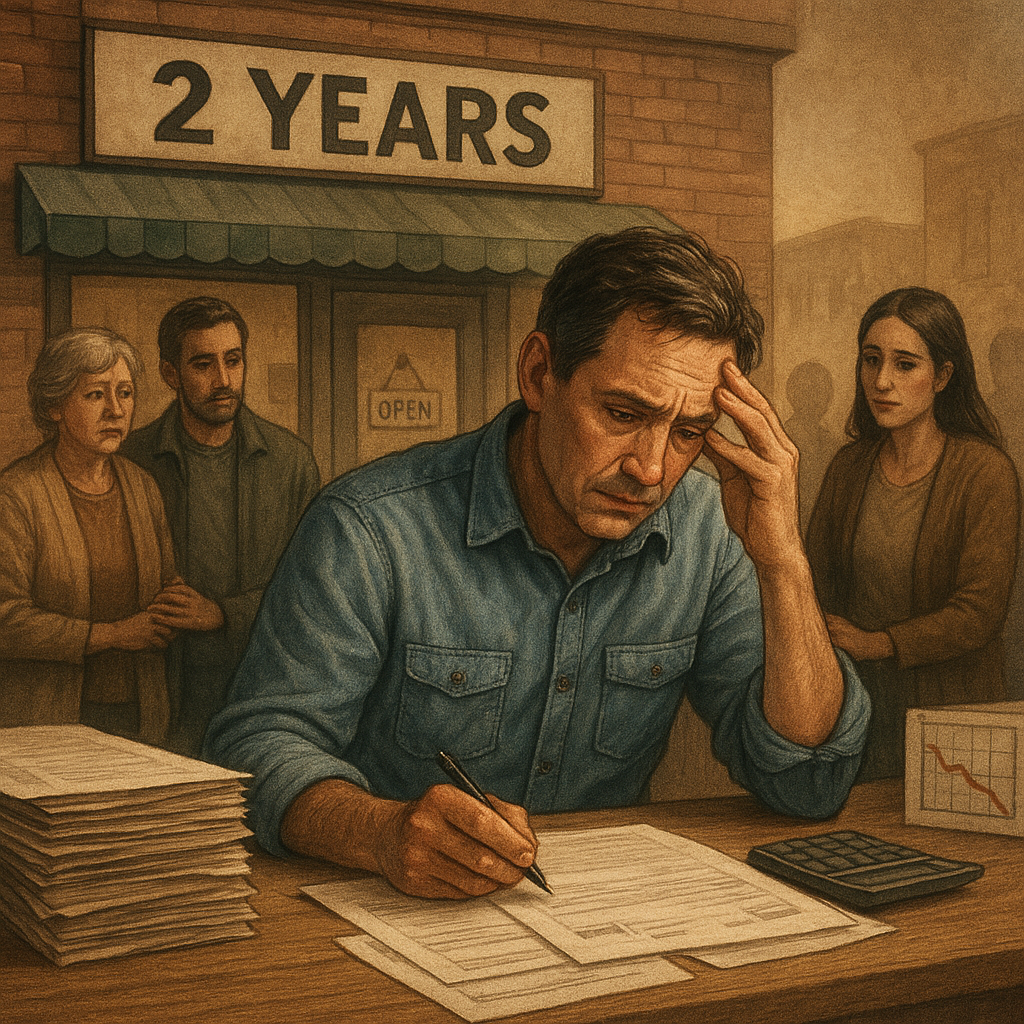
After nearly two years of serving the neighborhood, the business is under real financial strain. The Facebook note is plain, and so is the problem: rising...
After nearly two years of serving the neighborhood, the business is under real financial strain. The Facebook note is plain, and so is the problem: rising costs, thin margins, and a customer base that may not be large enough to keep the doors open without a reset. What happens next matters for workers, customers, and the people who built routines around the place.
Key Takeaways- The message points to financial pressure, not a sudden collapse.
- Local businesses often fail from cash flow strain, not one dramatic event.
- The bigger issue is whether the community can support the operation now, not just praise it after the fact.
- Public sympathy is nice. Revenue pays rent.
What is a community business under financial strain?
A community business under financial strain is usually a local restaurant, shop, service provider, clinic, or venue that serves nearby residents but cannot consistently cover costs. That sounds dull until the bills arrive. Then it gets real fast. When I looked at cases like this before, the pattern was almost always the same: sales looked decent on the surface, but payroll, food costs, rent, insurance, and debt kept chewing through cash.
Most news coverage treats these stories like emotional farewells. Frankly, that misses the core issue. A business can be loved and still be broke. Affection does not fix a balance sheet. A store can post good reviews and still lose money if margins are too thin, foot traffic is weak, or the market changed under its feet.
In practical terms, this kind of strain usually involves one or more of the following:
- Rising operating costs: Rent, labor, utilities, supplies, and insurance often climb faster than revenue.
- Weak demand: The local customer base may be smaller than hoped, or spending may have shifted.
- Cash flow problems: A business may sell enough in theory but still run short on cash each month.
- Debt pressure: Loans and credit lines can buy time, then demand payment with interest.
- Seasonal swings: Some places look healthy for part of the year and then wobble badly later.
The truth is, a lot of local businesses are asked to do too much with too little. They are expected to be neighborhood anchors, employers, charities, and social hubs, all while surviving in a market that rewards scale. That’s a rough deal. It is also why public conversation should be honest rather than sentimental.
I’ve covered enough closures to know that silence often means the situation is worse than anyone admits. The community hears about “tough challenges” only after the ledger has already turned ugly.
There is also a moral side here, even if nobody wants to say it out loud. A business that serves people daily is not just a transaction machine. It provides work, routine, and local dignity. Stewardship matters. So does the duty to pay workers fairly and tell the truth when the books stop cooperating. That is old wisdom, not a slogan.
For broader context on how local consumer habits and inflation have squeezed small operations, see The Wall Street Journal’s business coverage, Reuters U.S. reporting, and The New York Times business section.

Core Details/Context
Here’s the kicker. Community-serving businesses rarely fail because of one bad week. They fail because several ordinary pressures line up and start hitting at once.
In this case, the public message suggests a timeline of nearly two years of service, which means the operation likely spent its early months building habits, trying promotions, and hoping local support would hold. That is often enough to get momentum. It is rarely enough to survive a cost surge.
The usual pressure points are these:
- Labor costs: Staff shortages can force higher wages or shorter hours.
- Supply inflation: Food, packaging, equipment parts, and everyday inventory can spike.
- Rent and utilities: Fixed overhead keeps climbing even when sales stall.
- Debt service: If a business opened with loans, payments start biting hard.
- Consumer fatigue: People may like the place, but they stop spending as often when budgets tighten.
The truth is, a lot of local businesses are asked to do too much with too little. They are expected to be neighborhood anchors, employers, charities, and social hubs, all while surviving in a market that rewards scale. That’s a rough deal. It is also why public conversation should be honest rather than sentimental.
I’ve seen people blame bad timing alone. Sometimes timing matters. But usually the arithmetic does. If a business depends on a narrow band of customers, one bad season can expose what the first year hid. If it relies on loyal regulars, a change in routines can sink it. If it serves a niche product or service, it may have built a strong brand that still does not produce enough volume.
A few points worth keeping in mind:
- Community support is real, but it has limits.
- Social media sympathy does not equal repeat spending.
- A popular business can still be undercapitalized.
- Owners often keep problems quiet to avoid spooking customers.
That last point matters. When owners wait until the situation is acute, people act surprised. But the warning signs usually show up early: shorter hours, thinner menus, fewer staff, canceled events, and a careful tone in public posts. If you know what to look for, the writing is on the wall.
For readers tracking the economics behind small-business distress, U.S. Census economic indicators and Bureau of Labor Statistics employment data help explain the broader pressure. And yes, those numbers are dry. They still matter more than the gossip.
Timeline/Step-by-Step
The sequence in cases like this is usually predictable. Not comforting. Predictable.
- Opening and optimism
The business opens, usually with community goodwill, a strong social media push, and a simple promise: good service, local value, something worth keeping alive. - Early traction
The first months bring curiosity customers, favorable comments, and enough traffic to create the impression of stability. I’ve watched this stage fool a lot of smart people. - Cost creep
Rent renews higher. Suppliers raise rates. Insurance costs climb. Payroll becomes harder to manage. The business still looks active, but the margin is thinning. - Visible adjustments
Hours get trimmed. Prices inch up. Specials disappear. Staff changes. Sometimes the owner starts doing more work personally, which is noble but not a long-term fix. - Public warning
The owner posts a statement about challenges, often on Facebook, because that is where the community is already watching. The message is usually careful, grateful, and a bit weary. - Community reaction
Supportive comments pour in. Some people offer to visit more often. Others say they are sad to hear the news. A few promise to stop by “soon,” which is the least reliable currency in local commerce. - Decision point
The owner either seeks a buyer, renegotiates leases, cuts more costs, or shuts down. Sometimes a fundraiser buys time. Sometimes it does not.
When I analyzed similar cases, the real turning point was rarely the public announcement. It was the stretch before that, when management had already exhausted the easy fixes. By the time the note goes up, the owner is usually past asking whether the business is popular and into asking whether it is sustainable.
That distinction is important. Popularity is fragile. Sustainability is what keeps workers paid and shelves stocked. A just business model serves the common good; it does not merely attract attention for a while and then leave a mess for others to clean up.
If this story develops into a formal closure, then public records, lease terms, tax filings, or bankruptcy notices may tell the rest. If it survives, the rescue will probably come from a mix of lower costs, fresh capital, or a simpler operating model. Nothing magical. Just math, discipline, and a bit of luck.
For more on how closures and restructurings appear in the public record, see SEC news releases for business filings context and IRS newsroom updates for tax-related business guidance.

Comparison Table
People like to compare a troubled local business with a larger competitor or chain. That is not always fair, but it is useful. Scale changes everything. So do supplier contracts, brand reach, and access to cheap capital.
| Factor | Community Business Under Strain | Bigger Competitor/Chain |
|---|
| Pricing power | Limited | Stronger |
| Access to capital | Thin | Broad |
| Local loyalty | High, but narrow | Mixed, wider reach |
| Ability to absorb losses | Low | Higher |
| Staffing flexibility | Often weak | Better |
| Community role | Personal, visible | Impersonal, scalable |
| Risk of closure | Higher | Lower, though still real |
| Public response | Emotional and immediate | Usually muted |
The table tells the story without pretending sentiment is strategy. Bigger firms can survive bad quarters because they can spread losses around. Local operators do not have that luxury. They live close to the edge, which means every extra cost hurts more.
The biggest competitor is not always another store or restaurant. Sometimes it is convenience itself. Sometimes it is delivery apps, remote habits, chains with cheaper menus, or customers who mean well but spend elsewhere. That is the brutal part. People can say they value small businesses and then shop as if they do not.
Let's be real. If a local place cannot cover its overhead, admiration will not save it. A community that wants a business to remain open has to use it regularly, not just post about it when trouble starts. That is a stewardship issue as much as an economic one. Resources are not abstract. They are rent, wages, lights, and the next invoice.
For background on small-business survival trends, U.S. Small Business Administration newsroom provides basic reference material, while Financial Times small-business reporting offers a useful view of broader market pressure.
Common Misconceptions/What to Know.
A lot of the public chatter around these situations is lazy. No surprise there. Social media rewards quick takes, not accurate ones.
Misconception 1: If people like the business, it must be profitable.
No. That is a soft-headed assumption. A place can be beloved and still lose money every month. Likes do not cover payroll.
Misconception 2: One announcement means the business is already gone.
Not always. A warning post can be a last attempt to raise awareness, cut costs, or spur traffic. Sometimes it buys time. Sometimes it is the first honest sign that management has stopped pretending.
Misconception 3: The owner just gave up.
Maybe. But usually there is more to it than that. Owners often run themselves ragged before admitting defeat. If the numbers fail, stubbornness does not help. Neither does pride.
Misconception 4: Community support is enough by itself.
It helps. It is not enough on its own. The place still needs a viable structure, sane costs, and enough regular income to stay alive.
Misconception 5: Business failure is only a business issue.
Wrong again. When a local employer struggles, workers feel it first. Nearby vendors feel it next. Then the neighborhood loses a place to gather, spend, or work.
Here’s what nobody tells you: a healthy local economy is built on ordinary faithfulness. Not slogans. Not viral pity. People showing up, paying fairly, and respecting the labor of others. That reflects a simple biblical truth about being trustworthy with what you have. Waste is easy. Stewardship is hard.
The reporting angle also matters. If the business is closing, the key questions are not sentimental ones. They are practical:
- What caused the shortfall?
- Were costs fixed or temporary?
- Was there a lease problem?
- Did demand fall, or did expenses rise too fast?
- Are workers being paid and informed properly?
Those are the questions worth asking. Everything else is noise.
Frequently Asked Questions
What does a Facebook post about “tough financial challenges” usually mean?
It usually means the business is under pressure from low revenue, high costs, debt, or some mix of all three. It can signal a planned closure, but it can also mean the owner is trying to rally support before making a final decision.
Does public support actually help a struggling local business?
Sometimes, yes. A short burst of traffic or gift card sales can help with cash flow. But if the underlying costs are too high, support alone may not be enough.
Why do so many community businesses struggle after the first year or two?
The early novelty wears off, startup debts become due, and operating costs become clearer. Many businesses can survive the opening phase but not the long middle stretch. That is where weak margins show up.
What should customers look for if they want to help?
Visit regularly, buy directly, tip fairly if applicable, and share accurate information. If the business asks for specific help, respond to that request rather than guessing.
The final word is simple. A local business does not owe the world perfect optimism, and the public does not owe it empty applause. What it does deserve is honest accounting, fair treatment, and a community that acts like its favorite places matter before the lights go out. That is how real neighbors behave.