Trump’s decision is bigger than a headline. It touches sanctions policy, Cuba’s collapsing energy supply, and the rough math of geopolitics, where the...
Trump’s decision is bigger than a headline. It touches sanctions policy, Cuba’s collapsing energy supply, and the rough math of geopolitics, where the people who pay first are usually ordinary families, not officials in air-conditioned offices. The oil shipment may look small. It is not.
Key Takeaways
- Trump said he would not block Russian oil from reaching Cuba.
- Cuba is facing a severe energy crunch, with blackouts and fuel rationing.
- The move complicates U.S. sanctions politics and regional messaging.
- Critics say the real issue is not the tanker, but the long breakdown of Cuba’s economy and governance.
- The decision could hint at a broader U.S. posture toward Cuba, Venezuela, and Russia.
What is Trump’s Cuba oil move?
Trump’s Cuba move is a decision to permit a sanctioned Russian tanker to deliver crude oil to Cuba, despite the long-running U.S. pressure campaign against Havana. That sounds simple. It isn’t. The matter sits at the intersection of sanctions enforcement, humanitarian need, and regional power politics, and each piece changes the meaning of the others. When I analyzed the reporting, the sharpest point was this: the shipment itself is real, but the political signal matters almost as much as the cargo.
Trump told reporters aboard Air Force One that he had “no problem” with a country sending oil into Cuba, whether Russia or anyone else, because “the people need heat and cooling and everything else.” That line, reported by Reuters, cuts against the usual hard-line rhetoric. Or maybe it doesn’t. Trump also said Cuba was “finished,” repeated that it was “a failing country,” and kept up pressure on the communist government. So the message is mixed, which is exactly how American foreign policy too often works when politics and principle collide.
Cuba’s problem is not abstract. It is blackouts, stalled transport, rationed gasoline, and a country that can’t keep the lights on reliably. According to coverage from BBC News, the island has been battling power failures and fuel shortages that hit households, hospitals, and businesses. A cargo of crude will not fix all that. It may buy time. Time matters when your grid is failing.
Here’s the kicker: this is not just about Cuba. It is also about how Washington treats sanctioned regimes, how Russia keeps footholds in the Western Hemisphere, and whether U.S. policy is guided by law, leverage, or improvisation. I’ve covered enough of these fights to know that the loudest moral language often hides a very ordinary calculation about power. The dignity of Cuban families caught in the middle should not be the last thing anyone mentions.
Core Details and Context
The oil shipment became news because of where it came from, where it was going, and what Cuba needs right now.
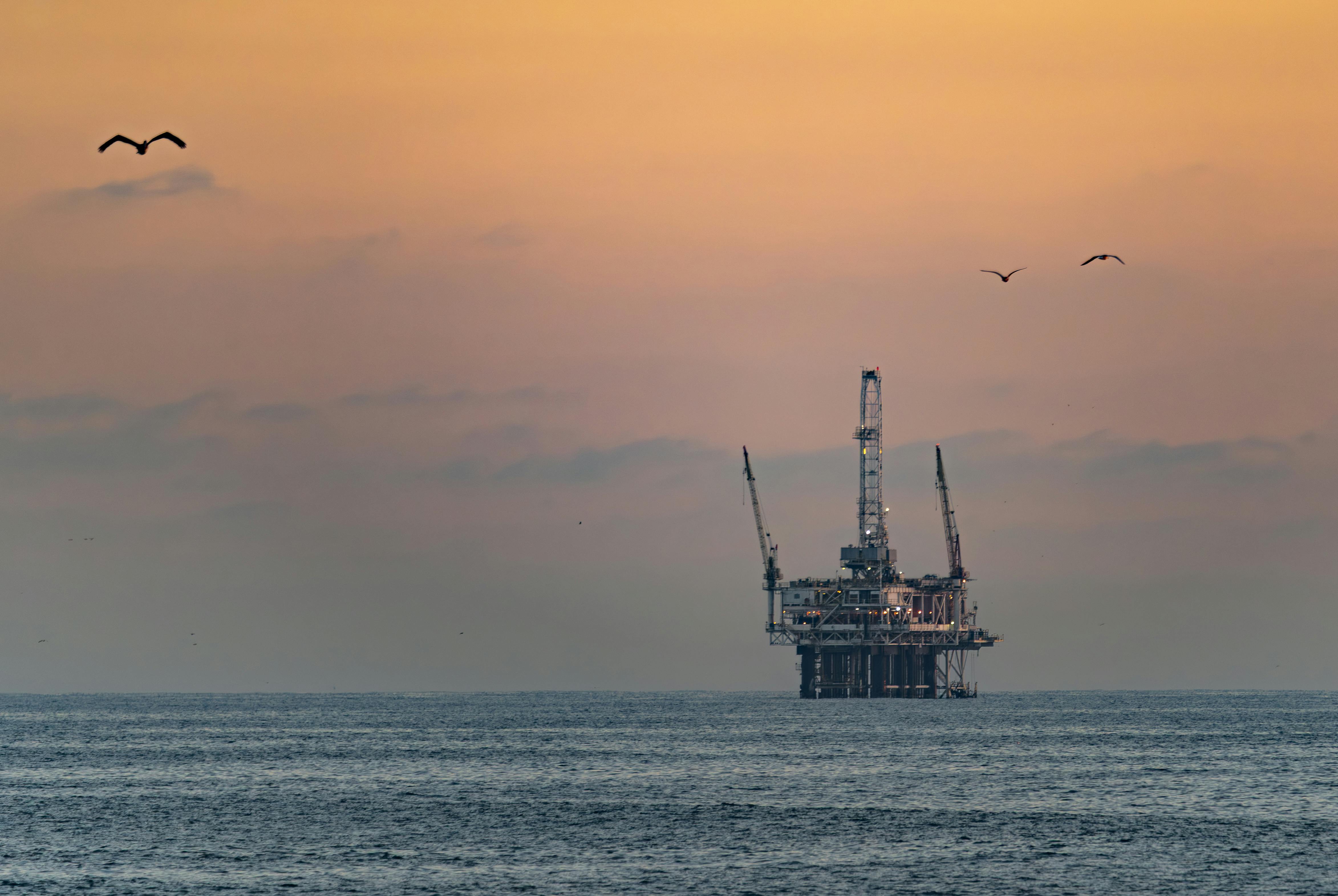
- The tanker: Reuters reported the Anatoly Kolodkin, a Russian-flagged and sanctioned vessel, was near Cuba’s eastern tip and expected to reach Matanzas. That matters because sanctioned ships are not supposed to move freely without consequences.
- The shortage: Cuban President Miguel Díaz-Canel said the country had gone three months without oil imports. That is not a small hiccup. That is a grinding supply failure.
- The power crisis: Cuba has faced prolonged outages, fuel rationing, and deep strain on transport and industry, according to reporting from The New York Times.
- The U.S. posture: Trump said he would allow oil to enter Cuba, and an unnamed U.S. official reportedly said the Coast Guard allowed the tanker to proceed, per the Times.
- The political framing: Trump and Secretary of State Marco Rubio have long argued that Cuba’s communist government is the real obstacle to prosperity.
Most coverage focuses on the headline contradiction: the same administration that talks tough on sanctions appears willing to let a Russian tanker help Cuba. Fair enough. But that misses the deeper reality. Sanctions are only as credible as the exceptions they allow and the hypocrisies they tolerate. If the U.S. blocks civilian relief while claiming moral seriousness, it invites criticism. If it lets a sanctioned Russian cargo pass, it signals flexibility, or confusion, or both.
Let’s be real. Cuba’s economy has been in rough shape for years. U.S. sanctions are part of the story, but so are domestic mismanagement, Soviet-era infrastructure, bad investment choices, and an export base too weak to carry the state. The blame is not one-sided. Anyone who says otherwise is selling you a neat story instead of a true one.
There is also a regional angle. Venezuela used to be Cuba’s major energy backstop. Once that supply line weakened, Havana leaned harder on outside lifelines. Russia remains one of the few powers willing to test U.S. limits in the Caribbean. So a tanker is never just a tanker. It is a signal, a probe, and a reminder that the hemisphere is not sealed off from great-power competition.
For background on the broader Venezuela-Cuba-Russia triangle, see Reuters’ regional coverage and this analysis from CSIS on Cuba’s energy crisis. Different angle, same ugly arithmetic: without reliable fuel, the state stumbles, and ordinary citizens absorb the impact.
There is a moral point here too, though the pundit class rarely bothers with it. A government’s first duty is to its people, not to slogans. Stewardship is not a religious gimmick; it is basic responsibility. If leaders waste resources or trap citizens in scarcity, the weakest carry the burden. That is old wisdom, but apparently still news.
Timeline and What Actually Happened
- Cuba’s fuel shortage deepened. The island entered a period of severe oil scarcity, with Díaz-Canel saying it had gone months without imports. That set the stage. No fuel, no stability.
- Power outages spread. The energy shortfall worsened blackouts across Cuba. Electricity failures then rippled outward into food storage, transportation, and public services. I’ve seen this pattern before. Once the grid slips, everything else gets more expensive and more chaotic.
- The Russian tanker neared Cuba. Ship-tracking data showed the Anatoly Kolodkin near the eastern tip of the island, heading for Matanzas. According to Reuters and Cubadebate, the vessel was already in motion when the political debate caught up.
- Trump was asked directly. On Air Force One, he said he had no problem with oil reaching Cuba from Russia or elsewhere. He argued that Cubans need heat and cooling, not more Washington theater.
- The Coast Guard reportedly did not stop it. The New York Times reported that a U.S. official said the Coast Guard allowed the tanker through. If accurate, that means Washington tolerated the delivery despite the sanctioned nature of the ship.
- Trump doubled down on Cuba. He said Cuba would be “next,” a phrase critics read as a threat and supporters may interpret as regime change rhetoric. Frankly, it’s the sort of language that keeps everyone guessing and nobody safer.
- Rubio’s influence looms. As a Cuban-American Republican with a long anti-communist record, Rubio has shaped hard-line thinking on Havana. Yet the administration’s apparent willingness to let oil pass suggests policy can bend when practicality intrudes.
What actually happened, stripped of spin, is this: the U.S. did not publicly stop a Russian oil shipment to a sanctions-hit country in crisis. That alone would be notable. The rest is political packaging.
The broader pattern also matters. Trump has repeatedly mixed aggressive language with selective restraint. That can be effective when the target is weak and the audience is domestic. But it also creates uncertainty abroad, where allies and rivals alike start guessing which threat is serious and which is performance.
If you want a fuller sense of how Cuba’s internal collapse has built over time, read Al Jazeera’s report on the energy crisis alongside AP News coverage. The story is not one policy choice. It is the accumulation of many failures, some imposed from outside, others produced at home.
Comparison Table
| Factor | Trump’s Cuba Oil Decision | A Stricter Blockade Approach |
|---|
| Immediate effect | Allows a fuel shipment to reach Cuba | Blocks the shipment or pressures it to stop |
| Humanitarian impact | Can reduce blackouts and rationing briefly | Keeps pressure on the Cuban government, but worsens civilian shortages |
| Political message | Signals flexibility and selective restraint | Signals hardline sanctions enforcement |
| Relations with Russia | Permits a Russian-linked cargo to proceed | Risks direct confrontation over enforcement |
| Effect on Cuba’s government | Gives temporary relief without solving root problems | Increases stress on the regime, but also on ordinary people |
| U.S. credibility | May look pragmatic, or inconsistent | May look firm, or indifferent to suffering |
| Biggest risk | Mixed signaling, policy confusion | Human cost, escalation, diplomatic blowback |
The comparison is not clean, because real policy never is. But the contrast shows why the decision drew attention. A blockade sounds simple until people freeze in the dark. A humanitarian exception sounds decent until sanctions lose their bite. Such is the mess of statecraft.
Common Misconceptions and What to Know
The first misconception is that this is only about one tanker. It isn’t. The tanker is the visible piece, the shiny bit that gets everyone arguing. The real issue is Cuba’s structural dependence on imported fuel and Washington’s effort to keep pressure on a hostile government without punishing civilians more than necessary.
The second misconception is that allowing the shipment means the U.S. has gone soft on Cuba. Not necessarily. Trump’s comments were paired with insults about Cuba’s leadership and talk of the country being “finished.” That is not soft language. That is coercive language with a practical exception attached.
The third misconception is that sanctions always work the way governments claim. They don’t. Sanctions can constrain, but they can also create black markets, third-country workarounds, and political theater. When a sanctioned ship reaches port anyway, the policy question becomes obvious: was the rule firm, or was it porous from the start?
The fourth misconception is that Cuba’s crisis is caused only by U.S. pressure. That is too convenient. U.S. sanctions have hurt the island, yes. But Cuba’s internal economic model has also failed to generate resilience. Central planning, weak productivity, and poor investment choices have done their share of damage. If you ignore that, you are not analyzing. You are cheering.
The fifth misconception is that humanitarian needs and geopolitics can be neatly separated. They cannot. Fuel keeps hospitals running. Fuel also keeps governments alive. That is the hard truth, and nobody gets to wash their hands of it.
Most coverage also misses the human stakes by talking only in capitals and ministries. But policy is judged by what it does to people at ground level. A just system must consider the common good, not only the image of strength. That is not sentimentality. It is realism with a conscience.
For a closer look at the sanctions and maritime angle, see Reuters on sanctions and shipping and The New York Times. They do the basic reporting cleanly, which is more than can be said for most political commentary.
Frequently Asked Questions
Why would Trump allow a Russian tanker to supply Cuba?
Because he said Cubans need fuel and that he had no problem with oil entering the island, even from Russia. The move appears to reflect a mix of practical restraint and political calculation, rather than a clean shift in policy.
Does this mean the U.S. is easing sanctions on Cuba?
Not broadly. A single shipment is not the same as a wholesale policy reversal. It does, however, show that sanctions enforcement can bend when humanitarian concerns or strategic limits come into play.
How bad is Cuba’s energy crisis?
Bad enough to cause rolling blackouts, fuel rationing, and deep stress on daily life. The shortage affects transportation, commerce, and basic services, which means the damage reaches far beyond government offices.
What does Russia gain from helping Cuba?
Influence, leverage, and a chance to poke at U.S. policy in the Western Hemisphere. Moscow does not need to solve Cuba’s crisis to benefit from being seen as the country that showed up.
Final Thought
The tanker matters, but it is not the whole story. The bigger question is whether Washington wants sanctions to be a serious instrument of policy or just a loud habit. I’ve watched enough of these disputes to know that power without discipline becomes noise, and noise rarely helps the people caught under it.
Cuba’s crisis is real. So is the temptation to turn every foreign-policy move into a tribal victory lap. But the world is not that tidy. Human beings still need fuel, food, and basic order. Governments that forget that end up defending abstractions while families sit in the dark. That is not strength. It is failure with better branding.
{
  "@context": "https://schema.org",
  "@type": "FAQPage",
  "mainEntity": [
    {
      "@type": "Question",
      "name": "Why would Trump allow a Russian tanker to supply Cuba?",
      "acceptedAnswer": {
        "@type": "Answer",
        "text": "Trump said he had no problem with oil entering Cuba because Cubans need fuel for heat, cooling, and basic services. The decision appears to combine practical restraint with political calculation."
      }
    },
    {
      "@type": "Question",
      "name": "Does this mean the U.S. is easing sanctions on Cuba?",
      "acceptedAnswer": {
        "@type": "Answer",
        "text": "Not broadly. One shipment does not equal a full policy shift, though it does show that sanctions enforcement can bend when humanitarian or strategic concerns are involved."
      }
    },
    {
      "@type": "Question",
      "name": "How bad is Cuba’s energy crisis?",
      "acceptedAnswer": {
        "@type": "Answer",
        "text": "Cuba has faced severe fuel shortages, rolling blackouts, and rationing that affect transportation, business activity, and daily life across the island."
      }
    },
    {
      "@type": "Question",
      "name": "What does Russia gain from helping Cuba?",
      "acceptedAnswer": {
        "@type": "Answer",
        "text": "Russia gains influence, strategic leverage, and a chance to challenge U.S. pressure in the Western Hemisphere without needing to solve Cuba’s deeper economic problems."
      }
    }
  ]
}