Trump’s attendance matters.
Trump’s attendance matters.
The Supreme Court is hearing a direct challenge to a Trump executive order that tries to narrow birthright citizenship, and his presence would signal how personally he wants to frame the case, how much he wants to pressure the political conversation, and how far this immigration fight reaches into constitutional law. Why now?
Key Takeaways- Trump plans to attend the Supreme Court hearing on birthright citizenship.
- The case challenges his executive order limiting citizenship for some children born in the U.S.
- The dispute turns on the 14th Amendment, federal statute, and long-settled court practice.
- The order is blocked for now, and the Court’s ruling could shape immigration policy nationwide.
- The broader issue is not just law; it is citizenship, sovereignty, and human dignity.
What is the birthright citizenship case?
Birthright citizenship is the rule that a child born on U.S. soil is generally a U.S. citizen, with narrow exceptions. That reading comes from the 14th Amendment and has been reinforced by federal law and long practice for well over a century. Trump’s executive order tries to cut that rule back for children born to parents who are in the country unlawfully or only temporarily. That is the core dispute.
Frankly, a lot of coverage gets sloppy here. People talk as if this is a fresh policy tweak, but it is really a constitutional fight over who gets counted as American at birth. I’ve covered this beat long enough to know that the legal language matters more than the political slogans, and the slogans are loud for a reason: citizenship is not just paperwork. It defines membership, duty, and protection.
The administration argues that the Constitution should not be read to grant automatic citizenship in these cases. Critics say that position clashes with the text, with precedent, and with the basic idea that the law should not sort newborns by their parents’ status. That last point is not sentimental fluff. It goes to the common good, and to the old moral question of whether a society protects the vulnerable without making infants pay for adult conduct.
The case also sits inside a larger immigration crackdown, which means the legal question is doing double duty as political theater. That is not unusual in Washington. It is also why the hearing drew so much attention. The justices are not just deciding an order; they are deciding whether the executive branch can redefine citizenship from the top down.
For more background on the Court’s recent posture in immigration disputes, see The New York Times coverage, The Washington Post report, and AP News.

Core details and context
The hard facts are these.
- Trump signed the order on his first day in office during his second term, making the move one of the earliest signals of his immigration agenda.
- The order says children born to parents who are in the U.S. illegally or temporarily are not citizens.
- Several courts blocked the order, so it has not taken effect nationwide.
- The Supreme Court is hearing Trump’s appeal, and a ruling is expected by early summer.
- Trump would be the first sitting president known to attend oral arguments at the Supreme Court.
That last point matters more than the cable chatter admits. A president in the courtroom is not a neutral spectator. It is a visual argument. It says the case is central, not peripheral, and it gives the White House an opening to frame the dispute as a constitutional correction rather than an aggressive rewrite of settled law.
Here’s the kicker: the Court is not being asked to decide immigration policy in the abstract. It is being asked whether the executive can change the meaning of citizenship through unilateral action. That is a government-power question, not just an immigration question.
A few things cut against the administration’s position.
- The 14th Amendment has long been read to confer citizenship to nearly everyone born in the United States.
- Federal law since 1940 has tracked that understanding.
- Lower courts have repeatedly blocked the order, which suggests serious legal doubt.
- The issue affects children directly, which raises obvious due process and fairness concerns.
A few things support the administration politically, though not necessarily legally.
- Immigration remains a top-tier issue for Trump’s base.
- The order fits his broader message that the federal government should take a harder line on border enforcement.
- The case gives him a clean way to argue that courts, not voters, are blocking his agenda.
Most news coverage misses the real story. It treats this like a simple yes-or-no question about citizenship, when the deeper fight is over the reach of executive power. If the president can narrow a constitutional status by order, the precedent would be larger than this case. It would tell future presidents that old rules can be bent with enough political muscle.
And yes, people should talk about legality before ideology. Rights are not supposed to be handed out like favors. They are supposed to be recognized, which is why the distinction between law and preference matters so much.
Read more on the broader political context in Reuters and on the administration’s immigration push at Politico.
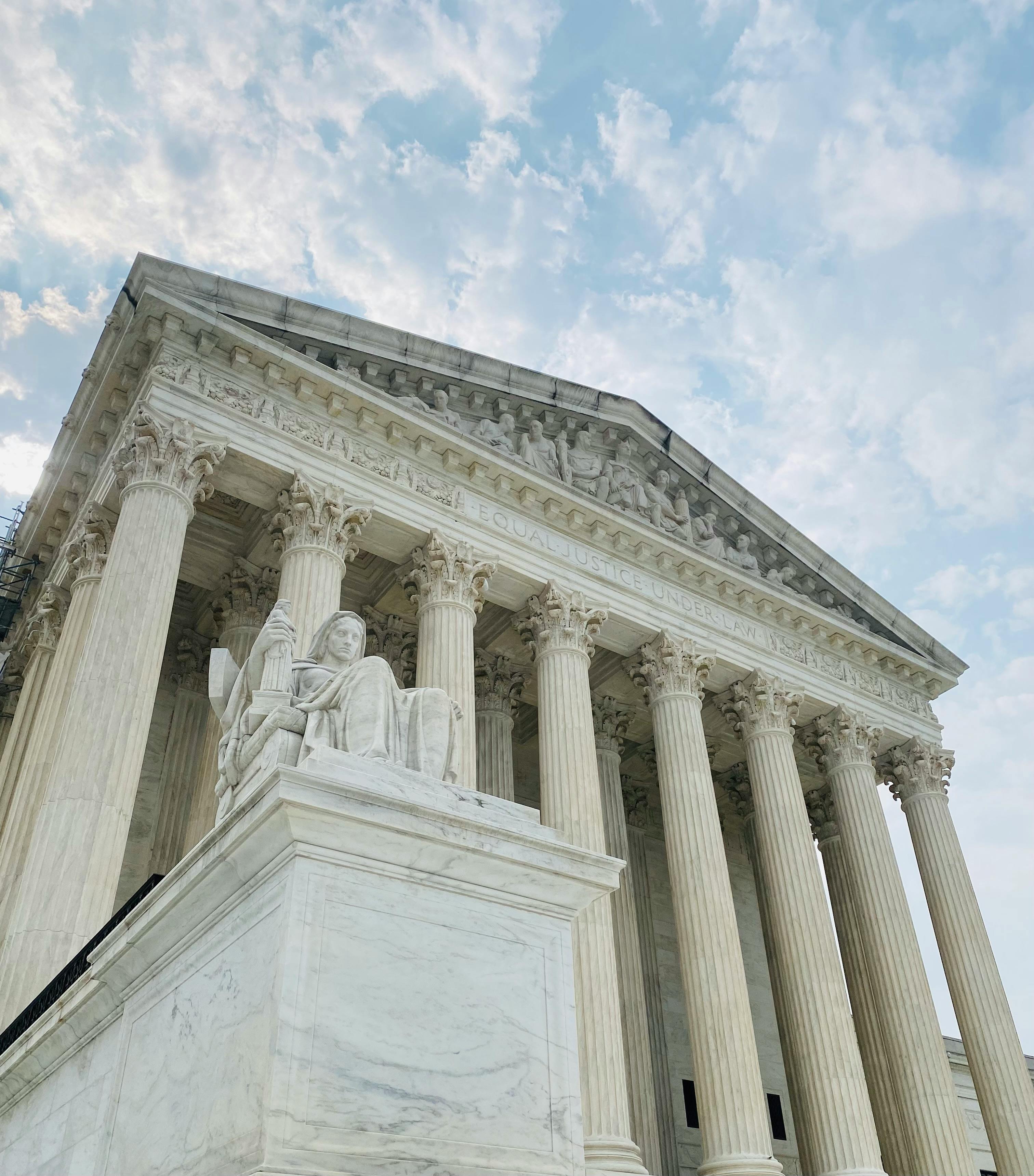
Timeline and step-by-step
- Trump signs the order on day one. I’m not romantic about the timing. It was meant to set the tone, and it did. The order instantly turned an old constitutional rule into a live political fight.
- Lower courts block implementation. Judges across multiple courts halted the order, which kept the policy from taking effect nationwide. That matters because it shows the judiciary saw enough legal concern to stop the government before the rule could touch real families.
- The administration appeals. The White House pushes the issue upward, arguing the lower courts got the Constitution wrong and that the executive branch has authority to act.
- The Supreme Court agrees to hear the case. That moves the matter from lower-court firefighting to a national constitutional test. The justices are now the final word unless Congress changes the statute or the Constitution itself.
- Trump announces he will attend. On Tuesday, he told reporters, “I’m going,” and then said, “I think so, I do believe,” when pressed. That’s not subtle. He wants to be seen at the center of the fight.
- The Court hears arguments Wednesday. The justices will consider whether the order can stand, and the legal briefs will likely focus on the text of the 14th Amendment, precedent, and the limits of presidential power.
- A ruling is expected by early summer. That timeline gives the Court time to issue a decision with major policy consequences before the political season gets even louder.
When I looked at the sequence, one thing stood out: the administration has moved from symbolic action to judicial confrontation without much space in between. That tells you this is not a niche legal dustup. It is a deliberate test of the system.
And here’s the part people should not ignore. Trump’s decision to show up in person, if he does, is not about legal subtleties. It is about control of the narrative, plain and simple. He knows that when the cameras roll, the image of a president at the Supreme Court sends a message about urgency, power, and grievance all at once.
For background on how the Court handles emergency and structural challenges, see SCOTUSblog’s preview and CNN’s report.

Comparison table
| Issue | Trump’s birthright citizenship order | Long-standing citizenship rule |
|---|
| Core claim | Children of some noncitizen parents are not automatic citizens | Most people born on U.S. soil are citizens |
| Legal basis | Executive order and new reading of citizenship law | 14th Amendment and decades of practice |
| Current status | Blocked by lower courts | Still the default rule nationally |
| Policy effect | Would narrow who qualifies at birth | Preserves broad birthright citizenship |
| Political meaning | Signals harder immigration enforcement | Reflects continuity and settled expectations |
| Main risk | Legal conflict, uncertainty for families, possible overreach | Political criticism from restriction advocates |
| Biggest supporter | Trump and immigration hardliners | Civil liberties groups, many legal scholars |
| Biggest competitor | The constitutional status quo | The executive order |
The comparison is simple. One side wants a narrower definition, the other side wants continuity. But simple does not mean easy.
The legal conflict is still messy because the Court has to balance constitutional text, historical interpretation, and institutional restraint. The practical stakes are ugly in the real world. Babies do not choose their parents’ paperwork. Families do not need another round of bureaucratic fog. A good legal system should know the difference between enforcement and inherited punishment.
Trump’s side will likely argue that the country has been too loose on citizenship and that the courts have protected a flawed reading for too long. Opponents will answer that the text and precedent are not loose at all, and that the executive branch cannot just file a new definition into existence.
You can see why this matters beyond the courtroom. Citizenship affects access to schooling, work, benefits, voting later in life, military service, and the basic obligations between the person and the republic. That is not abstract. It is the skeleton of civic life.
Common misconceptions and what to know
The biggest misconception is that this case is just about immigration numbers. It is not. It is about legal identity, and those are not the same thing.
Another common mistake is thinking the Court is deciding whether immigration should be tougher. That is not the question in front of the justices. The question is whether a president can redefine citizenship for children through executive order. That distinction matters, and anyone who blurs it is selling shortcuts.
A third misconception is that birthright citizenship is some odd modern invention. It is not. The rule rests on the 14th Amendment, which was written after the Civil War to establish citizenship and belonging in a country that had too often sorted people by status, race, and power. The moral logic is old: the law should not make a child pay for an adult’s position.
A fourth is that this case will settle immigration policy once and for all. No chance. Even a decisive Supreme Court ruling would leave Congress, future administrations, and state systems with plenty of room to argue about enforcement, documentation, and the edges of citizenship law.
Let’s be real: some commentary on both sides is performative. Supporters talk as if the rule is an open border loophole. Critics talk as if the case is only about cruelty. The truth is more stubborn. It is a legal contest with political heat wrapped around it.
I’ve watched enough of these fights to know that the loudest claim is rarely the cleanest one. The real issue is whether public authority stays inside its lane. That is where responsibility starts. In Catholic terms, government has duties, but not a blank check; stewardship means respecting the bounds of office, especially when vulnerable people are involved.
There is also a practical misconception worth clearing up: the order has not taken effect nationwide because courts have blocked it. So any claims that it already changed citizenship rules are wrong. That matters, because public trust suffers when people hear policy described as fait accompli before the law has moved.
For additional reporting, see NPR and BBC News.
Frequently Asked Questions
What is birthright citizenship in the United States?
It is the general rule that a person born on U.S. soil is a U.S. citizen, with narrow exceptions. The rule is tied to the 14th Amendment and long-standing federal practice.
Why is Trump taking the case to the Supreme Court?
He is asking the Court to allow his executive order limiting birthright citizenship to stand. The administration argues the lower courts blocked a valid policy change.
Has the order taken effect anywhere?
No. Lower courts have blocked the order, so it has not taken effect nationwide.
Why does Trump attending the hearing matter?
Because it would make him the first sitting president to attend Supreme Court oral arguments, and that would turn the hearing into a stronger political signal as well as a legal event.
Final thought
This case is bigger than one president and bigger than one hearing. The argument at the Court is really about whether citizenship can be narrowed by executive will, or whether the republic still treats membership as something more durable than a campaign promise.
That question reaches past law books and into the moral weather of the country. If citizenship is the first promise a nation makes to a child, then the standards for changing it ought to be heavy, careful, and honest. Not quick. Not theatrical. Not shaped by the loudest microphone in the room.
I’ve seen enough political fights to know that leaders often dress ambition up as principle. This one is no different. But courts exist for a reason, and the reason is older than any administration: power needs limits, and law needs steadiness. That is how a society protects the common good without treating people as props.
{
  "@context": "https://schema.org",
  "@type": "FAQPage",
  "mainEntity": [
    {
      "@type": "Question",
      "name": "What is birthright citizenship in the United States?",
      "acceptedAnswer": {
        "@type": "Answer",
        "text": "Birthright citizenship is the rule that a person born on U.S. soil is generally a U.S. citizen, with narrow exceptions. It is tied to the 14th Amendment and long-standing federal practice."
      }
    },
    {
      "@type": "Question",
      "name": "Why is Trump taking the case to the Supreme Court?",
      "acceptedAnswer": {
        "@type": "Answer",
        "text": "Trump is asking the Supreme Court to allow his executive order limiting birthright citizenship to stand. His administration argues that the lower courts blocked a valid policy change."
      }
    },
    {
      "@type": "Question",
      "name": "Has the order taken effect anywhere?",
      "acceptedAnswer": {
        "@type": "Answer",
        "text": "No. Lower courts have blocked the order, so it has not taken effect nationwide."
      }
    },
    {
      "@type": "Question",
      "name": "Why does Trump attending the hearing matter?",
      "acceptedAnswer": {
        "@type": "Answer",
        "text": "If Trump attends, he would be the first sitting president to attend Supreme Court oral arguments. That would make the hearing both a legal event and a major political signal."
      }
    }
  ]
}