Tumwater Apartment Fire Displaces 63 People as Neighbors and Care Teams Respond
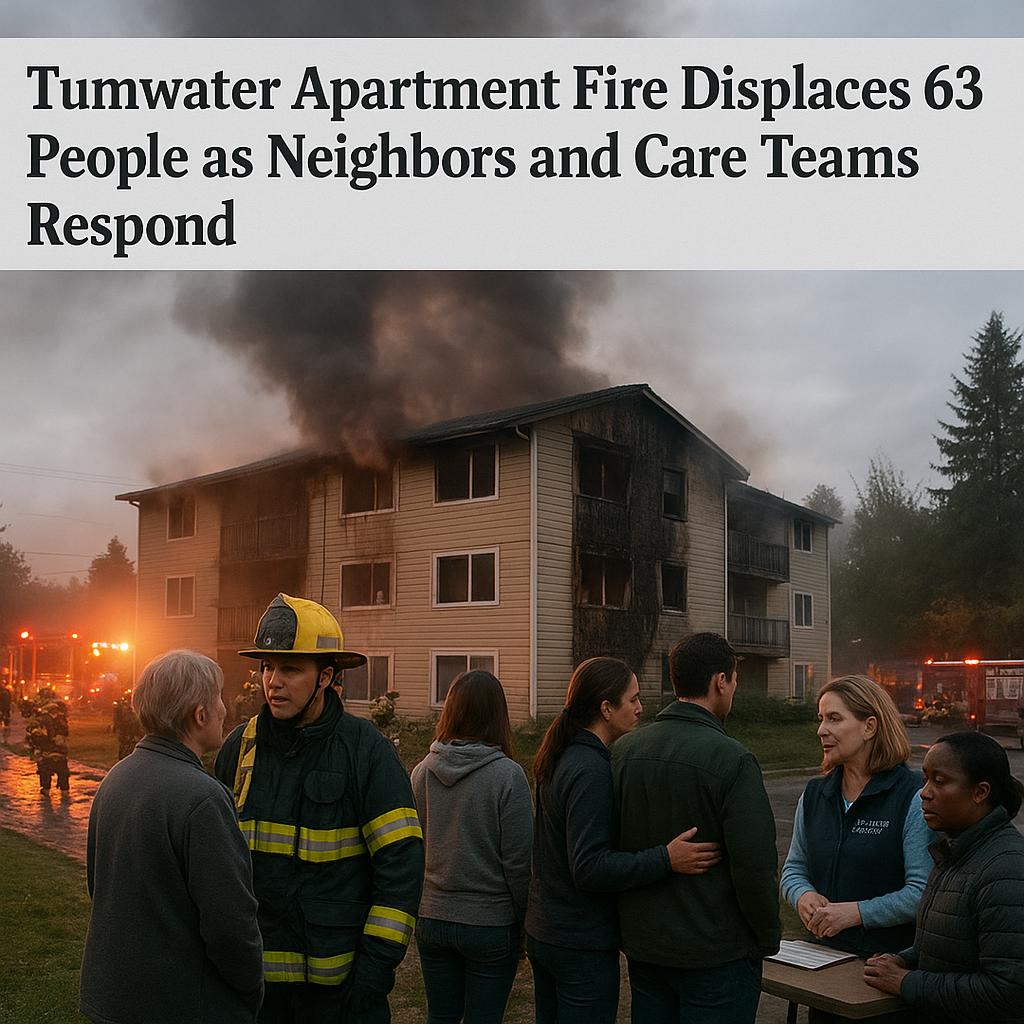
A fire at a roughly 30-unit apartment building on Tumwater’s Israel Road Southwest displaced 63 people, the American Red Cross reported. Firefighters rescued one resident from a second-floor balcony, and local organizations helped residents find shelter, supplies, and medical support. The cause was still under investigation.
What happened in the Tumwater apartment fire?
The fire damaged a roughly 30-unit apartment building on the 300 block of Israel Road Southwest in Tumwater, Washington. The building is across the street from Tumwater City Hall and fire department headquarters. The location places the incident near civic facilities, but the account does not say that those facilities were damaged or that their services were interrupted.
Dozens of firefighters responded at about 11:30 a.m. on Oct. 15, city spokesperson Jason Wettstein told The Olympian. Crews had the blaze extinguished by about 5:30 p.m. That six-hour span describes the reported response and suppression period; it does not establish when the fire began, how it spread, or what caused it.
The immediate toll was substantial even though no injuries were reported. Wettstein said about 30 units were damaged. The American Red Cross said fire, smoke, and water “left dozens of apartments uninhabitable” and displaced 63 people. Those details matter: a building can be unlivable even when flames have been put out, because damage from smoke and water can make apartments unsafe or unusable.
I read the clearest fact in this account as the gap between extinguishing a fire and restoring a home. Fire suppression ended that afternoon, but displaced residents still needed somewhere to stay, essential belongings, and—in some cases—medical supplies. The account does not specify how many residents returned later, how many units could be repaired, or how long relocation would last.
The cause was not established in the reported information. Wettstein said the fire department expected to complete its investigation by Oct. 30. That was a forecast, not a published finding, and no final determination is included here. It would be premature to assign blame or describe a cause without that result.
The human impact and the response
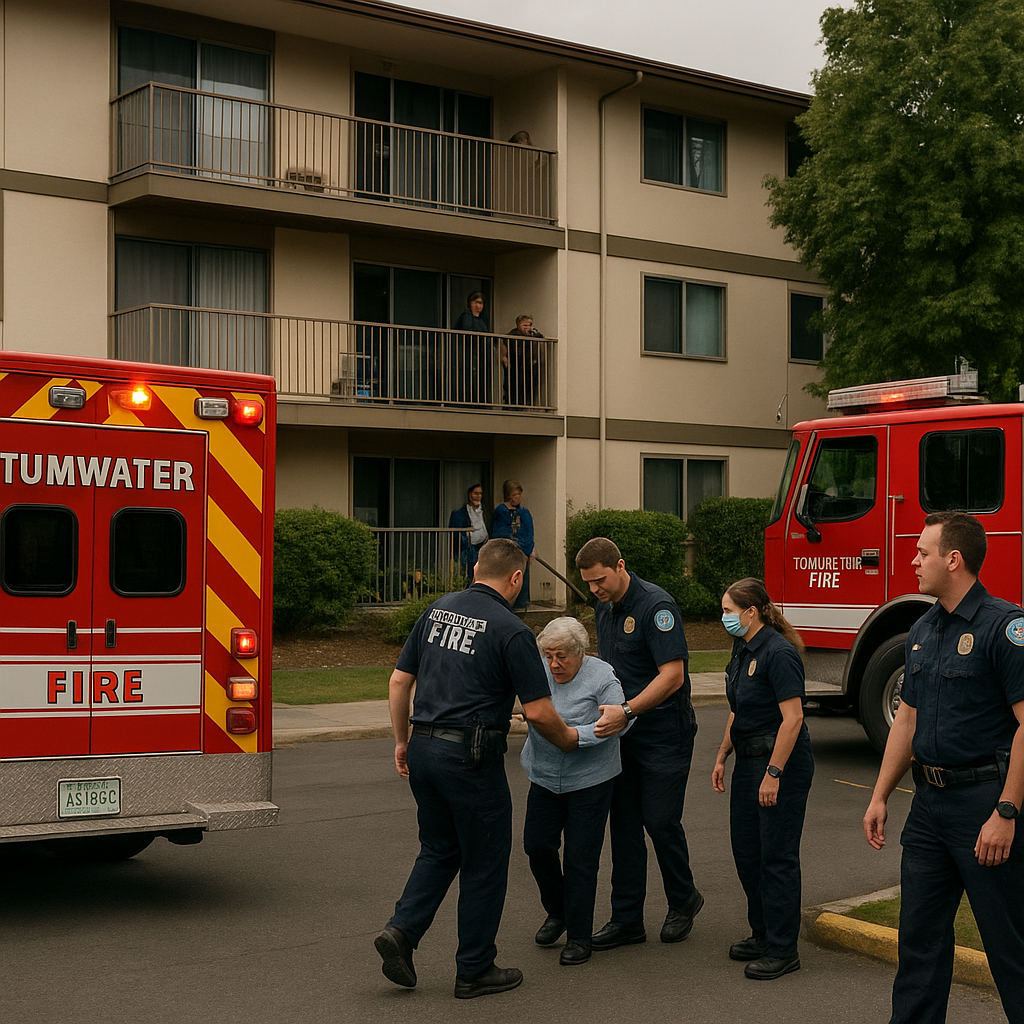
One rescue became a striking detail in the response. Deputy Fire Chief Shawn Crimmins previously said firefighters used a ladder to help a man get down from the second floor. The Red Cross identified him as Siegfried Glocker. According to the organization, Glocker noticed smoke rising along the side of the building, as well as smoke and flames outside his front door.
With his exit blocked, Glocker went to his balcony. The Red Cross said he lowered his dog, Chico, into the arms of a bystander before firefighters helped him descend by ladder. It was a narrow escape, but the account does not describe the man’s or dog’s condition after the rescue. No injuries were reported by Wettstein.
That distinction is worth keeping clear. The rescue was reported by fire officials and the Red Cross; details about the resident’s observations and his dog came from the Red Cross account. The reported sequence shows a resident seeking help, a bystander receiving the dog, and firefighters completing the ladder rescue. It does not tell us how long the man waited or what conditions firefighters encountered inside the building.
After the fire, Red Cross teams met with residents to assess needs and connect them with resources, including shelter, food, clothing, medicine, and pet supplies. The city said local organizations also assisted, among them Family Education and Support Services, FD CARES, and the Salvation Army. The account does not provide a breakdown of what each group supplied, how many people each served, or how long assistance continued.
Those limits do not diminish the importance of the work. Displacement can mean losing access to everyday necessities at once: a place to sleep, clean clothes, prescriptions, and supplies for a pet. An effective response depends on identifying those needs one person at a time, rather than assuming every household requires the same thing. That is practical care, and it recognizes residents’ dignity while their homes are unavailable.
Medical support for displaced residents
Providence St. Peter Hospital sent caregivers to the scene after a Tumwater battalion chief contacted the organization, according to a Providence news release. Dawn Green, a nurse manager for the Providence Swedish Mobile Health Clinic, said she was working with the clinic’s street medicine team when the request came in. She pivoted to the apartment complex and arrived in less than 15 minutes, the release said.
Over two hours, the team helped about a dozen residents whom the Red Cross had identified as having medical needs. Providence said the team helped order insulin, secure oxygen and an oxygen concentrator, and address medication needs. The account does not say whether every request was fulfilled at the scene, or describe residents’ diagnoses; it does show why health support can be part of a disaster response even when officials report no fire-related injuries.
Green described the work as “meeting people where they’re at” and providing urgent care to people without access to care. That phrase fits the practical problem described in the release: residents had been displaced, and some needed assistance maintaining access to medicine or medical equipment. For people who rely on regular medication or oxygen, a sudden move can interrupt routines even if they are physically unharmed.
The details also show how coordination worked in this instance. A battalion chief contacted Providence; a mobile health team responded; and the Red Cross had identified residents with medical needs. The available account does not explain how those organizations shared information or whether similar arrangements were formalized ahead of time. It does establish that responders connected residents with help beyond shelter and clothing.
Frankly, the measure of a response is not only how quickly crews put out a fire. It is also whether residents can obtain essential care while their homes are out of use. The Providence team’s reported work—helping with insulin, oxygen, and medications—makes that second part visible without suggesting that all needs were resolved.
Timeline of the reported response
- About 11:30 a.m., Oct. 15: Dozens of firefighters responded to the apartment complex on the 300 block of Israel Road Southwest, according to Wettstein.
- During the fire: Glocker moved to his balcony after noticing smoke and flames outside his front door, the Red Cross said. He passed Chico to a bystander, and firefighters used a ladder to bring him down.
- By about 5:30 p.m.: Firefighters had extinguished the blaze, Wettstein told The Olympian. The account does not say when residents were permitted to return or when the building was assessed for occupancy.
- After the fire: Red Cross teams assessed residents’ needs and connected them with resources. Local nonprofits also assisted, according to a city news release.
- During the response: Providence caregivers arrived in under 15 minutes after being contacted, then spent about two hours helping roughly a dozen residents with medical needs, according to Providence.
- By Oct. 30, as anticipated: The fire department expected to complete its investigation into the cause, Wettstein said. No final investigative result is included in the reported account.
The timeline helps separate two parts of the event: emergency action at the scene and the work that followed. The first involved firefighters controlling the blaze and assisting a resident. The second involved assessing housing and health needs, connecting residents to services, and supporting people whose apartments were uninhabitable.
I would be cautious about treating the timeline as a complete incident log. It gives several reported times and actions, but not the precise time of the first alarm, the number of responding units, the moment the rescue occurred, or the status of each apartment. Those details were not reported in the account.
Tumwater fire response and recovery: what the comparison shows
The account offers enough information to compare the immediate fire response with the recovery assistance that followed. It does not include data about another apartment fire, so a numerical comparison with a “competitor” incident would be invented. The useful comparison here is between the two phases of this event.
| Measure | Fire response | Resident recovery support |
|---|
| Main purpose | Suppress the fire and respond to immediate danger | Connect displaced people with housing, supplies, and medical help |
| Reported participants | Dozens of firefighters | Red Cross, local nonprofits, and Providence caregivers |
| Reported timing | Response began about 11:30 a.m.; blaze extinguished about 5:30 p.m. on Oct. 15 | Assistance followed the fire; Providence team arrived in under 15 minutes after contact and worked about two hours |
| Reported reach | One man was rescued by ladder; about 30 units were damaged | 63 people displaced; Providence team helped about a dozen residents with medical needs |
| Important unknowns | Cause, precise fire progression, and unit-by-unit damage | Length of displacement, final housing arrangements, and whether every need was met |
The table should not be read as a scorecard. The numbers describe different things: 63 is the reported number of people displaced, while about a dozen refers to residents the Providence team helped with medical needs. They are not competing counts, and the account does not say that the medical team served all displaced residents.
Here’s the kicker: extinguishing the fire is a clear milestone, but it does not answer the recovery questions residents face. The account confirms that dozens of apartments were uninhabitable and that services were offered. It does not report how long families needed temporary housing, whether insurance covered losses, or when repairs could begin.
What to know—and what remains unconfirmed
No injuries reported does not mean no serious consequences. Wettstein said no one was injured, but 63 people were displaced and dozens of apartments were described as uninhabitable. Physical injury is only one measure of harm. Losing access to a home, medication, or pet supplies can create urgent problems even without a reported injury.
The cause was not established in the account. The fire department expected to complete its investigation by Oct. 30. Until a finding is reported, claims about the origin or cause are speculation. The account also does not identify a final report or say whether the expected date changed.
Damage is not the same as a confirmed total loss. The city spokesperson said about 30 units were damaged, and the Red Cross described dozens as uninhabitable. That does not establish that every unit was destroyed, or that the full building was permanently lost. Repair status and occupancy decisions were not reported.
The rescue details are specific, not a full account of every resident’s experience. The Red Cross described Glocker’s escape with Chico, while fire officials described the ladder rescue. The report does not say whether other residents needed rescue or how every household left the building. Avoid turning one documented rescue into an assumption about all residents.
Fundraisers appeared, but their results are not stated. The account says multiple GoFundMe fundraisers were created to support displaced people. It does not identify organizers, verify the fundraisers, report how much money was raised, or explain how funds were distributed. People considering donations should check each fundraiser’s organizer, stated purpose, and updates rather than assume that every campaign has the same connection to residents.
Several organizations helped, but the total scale of assistance is unknown. The Red Cross, Family Education and Support Services, FD CARES, the Salvation Army, and Providence were named in the account. It does not provide a complete list of responders or a final count of people assisted by each group. A list of named organizations should not be mistaken for a full accounting of recovery work.
The responsible reading is simple: the fire displaced dozens, emergency crews rescued a resident, and local organizations responded to practical and medical needs. The cause, repair timeline, and long-term housing arrangements were not reported. Keeping those boundaries clear is not hair-splitting; it prevents rumor from being passed off as fact.
Frequently Asked Questions
How many people were displaced by the Tumwater apartment fire?
The American Red Cross reported that 63 people were displaced after fire, smoke, and water damage left dozens of apartments uninhabitable.
Was anyone injured in the fire?
Tumwater spokesperson Jason Wettstein told The Olympian that no one was injured. Firefighters did rescue one resident from a second-floor balcony using a ladder.
What caused the Tumwater apartment fire?
The reported account does not state a cause. Wettstein said the fire department expected to complete its investigation by Oct. 30; no final finding is included here.
What help was offered to residents?
The Red Cross connected residents with resources such as shelter, food, clothing, medicine, and pet supplies. Local nonprofits also assisted, and Providence caregivers helped about a dozen residents with medical needs, including access to insulin, oxygen, and medications.
Final Thought
This fire is a reminder that an emergency does not end when the flames are out. In Tumwater, firefighters extinguished the blaze, helped a resident escape by ladder, and left no injuries reported by the city spokesperson. But 63 people still faced displacement, while the condition of dozens of apartments made a return home impossible for at least some residents in the immediate aftermath.
The response described here joined public agencies, a humanitarian organization, nonprofits, and health caregivers. Each addressed a different need: immediate safety, temporary resources, community assistance, or access to medicine and oxygen. The account does not establish whether every resident received everything needed, nor does it provide the longer-term outcome. Those questions matter because recovery is measured in more than the hours crews spend at a fire scene.
There is also a basic responsibility in how this story is told. The cause remains unreported in the available account; the fundraisers’ results are unknown; and the duration of displacement is not specified. Filling those gaps with confident guesses would serve nobody, least of all the residents living through the consequences. Better to keep the known facts intact and give the people affected room to recover with dignity, fair access to help, and practical support.
The fire department’s investigation may clarify what happened. Until then, the clearest account is also the most useful: a major apartment fire displaced 63 people, a resident and his dog were rescued, and community organizations moved quickly to help with immediate needs.