Two U.S. service members were killed in Jordan. One is missing, and the strike is now part of a wider fight over U.S. forces, Iranian-backed militias, and the...
Two U.S. service members were killed in Jordan. One is missing, and the strike is now part of a wider fight over U.S. forces, Iranian-backed militias, and the growing risk of escalation in the Middle East.
Key Takeaways- U.S. Central Command says two service members died and one is missing after an attack in Jordan.
- Officials say Iranian-backed groups in the region have stepped up attacks on U.S. forces.
- Washington faces a hard choice: retaliate without widening the war, or hold back and invite more attacks.
- The missing service member keeps the story open, grimly, because the facts are still moving.
What is the attack in Jordan?
The attack in Jordan refers to a deadly strike on a U.S. outpost known as Tower 22, near the Syrian border, where U.S. Central Command said two service members were killed and another was reported missing. It happened in the shadow of repeated attacks on U.S. troops in the region, many of them tied to militias backed by Iran. The details matter, because this was not some random flare-up; it was part of a pattern that has been building for months.
Most coverage calls this a “retaliation cycle,” which is neat language and mostly useless. The real issue is simpler and uglier: armed groups keep testing the edge of U.S. patience, and U.S. officials keep trying to deter them without triggering a broader war. That is a thin rope to walk. I’ve covered enough conflict reporting to know that when politicians say they want “de-escalation,” they often mean “we want the other side to stop without us paying a price.” That is not how wars, or near-wars, usually work.
The attack also raises a moral point that gets buried under the tactical chatter. Soldiers are not chess pieces. They are people with names, families, and obligations. Catholic social teaching would call that the dignity of the human person; plain English calls it common decency. When a government sends troops into a tense border zone, stewardship is not a buzzword. It is a duty.
For background on the broader regional chain reaction, see coverage of Middle East conflict reporting from Reuters and the U.S. military’s own regional updates at U.S. Central Command. If you want the wider context of how Washington has responded to regional violence before, the recent pattern is also visible in major international reporting from The New York Times Middle East section.
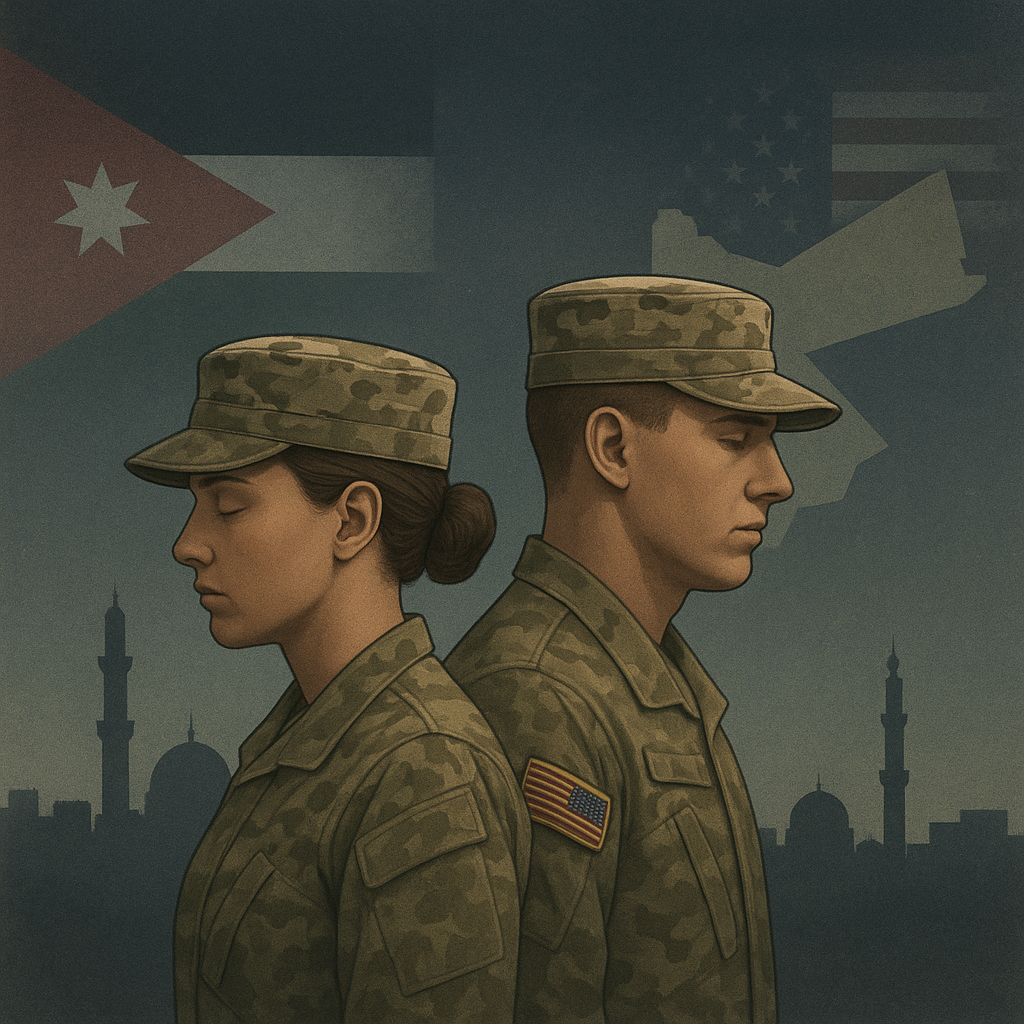
Core details and context
- U.S. Central Command said the attack occurred in Jordan, near the Syrian frontier, at a site used by U.S. forces supporting operations against ISIS.
- The U.S. said Iranian-backed militias were behind a broader wave of attacks on American positions across Iraq, Syria, and nearby areas.
- President Joe Biden and senior defense officials were under immediate pressure to respond, but any retaliation carried a risk of widening the conflict.
- Jordan’s role matters. It is a close U.S. partner, but its border geography puts it in a dangerous spot, exposed to spillover from Syria and Iraq.
- The missing service member changed the tone of the story. Death is final. Missing is uncertain, and uncertainty makes commanders, families, and reporters wait for bad news that may or may not come.
- Iran denied direct involvement in some of the militia attacks, which is the sort of denial governments always issue while everyone with a pulse understands the larger sponsorship structure.
- U.S. officials have said for months that attacks on their troops were unacceptable. Frankly, repeated warnings only matter if they are followed by action.
Here is the kicker: the story is not only about the attack itself, but about what American officials think deterrence means. If a state says it will protect its forces, then lets attacks keep landing with no clear cost, opponents learn something useful. If it strikes too hard, it risks dragging the region into a bigger war. That is why this news hit so hard. It exposes the ugly middle ground where policy, military limits, and politics collide.
The Biden administration has also had to weigh domestic politics. The public usually supports service members and dislikes ambushes. But it also dislikes open-ended wars, especially after two decades of Iraq and Afghanistan. That tension shapes every decision. No one in Washington wants to say the obvious thing out loud: the United States can defend its people, but it cannot control every militia cell or every cross-border launch site.
For readers tracking the geopolitical background, the attack sits inside a wider surge of regional instability. The war in Gaza has fed anger across the Middle East, and U.S. troops have become a target for groups seeking to punish Washington for backing Israel. That is the sort of chain reaction that diplomats pretend is temporary until it becomes their main problem.

Timeline and what actually happened
- U.S. forces were stationed at Tower 22, a small but strategically placed outpost in northeastern Jordan.
- A strike hit the base, leading to the deaths of two service members and leaving one missing.
- U.S. Central Command released the first official account and confirmed the attack was under investigation.
- Political leaders in Washington began discussing options, including direct military retaliation against militia targets.
- U.S. officials said the attack was linked to the broader campaign of harassment against American troops in the region.
- Regional actors watched for the response, because everyone knew the next move could either signal restraint or trigger escalation.
- Search and recovery operations continued for the missing service member, keeping the story painfully unfinished.
I read the first reports like I always do: slowly, then again, because the first official statement usually tells you what the government knows, and just as often what it does not want to say yet. The initial facts were enough to show the shape of the event, but not enough to settle the question that mattered most: was this a one-off strike, or a message?
Most likely it was both. That is how these things usually go. The attack takes lives, and it sends a signal. The signal is aimed at Washington, but also at Tehran, Baghdad, Damascus, and every militia commander thinking he can poke at U.S. forces without consequence.
The comparison below shows why this attack drew so much attention. It was not merely another exchange of fire. It hit U.S. personnel directly and raised the stakes in a way smaller drone launches often do not.
| Factor | Tower 22 attack in Jordan | Typical militia rocket/drone attack |
|---|
| Target | U.S. service members at a base | U.S. facility or nearby area |
| Casualties | Two killed, one missing reported | Often no deaths, sometimes injuries |
| Strategic effect | High, because of fatalities and location | Moderate, unless escalation follows |
| Political pressure | Very high on White House and Pentagon | Usually lower unless injuries occur |
| Regional risk | Elevated, because Jordan is a U.S. partner state | Serious, but often contained |
| Media impact | Immediate and sustained | Often brief unless Americans are hurt |
The contrast with Iran-backed harassment campaigns is stark. Many drone and rocket strikes are designed to be deniable, annoying, and persistent. This one crossed a line because American blood was spilled and the geography involved a partner country that is already walking a tightrope. That changes the diplomatic math.
If you want a broader military-policy lens, recent analysis in CNN World and operational context from The Associated Press Middle East coverage help show how these incidents fit into a longer pattern of low-level conflict.
Common misconceptions and what to know
One misconception is that this was somehow isolated. It was not. The attack came after a steady drumbeat of assaults on U.S. interests in the region, and the pattern matters more than the single event. People love isolated stories because they feel containable. Conflict rarely is.
Another bad take is that retaliation is simple. It is not. Airstrikes can punish, but they can also miss, kill the wrong people, or invite counterstrikes. I’ve seen too many officials talk like force is a tidy instrument. It isn’t. It is blunt, and sometimes it breaks things that cannot be fixed.
A third myth says the United States can just leave and the problem disappears. Maybe some threats would fade. Others would fill the vacuum. That is the part partisan commentary skips. The region does not become peaceful because Washington gets tired. Power abhors a vacuum, and armed groups know it.
Here is what nobody tells you: restraint is not the same as weakness, and strength is not the same as bombing something. Good policy has to protect service members, preserve alliances, and avoid treating civilian life as disposable. That last part should not be controversial, but in war talk, it often is.
The missing service member is also important in another way. News cycles encourage certainty, but families do not live in certainty. They live in waiting, prayer, calls, and updates that may arrive with no comfort in them. That is the human cost behind the headline. Any state that claims moral seriousness should recognize that reality before it reaches for its next talking point.
Frequently asked questions
What happened in Jordan?
U.S. Central Command said two U.S. service members were killed and one was missing after an attack on a U.S. position in Jordan near the Syrian border.
Who was responsible for the attack?
U.S. officials said Iranian-backed militias were behind the broader pattern of attacks on U.S. forces. Specific attribution can take time, and officials often wait for intelligence reviews before naming a precise actor.
Why is Tower 22 important?
Tower 22 is a strategically located outpost in northeastern Jordan used to support operations in the region, including counter-ISIS efforts. Its location makes it vulnerable to spillover from neighboring conflicts.
Will the United States retaliate?
The White House and Pentagon signaled that options were under review. Whether and how the U.S. responds depends on intelligence, political pressure, and the risk of widening the conflict.
Final thought
The hard truth is that this story is about more than one attack. It is about the cost of leaving American troops in a region where militias, states, and proxy forces all keep probing for weakness. That is not a neat policy problem. It is a human one. And if government exists for anything beyond speeches and ceremonies, it exists to protect life, tell the truth plainly, and act with enough restraint to avoid making grief worse.
That is where the real test lies. Not in the rhetoric. In the choices that follow.