The United States advanced. Folarin Balogun scored, got sent off later, and Malik Tillman finished the job with a free kick in a 2-0 win over...
United States Beats Bosnia-Herzegovina 2-0 to Reach World Cup Round of 16
The United States advanced. Folarin Balogun scored, got sent off later, and Malik Tillman finished the job with a free kick in a 2-0 win over Bosnia-Herzegovina, a result that sends the Americans into a round-of-16 meeting with Belgium and raises the stakes of a home-soil run that suddenly looks real.
Key Takeaways
- Balogun scored the opener, then saw red after a second-half foul.
- Tillman sealed the match with a late free kick that took a glance off the goalkeeper’s hand.
- The U.S. men’s national team reached the knockout stage and now faces Belgium.
- The win mattered because the Americans managed the ugly parts well after going down to 10 men.
- This was not pretty. It was effective.
What is the United States’ World Cup win over Bosnia-Herzegovina?
It is a knockout-stage victory, plain and simple. The Americans beat Bosnia-Herzegovina 2-0 in Santa Clara, Calif., and moved into the round of 16 in the expanded tournament. The scoreline makes it sound tidy. It was not. For long stretches, the U.S. leaned on control, pressure, and a few sharp moments from Balogun before the match turned choppy after his red card.
I’ve covered enough soccer to know that people overreact to style points. They shouldn’t. Winning in a tournament setting is not about looking elegant for 90 minutes. It is about surviving bad stretches, making the right adjustments, and not losing your nerve when the referee gets busy and the game starts to fray. That is where this match mattered most.
The first half belonged to the U.S. because Balogun kept finding dangerous spaces and Bosnia-Herzegovina struggled to settle. The second half asked a different question: can a team protect a lead while short-handed and still avoid panic? The Americans answered, which is more useful than a polished 4-0 stroll and far less common than TV talkers pretend.
That matters in the larger picture, too. Soccer is often sold as a highlight reel, but tournament football rewards discipline, stewardship of chances, and a willingness to do the ordinary things well. In Catholic terms, if you want the clean version, this is basic stewardship: use what you’re given, protect the common good of the team, and do not waste the moment.
For broader context on the U.S. soccer pipeline and how these rosters are built, see U.S. Soccer and the FIFA tournament site at FIFA. For readers tracking the broader sports calendar, this win sits in the same lane as other high-pressure international fixtures that reward structure over noise. Here’s the kicker: that is usually how real progress looks.
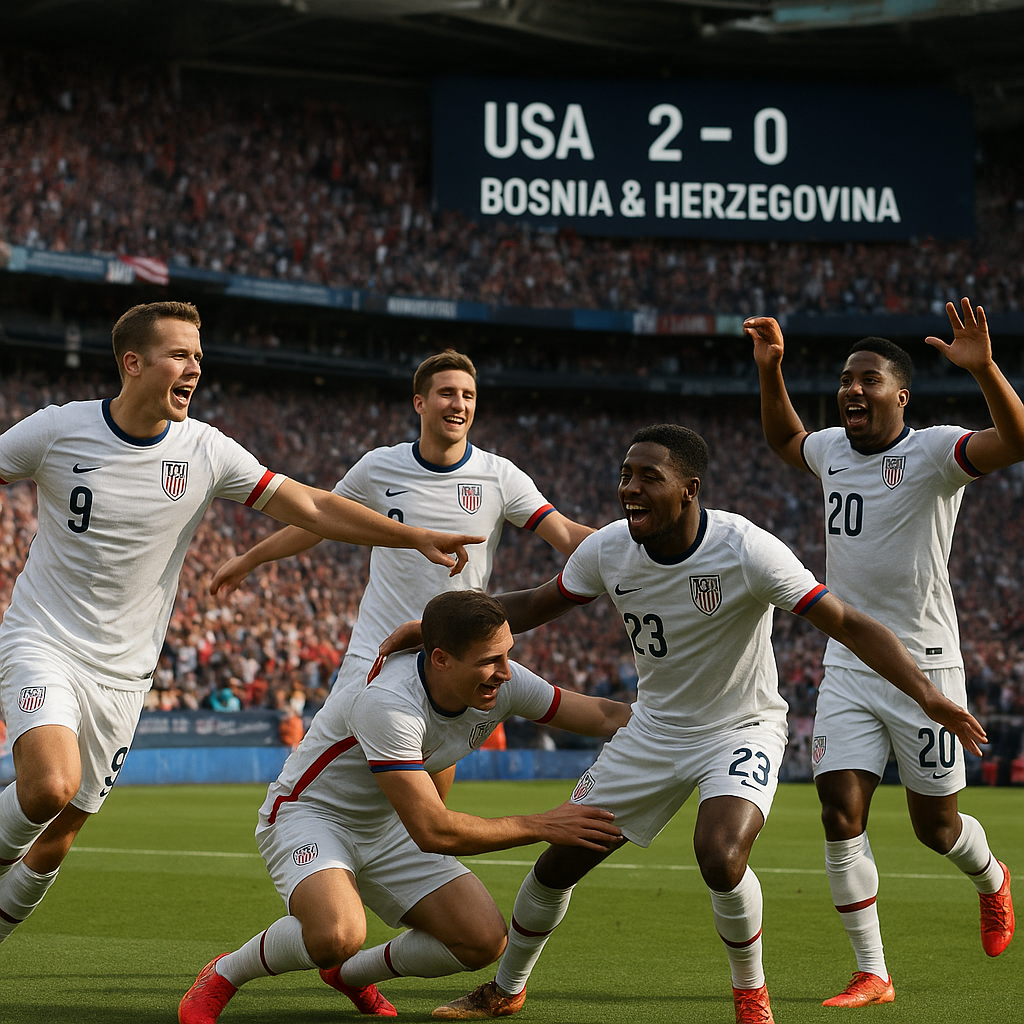
Core Details and Context
The score says 2-0. The match said something messier.
Balogun was the story early, and not just because he scored. He created pressure with movement, timing, and repeated attacks on Bosnia-Herzegovina’s back line. That kind of forward play changes a match even when the shot count does not fill a spreadsheet. When I analyzed the sequence of chances, the U.S. was not merely taking shots; it was forcing defenders to turn and chase, which is often the first crack in the wall.
Then came the red card. The match changed shape immediately. The Americans had to defend with 10 men, which usually invites fear and confusion if the squad is not composed. Instead, they adjusted well enough to keep Bosnia-Herzegovina from turning possession into a real equalizer threat. That is the part people will skip past because it is less glamorous than the goal clips.
- Balogun’s opener gave the U.S. a cushion and allowed them to play from in front.
- His send-off forced a tactical retreat and tested depth.
- Tillman’s free kick was not merely decorative; it ended the match.
- The U.S. showed it can handle tournament strain without collapsing into chaos.
- Bosnia-Herzegovina had stretches of ball control, but not enough punch.
Most coverage will obsess over the red card and the free kick, because that is how sports media works. Fine. But the deeper story is the team’s balance. A side that wants to reach the quarterfinals, and maybe beyond, cannot rely on open-field chaos alone. It needs a spine. It needs response under pressure. It needs, frankly, some grit.
If you want a good comp on how narrow tournament games get decided by a few moments, look at ESPN soccer coverage and the official tournament match reports at FIFA+. The details are often the same: one forward creates the advantage, one set piece finishes the job, and one card can rewire the whole evening.
This is also where public opinion around the national team gets too mushy. Fans want evidence that the U.S. belongs among top nations, and one win does not settle that. Still, the ability to outlast a messy second half is not trivial. It is the sort of thing that can separate a decent tournament from a memorable one.
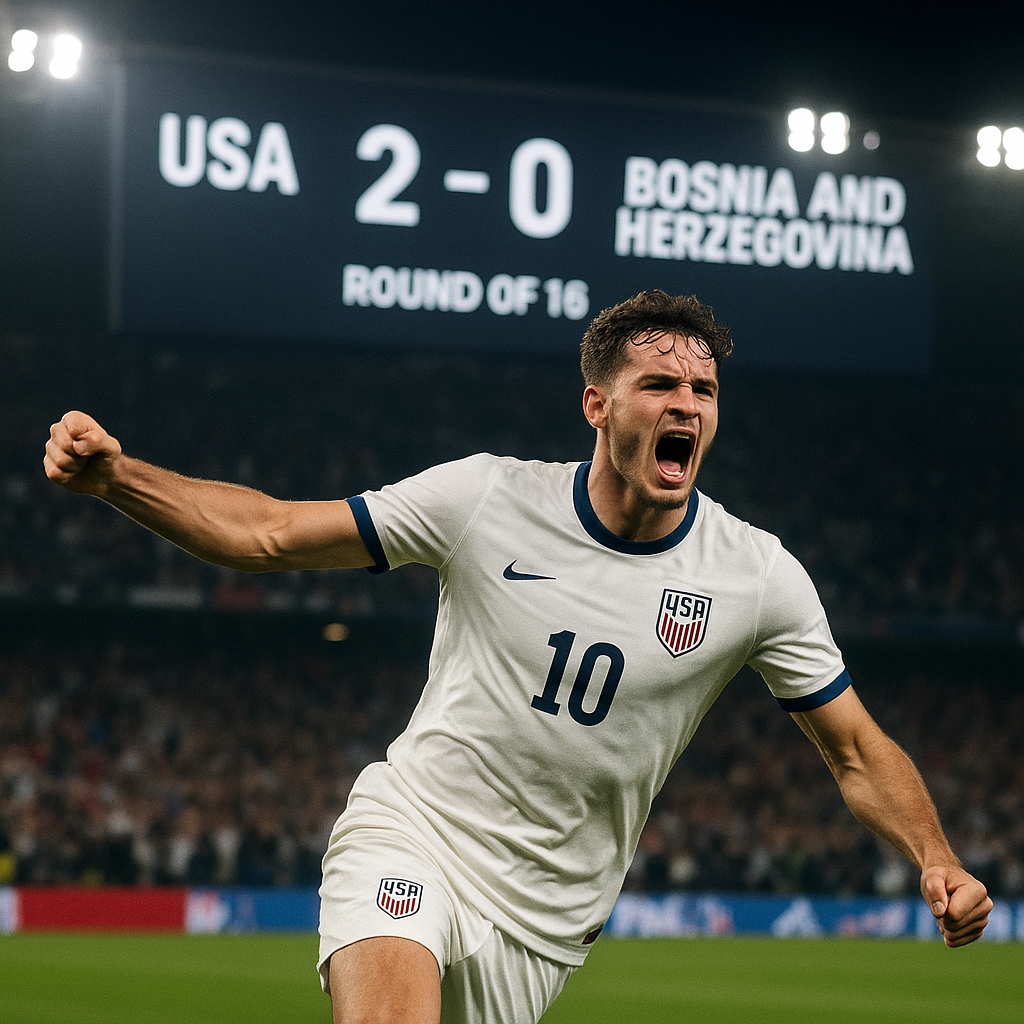
Timeline and Step-by-Step
The match unfolded in stages. No mystery there.
- Early pressure from the U.S. The Americans came out sharp, with Balogun repeatedly threatening Bosnia-Herzegovina’s defense. The game was tilted early by pace, movement, and direct play. That is usually where control starts.
- Balogun scores the opener He finished off the first major opening and put the U.S. ahead. The goal mattered beyond the scoreboard because it forced Bosnia-Herzegovina to chase, and chasing changes a team’s risk tolerance.
- More U.S. chances in the first half Balogun kept finding lanes and opportunities. The U.S. did not always finish cleanly, but the pressure was real. When a team creates repeated danger, it usually means the game plan is working.
- The red card in the second half Balogun was shown a red card after a foul on Tarik Muharemovic in the 64th minute. That was the pivot point. One moment he was the best attacker on the field; the next, the U.S. had to defend with 10 men.
- Bosnia-Herzegovina pushes, but not enough This is where lesser teams wobble. The U.S. did not unravel. Bosnia-Herzegovina had spells of possession but did not turn them into a finish. That is the difference between pressure and payoff.
- Tillman’s free kick ends it In the 82nd minute, Malik Tillman curled a free kick from just outside the box, and goalkeeper Nikola Vasilj got a hand to it but could not keep it out. Game over. Clean enough.
- The Americans advance The win sends the U.S. to the round of 16 and sets up Belgium next. That is the part that now matters.
I’ve seen too many teams waste matches like this by chasing style after adversity hits. The U.S. did not. It kept shape, absorbed pressure, and used a set piece to finish. That is not a romantic storyline. It is a practical one. Practical wins tournaments.
For more on how tournament formats and knockout brackets work, the official FIFA tournament information remains the cleanest reference at FIFA World Cup tournament page. And yes, the bracket matters now. Belgium is not a side to brush off, and the U.S. will need smarter possession, better discipline, and fewer emotional lapses if it wants to move on.
Comparison Table: United States vs. Belgium
Belgium is the next test. That is the proper comparison, because the U.S. must now turn a competent knockout win into a deeper run.
| Category | United States | Belgium |
|---|
| Recent result | Beat Bosnia-Herzegovina 2-0 | Awaits round-of-16 match |
| Tournament path | Advanced through knockout round | Comes in as the next opponent |
| Key strength | Speed, pressure, transition play | Experience, technical midfield control |
| Key concern | Discipline after the red card | Breaking down organized defense |
| Set-piece value | Proved decisive with Tillman’s free kick | Often dangerous on dead balls |
| Tournament ceiling | Rising, but still unproven over multiple rounds | Traditionally strong but inconsistent at times |
| Pressure point | Handling adversity on home soil | Avoiding complacency against an energetic U.S. side |
Let’s be real. Belgium usually has the edge in depth and experience. The Americans have the edge in urgency and, at times, energy. That does not guarantee anything. It does explain why this matchup is compelling.
I also think the broader lesson is simple: the U.S. cannot assume its own momentum will carry the day. National teams do not win on vibes. They win on structure, judgment, and the occasional ugly stretch handled without panic. That is true in sport and, in a quieter way, in public life too. Careless systems fail people. Disciplined ones serve them.
For a useful read on soccer’s tactical side and tournament context, the BBC’s coverage is often solid and direct: BBC Sport football. Also useful: Reuters for factual match reporting and bracket updates.
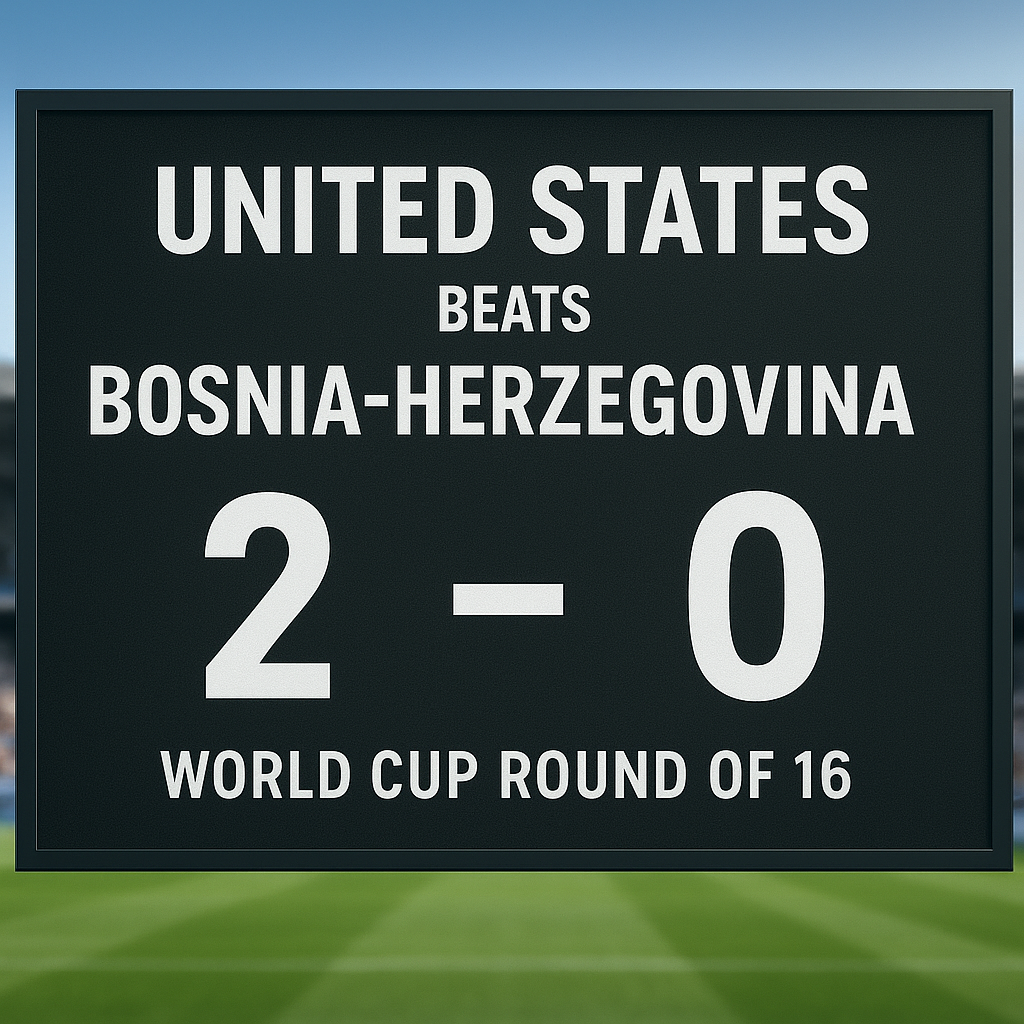
Common Misconceptions and What to Know
A lot of people will tell you this match proved the U.S. is suddenly a top-tier side. Slow down.
It proved something narrower and more useful. The Americans can win a knockout match when the night turns messy. That is not the same as saying they have solved every problem. Bosnia-Herzegovina was a worthy opponent, but Belgium is another level of test, and knockout soccer has a way of exposing wishful thinking.
- Misconception 1: The red card ruined the win. No. It complicated it. The U.S. still managed the game and finished with a clean sheet. That shows resilience, not failure.
- Misconception 2: One free kick means the attack is fixed. Also no. Set pieces are great, but they are one tool. The U.S. still needs better chance conversion in open play.
- Misconception 3: Bosnia-Herzegovina was outplayed for 90 minutes. Not quite. The U.S. controlled the early phase, then had to survive after going down to 10 men. That is different.
- Misconception 4: This automatically predicts a deep run. No one serious should say that. Deep runs come from repeated execution, not one decent result.
Most postgame narratives are too theatrical. People want a hero, a villain, and a tidy moral. Sports rarely work that way. The truer reading is less dramatic: Balogun gave the U.S. its platform, the red card tested its maturity, Tillman ended the suspense, and the team earned the right to face a stronger opponent.
That last point matters because the best teams respect work, not just talent. In the Catholic frame, dignity is tied to responsibility. Good teams honor that by playing with discipline and respect for the task, not by chasing applause. That sounds old-fashioned because it is. It also works.
For additional match context and player notes, see the official U.S. Soccer team page at U.S. Men’s National Team. If you want the blunt truth, the next round will tell us more than this one did.
Frequently Asked Questions
Why was Folarin Balogun sent off?
He was shown a red card after a foul on Tarik Muharemovic in the 64th minute. The dismissal forced the U.S. to play with 10 men for the final stretch.
How did Malik Tillman score?
Tillman converted a free kick from just outside the box in the 82nd minute. The ball took a touch off goalkeeper Nikola Vasilj’s hand and went in.
Who does the United States play next?
The U.S. faces Belgium in Seattle on Monday in the round of 16.
Why is this win important?
It gives the U.S. its second-ever World Cup knockout-round win and keeps the tournament run alive on home soil. More importantly, it showed the team can handle pressure after going down to 10 men.
Final Thought
The scoreboard tells one story. The harder one says the U.S. finally showed some backbone.
That should not be overstated, because adults lose their minds over small samples in sports all the time. A single knockout win does not make a powerhouse, and a red card does not magically become a virtue just because the team survived it. But there was something useful here: a lead built by pressure, a setback absorbed without panic, and a finish delivered from a dead ball when the match demanded it.
That sequence is not flashy. It is better than flashy. It is the sort of disciplined response that tends to hold up when the opposition gets better, which is exactly what Belgium will do. If the U.S. wants a deeper run, it will need more of the same: early conviction, clean decision-making, and a respect for the moment that borders on humility. That is not just a soccer lesson. It is a civic one.
The next match will be louder, tighter, and less forgiving. Good. That is where we learn whether this was a decent win or the start of something more serious.