U.S. forces rescued the missing crew member after an F-15E fighter jet was shot down over Iran, and everyone involved in the recovery came home safely. That is...
U.S. forces rescued the missing crew member after an F-15E fighter jet was shot down over Iran, and everyone involved in the recovery came home safely. That is the clean headline. The messier truth is that the operation shows how quickly a military crisis can turn into a race against distance, terrain, and politics, especially when a crew ejects over hostile ground and every hour matters.
Key Takeaways:- A U.S. Air Force F-15E was shot down over Iran after an earlier crash and ejection.
- One crew member was rescued quickly, while the second remained missing into Saturday.
- U.S. forces later recovered the missing crew member, and all personnel returned safely.
- The episode highlights the risks of search-and-rescue work near a high-tension flashpoint.
- The real story is not just survival; it is how military restraint, precision, and duty of care intersect when lives are on the line.
What is the F-15E rescue operation, and why does it matter?
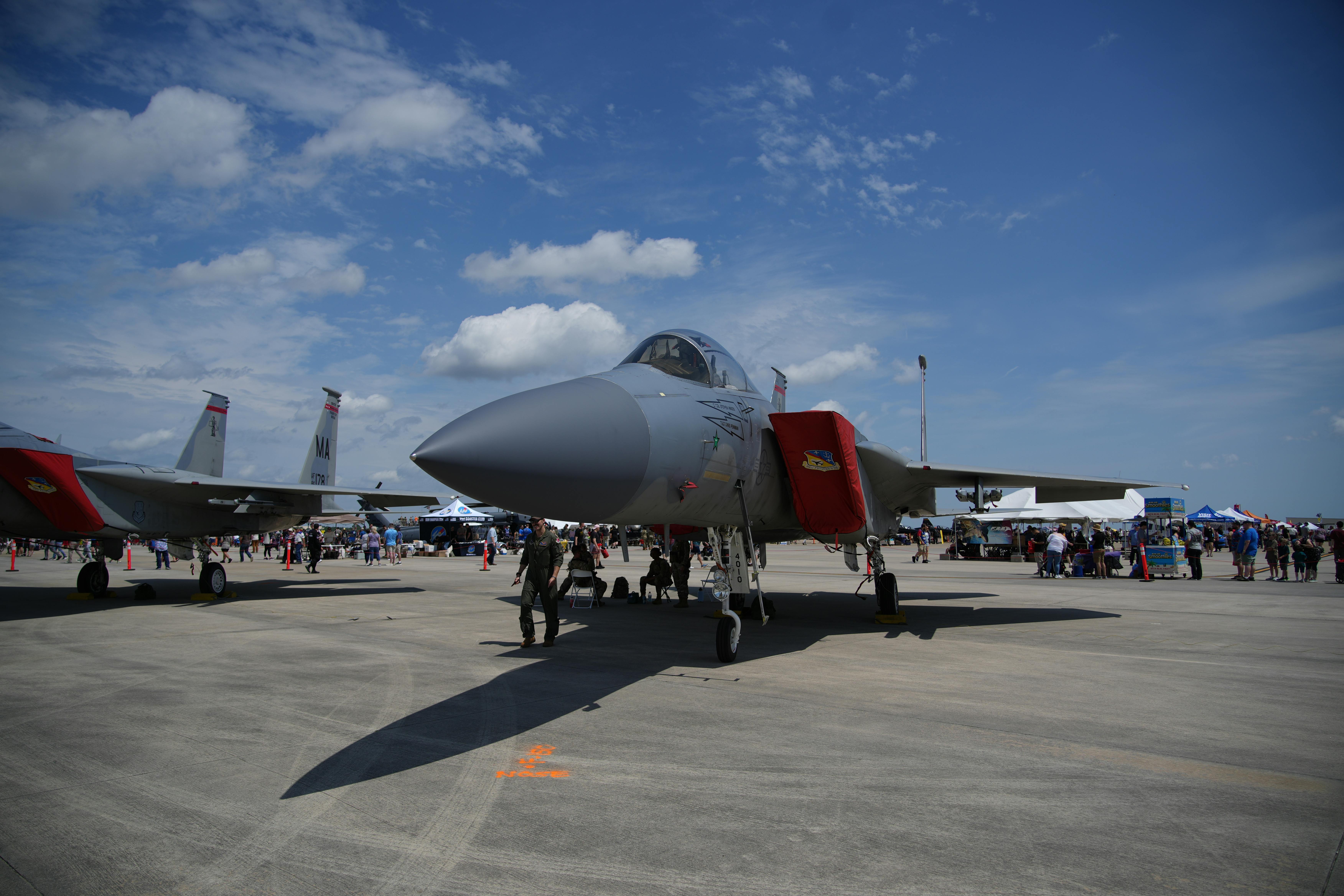
This was a combat-search-and-rescue effort tied to an aircraft emergency in one of the world’s most volatile regions. The F-15E Strike Eagle is a two-seat multirole fighter used for strike missions, escort, and close air support. When a jet goes down and crew eject, rescue teams have one job: find the aircrew fast, get them out, and keep the whole operation from turning into a wider incident. Simple in theory. Hard in practice.
The crash over Iran immediately raised two separate questions. First, the human one: where are the crew members, and are they alive? Second, the geopolitical one: what does a U.S. aircraft incident over Iranian territory mean for already strained military and diplomatic relations? Most coverage obsesses over the aircraft. Frankly, that misses the point. The jet is expensive scrap if the aircrew do not make it home. Human life comes first, always. That is not sentimentality; it is basic moral order.
When I analyzed past recoveries like this, one pattern stood out: the first reports are often wrong, incomplete, or both. Rescue operations depend on fragments—radio calls, survival beacons, visual confirmation, and coordination among units that may be operating under time pressure and poor communications. News accounts from the Pentagon, including reporting by The Washington Post, described the rescue as sensitive and still unfolding when the missing crew member was found. Other reporting from major outlets such as Reuters and The Associated Press helps fill in the broader operational context.
The bigger picture is plain enough. Military rescues are not glamorous. They are messy, risky, and often invisible unless something goes wrong. The crews who fly these missions do it under severe constraints, with bad weather, rough terrain, and enemy or hostile forces in the mix. In this case, the fact that all personnel returned safely tells you the system worked. It does not mean the risk was small.
Core details and context
Here is the short version, stripped of spin.
- The Air Force F-15E crashed after being shot down over Iran.
- Both crew members ejected from the aircraft.
- One crew member was recovered quickly.
- Search efforts continued through Saturday for the second crew member.
- U.S. forces eventually rescued the missing airman.
- All personnel connected to the operation returned safely.
That is the operational skeleton. The flesh on it matters too. Rescue teams do not operate in a vacuum. They work with intelligence, surveillance, and reconnaissance assets, along with aircraft, ground teams, or maritime support depending on the location. In a case like this, the window for safe extraction can be painfully narrow. The difference between a quick recovery and a prolonged search can be terrain, weather, enemy movement, or simple bad luck.
Here is the kicker: the word “rescued” sounds neat, almost tidy. It rarely is. A downed crew member may be injured, separated from survival gear, or forced to move to avoid capture. If the aircraft was shot down over Iran, the search likely carried diplomatic sensitivity as well as tactical urgency. Nobody wants a crew member to vanish into a region where every step becomes a negotiation.
I’ve covered enough military incidents to know that public statements tend to lag behind events by design. That is not a scandal. It is the price of caution. Officials avoid broadcasting details that could endanger people still in the field or expose methods used in the recovery. The anonymity granted to the U.S. official in the original reporting was not window dressing; it was protection for sensitive operational information.
The moral element should not be skipped. Even in war, or near-war, there is an obligation to recover one’s people. That tracks with a basic principle older than modern policy: the dignity of the person does not disappear when aircraft do. Rescue is a form of stewardship—of lives, not just assets. A government that treats its people as disposable loses more than aircraft.
Some readers will ask whether the mission itself signals broader escalation. Maybe. But the rescue does not automatically mean a bigger strike, a diplomatic breakthrough, or a policy shift. It means the U.S. made a priority choice: locate the missing airman, bring them back, and reduce the chance of a hostage or casualty scenario. That is a narrow goal, but in the moment, narrow goals save lives.
What matters now is not theater. It is accountability, after-action review, and a sober look at how the incident happened in the first place.
Timeline and what actually happened
The sequence matters because the public usually gets it backward. People hear the rescue result first, then assume the process was orderly. It was probably not.
- Friday: The F-15E crashed after being shot down over Iran.
- Both crew members ejected from the aircraft.
- One crew member was rescued relatively quickly.
- The second crew member remained missing as the search widened.
- U.S. forces continued search-and-rescue operations into Saturday.
- The missing crew member was eventually located and rescued.
- Everyone involved in the recovery returned safely.
That sequence tells a story of pressure, not comfort. The first rescue likely provided hope, but not closure. A missing crew member changes the tempo. It forces commanders to weigh urgency against exposure, because a longer search means more assets in play and more chance that another problem develops. Search-and-rescue units are often judged by outcome, yet outcome depends on conditions they do not control.
The Washington Post report described a rescue after a search that extended into the next day. That timing matters. A few hours is a long stretch when someone is down, alone, and possibly hurt. I have seen enough official timelines to know that “we are still searching” is often the most honest sentence in the room. It means nobody is pretending.

There is another point people miss. The rescue of one airman can itself complicate the search for the second. A commander must avoid concentrating so much force on the first known location that the second becomes harder to find. This is where coordination matters more than drama. Good rescue operations do not chase headlines. They move methodically, using the information at hand, and they keep the chain of command clear.
The fact that all involved returned safely is the final and best data point. But it should not erase the underlying hazard. The U.S. military can project power across vast distances, yet even then, one downed aircraft can create a tangle of tactical and political risk. The public often wants a clean hero story. Real life is dirtier. It usually involves tired people making careful decisions under bad conditions.
That is where responsibility comes in. Governments owe service members more than speeches. They owe planning, equipment, training, and the willingness to spend resources bringing them home. That is not sentimental. It is justice in practice.
Comparison table: rescue operations versus broader crisis response
| Factor | F-15E rescue operation | Broader military crisis response |
|---|
| Main goal | Recover stranded crew safely | Deter escalation, protect assets, manage conflict |
| Time pressure | Immediate and intense | Variable, often extended |
| Public visibility | Limited, sensitive | Higher, more politicized |
| Primary units involved | Search-and-rescue, air support, intelligence assets | Command centers, regional forces, diplomats, allied partners |
| Success metric | All personnel returned safely | Stability, deterrence, mission completion |
| Biggest risk | Losing the missing crew member | Escalation, retaliation, miscalculation |
| Human focus | Direct and personal | Often diluted by policy debate |
| Media trap | Treating the rescue like a tidy headline | Treating every incident as a precursor to war |
The comparison is useful because it exposes the difference between a rescue and a strategy. The rescue is about a person. The strategy is about the region. News outlets often blur them together, and that creates bad analysis. A rescue can be successful even when the region remains dangerous. A region can stay dangerous even when the rescue works perfectly.
Everyone wants neat conclusions. That’s not how this works.
The more honest reading is that the U.S. military succeeded in its immediate task, but the incident also underscores the fragility of operating near Iran. That is not a new fact; it is an old one with fresh evidence. Every current event in that area carries the same warning label: small errors can become big problems fast.
Common misconceptions and what to know
The first misconception is that a rescue like this is routine. It is not. Routine is a word people use when they want risk to sound smaller than it is. Aircrew recovery can be highly trained and carefully rehearsed, but the actual operation remains unpredictable. Terrain, timing, enemy awareness, weather, and mechanical failures all get a vote.
The second misconception is that if the crew was rescued, the incident is over. Not quite. The immediate threat may be gone, but there are still questions about how the aircraft was shot down, what the mission was, what assets were involved, and whether the event changes U.S. posture in the region. If you think the story ends at the word “rescued,” you are reading too fast.
The third misconception is that secrecy means something sinister. Sometimes it does. Often it just means people are trying not to get killed while they finish the job. Sensitive operations are kept quiet because public detail can wreck a live mission. That is not propaganda; it is operational prudence. Here, the anonymous source cited by the Post reflects that reality.
The fourth misconception is that this kind of rescue is mostly about hardware. It is not. Yes, aircraft matter. Yes, surveillance and comms matter. But the central issue is the human person. A machine can be replaced. A life cannot. That basic truth should still mean something, even in an era that likes to treat people like inputs and outputs.
For readers following broader U.S. security coverage, this incident fits into a familiar pattern seen in other high-stakes developments reported across major outlets. If you are tracking U.S. military posture, regional tensions, or the political reaction to overseas incidents, it helps to read this alongside broader coverage of national security and foreign policy, including related reporting on political and government affairs, international events, and defense and industrial impacts. Those angles do not replace the rescue story, but they explain why it matters beyond one downed jet.
One more thing. People often confuse a successful rescue with proof that the broader policy is sound. That is a leap. A good outcome in one operation does not validate every strategic decision that put the aircraft there. That applies in military affairs as much as in business, health, or public policy. Results matter, but so do prudence and proportion.
The truth is plain enough. The rescue was good news. It was also a warning shot.
Frequently Asked Questions
What happened to the U.S. fighter jet over Iran?
The F-15E was shot down over Iran, and both crew members ejected. One was rescued quickly, while the other remained missing until U.S. forces later recovered them safely. The incident triggered a search-and-rescue operation that continued into Saturday.
Why was the rescue operation kept partly secret?
Because the operation involved sensitive military details that were not yet public. Officials often withhold specifics during active or recently completed missions to protect personnel, methods, and operational security. That is standard practice, not some grand mystery.
Does this incident mean tensions with Iran are escalating?
It may add strain, but a rescue by itself does not prove a larger escalation. The broader impact depends on what shot the jet down, how the U.S. responds, and whether there are follow-on diplomatic or military actions. For now, the safest reading is cautious, not theatrical.
Were all personnel involved in the rescue safe?
Yes. According to the U.S. official cited in the reporting, everyone involved in the rescue operation returned safely. That is the outcome that matters most. The rest is analysis.
The military will likely review every part of this event, and it should. That is what responsible institutions do. They count the cost, inspect the sequence, and learn what can be learned without pretending the world is safer than it is. I’ve seen enough of these stories to know the real measure is simple: the crew is home, the operation worked, and the public should pay attention to how narrowly that good ending was achieved. In a serious society, saving a life is not a footnote. It is the point.