Washington State Ferries warned that some routes may go out of service because it does not have enough qualified crew. That is not a minor scheduling hiccup...
Washington State Ferries Warns Routes Could Go Dark as Crew Shortages Bite
Washington State Ferries warned that some routes may go out of service because it does not have enough qualified crew. That is not a minor scheduling hiccup. It is a public-service failure in slow motion, and it hits commuters, island residents, freight haulers, and the state budget at the same time. The problem is not just staffing counts. It is training, certification, retention, and the ugly math of a system that cannot simply stamp out skilled mariners overnight.
Key Takeaways
- Washington State Ferries says routes could be out of service because of a lack of qualified crew.
- The shortage is about more than headcount; it involves training pipelines, licensing, retention, and fatigue.
- Service cuts would ripple through commuter schedules, emergency access, tourism, and local commerce.
- The state has known about ferry workforce strain for years, but the fixes are slow, expensive, and politically awkward.
- The real issue is stewardship: a public system has to treat workers fairly and keep essential transportation reliable for the common good.
What is Washington State Ferries warning about?
Washington State Ferries, the largest ferry system in the United States, runs critical marine routes across Puget Sound and to the San Juan Islands. When it says routes may go out of service because of a lack of qualified crew, it means some boats may not have enough properly trained and certified workers to sail safely and legally. That is different from having a few empty shifts on a spreadsheet. A vessel needs the right mix of licensed deckhands, engineers, mates, captains, and support staff. Miss one link, and the boat stays tied up.
Frankly, this is what happens when a system runs lean for too long. People hear "staffing shortage" and think it means someone forgot to post a job ad. It rarely does. The maritime labor pool is limited, the training takes time, and the work is hard on family life. I’ve covered public-service breakdowns long enough to say this much: the real bottleneck is often not money alone, but the patient, messy business of building a workforce that can actually do the job.
The ferry system matters because it is not a luxury line. For many communities it is a bridge, just made of steel and water. When routes are canceled, residents lose access to work, school, medical appointments, and basic commerce. Freight delays hit small businesses. Tourists grumble. Islanders make contingency plans. And the state, which has a duty to steward public resources wisely, gets forced into expensive emergency patches.
If you want a broader picture of how transportation systems buckle under pressure, the federal conversation around transit labor and infrastructure gives useful context. Reports from the American Public Transportation Association and coverage from major outlets like The New York Times and The Seattle Times have repeatedly shown that labor and reliability are inseparable. One cannot be fixed while ignoring the other.
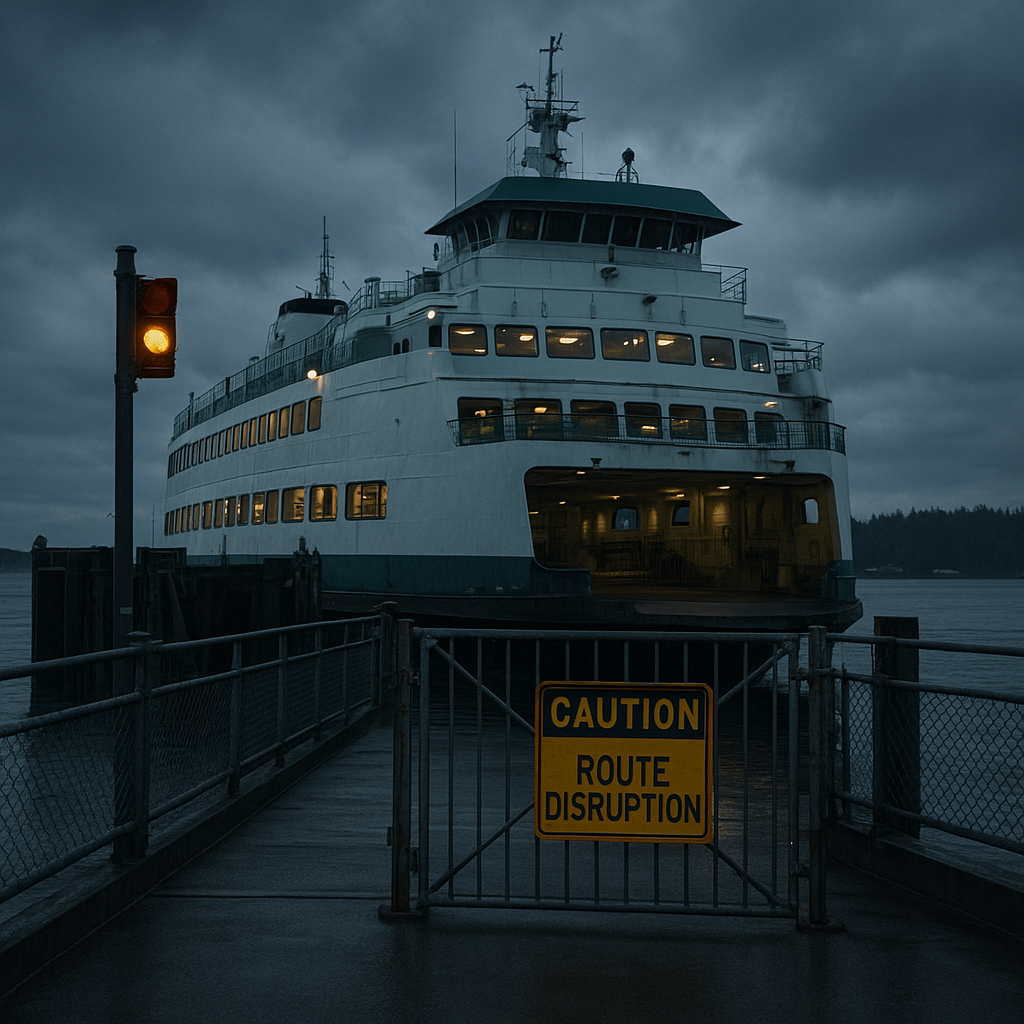
Core details and context
The shortage is not just about recruiting bodies. It is about qualified bodies. That distinction matters.
- Certification takes time. Maritime jobs require specific credentials, sea time, and training. A warm body cannot replace a licensed operator.
- Retention remains a problem. Experienced workers can leave for better schedules, higher pay, or less punishing assignments.
- Fatigue is real. Ferry operations run early, late, and in bad weather. That wears people down.
- The system is aging. Older vessels and terminals need more maintenance, more backup planning, and more specialized crews.
- Contingency service is fragile. One missed assignment can force route reductions or cancellations.
Here’s the kicker: public discussion often treats maritime staffing like a one-week emergency. It is not. It is a pipeline issue that compounds over years. When training slots are too few, when classes fill slowly, and when seasoned workers retire faster than replacements arrive, the problem becomes structural. I’ve seen this pattern before in transit, health care, and municipal services. The scoreboard shows an event; the back office shows a chronic wound.
There is also a geographic trap. Washington’s ferry network serves communities that cannot simply hop on a highway around the water. The cost of a cancellation is therefore not distributed evenly. Someone in Seattle may shrug and take another route. Someone on an island cannot. That is where policy gets real, because justice is not abstract when a missed sailing means a missed dialysis appointment or a lost day’s pay.
The state has tried fixes before: wage adjustments, recruitment pushes, training investments, and service reconfiguration. Some help. None are magic. And that should be said plainly. Government cannot wish away labor shortages with a press release. It has to do the slow work of recruiting, training, retaining, and respecting the people who keep the boats moving.
The broader maritime labor market is also tight. Ports, shipping firms, tug operators, and other marine employers compete for the same skill sets. That means Washington State Ferries is not just competing with its own past. It is competing with private employers and other public agencies for scarce talent. The Maritime Administration has long warned about workforce development challenges across the marine sector, and local coverage from KING 5 has shown how those warnings hit home in daily service disruptions.
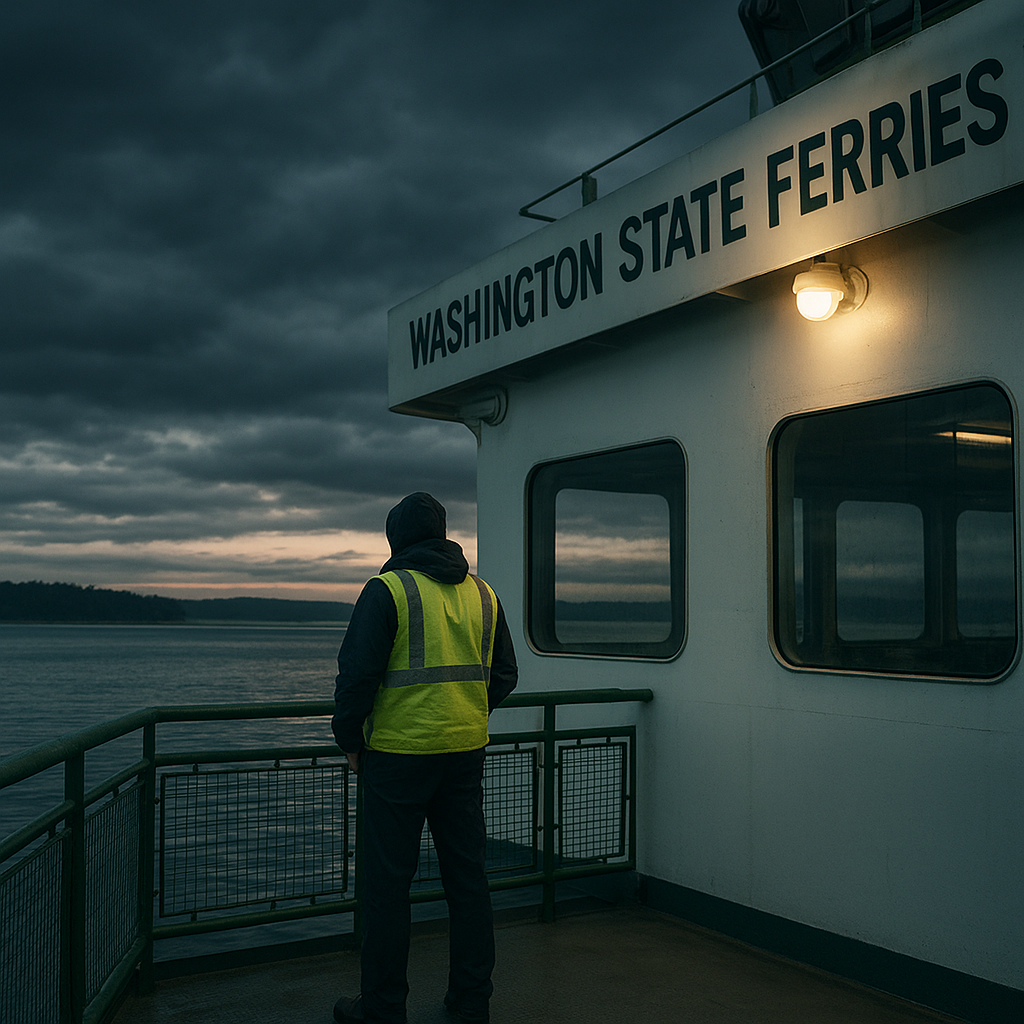
Timeline and what actually happened
- Years of strain built up. Washington State Ferries faced rising maintenance needs, staffing churn, and service reliability issues long before this warning. The system has been under pressure for years, not weeks.
- Training bottlenecks narrowed the pipeline. Qualified crew do not materialize instantly. Licensing, onboard experience, and safety drills take time, and the pipeline has not kept up with demand.
- Operational gaps became more visible. When enough workers retire, transfer, or burn out, routes become vulnerable. A few vacancies can suddenly mean a whole sailing is at risk.
- Monday morning’s warning made the risk public. Washington State Ferries said routes may be out of service because of a lack of qualified crew. That is the kind of statement agencies make when they need riders, lawmakers, and the public to understand the seriousness of the gap.
- The consequences spread fast. Riders begin checking schedules obsessively. Businesses adjust deliveries. Island communities brace for delays. The political temperature rises.
- The response becomes a policy test. The state must decide whether to invest more heavily in training, improve retention, alter schedules, or accept reduced service. Each choice has tradeoffs.
When I analyzed past ferry disruptions, the pattern was always the same: officials emphasize that safety comes first, which is correct, but riders mostly want honesty and a workable plan. They do not need spin. They need boats. If a route is going to miss sailings, say so early. If the shortage is worse than expected, admit it. People can handle bad news better than vague assurances.
The timeline also shows a deeper truth. Public systems fail not because one thing breaks, but because several weak links line up at once. A staffing shortage meets older vessels, maintenance backlogs, union constraints, budget limits, and population dependence. Then, suddenly, one route is out of service and everyone acts surprised. They should not be.
For a fuller view of transit disruption and public-works strain, recent reporting from The Washington Post transportation desk and state-focused coverage from KUOW have tracked how infrastructure and labor problems feed each other. The lesson is blunt: a system cannot run on goodwill alone.
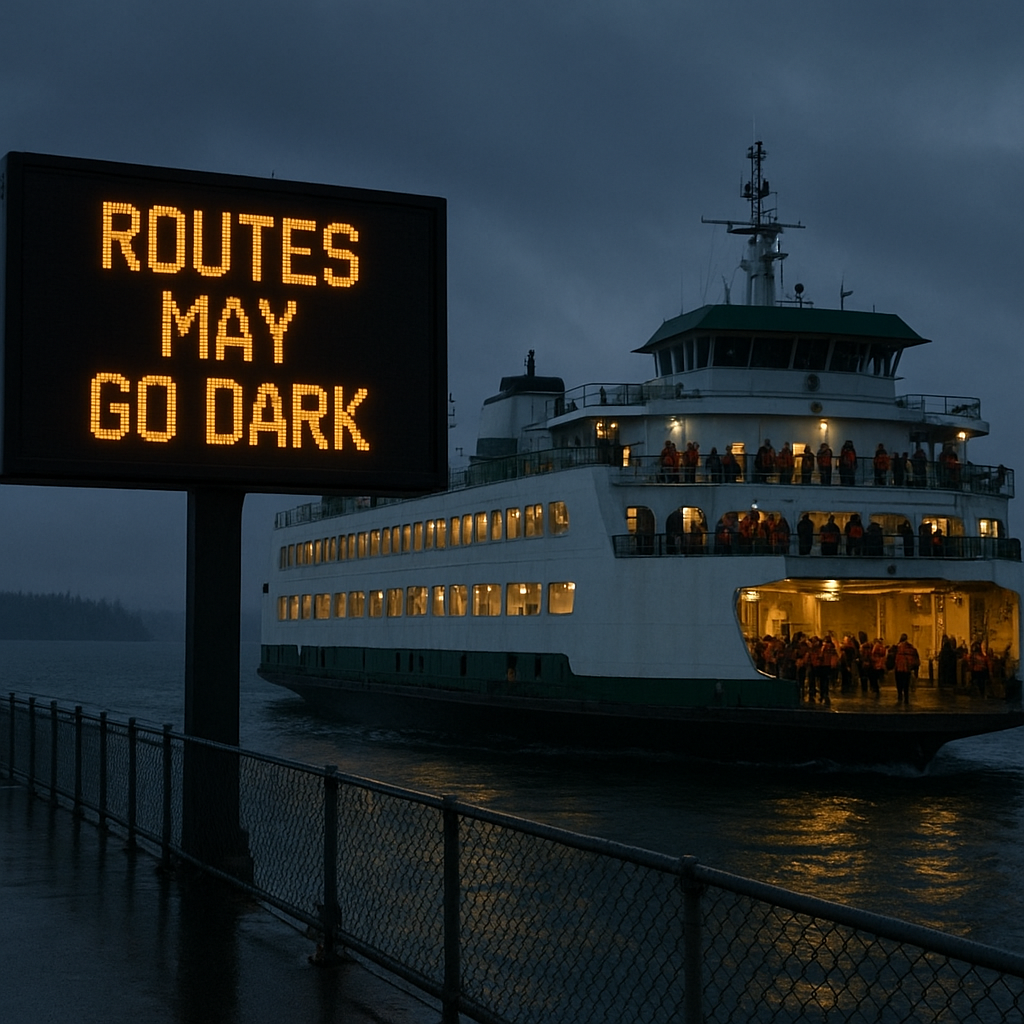
Comparison table
Washington State Ferries is not the only transportation system under strain, but its problem is unusually visible because the water has no alternate lane. Compare it with a common mainland transit competitor: regional bus service.
| Factor | Washington State Ferries | Regional Bus Service |
|---|
| Service flexibility | Low. A canceled sailing often has few substitutes. | Higher. Another bus or route may be available. |
| Staffing requirement | Highly specialized maritime crew and certifications. | Driver shortages still matter, but training is simpler. |
| Backup options | Limited for island and water-crossing routes. | More rerouting possibilities on road networks. |
| Impact of one canceled run | Large, especially for island communities and freight. | Moderate to high, but usually less isolating. |
| Public visibility | Very high. Delays are immediately obvious. | Medium. Riders absorb delays more quietly. |
| Long-term fix | Training pipelines, retention, vessel maintenance, labor planning. | Driver recruitment, scheduling, fleet planning. |
The comparison is not meant to pick favorites. It is meant to show why ferry staffing is uniquely unforgiving. Buses can be swapped more easily. Ferries cannot. That is the whole problem in one sentence.
Most coverage stops there. That is lazy.
The harder comparison is between short-term service cuts and long-term workforce investment. Cancel a sailing today, and you save a crew gap for the moment. Spend more on training and retention, and you may prevent dozens of future cancellations. Public officials love the first option because it is immediate and visible. The second requires patience, discipline, and political courage. Those are not common commodities.
This is where stewardship enters the picture. A state-run system owes residents more than excuses. It owes them prudence with money, fairness to workers, and reliable access to essential movement. That is not religious ornament. It is basic public morality.
Common misconceptions and what to know
A lot of bad assumptions float around whenever ferries miss service. Let’s clear a few out.
Misconception 1: The problem is just lazy hiring.
No. Maritime hiring is constrained by licensing, training capacity, and a small labor pool. If it were just a matter of posting another job notice, this would already be fixed. It is not that simple. Anyone claiming otherwise is selling a story, not an analysis.
Misconception 2: More money alone solves it.
Money matters, but it is not enough by itself. If the training pipeline is weak, if schedules are brutal, and if experienced workers keep leaving, then pay raises only slow the bleed. They do not stop it. The state needs a wider retention strategy.
Misconception 3: Service interruptions are proof ferries are obsolete.
That is too easy. Ferries remain essential in Washington because geography is stubborn. Bridges do not float over every route. The real issue is not whether ferries matter. They do. The issue is whether the state can staff and maintain them properly.
Misconception 4: Riders should just plan better.
Easy to say if you are not the one stuck on the island. Regular commuters can absorb a missed sailing more than families, patients, and workers with fixed schedules. Public transportation is supposed to serve the common good, not merely the most flexible rider.
Misconception 5: This is only a temporary glitch.
Maybe a specific route disruption is temporary. The workforce problem is not. That is the piece many reports gloss over. The shortage is a signal, not an isolated event.
I’ll be blunt. Most news coverage chases the headline and leaves the machinery unexplained. That is why the public keeps getting surprised by the same crisis under different labels. When one route goes dark, it is tempting to call it an operational inconvenience. It is actually a warning that the system is underfed, undertrained, and stretched past what good management should tolerate.
For readers tracking transportation policy and labor trends, related coverage from NPR’s business and labor reporting and state reporting from The Seattle Times transportation section helps show how public agencies across the country face the same basic problem: essential workers are hard to recruit, harder to keep, and impossible to fake.
Frequently asked questions
Why did Washington State Ferries say routes may be out of service?
Because it does not have enough qualified crew to staff all scheduled sailings safely. Maritime operations require licensed and trained workers, not placeholders.
Is this the same as a simple staffing shortage?
Not exactly. It is a staffing shortage in a specialized job pool, which makes it worse. The crew has to be properly certified, and that takes time.
Which riders are most affected?
Island residents, daily commuters, medical travelers, freight operators, and businesses that depend on predictable cross-sound service.
Can the state fix this quickly?
Not quickly. It can reduce the damage with better scheduling and contingency planning, but a real fix requires training, retention, and long-term workforce planning.
Final thought
Washington’s ferry system is a public trust, not a slogan. When routes go out of service because qualified crew are missing, the state is not just fighting a labor shortage. It is revealing whether it has treated essential workers, riders, and whole communities with the care they deserve. That is the part that matters most.
The truth is simple, even if the politics are not. A ferry route is not merely a line item. It is a lifeline. And when a lifeline frays, the measure of leadership is whether officials patch it with honesty, discipline, and respect for the people carrying the load. That is the standard. Anything less is just drift.