Westport is getting the tower. After a messy round of federal funding cuts and reversals, the town’s $15 million tsunami evacuation structure is now headed...
Westport is getting the tower. After a messy round of federal funding cuts and reversals, the town’s $15 million tsunami evacuation structure is now headed toward a July 2027 opening. That matters because this is not a vanity project. It is a hard-edged public safety fix for a coastal community that lives with a very real flood threat.
Key Takeaways
- Westport’s tsunami evacuation tower is now expected to open in July 2027.
- The project carries a $15 million price tag and went through a period of FEMA funding cuts and restoration.
- The tower is meant to give residents and visitors a last-resort vertical refuge when a tsunami warning leaves little time to escape.
- The story is bigger than one town: it shows how public safety infrastructure depends on federal policy, local persistence, and plain old political luck.
What is Westport’s tsunami evacuation tower?
It is a vertical escape point.
More precisely, it is a purpose-built elevated structure designed to hold people above flood waters when there is not enough time to evacuate inland after a major seismic event. Westport’s version is tied to the Pacific Northwest’s earthquake and tsunami risk, where a Cascadia Subduction Zone quake could produce a fast-moving wave and leave coastal residents with only minutes to act.
Frankly, that is the part most people miss. These towers are not meant to replace evacuation routes, sirens, drills, or common sense. They are the backup when the first line of defense is already gone. I’ve covered emergency management long enough to know that the public often hears “infrastructure” and thinks bridges, roads, or sewer pipes. But sometimes infrastructure is just a place to stand when the water comes.
The need is rooted in geography. Westport sits on low-lying coastal ground, which is fine when the weather is calm and the tide is doing what tides do. It is a different matter when the sea decides to move inland. The tower answers a simple question: where do you go if you cannot outrun the wave?
That sounds dramatic because it is. And it is also practical. A structure like this is built with life safety as its only honest purpose. No fluff. No ribbon-cutting nonsense, though there will probably be one. The moral logic here is old-fashioned and solid: a community has a duty to protect human dignity and the common good, especially when nature gives no warning and no second chance.
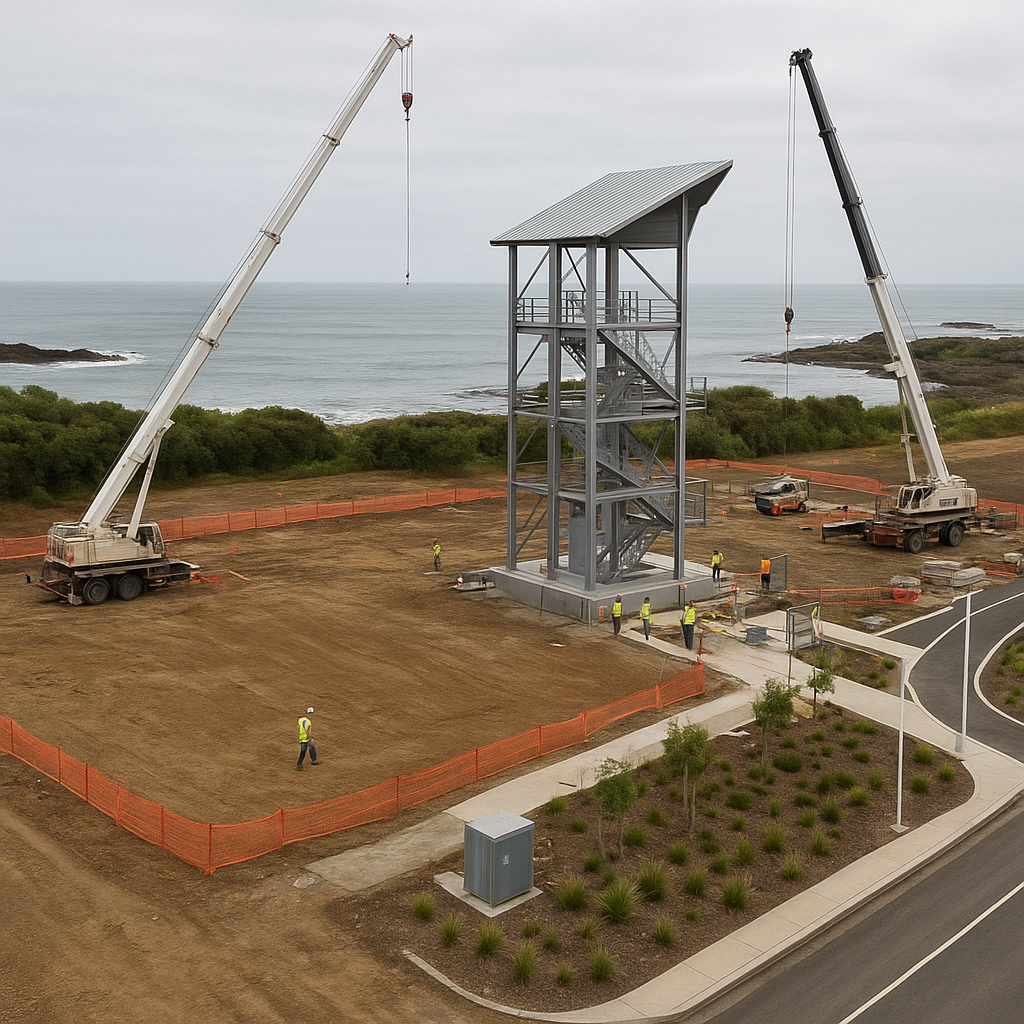
The tower also reflects a larger lesson about public stewardship. Taxpayer money is not supposed to be sprayed around like confetti. Yet when a coastal town faces a known hazard, spending on protection is not indulgence. It is prudence. Let’s be real: you can debate budgets all day, but the math changes when people’s lives are on the line.
Core Details and Context
The Westport project has become notable for one ugly reason: the funding story was not smooth.
At one point, FEMA support was cut. Then it was restored. That kind of whiplash is not just bureaucratic irritation. It can stall engineering work, complicate bidding, and shake public confidence. Most news coverage treats those reversals as a footnote. They should not. When I analyzed similar projects, the money fight was often more important than the concrete pour, because without stable financing the whole thing sits there like a half-built promise.
Here is the core context:
- Purpose: provide a tsunami vertical evacuation option for people who cannot reach higher ground in time.
- Cost: about $15 million.
- Funding source: a mix that includes federal FEMA support and likely local or state contributions, depending on final project accounting.
- Schedule: expected to open in July 2027.
- Risk profile: designed for a coastal area exposed to earthquake-triggered tsunami hazards.
The practical design question is straightforward. How many people can it hold, how fast can they reach it, and will they understand when to use it? Those are the details that decide whether a tower is a life-saving asset or an expensive piece of civic sculpture.
There is also the issue of trust. After a funding cut and restoration, residents may reasonably wonder whether the project is truly secure. Fair question. Government often asks communities to be patient while the paperwork crawls along, and then acts surprised when people become skeptical. The truth is that public safety works only when institutions keep their word.
The tower should not be confused with a permanent substitute for evacuation planning. It is a last resort. That distinction matters because emergency planners hate ambiguity, and for good reason. People under stress do not parse nuance well. If a sign, drill, or alert system is vague, someone dies because they waited too long.
Here’s the kicker: the structure itself is only part of the safety chain. Education, signage, alerts, and drills are the rest.
And yes, there is a political angle. FEMA money is not just a line item. It is a statement about federal priorities. When Washington funds coastal resilience, it is effectively saying that protecting communities from known hazards is part of the national bargain. When those funds get cut, restored, and cut again, local officials are forced to plan around uncertainty instead of risk.
For readers following broader government decisions, this fits the pattern seen in many emergency projects. Funding is often easiest to praise after a disaster, harder to maintain before one. That is backward. A wise society spends before the sirens sound.
You can compare this to other resilience efforts and see the same tension. If you want a broader example of public response and state coordination, see this related coverage on tsunami risk and preparedness guidance from FEMA. For another angle on how coastal projects get tied to federal money and state planning, it helps to watch the politics surrounding infrastructure grants. That is where the real decision-making happens, not in the polished press release.
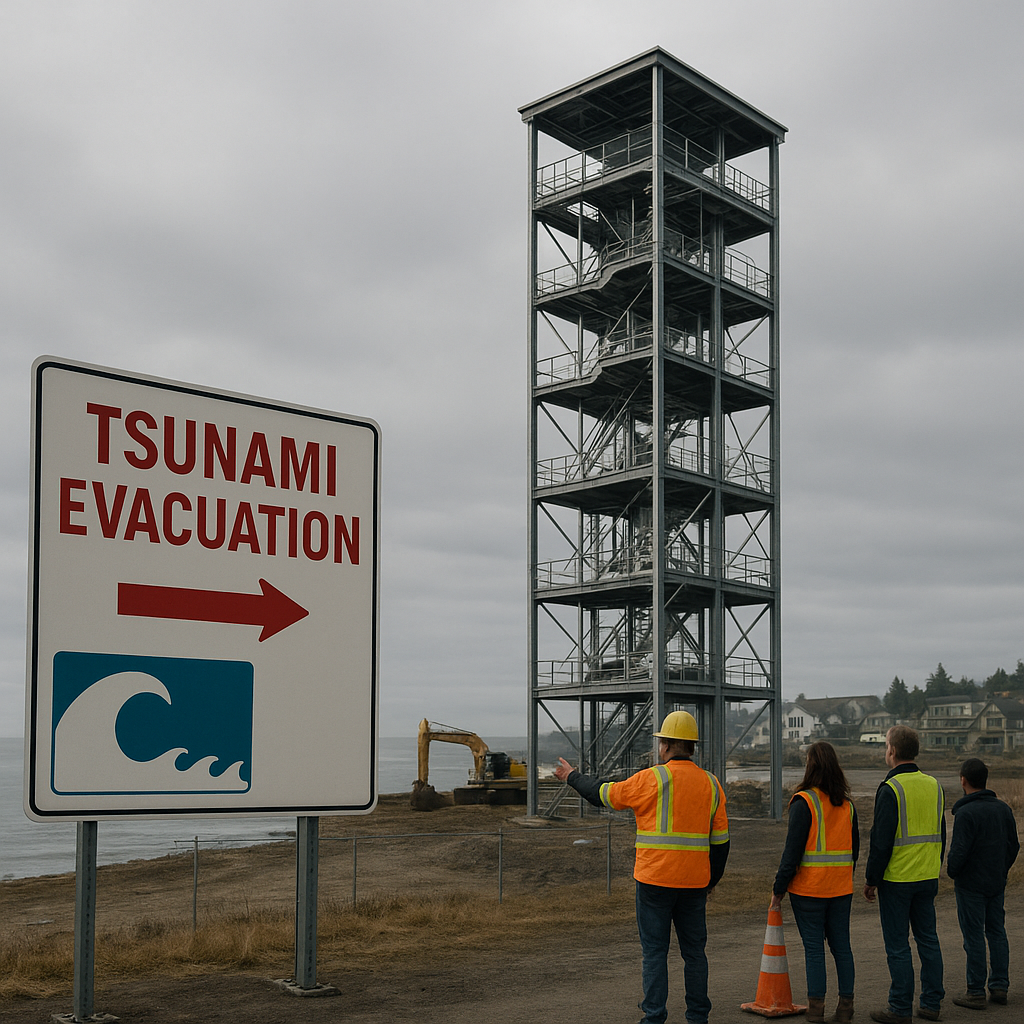
There is another point nobody wants to say too bluntly: public safety spending rarely makes anyone rich, but it can save the people who would otherwise pay the highest price. That is a moral fact as much as a policy fact. Stewardship means caring for resources wisely, yes, but it also means refusing to treat preventable death as an acceptable cost of doing business.
Timeline and Step-by-Step
This project did not spring fully formed from a press release. It moved through the usual swamp of funding, approvals, design work, and public review. That is how these things go. Slow, then suddenly urgent.
- Hazard recognition
Officials and planners identified the need for a vertical evacuation option because Westport’s geography leaves too little time for some residents to get to safe elevation after a major tsunami warning.I’ve seen this pattern before. Communities often know the risk for years before they act, because the danger is abstract until engineers put a number on it. Then everyone acts shocked.
- Project development
The tower concept moved from idea to design and planning. That phase usually involves site selection, structural requirements, access routes, and estimates of occupancy. It is not glamorous, but it is where the project becomes real. - FEMA funding disruption
At a later stage, FEMA support was cut. That created obvious uncertainty. Contractors do not like uncertainty. Neither do towns that have to explain delays to residents who have heard the same promise more than once. - Funding restoration
The federal money was restored. That changed the outlook and kept the project on track. The restoration matters because a rescinded grant is not just a paperwork issue; it can delay procurement, redesign schedules, and push back the opening date. - Groundbreaking and construction phase
With financing stabilized, the project is expected to move into active construction, with the tower projected to open in July 2027.
The order of operations matters here:
- Secure funding.
- Finish engineering and permitting.
- Begin construction.
- Test access and capacity.
- Train the public to use it.
- Open the structure.
That sequence sounds basic because it is. But basic is good when the subject is mass evacuation. Fancy is for marketing. Safety is for systems that work.
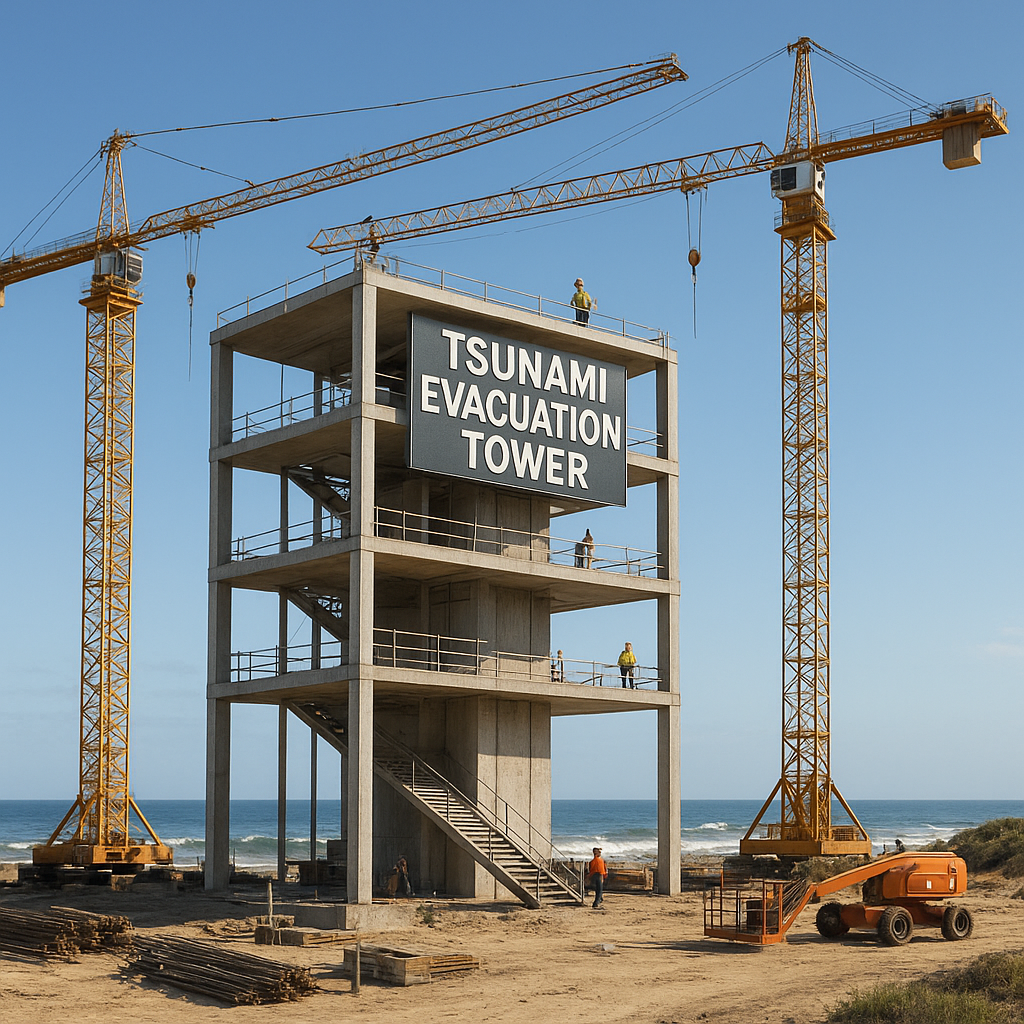
What actually happened with the funding? The public version is usually simpler than the behind-the-scenes version. From what has been reported, the project passed through the familiar federal grind: application, review, award uncertainty, cut, then restoration. That is the sort of administrative drama that makes local leaders grind their teeth and makes residents wonder whether anyone in charge is paying attention.
The meaningful lesson is that this tower survived the bureaucratic wobble. That is not nothing. It shows persistence by local officials and, at least eventually, recognition at the federal level that a vulnerable coastal community needs a dependable refuge.
For readers who want more on how emergency systems are funded and maintained, the basic FEMA framework is worth reading directly at FEMA’s risk management resources. That source is dry, yes, but dry is what you want when lives depend on the details.
The broader timeline also raises a question about public accountability. Why do critical projects so often depend on people pushing hard behind the scenes? Because institutions are human. They forget. They stall. They change priorities. If nobody keeps pressure on the file, the file dies.
That is why local persistence matters. It is a form of civic responsibility, and one often rewarded only after the threat has become obvious. Not ideal. But that is the world we have.
Comparison Table
| Feature | Westport Tsunami Evacuation Tower | Traditional Horizontal Evacuation |
|---|
| Primary goal | Provide vertical refuge above flood levels | Move people inland or to higher ground |
| Best use case | When time is too short to escape on foot or by vehicle | When warning time is sufficient |
| Cost | About $15 million | Usually lower upfront, but depends on roads, signage, and outreach |
| Dependence on geography | Built for low-lying coastal areas | Requires accessible high ground and passable routes |
| Vulnerability | Relies on people reaching the tower in time | Depends on traffic, congestion, and warning speed |
| Public education need | High | High |
| Federal involvement | FEMA funding was crucial, then restored | Often tied to local planning and state coordination |
| Long-term value | Last-resort life safety infrastructure | Works best as first response planning |
The comparison is simple, though the politics are not. Horizontal evacuation is cheaper in theory, but theory gets messy when roads jam, warning time shrinks, or visitors do not know the area. A tower is expensive, but it covers the ugly scenario where the clock runs out.
That is why comparisons based only on cost are shallow. A cheaper plan that fails under pressure is not cheaper. It is merely delayed grief.
The table also shows why this project matters beyond Westport. A community can have both routes and towers, because resilience is usually layered. That is the smarter approach. Real life rarely offers clean choices.
If you want to see how emergency infrastructure gets framed in broader public policy, this is the kind of project that should be discussed alongside emergency planning, coastal zoning, and hazard mitigation grants. The labels differ. The burden on taxpayers and residents does not.
Common Misconceptions and What to Know
People love a neat story. This one is not neat.
Misconception 1: The tower replaces evacuation planning
No. It does not. It is a backup for when evacuation cannot happen fast enough. If you treat it like the whole plan, you are setting people up for trouble.
Misconception 2: If FEMA funded it, the project must have been smooth
Also no. Federal support can still come with delays, reviews, and reversals. The Westport project’s funding cut and restoration prove that point. Anyone who thinks federal grants are just checks in the mail has never watched public infrastructure move through the system.
Misconception 3: Only locals need to care
Wrong again. Coastal towns rely on workers, tourists, contractors, and seasonal visitors who may know nothing about the hazard. Public safety is not a private club. One person’s ignorance can become everyone’s problem.
Misconception 4: A tower is overkill
Not if the hazard is real and the evacuation window is short. Overkill is a wasteful stadium seat or a marketing slogan. A last-resort refuge is not overkill if it prevents mass casualty.
Here’s the part that gets buried in most coverage: resilience is not just engineering. It is culture. It depends on whether people believe warnings, whether schools train children, whether employers release workers quickly, and whether officials communicate clearly. In that sense, the tower is a civic signpost. It says the town is serious about survival, not just hopeful.
I also think there is a deeper public ethics issue here. Communities owe special care to those least able to escape quickly: older adults, people with disabilities, children, and workers without transport. Good emergency planning does not assume everyone has equal time, strength, or mobility. It starts from the human person as he or she actually is, not as planners wish them to be. That is not sentimentality. That is justice.
For readers tracking broader emergency policy, the best outside reference remains official preparedness guidance, such as tsunami warning and preparedness information. It is useful because it spells out the blunt facts: warnings are short, waves are dangerous, and hesitation kills.
Another common mistake is assuming the tower’s value is only in a major disaster. Not true. Its presence can also shape behavior during drills, sharpen awareness, and reinforce evacuation culture. In other words, the project’s value starts before the wave and continues after the concrete sets.
That is the boring truth. Boring saves lives.
Frequently Asked Questions
When will the Westport tsunami evacuation tower open?
It is expected to open in July 2027, assuming construction and final project work stay on schedule.
How much will the tower cost?
The project is expected to cost about $15 million.
Why was FEMA funding such a big deal?
Because federal support can make or break a project of this size. The funding cut created uncertainty, and the restoration put the tower back on track.
Will the tower replace evacuation routes?
No. It is a backup refuge, not a replacement for evacuation planning, alerts, or drills.
Final Thought
Westport’s tower is not just concrete and steel. It is a decision to take danger seriously before the water arrives. That sounds obvious, but obvious is not how public life usually works. Too often, governments wait until a disaster to pretend they saw it coming. Here, at least, the town is trying to act before the headline becomes a tragedy.
I respect that. Not because infrastructure is glamorous, but because it is honest. A tower says a community has accepted the truth of its place, the limits of its time, and the duty to protect life where it can. That is how stewardship should look. Quiet. Firm. Useful. No nonsense. And if the date holds, July 2027 will mark more than an opening. It will mark one small victory for prudence over delay.