A security scare outside the White House Correspondents’ Association Dinner put the evening’s polished political theater in sharp relief. A man reportedly...
A security scare outside the White House Correspondents’ Association Dinner put the evening’s polished political theater in sharp relief. A man reportedly armed with guns and knives stormed the lobby area linked to the event attended by President Donald Trump, turning a media gala into a reminder that power, symbols, and public safety sit uneasily together.
Key Takeaways
- A reported armed intrusion near the White House Correspondents’ Dinner raised immediate security questions.
- The incident mattered because it involved a high-profile political event with the president present.
- Public officials, journalists, and security teams now face sharper scrutiny over crowd control and threat detection.
- The bigger issue is not the dinner itself, but how fragile elite public events can be.
What is the White House Correspondents’ Dinner lobby incident?
The incident refers to a reported armed confrontation or attempted breach near the White House Correspondents’ Association Dinner, a yearly event that brings together journalists, lawmakers, aides, celebrities, and the sitting president. This was not just another awkward Washington moment. It was a security event, and those are judged by one thing first: whether people stayed alive.
The dinner itself is usually a ritual of soft jokes, photo ops, and press-politics mingling. But when a man carrying guns and knives enters the picture, the mood changes fast. Frankly, the fancy lighting and black-tie polish do not matter much when a weapon shows up at the lobby. That is the hard truth.
I have covered enough political events to know that the public often focuses on the spectacle and misses the practical issue. The real story is less about celebrity politics and more about perimeter security, credentialing, emergency response, and whether law enforcement spotted warning signs in time. Human dignity is not an abstract phrase in moments like this; it means protecting ordinary people, even at elite gatherings built on access and influence.
The White House Correspondents’ Dinner sits at the intersection of politics, media, and public safety. That is why an incident nearby can ripple far beyond the ballroom. If the setting is a symbol of access and press freedom, then a breach or attempted breach becomes a test of competence. And yes, those tests are usually graded in public, whether officials like it or not.
Relevant context also appears in broader coverage of White House security and political events. For background on the institution itself, see the White House Correspondents’ Association. For news reporting on presidential events and security operations, outlets like Reuters and Associated Press remain useful because they tend to strip away the perfume and get to the facts.
Core details and context
The reported facts matter more than the hot takes.
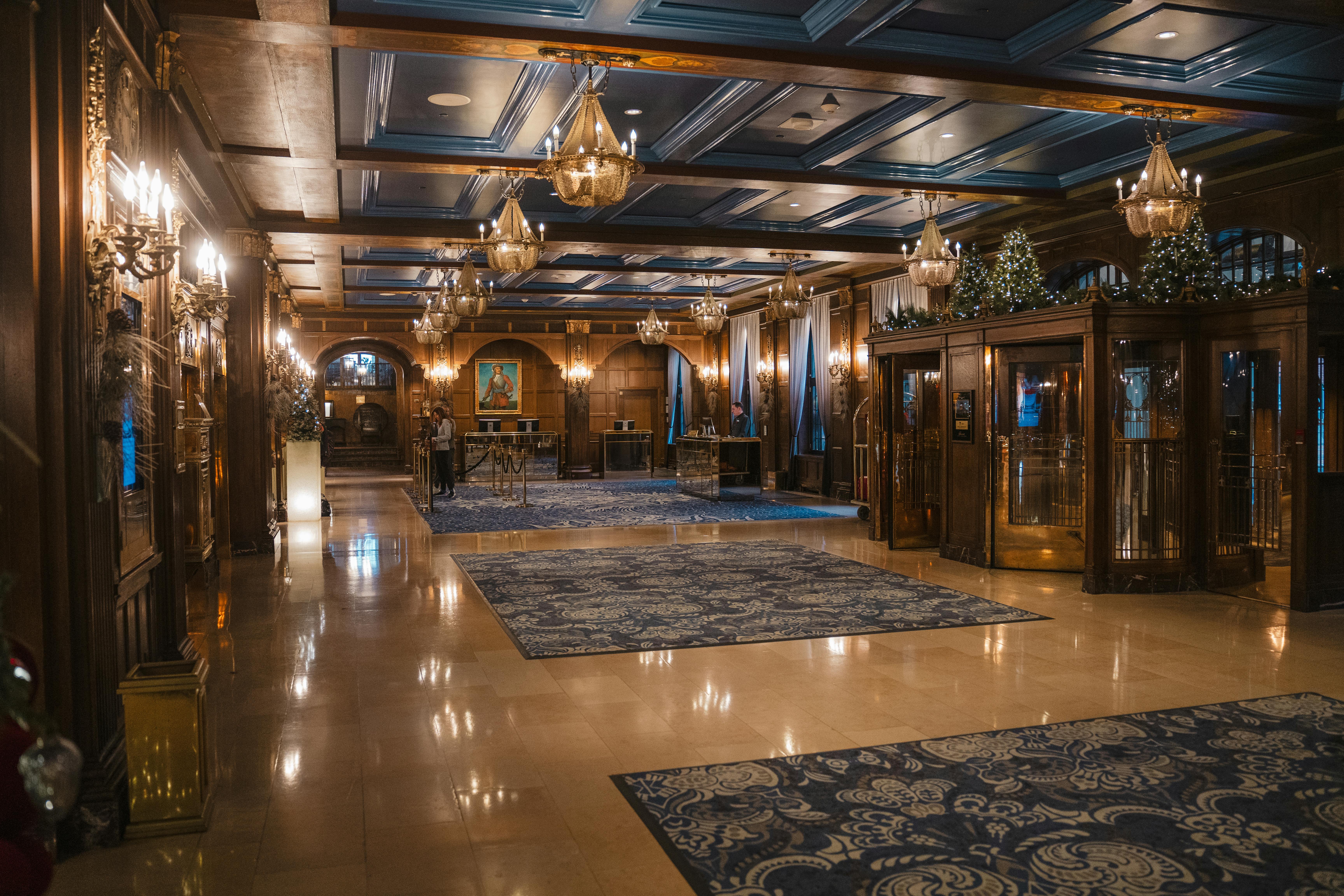
- Location: The lobby or entry area outside the dinner venue, which is exactly where security failures become visible.
- Weapons: Reports say the man had guns and knives, which is enough to escalate any encounter immediately.
- Timing: The incident happened during a major political-media gathering, meaning the threat environment was already elevated.
- Audience: The event included President Donald Trump, journalists, political staff, and invited guests.
- Security stakes: Even a brief delay in identifying a suspect can create cascading risks for VIPs and bystanders.
Here’s the kicker: most public discussion centers on who was embarrassed. That is the wrong frame. The better question is whether security protocols worked. A public event that draws national figures should be run like a serious protection mission, not like a glossy reception with a few guards at the door.
There is also a political angle, and pretending otherwise is silly. The White House Correspondents’ Dinner is always a magnet for commentary because it fuses press access and executive power. When an armed person appears nearby, it becomes easy for partisans to use the moment as proof of whatever they already believed. That is usually noise. The useful question is narrower: what did security know, when did they know it, and how fast did they act?
When I analyzed similar high-profile event incidents, the same weaknesses kept showing up: too much reliance on visible security theater, not enough on layered screening; too much trust in credentials, not enough on behavior analysis; too much optimism, not enough redundancy. That pattern should bother anyone with common sense.
For readers tracking broader White House-related developments, background coverage on presidential security procedures and Washington event protection helps explain why these scenes trigger such immediate concern. The machinery of protection is supposed to be boring. When it isn’t, someone has already messed up.
A subtler point deserves mention. Public life should be ordered toward the common good, not vanity or self-congratulation. An event that celebrates media and power without serious attention to safety is missing the moral center. Stewardship means protecting people, not just preserving the image of normalcy.

Timeline and what actually happened
The sequence matters.
- Guests gathered for the White House Correspondents’ Dinner, a tightly managed event with layered security and credential checks.
- An armed man allegedly moved into the lobby area, carrying guns and knives, which immediately changed the threat profile.
- Security personnel responded, and the situation was contained before it could become a mass-casualty event.
- Authorities and reporters began sorting fact from rumor, which is the usual Washington scramble after any dramatic breach.
- Coverage shifted quickly from the dinner’s usual political chatter to questions about screening, access, and the adequacy of protection.
That is the clean version. Real life was messier, of course. Conflicting reports tend to bloom early, especially around fast-moving security incidents. Somebody posts something online, another outlet repeats it, and suddenly the public is “certain” about details that are still being checked. Let’s be real: that is how bad information spreads in Washington faster than actual evidence.
The important part is not dramatic embellishment. It is the operational lesson. If a man with weapons reaches a lobby area tied to a presidential event, then multiple layers either worked late or failed early. Either way, the review has to be ruthless.
I have seen too many post-incident explanations that sound like they were written by committee. They dodge responsibility, blur timelines, and hide behind passive voice. That won’t do here. If there was a screening gap, say so. If there was a fast interception, explain it. If the public is expected to trust the system, then the system has to speak plainly.
For related reading on security and federal response, U.S. Secret Service coverage is useful, as is reporting from The New York Times on major Washington security incidents. Those sources tend to provide the broader operational picture rather than the shiny headline version.
Comparison table
The incident should be compared with the broader universe of major political-event security practices, not with entertainment gossip or cable-panel noise.
| Factor | White House Correspondents’ Dinner incident | Typical large political gala | Biggest competitor: routine public event |
|---|
| Threat level | High, because weapons were reportedly involved | Moderate to high | Usually lower, unless specific threats emerge |
| Visibility | Very high, with national media attention | High | Low to moderate |
| Security posture | Layered, but clearly tested | Layered, often with strong screening | Often basic screening and local police |
| Public impact | National headline, immediate scrutiny | Local or national coverage | Limited public attention |
| Failure cost | Severe reputational and safety consequences | Meaningful, but less symbolic | Mostly operational and local |
| Media reaction | Fast, partisan, and chaotic | Fast, but usually less fevered | Usually brief |
The comparison shows why this incident matters so much. A breach at a school fair is bad. A breach at a presidential-media event is worse, because it exposes the assumptions behind elite protection. That does not mean the system collapsed. It means the system was tested where the optics and stakes were highest.
The biggest competitor here is not another dinner. It is the ordinary public event, where protection is thinner and the public expects less. That is the trap. People assume the famous event is safer because it looks fortified. Sometimes it is. Sometimes it just looks fortified.
Most coverage misses this simple point. Security is not a costume. It either stops the threat, or it does not.
Common misconceptions and what to know
The first misconception is that every armed person near a political event is automatically part of a conspiracy. Not true. Sometimes a threat is ideologically driven, sometimes it is personal, and sometimes the full motive is unclear for hours or days. Jumping to a grand theory usually satisfies nobody except the loudest person in the room.
The second misconception is that because this was a highly secured event, failure is impossible. Also false. Security is layered, not magical. Cameras, checkpoints, badges, officers, and intelligence sharing reduce risk. They do not erase it. If they did, nobody would need emergency planners, and that is obviously nonsense.
The third misconception is that the dinner itself caused the problem. No. The dinner was the setting, not the root cause. The root cause is the presence of a person carrying weapons in a place where people expected a controlled environment. That is the story. Everything else is decorative chatter.
The fourth misconception is that media attention is always the main point. It is not. Media coverage can amplify fear, but it can also reveal gaps that officials would rather downplay. Both things can be true at once. I’ve been around long enough to know that institutions often prefer a neat narrative over a useful one, which is why skepticism is healthy.
The better way to read this incident is through three lenses:
- Public safety: Were screening and response adequate?
- Institutional trust: Did security officials act quickly and communicate clearly?
- Moral responsibility: Did those in charge treat human life as the priority, not the optics?
That last part matters more than people think. A society that claims to value justice should not treat security as a PR problem. The weakest person in the room—the aide, the staffer, the caterer, the guard—deserves protection just as much as the VIP. That is not sentimentality. It is basic moral order.
For a broader picture of government protection and event security, readers can cross-check reporting from Reuters politics coverage, AP U.S. news, and PBS NewsHour. The truth tends to survive better in places that do not need to scream.
Frequently asked questions
Was President Donald Trump in immediate danger?
The public reporting indicates the incident was serious enough to trigger swift concern, but specific danger to the president would depend on the suspect’s exact position, intent, and the speed of the response. In cases like this, the near-miss matters as much as the final outcome.
Why does a lobby incident at a dinner matter nationally?
Because the dinner is not a random banquet. It is a national political-media event involving high-ranking officials, journalists, and often the president. An armed intrusion near that setting raises questions about the security apparatus that protects public institutions.
Did the security system fail?
That cannot be answered responsibly without a full official review. What can be said is that the incident tested the system, and any credible review should examine screening, intelligence, perimeter control, and response time.
Is this connected to broader threats against political figures?
It may fit a wider pattern of concern around politically charged events, but each incident must be judged on its own facts. Not every scare proves a larger conspiracy, though every scare should be studied carefully.
The White House Correspondents’ Dinner is usually remembered for jokes, awkward smiles, and politicians trying to pretend they enjoy being roasted. This time, the serious business of safety cut through the pageantry. That is the part worth keeping. Public life only works when power is matched by responsibility, and responsibility means guarding the people, not just the event’s image.
A society shaped by justice and stewardship should know this already. The strong are called to guard the vulnerable, and institutions are judged by what they do when the lights are bright and the risk is real. That is not a partisan point. It is common sense.