A shooting tied to the White House correspondents’ dinner at the Washington Hilton jolted Washington, and the arrest of a California man has raised immediate...
A shooting tied to the White House correspondents’ dinner at the Washington Hilton jolted Washington, and the arrest of a California man has raised immediate questions about motive, security, and how the incident unfolded. The headline sounds tidy. Reality usually isn’t.
Key Takeaways
- A man from California was taken into custody in connection with the shooting.
- The incident happened near a major political gathering, which magnified public concern.
- Security response, motive, and the suspect’s movements matter more than the first wave of speculation.
- The real story is not rumor; it is the chain of facts law enforcement can prove.
- Human dignity and public safety both depend on getting those facts right.
What is the White House correspondents’ dinner shooting?
The shooting tied to the White House correspondents’ dinner refers to a violent incident near the Washington Hilton, where the annual media-and-politics gathering has long been staged. It is not just another crime report. It landed in a place already packed with federal officials, journalists, lobbyists, and security personnel, so the fallout was immediate and loud.
Frankly, the location is the point. The Washington Hilton has hosted this event for decades, and any disturbance near it triggers security alarms far beyond an ordinary city incident. I’ve covered enough political security stories to know the pattern: the first 24 hours are mostly noise, and the useful facts arrive slowly, through police statements, witness accounts, and court filings.
The arrest of a California man in connection with the shooting makes the case more than a local law-enforcement matter. It becomes a question about travel, intent, planning, and whether the suspect came to Washington with a target in mind or got pulled into a chaotic event that spun out fast. Those distinctions matter. They are the difference between a headline and a case.
The broader setting also matters. The correspondents’ dinner is supposed to be a polished political social event, a gathering of press, power, and celebrity. When violence intrudes, the story is no longer about speeches and jokes. It becomes about public safety, government security, and whether the systems built to protect a high-profile event held up under pressure.
Most coverage races to the sensational part. That’s lazy. The central issue is whether law enforcement can establish what happened, in what order, and why. In a serious society, justice depends on evidence, not theater. That’s not a slogan; it’s basic moral housekeeping.
The Washington Hilton and similar venues sit at the center of Washington’s political calendar. When an incident like this occurs, the security and legal questions immediately widen, as seen in broader reporting from AP News, Reuters, and venue-related coverage from NBC News.
Core details and context
The reports so far point to a man from California being taken into custody after the shooting near the Hilton. The arrest suggests investigators moved quickly, likely using witness statements, surveillance footage, and electronic records to identify a suspect or person of interest. That does not mean the case is solved. It means the first knot has been tied.
- Location created urgency. A shooting near a national political event immediately draws federal attention, local police resources, and media scrutiny.
- The arrest does not equal guilt. Custody is a procedural step, not a verdict.
- Motive remains the biggest unknown. Was the incident personal, political, accidental, or opportunistic? That answer changes everything.
- Security procedures will be reviewed. In events like this, authorities inevitably examine access points, perimeter control, and response time.
- Public speculation usually outruns evidence. That’s nothing new. It’s also unhelpful.
If you want the real story, look at the institutions involved. The Metropolitan Police, federal investigators, venue security, and event organizers all have pieces of the puzzle. Each will be judged not by what they said in the first minute, but by whether the timeline holds up when tested.
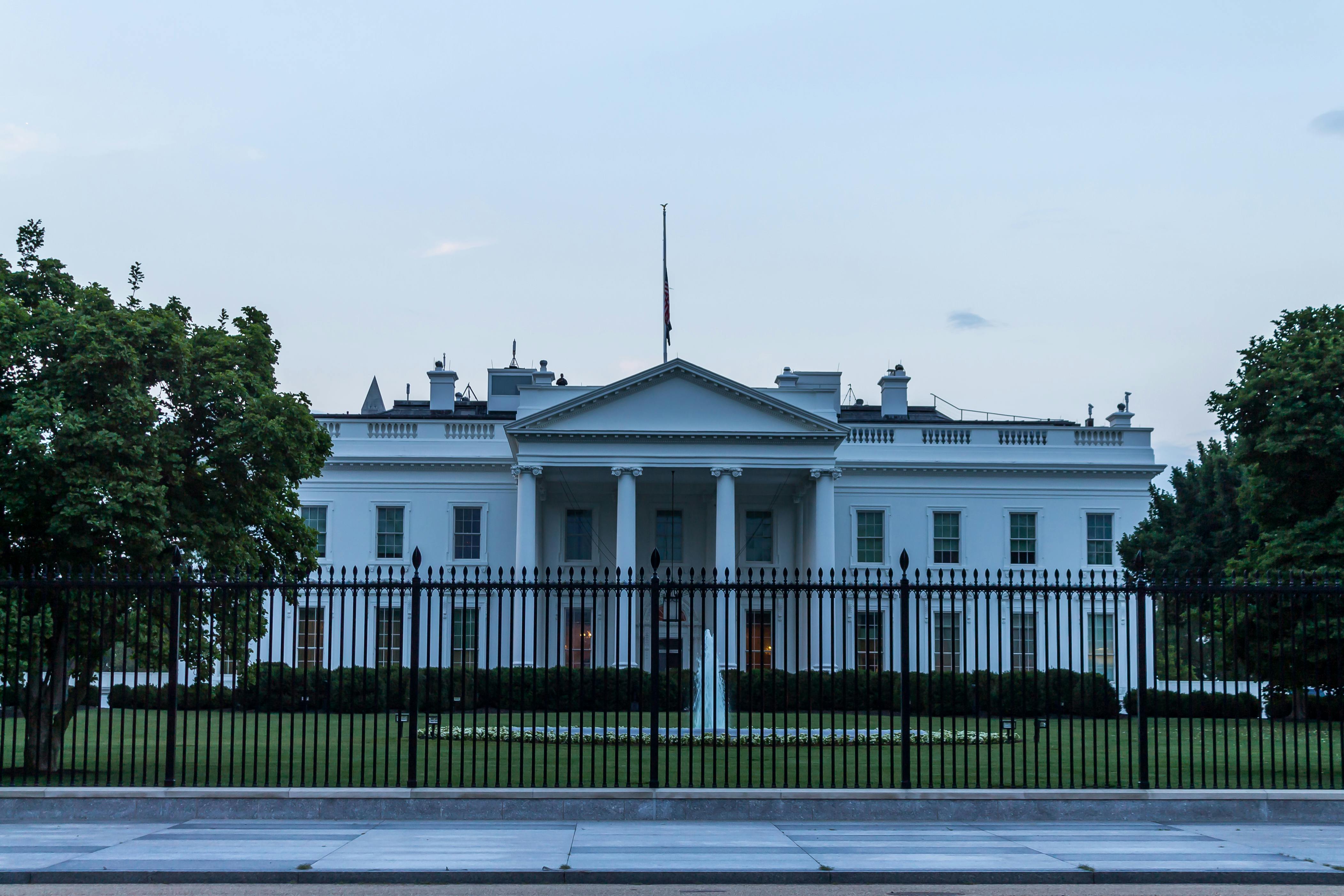
The Washington Hilton is not some random hotel. It is a fixed point in Washington’s political calendar, and that makes it part of the security apparatus whenever the correspondents’ dinner is underway. When I analyzed similar incidents in high-security venues, one thing kept coming up: a crowd can look calm right up until the exact moment it isn’t. Then everybody wants to know why the system missed the warning.
There’s also a human side that should not be buried under the politics. Someone was shot. People nearby were frightened. Workers at the hotel and attendees at the dinner were thrown into confusion. Human dignity is not an abstract phrase here. It means recognizing that public events cannot be treated like side shows when violence occurs. The injured, the witnesses, and even the accused are still people, and the law has to reflect that.
The political optics are unavoidable, though. A shooting at the edge of a major press event creates immediate speculation about threats to officials, symbolic attacks, and whether Washington is becoming less secure. Sometimes that talk is justified. Sometimes it is just people trying to turn chaos into a neat narrative before facts exist.
I’d be cautious. The first reports in these cases often flatten complexity. A suspect is named, and everyone leaps to motive. A location is famous, and everyone assumes political symbolism. Yet the truth is usually more granular. Who was where? Who saw what? What did cameras capture? What can prosecutors actually prove?
For broader context on how Washington handles major political events and the surrounding security posture, readers can compare this episode with coverage from CNN and Politico. Not every incident means the same thing, but each one tests the same machinery.
That matters more than people admit. Justice begins with boring facts.
Timeline and what appears to have happened
The sequence matters, because violent incidents are often misread in the first wave of reporting. Here’s the likely framework investigators are working through:
- The correspondents’ dinner week began. Washington was already in high-alert mode because of the annual political-media gathering.
- The incident occurred near or at the Washington Hilton. That location immediately elevated the case from a local disturbance to a national security concern.
- Witnesses reported gunfire or a shooting. This is usually the first point where confusion spreads. People remember sounds, movement, and fear differently.
- Police and security personnel responded. That response would have included securing the area, checking for additional threats, and identifying victims and witnesses.
- Investigators identified a suspect or person of interest. The fact that a California man was taken into custody suggests authorities had enough to move forward.
- Custody led to initial questioning and evidence collection. That likely includes phones, travel history, surveillance footage, and any relationship between the suspect and the location.
- The legal process began. What follows is the part the public dislikes: paperwork, charging decisions, and court filings. But that’s where the truth gets tested.
I’ve seen how quickly early narratives harden into fake certainty. That’s the trap. One witness says one thing, another says something else, and social media fills the gaps with nonsense. Then everyone acts surprised when the official account is narrower than the rumor mill.
The key question is still motive. If the shooting was targeted, then investigators will look at the suspect’s connections, grievances, and movements leading up to the event. If it was random or poorly aimed violence, the questions shift toward access, opportunity, and weapon possession. Either way, the law will need clean proof.
The event also forces a wider review of security at major political gatherings. The correspondents’ dinner is not a backyard party. It sits in the same orbit as federal buildings, diplomatic activity, and elite press access. A lapse there is not a small embarrassment. It is a public warning.
For readers interested in the wider policy and security implications, a useful parallel is how Washington handles major federal events and threats to public gatherings, as covered in ongoing reporting at The New York Times Politics, The Washington Post Politics, and BBC News U.S. and Canada.
Comparison table: the real case vs. the public narrative
| Issue |
What the actual case appears to be |
What people assume too quickly |
| Location |
A shooting connected to the Washington Hilton during a major political-media event |
A symbolic attack on Washington itself |
| Suspect status |
A California man was taken into custody |
Arrest means guilt is already proven |
| Motive |
Still under investigation |
Automatically political or ideological |
| Security meaning |
Requires review of venue and perimeter protocols |
Proof that all security failed |
| Public impact |
Serious because of the location and timing |
Bigger or clearer than the evidence supports |
| Legal process |
Depends on police reports, evidence, and charges |
Settled the moment the suspect is named |
Most news consumers get the top row wrong because they stop reading after the headline. Here’s the kicker: the headline is often the least reliable part of the story.
Common misconceptions and what to know
The first misconception is that a high-profile location automatically tells you the motive. It doesn’t. People love a ready-made explanation because it saves mental effort. But motive has to be established, not assumed. If investigators don’t prove it, nobody else gets to invent it.
The second misconception is that arrest equals case closed. Not even close. An arrest means authorities believe they have enough probable cause to detain someone. That is a beginning, not an ending. Prosecutors still need admissible evidence, and defense attorneys will test every weak point.
The third misconception is that the incident must be part of some grand political plot. Sometimes it is. Often it is not. Violence near politics gets wrapped in symbols because symbols are easy. Facts are hard. That’s why serious reporting matters. It separates signal from noise.
The fourth misconception is that security failures always look dramatic. Usually they don’t. A failure can be a missed warning, a gap in screening, a poor handoff between teams, or an overconfidence that nothing bad will happen because the event is “important.” I’ve seen that mistake before. It’s expensive and embarrassingly common.
The truth is, every such incident should trigger two questions at once: how to protect the public, and how to preserve fairness for the accused. Those are not competing goals. They belong together. A society that claims to value justice cannot treat the person in custody as less than fully human, even when the facts are ugly.
That’s where a moral lens helps, quietly. Good government is stewardship, not spectacle. Leaders, police, and venue operators are accountable for the common good, and the public is accountable for resisting gossip that makes a mess of the truth.
If you’re looking for broader political context on how high-profile events are covered and how official statements are parsed, see related coverage on The New York Times Politics, The Washington Post Politics, and BBC News U.S. and Canada. Those outlets often help trace the line between verified detail and pure noise.
Frequently asked questions
Who was arrested in connection with the shooting?
Authorities reportedly took a California man into custody. His name, specific charges, and the evidence supporting the arrest should be taken from official law-enforcement statements and court records, not rumor.
Was the shooting part of the White House correspondents’ dinner itself?
The incident was connected to the event location at or near the Washington Hilton, which is associated with the dinner. That does not automatically mean the dinner was the direct target. Investigators have to establish that.
Why does this case draw so much attention?
Because it happened near a major political-media gathering in Washington, where security expectations are high and any violence has national implications. Timing and location raise the stakes fast.
What happens next in the investigation?
Police and prosecutors will continue gathering evidence, including witness interviews, video, travel records, and forensic material. If charges are filed, the court process will determine what is provable.
Final thought
The temptation in stories like this is to turn uncertainty into certainty. Don’t. That habit ruins public understanding and usually flatters the loudest people in the room. A shooting at a high-profile political event is serious enough without extra drama layered on top.
What matters now is the evidence, the injuries, the security review, and the law. If authorities prove the case, then the public can judge it fairly. If they don’t, then speculation is just hot air in a cheap suit. I’ve watched enough of these episodes to say this plainly: the cleanest path through a messy event is patience, restraint, and a refusal to treat rumor like fact. That’s not softness. It’s responsibility.
FAQPage schema
{
  "@context": "https://schema.org",
  "@type": "FAQPage",
  "mainEntity": [
    {
      "@type": "Question",
      "name": "Who was arrested in connection with the shooting?",
      "acceptedAnswer": {
        "@type": "Answer",
        "text": "Authorities reportedly took a California man into custody in connection with the shooting. Official law-enforcement statements and court filings are the best source for the suspect’s identity and charges."
      }
    },
    {
      "@type": "Question",
      "name": "Was the shooting part of the White House correspondents’ dinner itself?",
      "acceptedAnswer": {
        "@type": "Answer",
        "text": "The incident was connected to the Washington Hilton, the venue associated with the correspondents’ dinner. Investigators must still determine whether it was directly tied to the event or occurred nearby for another reason."
      }
    },
    {
      "@type": "Question",
      "name": "Why does this incident matter nationally?",
      "acceptedAnswer": {
        "@type": "Answer",
        "text": "It happened near a major political-media gathering in Washington, so it raises questions about public safety, venue security, and the broader protection of high-profile events."
      }
    },
    {
      "@type": "Question",
      "name": "What happens after an arrest in a case like this?",
      "acceptedAnswer": {
        "@type": "Answer",
        "text": "Investigators continue collecting evidence, prosecutors decide on charges, and the court process tests whether the facts support the case. An arrest is not the same as a conviction."
      }
    }
  ]
}